
Freshness is the whole product
Sushi sells one thing: the promise that the fish was cut within the hour. Every design choice either protects that promise or breaks it. We keep the alternative on the same quotation, so the buyer compares a number instead of a preference. That number belongs on the kiosk drawing, because a case temperature agreed verbally rarely survives the first lunch rush.
A counter at 5 C, a rice warmer at 40 C and a 20 minute display life. Miss any of the three and the shop sells the same fish twice in one day, and the second one is a complaint. Most of these gaps appear on day one, which is exactly when the first plate hits the bin.
The 5 C case and the 20 minute rule
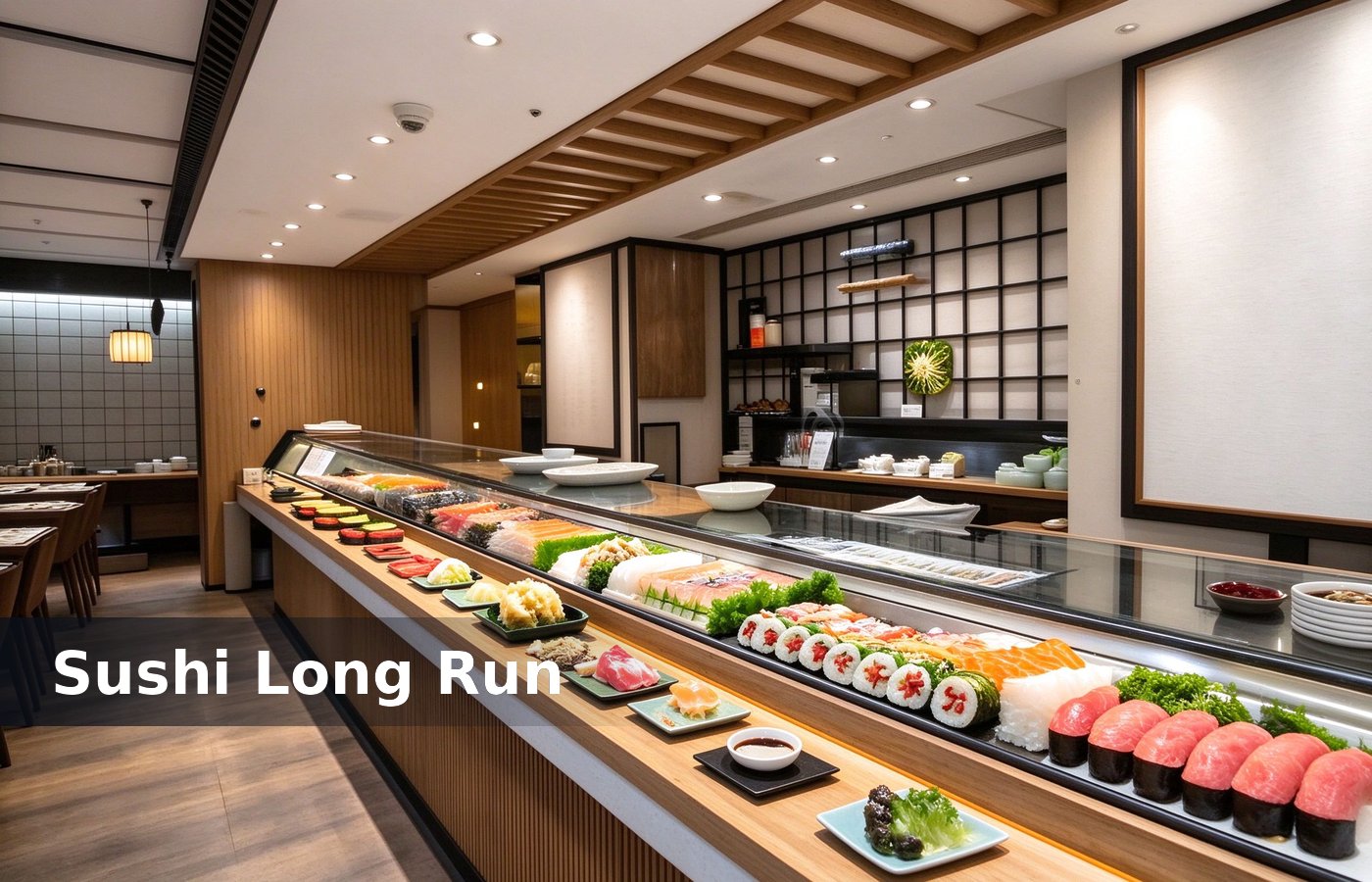
Neta sits in a refrigerated case at 0 to 5 C, and a plate under a glass dome holds 18 to 22 C on the surface. A plate out of the case for more than 20 minutes goes in the bin. Mark it on the drawing sheet too, so whoever services the belt later has the reference without guessing. One lunch hour with a clicker settles the question faster than a week of drawing revisions.
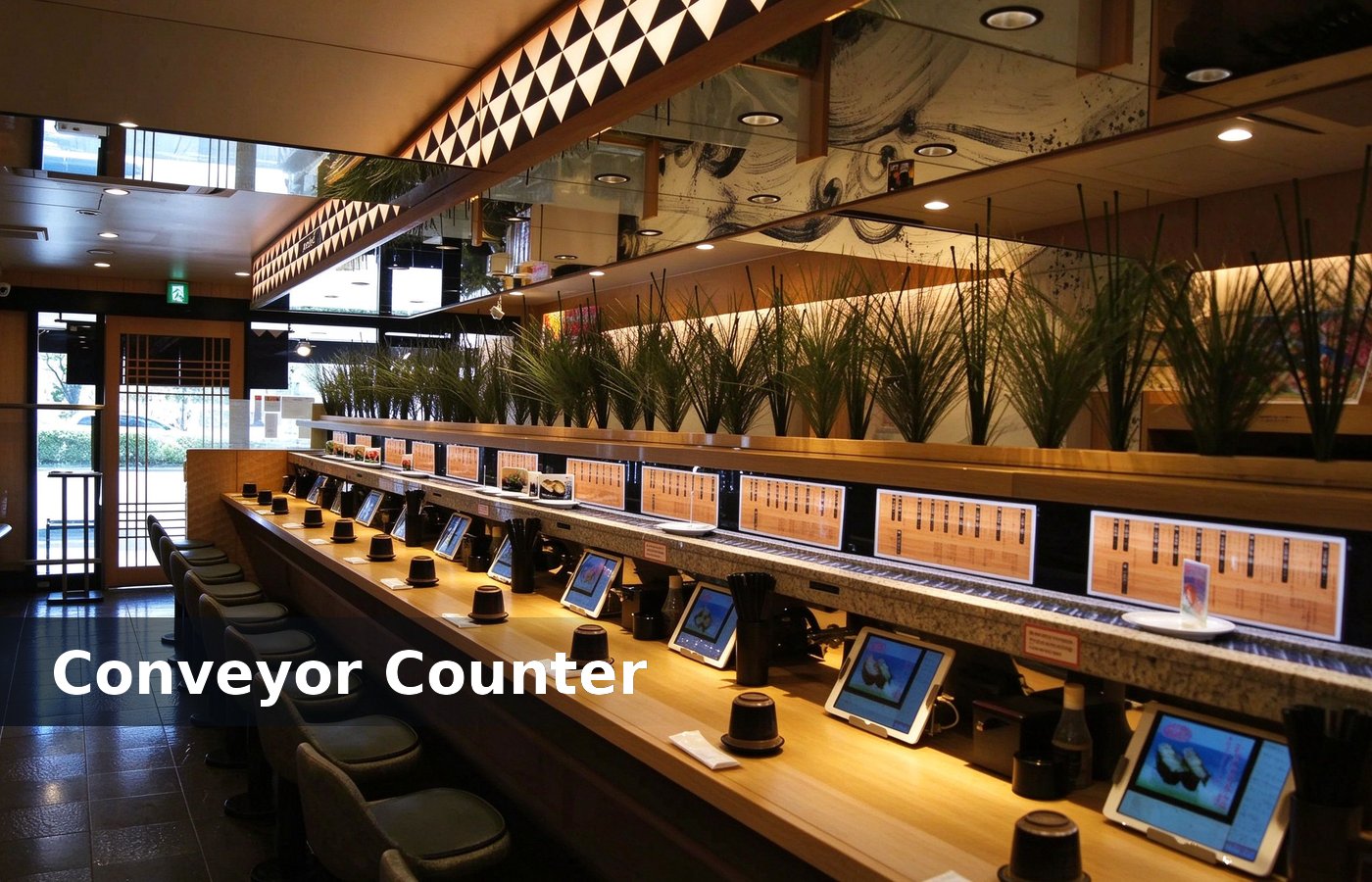
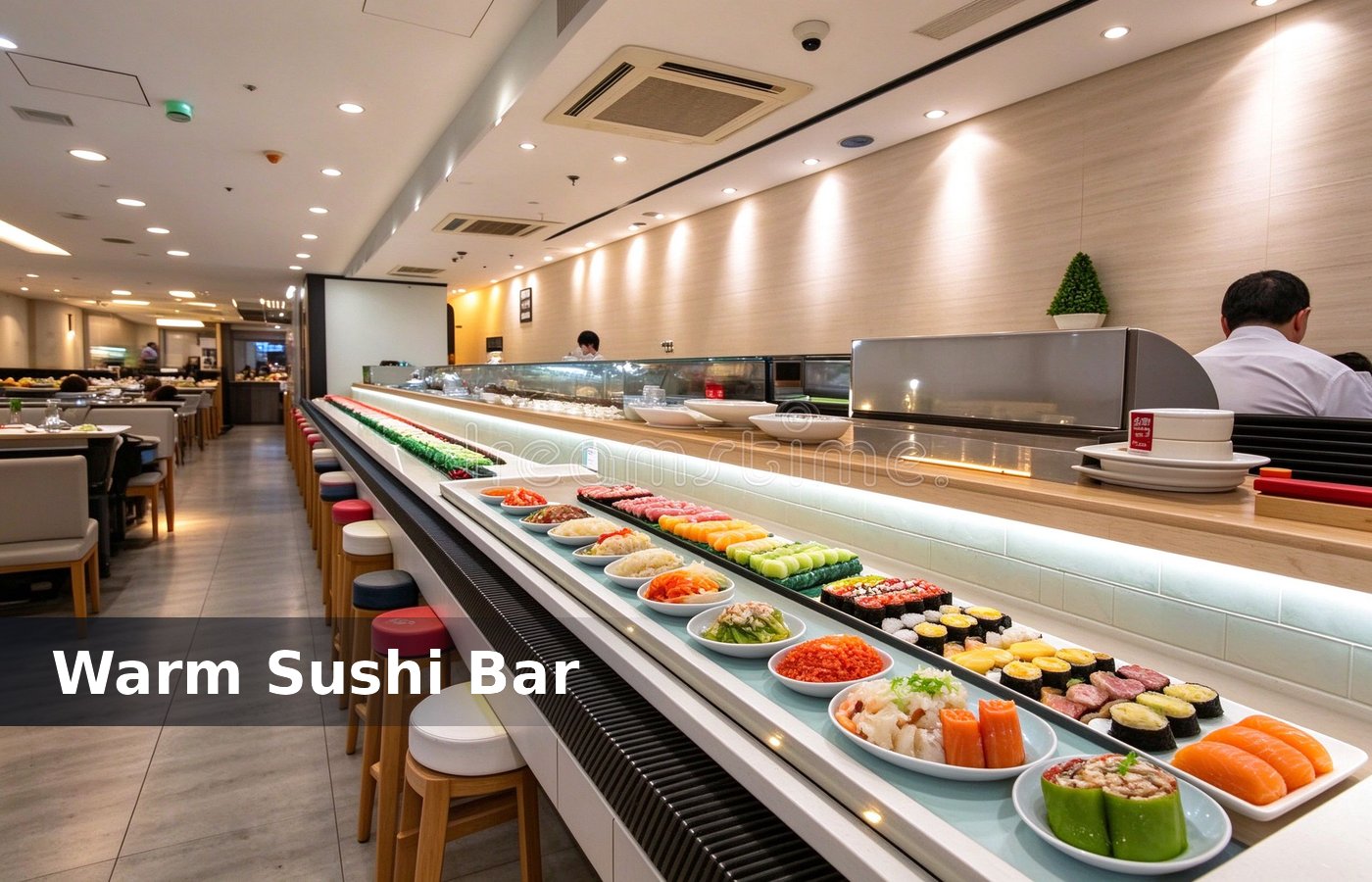
A conveyor that never stops is a conveyor that never sells stale fish. Set the belt at 4 to 6 m per minute so a plate passes a seat every 40 seconds and returns in 8 minutes. None of that shows in a render, which is why we mark the case depth and the belt speed on the plan.
Turn rate beats margin
A sushi counter lives on turns. A plate at 3 with a 45 percent margin sold 6 times a day earns more than a plate at 6 with 60 percent sold twice. Clients who settle it at design stage pay nothing extra, and clients who settle it after opening pay for a rebuild. The same rule holds for a food court bay and a station unit, with the belt return mattering more in a food court.
Design for the turn: a 1.8 m case showing 60 plates, a belt that returns in 8 minutes, and a menu that pushes the fast lines to the front. We keep the alternative on the same quotation, so the buyer compares a number instead of a preference. That number belongs on the kiosk drawing, because a case temperature agreed verbally rarely survives the first lunch rush.
Keep the case at 900 mm counter height. A case at 800 mm hides the front row of plates, and a hidden row stops moving and cash counters at 20 minutes. Most of these gaps appear on day one, which is exactly when the first plate hits the bin. Mark it on the drawing sheet too, so whoever services the belt later has the reference without guessing.
Six square metres is enough
A sushi kiosk needs 6 sqm: a 1.8 m case, a 600 mm rice bay, a 600 mm prep board and a 900 mm till. That kit serves 30 plates an hour with two staff. One lunch hour with a clicker settles the question faster than a week of drawing revisions. None of that shows in a render, which is why we mark the case depth and the belt speed on the plan.
A full restaurant at 120 sqm serves 90 an hour with 6 staff, and the kiosk does a third of the volume on a fifth of the floor. For a mall, that is the fixture materials. Clients who settle it at design stage pay nothing extra, and clients who settle it after opening pay for a rebuild.
Choose a case with front glass at 45 degrees. A vertical glass shows the plate but hides the cut face, and the cut face is what a customer judges. The same rule holds for a food court bay and a station unit, with the belt return mattering more in a food court. We keep the alternative on the same quotation, so the buyer compares a number instead of a preference.
Rice, the invisible cost
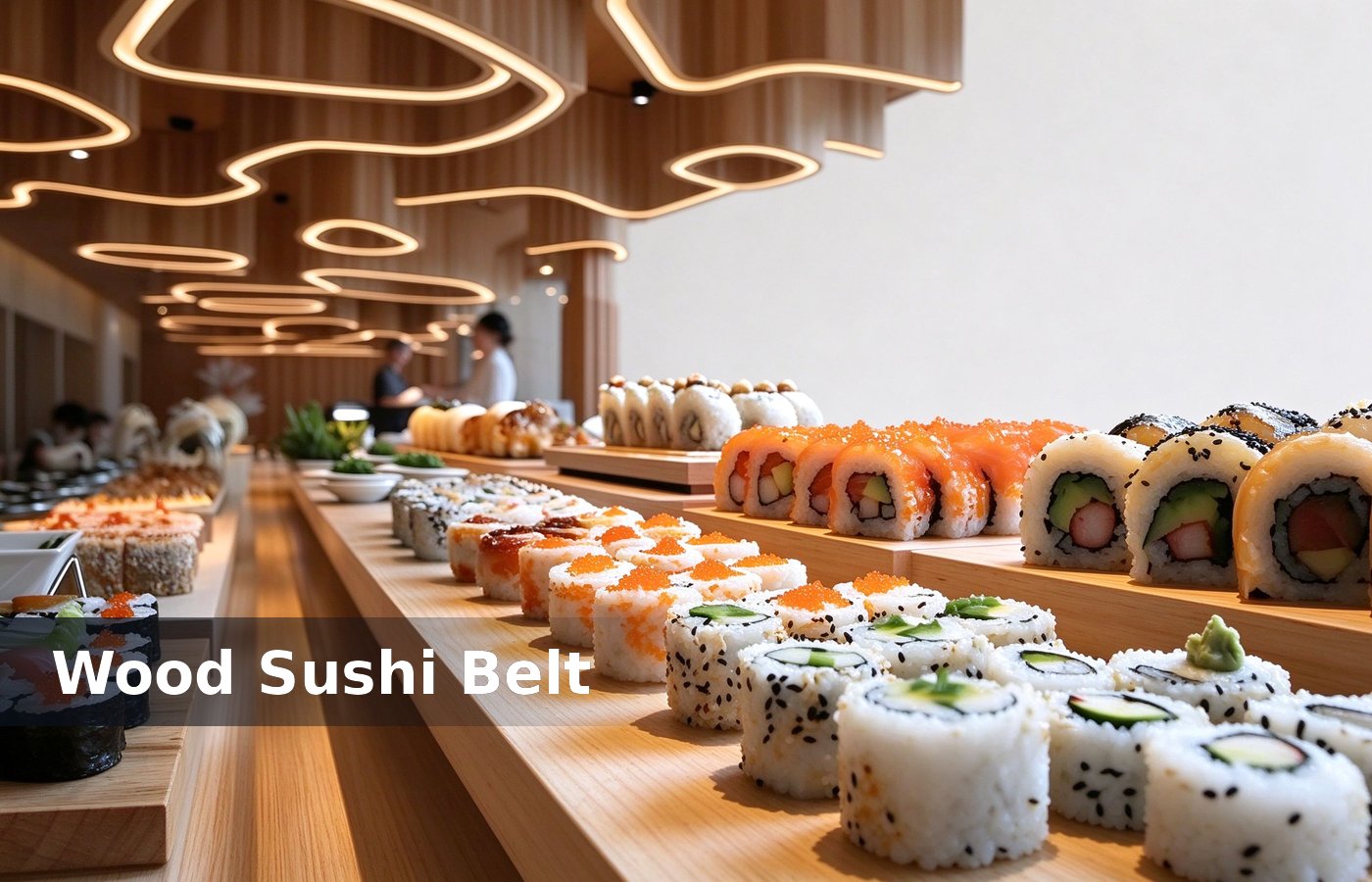
Rice at 40 C holds for 4 hours, and rice below 35 C turns hard and reads as yesterday. Plan a warmer at 40 C and cook 3 batches a day, not one. That number belongs on the kiosk drawing, because a case temperature agreed verbally rarely survives the first lunch rush. Most of these gaps appear on day one, which is exactly when the first plate hits the bin.
Watch the rice waste line. A kiosk wasting 15 percent rice is a kiosk cooking in batches that are too big, and a half batch costs nothing but retail displays. Mark it on the drawing sheet too, so whoever services the belt later has the reference without guessing. One lunch hour with a clicker settles the question faster than a week of drawing revisions.
Light that makes fish look fresh
Sushi light runs 3500 K with a CRI above 90 at 400 lux on the case. A light at 6500 K turns tuna grey, and grey tuna does not sell at display cases. None of that shows in a render, which is why we mark the case depth and the belt speed on the plan. Clients who settle it at design stage pay nothing extra, and clients who settle it after opening pay for a rebuild.
Keep the light off the ice. A spot on a bed of ice glares and hides the fish, so angle the fixture at 30 degrees from the case face. The same rule holds for a food court bay and a station unit, with the belt return mattering more in a food court. We keep the alternative on the same quotation, so the buyer compares a number instead of a preference.
Queue and the pick-up shelf
A kiosk needs a 900 mm pick-up shelf away from the belt. A customer who takes a plate from the belt and stands in the queue blocks the belt for everyone shop fixtures. That number belongs on the kiosk drawing, because a case temperature agreed verbally rarely survives the first lunch rush. Most of these gaps appear on day one, which is exactly when the first plate hits the bin.
Plan the till 1.2 m from the belt end. A till at the belt makes the last two seats unusable, and two seats at peak are 60 plates a day. Mark it on the drawing sheet too, so whoever services the belt later has the reference without guessing. One lunch hour with a clicker settles the question faster than a week of drawing revisions.
Depth the case at 500 mm and the belt at 300 mm. A 400 mm case holds one row and a 500 mm holds two, and two rows are what makes the 8 minute kiosk design. None of that shows in a render, which is why we mark the case depth and the belt speed on the plan.
What a kiosk sells in a lunch hour
The table below is a working model for a 6 sqm kiosk at a business mall, from 12 to 1 pm with two staff on the case. Clients who settle it at design stage pay nothing extra, and clients who settle it after opening pay for a rebuild. The same rule holds for a food court bay and a station unit, with the belt return mattering more in a food court.
| Line | Plates | Price |
|---|---|---|
| Salmon nigiri | 40 | 2.5 |
| Roll set | 25 | 4.0 |
| Combo box | 15 | 7.0 |
| Miso and tea | 30 | 1.5 |
Why it travels so well
Sushi fits a kiosk because the prep is cold, the service is dry and the menu is visual. No frying, no smoke, no grease duct, and a mall approves it faster than a grill. We keep the alternative on the same quotation, so the buyer compares a number instead of a preference. That number belongs on the kiosk drawing, because a case temperature agreed verbally rarely survives the first lunch rush.
The same case works in a station, an airport and a food court. That portability is why sushi counters appear in every market, and it is a layout property, not a cuisine property. Most of these gaps appear on day one, which is exactly when the first plate hits the bin. Mark it on the drawing sheet too, so whoever services the belt later has the reference without guessing.
Conclusion
5 C case, 40 C rice, 20 minutes on display and an 8 minute belt return. Those four numbers are the business, and the fit out exists to hold them. One lunch hour with a clicker settles the question faster than a week of drawing revisions. None of that shows in a render, which is why we mark the case depth and the belt speed on the plan.
Sell the cut, not the roll. A customer buys the look of the fish, and the case and the light are the only things that make it look right. Clients who settle it at design stage pay nothing extra, and clients who settle it after opening pay for a rebuild. The same rule holds for a food court bay and a station unit, with the belt return mattering more in a food court.
Keep the glass clean on both faces and wipe the dome every hour. A smudged dome at a sushi case reads as old fish, and a customer walks at the fixture systems. We keep the alternative on the same quotation, so the buyer compares a number instead of a preference. That number belongs on the kiosk drawing, because a case temperature agreed verbally rarely survives the first lunch rush.