
Three panel types cover most retail walls: slatwall, gridwall and pegboard. Each one takes a different hook, carries a different load and costs a different amount per square metre. The choice shapes the whole wall, from shelf pitch to how fast staff reset a display during a season change. This guide compares the three panels on load, hardware, cost and installation, and shows where each one fails.
The ranges below come from our own fixture line and from supplier quotes gathered through 2026. Read them as ranges, not as promises, because wall framing, local labour and freight move the final figure by a wide margin. The ranking still holds in every market we quote: each panel wins on one measure, and loses on another.
What Each Panel Really Is
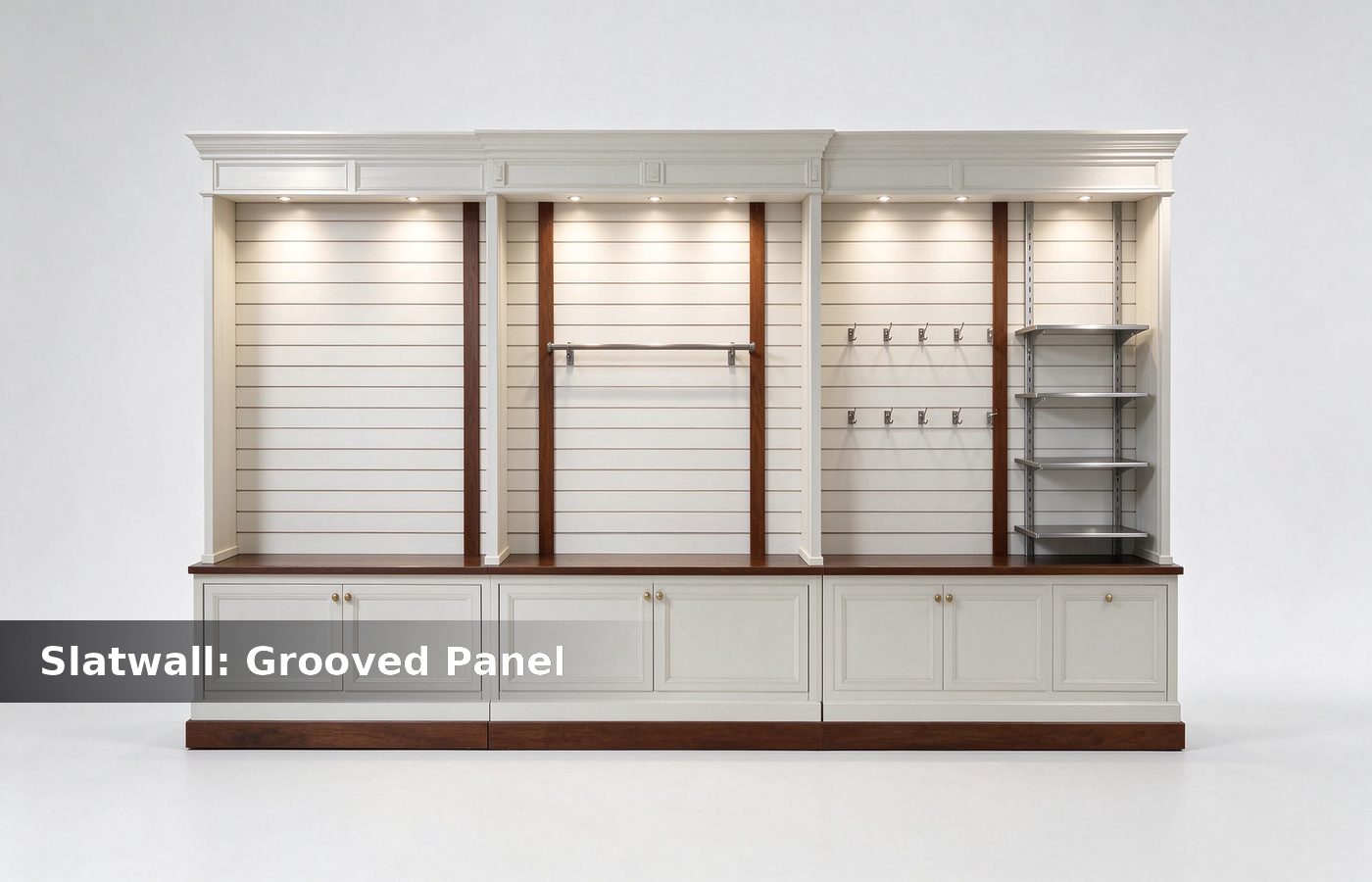
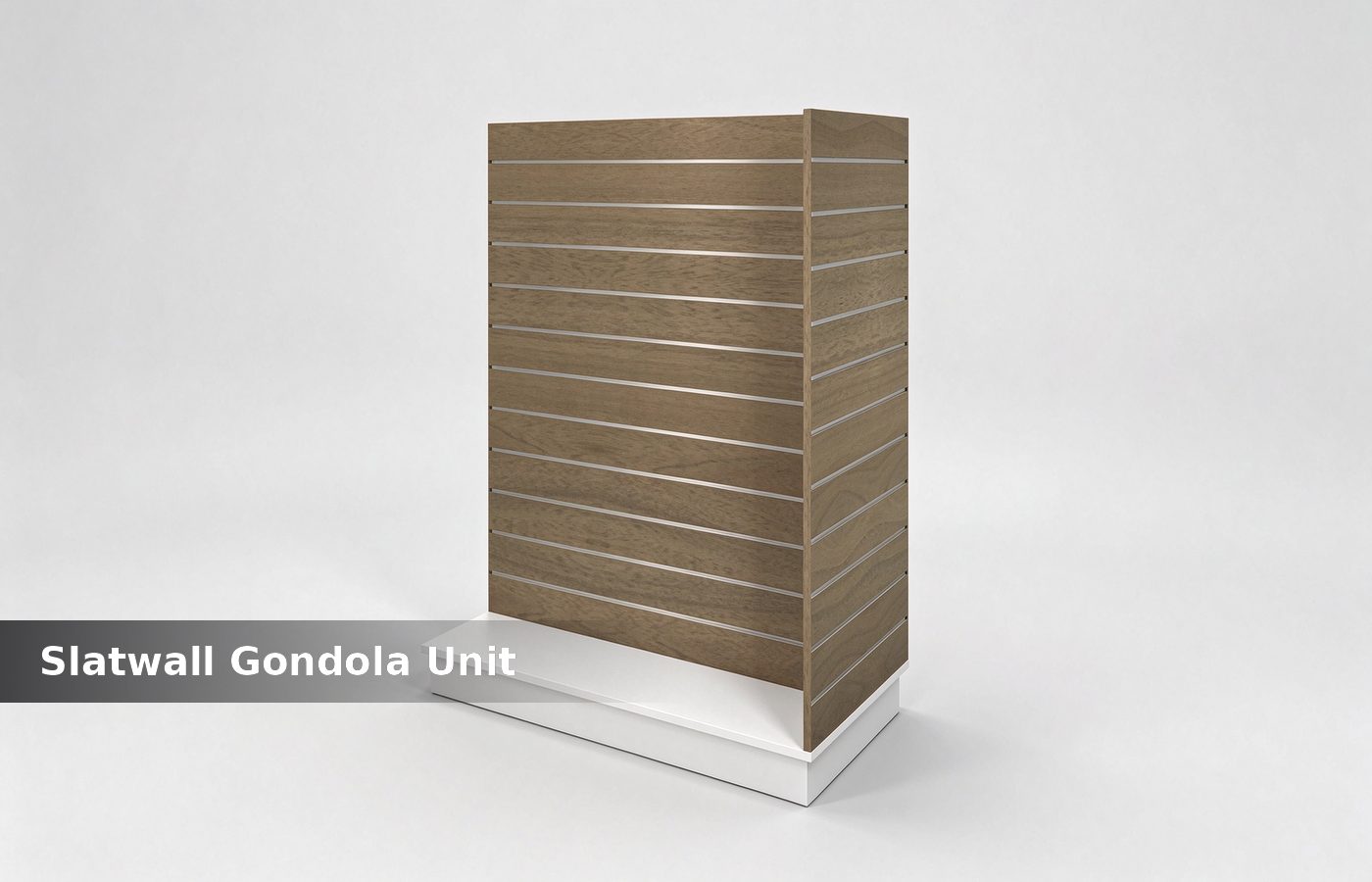
Slatwall is an MDF or plywood panel with horizontal grooves cut at a fixed pitch. A 100 mm pitch is the common size, and fittings clip into an aluminium insert inside the groove. The panel hides its brackets, so a finished wall reads as one clean surface with no visible hardware line. Sheet sizes run 1200 x 2400 mm and 1200 x 3000 mm, and edge trims close the ends.
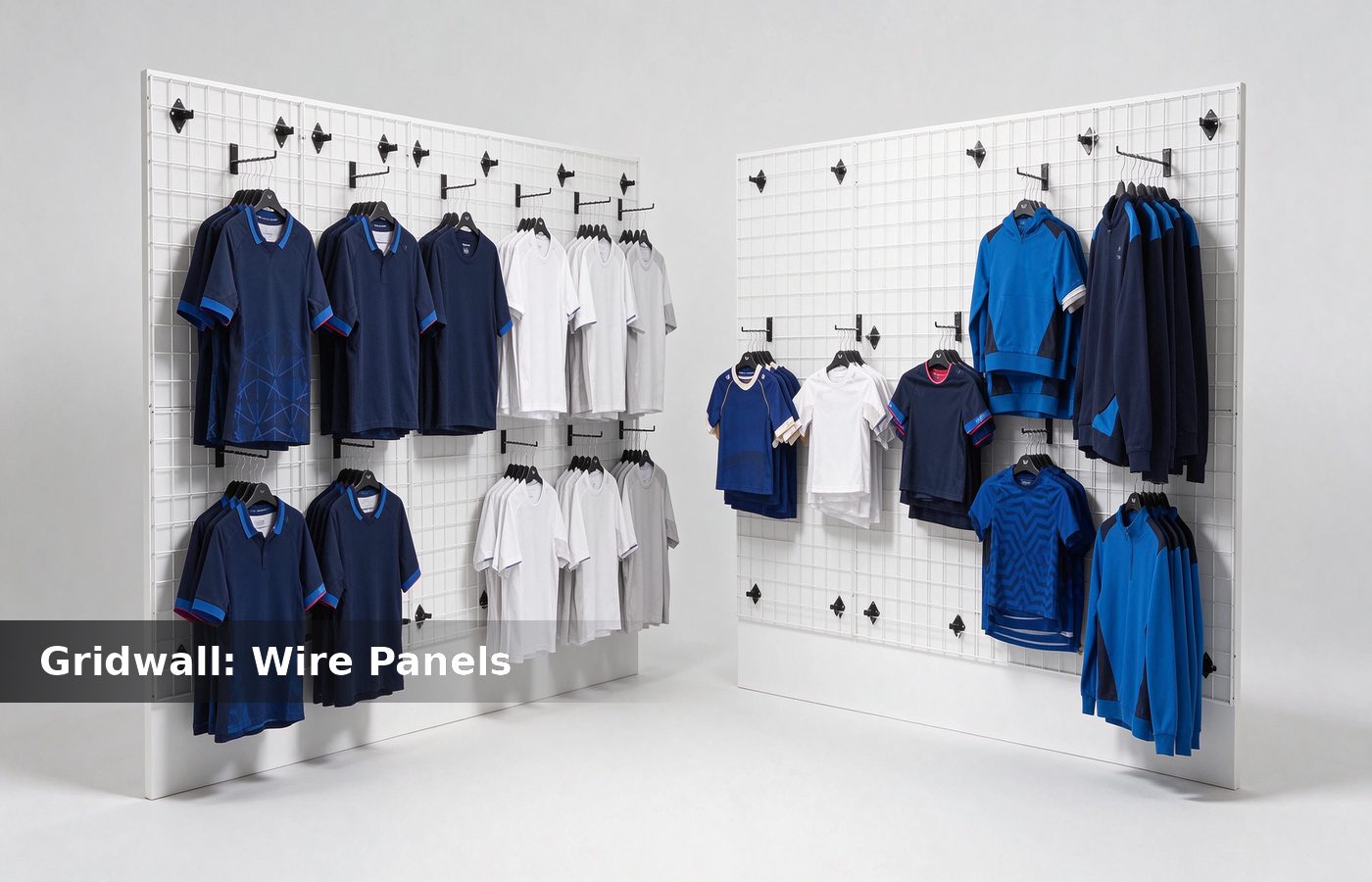
Gridwall is a welded wire grid, usually 75 mm squares, finished in black or white powder coat. Hooks, arms and shelves clip straight onto the wire, so a reset takes minutes rather than an afternoon. Nothing hides behind the panel, and the open grid shows the wall colour behind it. Panels come 600, 900 and 1200 mm wide, and two or three stack into a taller wall.
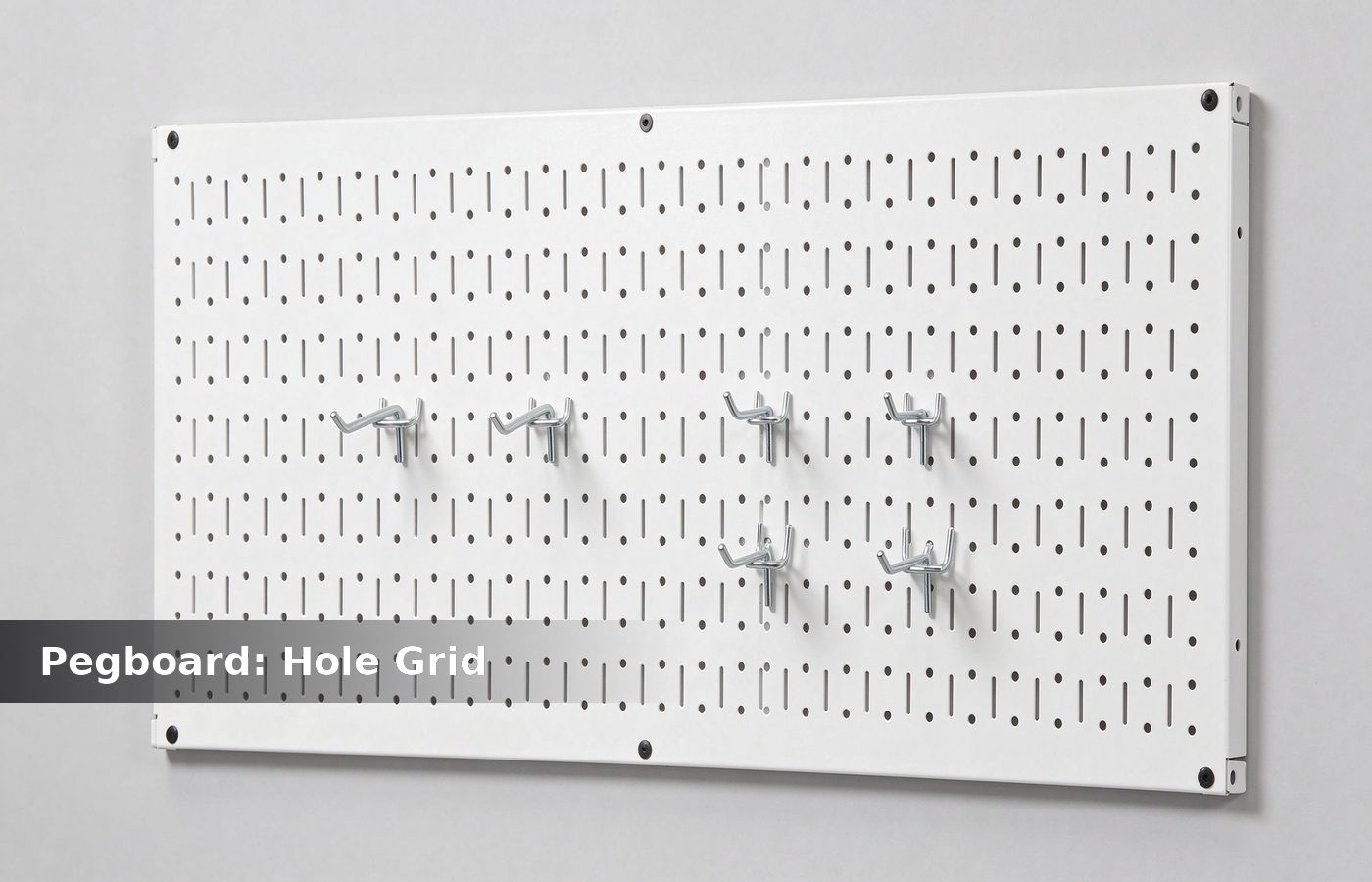
Pegboard is a thin steel or hardboard sheet with a regular hole pattern. Hooks push through the holes and lock with a back plate behind the sheet. It is the cheapest of the three per square metre, and the easiest sheet to swap when a wall changes use. Hole pitch runs 25 mm or 50 mm on most retail grades, and both accept the same hook shank.
Load Limits and Span
Slatwall carries the most weight of the three, because the groove spreads load along the panel face instead of one screw point. A 900 mm shelf holds 25-40 kg when the panel is fixed to battens at 400 mm centres. Above that figure, MDF starts to bow and the groove lip cracks at the ends. Steel-core slatwall adds roughly 30 percent to that limit.
Gridwall shelves hold 15-25 kg per 900 mm deck, and the wire bows long before the panel itself fails. Hooks take less: a waterfall arm carries about 12 kg of folded garments, and a straight hook about 15 kg. Pegboard sits lowest at 8-15 kg on a hook, or 20 kg on a short shelf fixed into two holes.
Span matters as much as load, and most failures start with a long shelf. Keep shelf runs under 1200 mm on all three panels, and add a centre upright on anything longer. Furniture, tools and heavy stock belong on retail shelving with steel uprights, not on a wall panel chosen for finish. A 1500 mm shelf on gridwall will sag within a month under normal stock.
Fitting Options and Hardware
Slatwall accepts the widest range of fittings: shelves, hangrails, shoe decks, acrylic bins, sign holders and lockable glass boxes. One groove takes one fitting type at a time, so a mixed wall needs a plan before the order. Buy fittings with the same insert depth as the panel, or the clip sits loose and the shelf tilts.
Gridwall runs on a smaller hardware set. Standard pieces are waterfall arms, straight hooks, bin baskets and wire shelves, and every one clips at the same wire spacing. Setup is quick for the same reason, and a seasonal change needs no new fittings. The open grid also lets a shopper see the wall behind, which suits light stock on a small floor.
Pegboard hardware is the cheapest and the most limited. Hooks come in 100, 150 and 200 mm lengths, shelves are small, and heavier items need a back plate to spread the load. Plan pegboard walls for countertop displays and small parts, not for bulk cartons or stacked stock. Order hooks in boxes of fifty, and check the shank length against the sheet thickness.
Cost Per Square Metre
Cost is where the three panels separate fastest. A painted MDF slatwall sheet with aluminium inserts lands at USD 55-95 per square metre in 2026, before freight. A wire gridwall panel runs USD 25-45, and a steel pegboard sheet runs USD 18-40. Those are panel prices only, not fitted prices. Freight adds roughly 10 to 18 percent on top, depending on carton size and port.
Hardware changes the total more than the sheet does, and this is the line most buyers miss. A slatwall wall needs fewer fittings because each shelf uses one bracket pair and no back plate. A gridwall wall needs more hooks for the same stock count, and hooks add up fast at volume. Price both lists side by side before comparing panels.
Add installation to the same sheet. Slatwall needs battens, a level line and edge trims, so labour runs USD 20-35 per square metre. Gridwall and pegboard fix straight to a wall or a rail, at roughly USD 12-20 per square metre. A cheap panel with costly prep is not the cheaper wall at the end of the job.
| Panel | Pitch | Shelf Load | Cost per m2 (2026) |
|---|---|---|---|
| Slatwall | 100 mm groove | 25-40 kg | USD 55-95 |
| Gridwall | 75 mm wire | 15-25 kg | USD 25-45 |
| Pegboard | 25-50 mm holes | 8-15 kg | USD 18-40 |
Installation and Wall Prep
Slatwall panels are heavy and want a flat base. Fix 18 mm battens to the studs at 400 mm centres, then screw the sheets through the battens into the wall. Leave a 5 mm gap at the floor so a mop can pass and damp does not sit under the panel. An out-of-line wall shows at the top edge, so check the level twice before the last sheet goes up.
Gridwall hangs from a top rail or stands on a base leg, and a rail wall needs two fixing points per panel into studs or a concrete anchor. Pegboard is the lightest and the least fussy: one sheet, four screws and a trim strip, with a back plate on any hook that carries real weight. Concrete anchors need a longer setting time than stud screws, so plan that wall a day earlier and keep the drill on site.
All three panels need power planned before fixing starts. Light bars and case locks and lights sit above or inside the wall, and a socket behind a finished panel is hard to add later. Draw the lighting on the wall plan first, and run the cable while the battens are still open. Leave a 100 mm service gap along the top, so a driver can be swapped without lifting a panel.
Which Panel Suits Which Shop
Match the panel to the stock first, then to the budget, and the decision takes about five minutes. Slatwall suits shoes, bags, folded knitwear and homeware walls, where one shelf carries several kilos and the finish has to look built in. Gridwall suits fashion walls, cap and accessory runs, and any shop that resets the wall every week.
Pegboard suits hardware, auto parts, phone accessories and small electronics, where hooks and small bins do the work and the stock is light. A hook wall also suits a mall kiosk bay, because the stock is light, the bay is small and the reset is cheap between promotions. Keep the hook count low, and let two small shelves carry the weight instead of ten hooks.
Watch the traffic pattern as well as the stock. A wall beside a fitting room needs the firmest panel, because shoppers lean on it while they wait. A wall behind a display counter can take a lighter panel, since the counter carries the load and the wall only shows stock. Watch the queue as well, because a wall behind a till takes constant leaning through a busy day.
Mixing Panels in One Store
Most shops end up mixing two panels, and that works when the transition is planned rather than improvised. Run slatwall on the main selling wall and pegboard on a stock or service wall. Line the service wall with store showcases where stock has to be seen, not just stored. Keep the top line and the base line level across both, so the two walls read as one continuous run from the door.
Use a steel upright or a trim post between the panels. It hides the joint, gives the lighter panel a fixing point, and stops one wall from drifting out of line. A mixed wall also lets a shop test a layout on one bay before committing the whole store to a panel type. Trim posts cost less than a repair on a wall that has drifted out of line.
Maintenance and Swapping
Slatwall needs little care beyond a routine check. Vacuum the grooves each quarter, and check the insert screws twice a year, because a loose insert drops a shelf. Wipe spills at once, since moisture swells MDF at the groove lip. A damaged groove can be repaired with a new insert rather than a new sheet.
Gridwall and pegboard are simpler still. Wire grids take a wipe and a touch of paint on chips, and nothing sits behind the wire to collect dust. Pegboard sheets are cheap enough to replace when a wall changes use, so keep two spare sheets on site for a fast swap over a weekend. Keep one spare trim strip as well, because the trims take most of the knocks.
Every panel needs a loading habit, not just a load rating. Move heavy stock to the lowest shelf, keep shelf runs short, and re-check fittings after a busy season. A wall that carries its load for years is a wall that was planned at the fitting stage, not the week before opening. Keep a fitting schedule on the wall, so a new starter does not overload the top shelf.
Conclusion: Choose Load Then Cost
Rank the three panels on what the wall must do, and the answer is rarely a tie. Take slatwall when a shelf has to carry weight and the finish has to look built in. Take gridwall when stock is light, the wall resets often and the budget is tight. Take pegboard when hooks do the work and the stock is small.
Then compare the full cost, including fittings, battens and labour. A cheaper sheet with costly prep can lose to a dearer sheet that fixes straight to the wall. Write the fitting list first, price it at volume, and the panel choice usually settles itself. Set a fitting budget per bay, so the wall does not grow past the quote.
Panel choice should follow load and budget, not habit. Our Shenzhen factory builds retail store fixtures in all three panel types, plus display cabinets and glass counters for the same wall. We cut groove slots, hole pitch and finish to your drawing, and ship a mixed wall as one order. Send your wall sizes through our contact page and we will quote both panel options.