
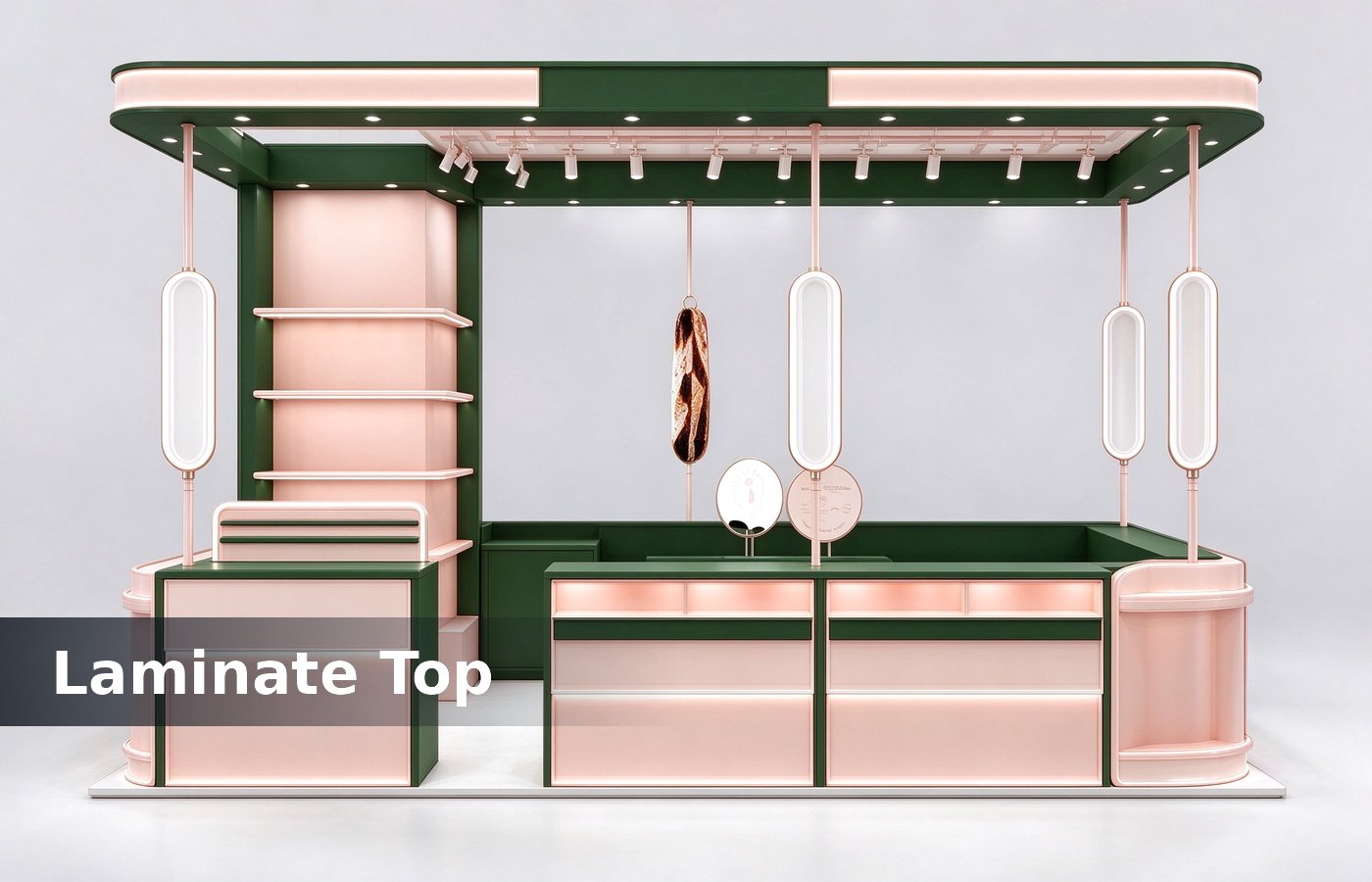
Four surfaces, four failure modes
A cosmetic kiosk is four surfaces doing four jobs, and each one fails in its own way. The working top takes spills and acetone, the frame takes knocks at knee height, the acrylic takes gloss and scratches, and the light box takes heat and dust. Most of these failures appear in year two, which is exactly when a mall lease is up for renewal.
Specifying one material across all four is the reason most kiosks look aged by year two. The right panel for a fascia is the wrong panel for a working top, and the wrong panel for a plinth is expensive to correct once the crates arrive at the mall. Mark it on the crate label too, so whoever repairs it later has the reference without hunting a folder.
Below is what we specify for a mall cosmetic kiosk in 2026, with the failure each choice is meant to avoid and cosmetic counters. Two minutes with a sample settles the question faster than an hour of specification reading. None of that shows in a render, which is why we check it on a sample panel before the run is released.
Laminate on the working top
Laminate wins on any surface that meets product, hands or cleaning chemicals. A high pressure laminate face resists acetone, alcohol and remover for years, where a painted MDF top loses its film along the edge within one trading season. Clients who settle it at design stage pay nothing extra, and clients who settle it after opening pay for a rebuild.
Grade matters. A 0.8 mm laminate on a 18 mm plywood core is the commercial standard, while a 0.6 mm laminate on MDF is the version that lifts at the joint after a summer of air conditioning cycling on and off. The same rule holds for a fixed kiosk and for a demountable one, with fixing points mattering more on the demountable build.
Seal the joint between the laminate top and the back panel with a silicone bead, not with edge tape. Tape bridges the gap for a month and then collects powder in the crease, which is kiosk materials while waiting at the till. We keep the alternative on the same quotation, so the buyer compares a number instead of a preference.
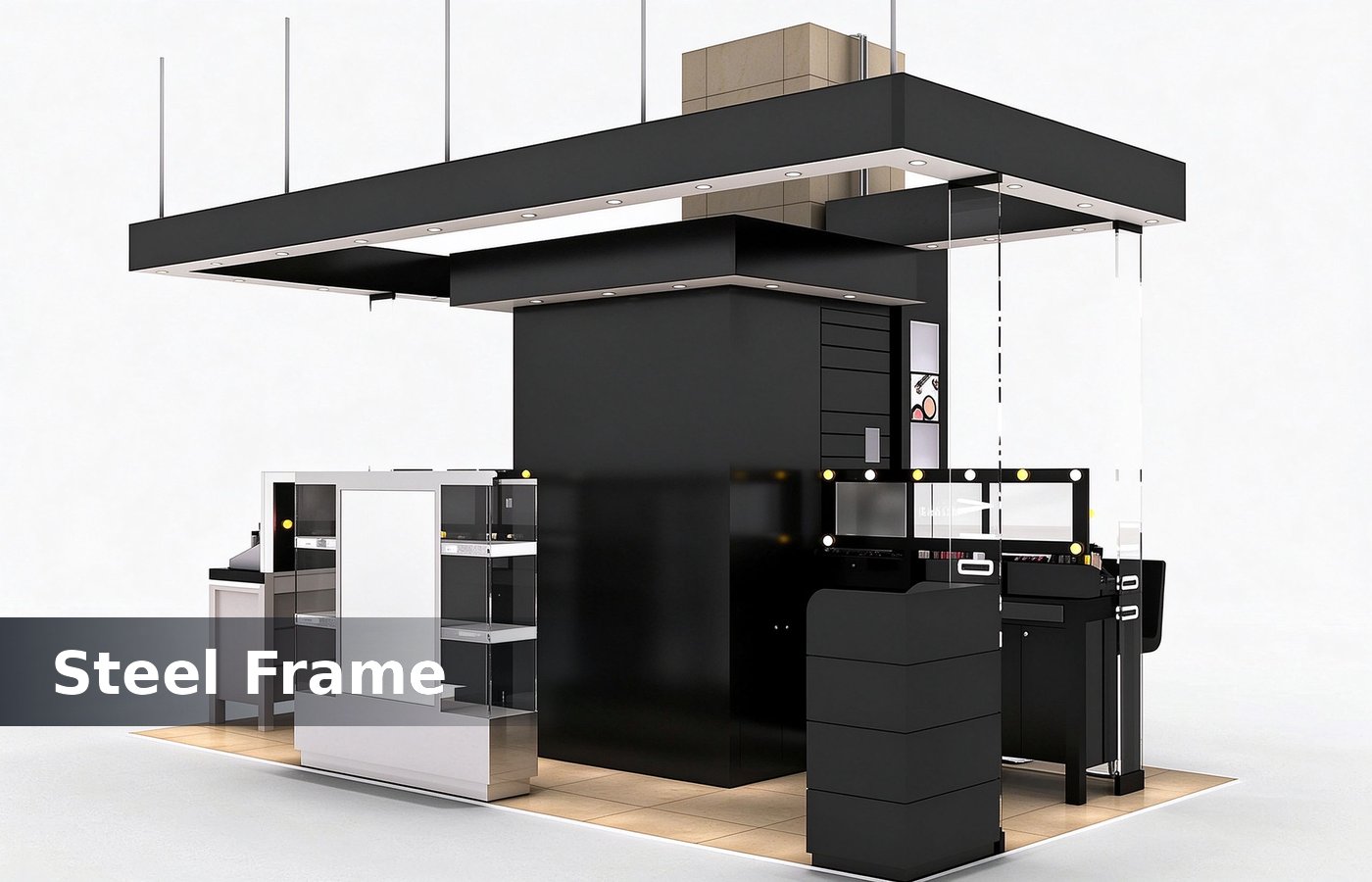
Powder coated steel frames
Powder coated steel suits the frame, the plinth and the counter carcass, because those parts are kicked by trolleys and cleaned by machines. A 60 micron coating on 1.2 mm steel takes that abuse and counters and towers after three years of mall traffic. That figure belongs on the drawing, because a layout agreed verbally rarely survives a trip through production.
The alternative, a laminated MDF frame, saves about a tenth of the cost and loses the argument at the base. Water reaches the bottom rail on every mop, and a laminated rail absorbs it through the cut edge that nobody seals at the factory. Most of these failures appear in year two, which is exactly when a mall lease is up for renewal.
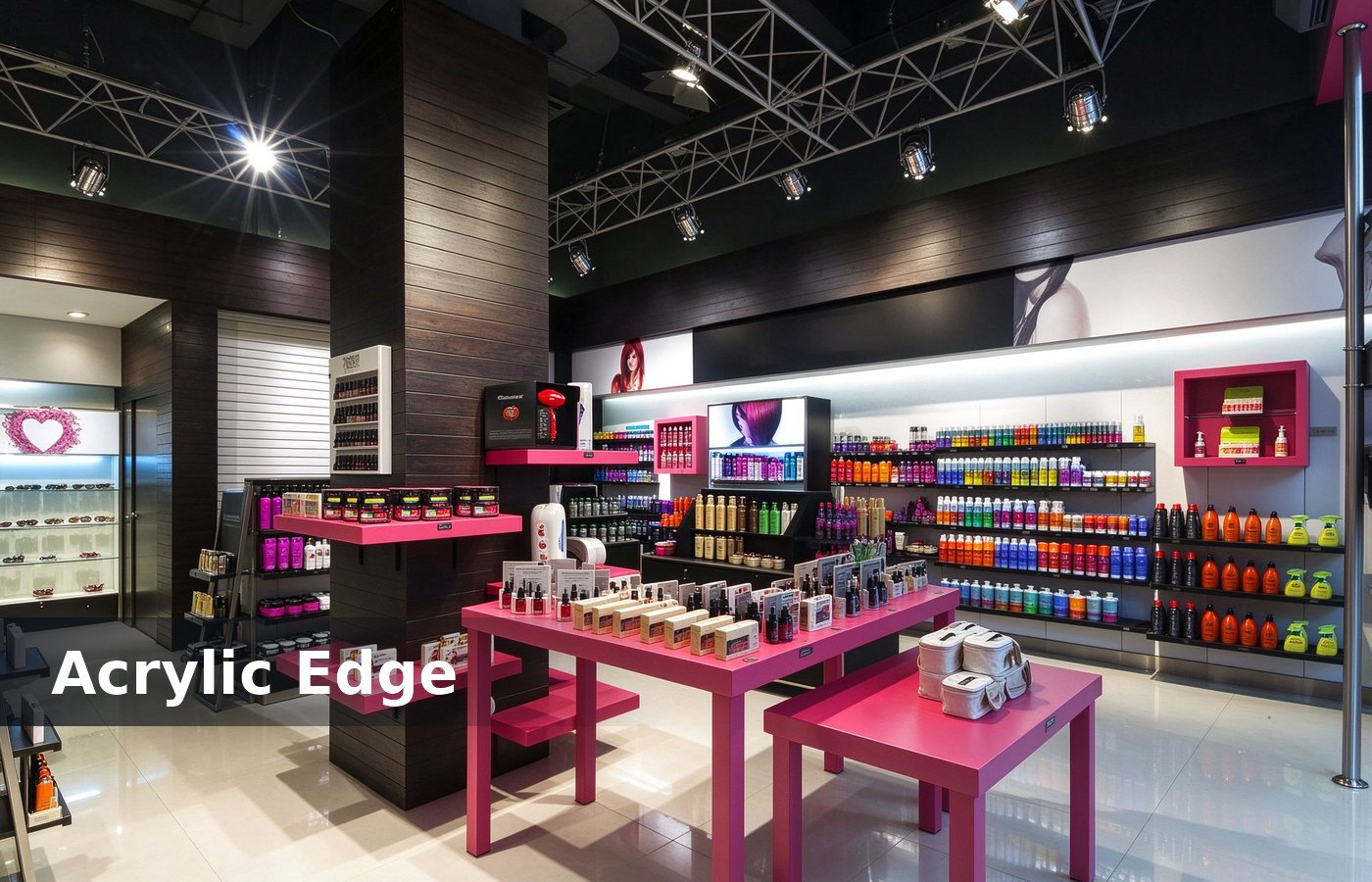
Acrylic where gloss matters
Acrylic suits risers, tray dividers, shelf talkers and the small blocks that lift a tester to eye level. Cast acrylic at 8 mm polishes to a glass like edge, cuts cleanly on a laser and carries a colour through the whole thickness. Mark it on the crate label too, so whoever repairs it later has the reference without hunting a folder. Two minutes with a sample settles the question faster than an hour of specification reading.
It also scratches, and that is the trade. A riser on a busy tester shelf collects hairline marks in months, so we price acrylic risers as consumables and quote a spare set with the kiosk rather than glass showcases. None of that shows in a render, which is why we check it on a sample panel before the run is released.
Never put acrylic next to acetone. A remover bottle knocked over on a counter reaches a riser in seconds and turns the face cloudy, and no polish brings it back. Glass or laminate belongs on the surfaces that meet chemicals. Clients who settle it at design stage pay nothing extra, and clients who settle it after opening pay for a rebuild.
MDF only where nobody touches
MDF is fine on fascias, back panels behind the stock and any surface that is painted, flat and out of reach. It routes cleanly, holds a sprayed finish without a visible seam and costs less than plywood for the same painted look. The same rule holds for a fixed kiosk and for a demountable one, with fixing points mattering more on the demountable build.
Keep it away from hinges, drawer boxes and plinths. Those three are where a screw has to hold under load and where water arrives first, and an MDF door that loses a hinge thread cannot be repaired on site shop fixtures. We keep the alternative on the same quotation, so the buyer compares a number instead of a preference.
What stains and what cleans
Cosmetic stock stains in predictable ways, and the table below is the one we hand to a client who asks why a surface failed. Every entry comes from a service visit rather than from a brochure. That figure belongs on the drawing, because a layout agreed verbally rarely survives a trip through production. Most of these failures appear in year two, which is exactly when a mall lease is up for renewal.
Match the material to the stain rather than to the colour. A white laminate that cleans in ten seconds beats a beautiful matte paint that needs a specialist after kiosk design. Mark it on the crate label too, so whoever repairs it later has the reference without hunting a folder. Two minutes with a sample settles the question faster than an hour of specification reading.
| Surface | Best material | Failure to avoid |
|---|---|---|
| Working top | HPL laminate on plywood | Acetone lifting the film |
| Plinth and frame | Powder coated steel | Water at the bottom rail |
| Risers and trays | Cast acrylic 8 mm | Clouding from remover |
| Fascia and back panel | MDF, sprayed | Chips at the corner |
Edge sealing decides the life
Every panel has a cut edge, and that edge is the entry point for everything that kills a kiosk. Acetone, mop water and humidity all arrive at the same place, and a sealed edge turns all three away for the price of a bead of glue. None of that shows in a render, which is why we check it on a sample panel before the run is released.
We tape and trim laminate edges and seal every cut with a polyurethane edge band, then check it by hand before crating. A factory that skips the step saves two dollars and creates a failure that shows up in the client report retail displays. Clients who settle it at design stage pay nothing extra, and clients who settle it after opening pay for a rebuild.
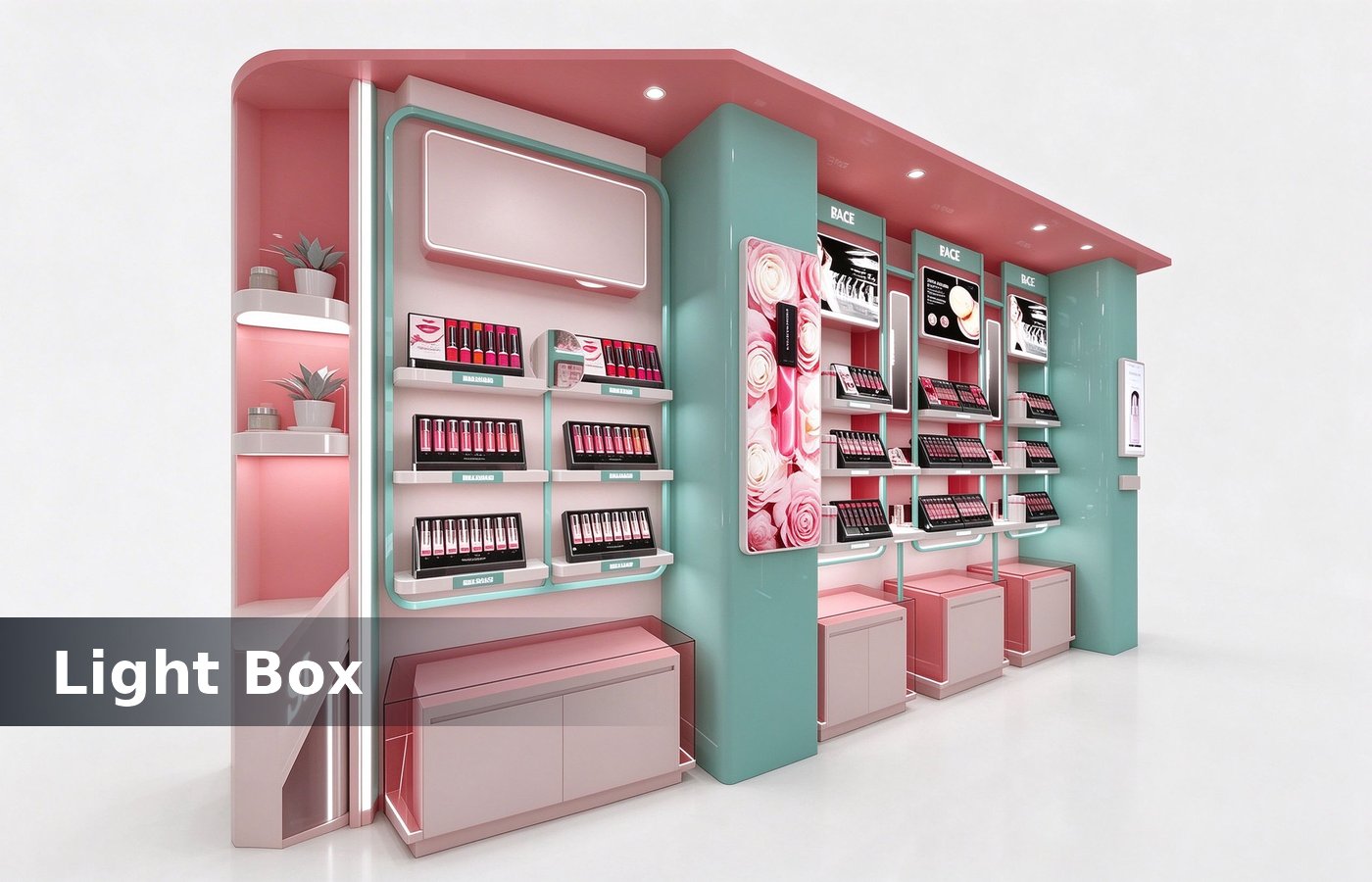
Light box faces and heat
A light box adds heat to a very small volume, and the face material has to take it. Fabric faces stretch and sag above 45 degrees, so we use a tension frame with a 400 mm grid and an LED module rated for enclosed use rather than a bare strip. The same rule holds for a fixed kiosk and for a demountable one, with fixing points mattering more on the demountable build.
Acrylic faces yellow under heat and UV, and a kiosk near a mall entrance takes both. A 3 mm diffused acrylic with a UV stable grade lasts about three years, while a cheap extruded sheet shows a visible shift in eighteen months on a white fascia. We keep the alternative on the same quotation, so the buyer compares a number instead of a preference.
Ask for the lux reading at the face, not the wattage of the module. A box that reads 3000 lux at the face is bright enough for a mall corridor, and a spec sheet quoting 12 watts tells the buyer nothing about cash counters. That figure belongs on the drawing, because a layout agreed verbally rarely survives a trip through production.
Cost ladder in 2026
Factory terms, fob Shenzhen, for a three metre cosmetic kiosk: laminate top adds about 8 percent, powder coated steel frame about 18 percent, cast acrylic risers about 6 percent, and a tension fabric light box about 9 percent against a printed panel. Most of these failures appear in year two, which is exactly when a mall lease is up for renewal.
Choosing correctly at quote stage costs nothing extra, because the budget is the same and the mix changes. Choosing again after a failure costs a closed kiosk, a crate and a technician, which is the number kiosk materials. Mark it on the crate label too, so whoever repairs it later has the reference without hunting a folder. Two minutes with a sample settles the question faster than an hour of specification reading.
What to send us
Send the product list with pack sizes, the cleaning chemicals used in store, and the mall frontage limit. Three items let a factory choose the material mix without a sample round, and they remove the guesswork that causes most first year failures. None of that shows in a render, which is why we check it on a sample panel before the run is released.
Add a photo of the current kiosk if there is one. A picture of a lifted edge or a cloudy riser tells us more about the store routine than a page of specification, and it usually changes what we quote. Clients who settle it at design stage pay nothing extra, and clients who settle it after opening pay for a rebuild.
Conclusion
Laminate for the top, steel for the frame, acrylic for the gloss, MDF for the fascia, and seal every edge that gets cut. That mix reads as a premium kiosk and survives the chemicals that come with cosmetic retail. The same rule holds for a fixed kiosk and for a demountable one, with fixing points mattering more on the demountable build.
We build cosmetic kiosks in Shenzhen with that material mix as standard, quote the alternatives on the same sheet, and ship a maintenance note that names the cleaner each surface can take. We keep the alternative on the same quotation, so the buyer compares a number instead of a preference. That figure belongs on the drawing, because a layout agreed verbally rarely survives a trip through production.