
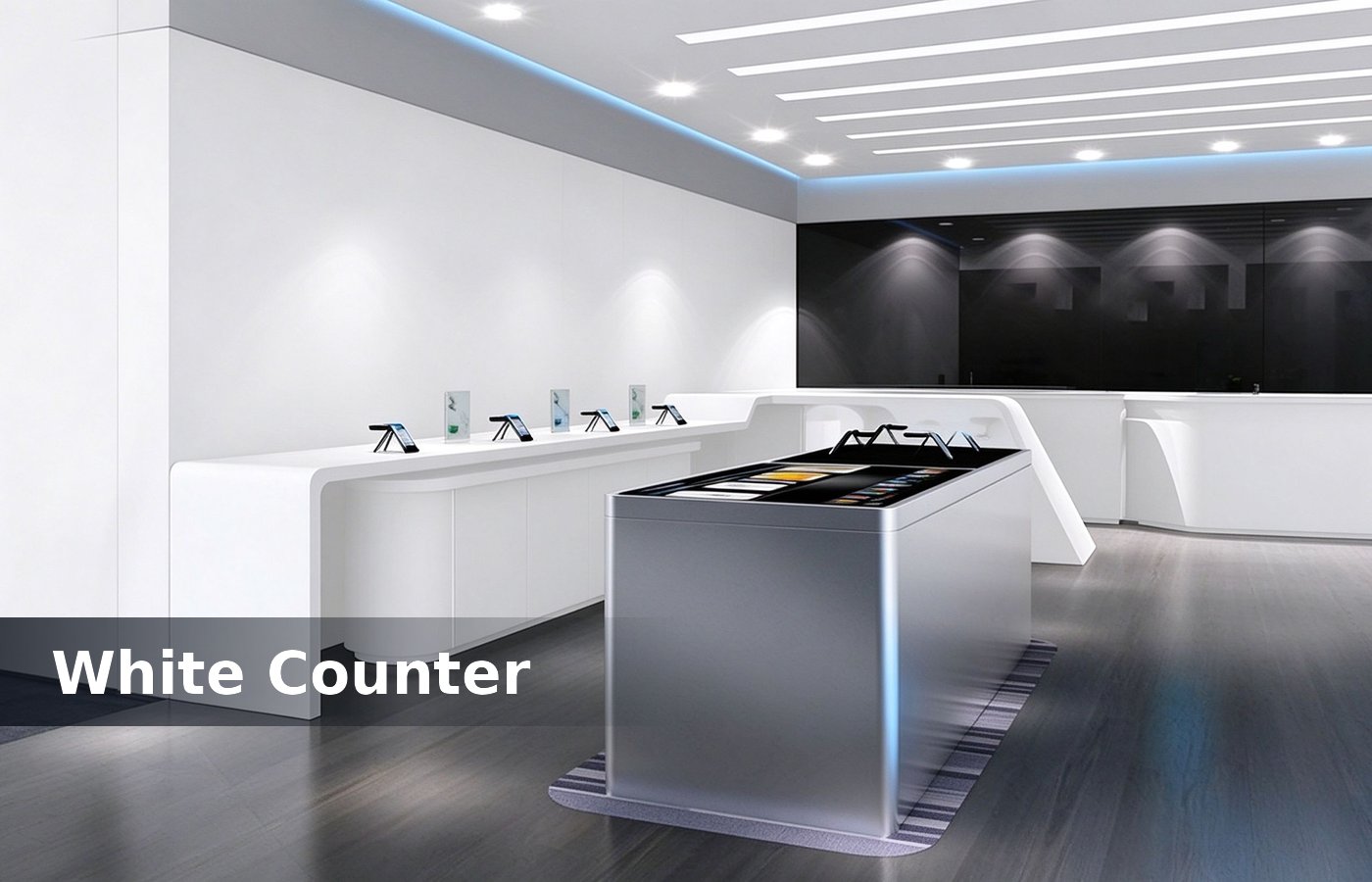
Slatwall does the heavy lifting
Phone shops sell small items in large numbers, so most of the wall is a slatwall, not a glass case. Slatwall at 100 mm pitch takes hooks, shelves and lit panels on the same surface. None of that shows in a render, which is why we check the slatwall pitch on a sample bay first. Clients who settle it at design stage pay nothing extra, and clients who settle it after opening pay for a rebuild.
A 3 m slatwall run with four shelves holds about 180 accessory SKUs. A shop that tries to show the same number in glass towers needs three times the floor and twice the walk. The same rule holds for a mall unit and a street shop, with the security run mattering more in a mall. We keep the alternative on the same quotation, so the buyer compares a number instead of a preference.
Fix the slatwall to a stud wall, not to plasterboard. A loaded shelf of power banks weighs 14 kg per 600 mm, and a panel fixed to plasterboard kiosk design. That number belongs on the drawing, because a fixture count agreed verbally rarely survives the first stock delivery. Most of these gaps appear on opening day, which is exactly when the first trade-in arrives.
Glass towers for phones
Live phones sit in glass towers on a counter, at 950 mm, with a security cable per phone. A tower shows six to eight handsets, so the launch range needs two towers. Mark it on the drawing sheet too, so whoever adds a bay later has the reference without guessing. One hour with a tape measure settles the question faster than a week of drawing revisions.
Angle the phone face 20 degrees toward the customer. A phone flat on a counter reflects the ceiling, and a screen that reflects the ceiling cannot be compared with the phone glass showcases. None of that shows in a render, which is why we check the slatwall pitch on a sample bay first. Clients who settle it at design stage pay nothing extra, and clients who settle it after opening pay for a rebuild.
The accessory wall
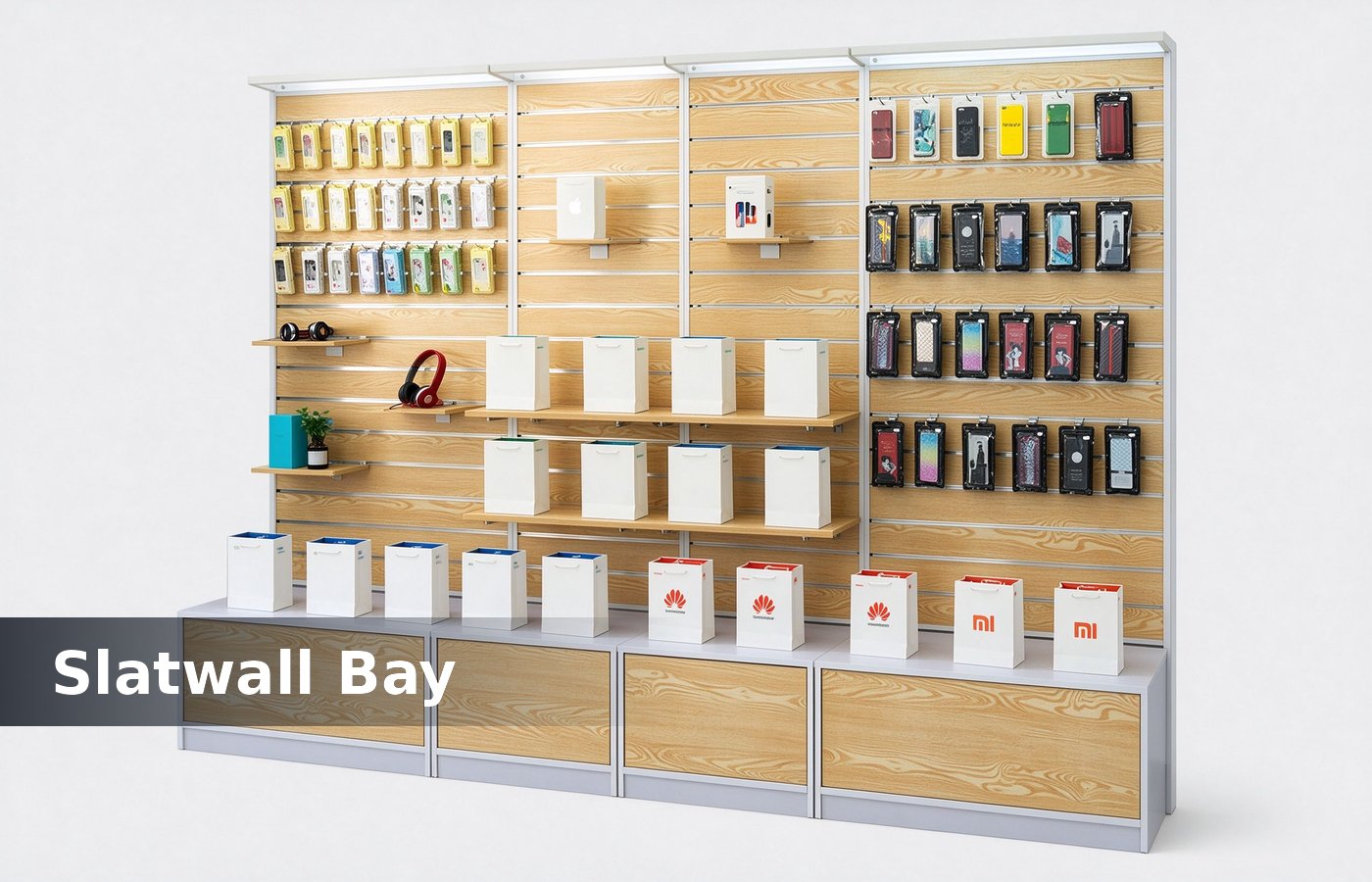
Accessory walls run on 180 mm pitch for cases and 240 mm for audio. Cases sell from a wall at eye level, and audio sells from a shelf at chest level, so plan two pitch bands on one wall. The same rule holds for a mall unit and a street shop, with the security run mattering more in a mall.
Keep the top shelf for slow lines and the bottom shelf for bulk. A wall that puts 20 dollar cables at eye level and 200 dollar headphones at the floor sells the cheap line all day. We keep the alternative on the same quotation, so the buyer compares a number instead of a preference. That number belongs on the drawing, because a fixture count agreed verbally rarely survives the first stock delivery.
Repair counter and queue
A repair counter is a separate counter from the sales counter, and it needs 1.4 m of run with a bench behind it. Mixing the two puts a queue of broken screens beside a customer buying a new phone. Most of these gaps appear on opening day, which is exactly when the first trade-in arrives. Mark it on the drawing sheet too, so whoever adds a bay later has the reference without guessing.
Set the repair counter at 1050 mm with a 350 mm riser. A technician needs the riser to keep a screw tray and a heat mat above the customer side, and a flat counter loses both. One hour with a tape measure settles the question faster than a week of drawing revisions. None of that shows in a render, which is why we check the slatwall pitch on a sample bay first.
Leave 1.2 m in front of the repair counter. A repair queue that meets the sales counter blocks the accessory wall behind it, and that wall is usually the shop fixtures. Clients who settle it at design stage pay nothing extra, and clients who settle it after opening pay for a rebuild. The same rule holds for a mall unit and a street shop, with the security run mattering more in a mall.
Security and lock cases
Phone stock is small, valuable and easy to move. Plan a lock case for the boxed stock at 1.2 m, plus a cable alarm on every live phone, and a lock drawer at the counter for trade-in handsets. We keep the alternative on the same quotation, so the buyer compares a number instead of a preference. That number belongs on the drawing, because a fixture count agreed verbally rarely survives the first stock delivery.
Run the security cabling behind the slatwall. A cable that runs across a counter is a cable a customer pulls, and a pulled cable takes a phone display cases. Most of these gaps appear on opening day, which is exactly when the first trade-in arrives. Mark it on the drawing sheet too, so whoever adds a bay later has the reference without guessing.
Light and phone screens
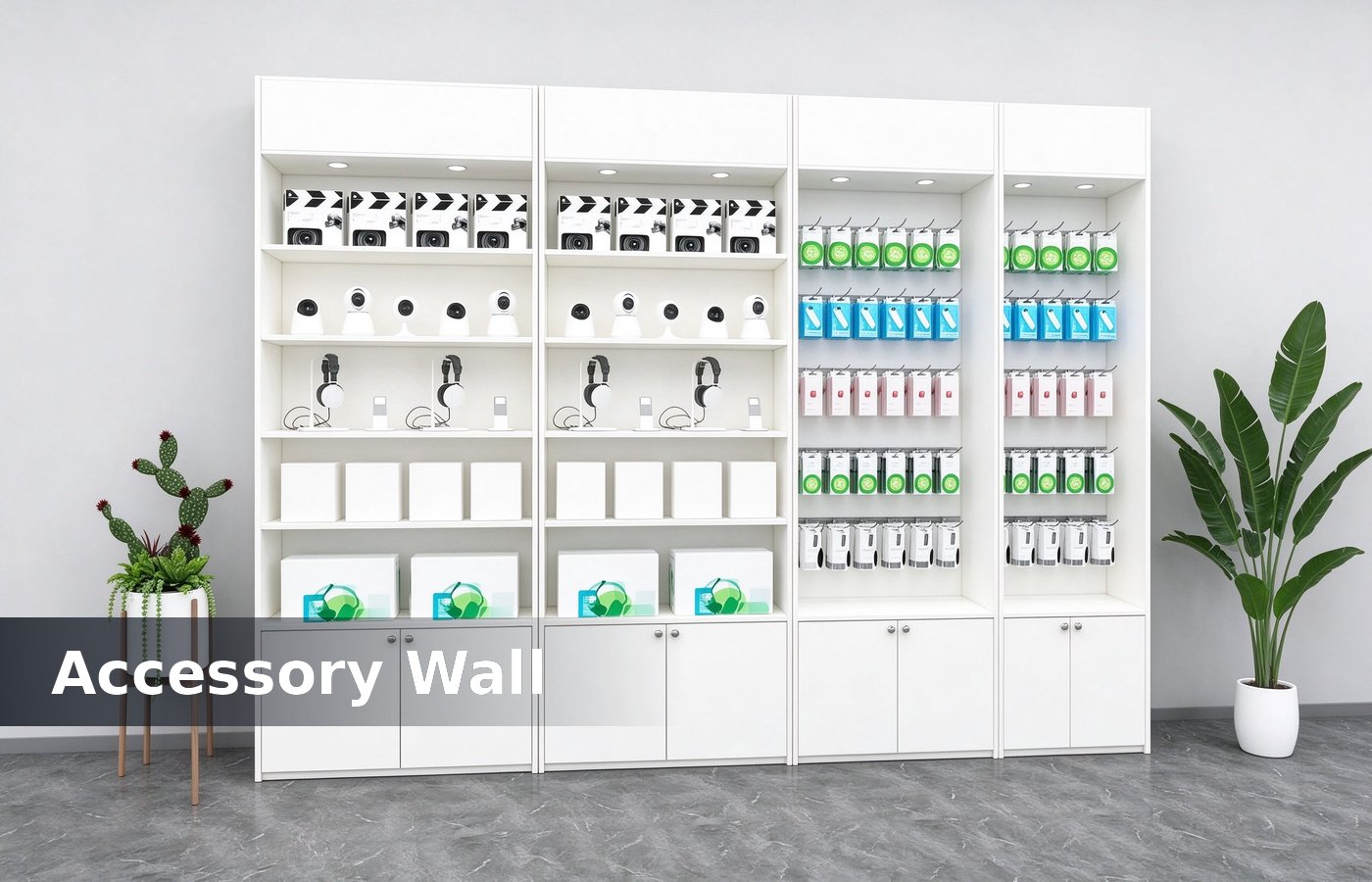
Phones need 500 lux on the screen face and a light that does not appear on the glass. Use a diffused panel above the tower and keep the source out of the reflected angle. One hour with a tape measure settles the question faster than a week of drawing revisions. None of that shows in a render, which is why we check the slatwall pitch on a sample bay first.
Set 4000 K across the wall. A 3000 K spot makes a white phone read cream, and a customer comparing two whites under warm light cannot choose and leaves. Clients who settle it at design stage pay nothing extra, and clients who settle it after opening pay for a rebuild. The same rule holds for a mall unit and a street shop, with the security run mattering more in a mall.
Light the accessory wall with a linear strip at 3000 K and the phone towers with a panel at 4000 K. Two colour temperatures in one shop looks like two shops, so keep one for the wall and one for the product, no more. We keep the alternative on the same quotation, so the buyer compares a number instead of a preference.
Fixture count by shop size
The numbers below are what we plan for a phone shop, and they hold when the repair counter sits on one side of the floor. That number belongs on the drawing, because a fixture count agreed verbally rarely survives the first stock delivery. Most of these gaps appear on opening day, which is exactly when the first trade-in arrives.
| Floor | Slatwall run | Glass towers | Accessory SKUs |
|---|---|---|---|
| 25 sqm | 6 m | 2 | 260 |
| 40 sqm | 10 m | 3 | 420 |
| 60 sqm | 14 m | 4 | 600 |
| 90 sqm | 20 m | 6 | 900 |
Counter depth and height
Sales counters sit at 950 mm to show a phone at a standing angle, and repair counters at 1050 mm to work standing. Both need 600 mm of depth for a tray, a card terminal and a bag. Mark it on the drawing sheet too, so whoever adds a bay later has the reference without guessing. One hour with a tape measure settles the question faster than a week of drawing revisions.
Keep 250 mm of clear space behind the counter. A counter against a slatwall leaves no room for a cable duct, and a duct cut after the counter lands fixture materials. None of that shows in a render, which is why we check the slatwall pitch on a sample bay first. Clients who settle it at design stage pay nothing extra, and clients who settle it after opening pay for a rebuild.
Depth the slatwall panels at 18 mm and the lit panels at 40 mm. A deeper panel takes a shelf bracket and hides the driver, and a panel too thin leaves the LED driver on the floor. The same rule holds for a mall unit and a street shop, with the security run mattering more in a mall. We keep the alternative on the same quotation, so the buyer compares a number instead of a preference.
Six pieces of display furniture
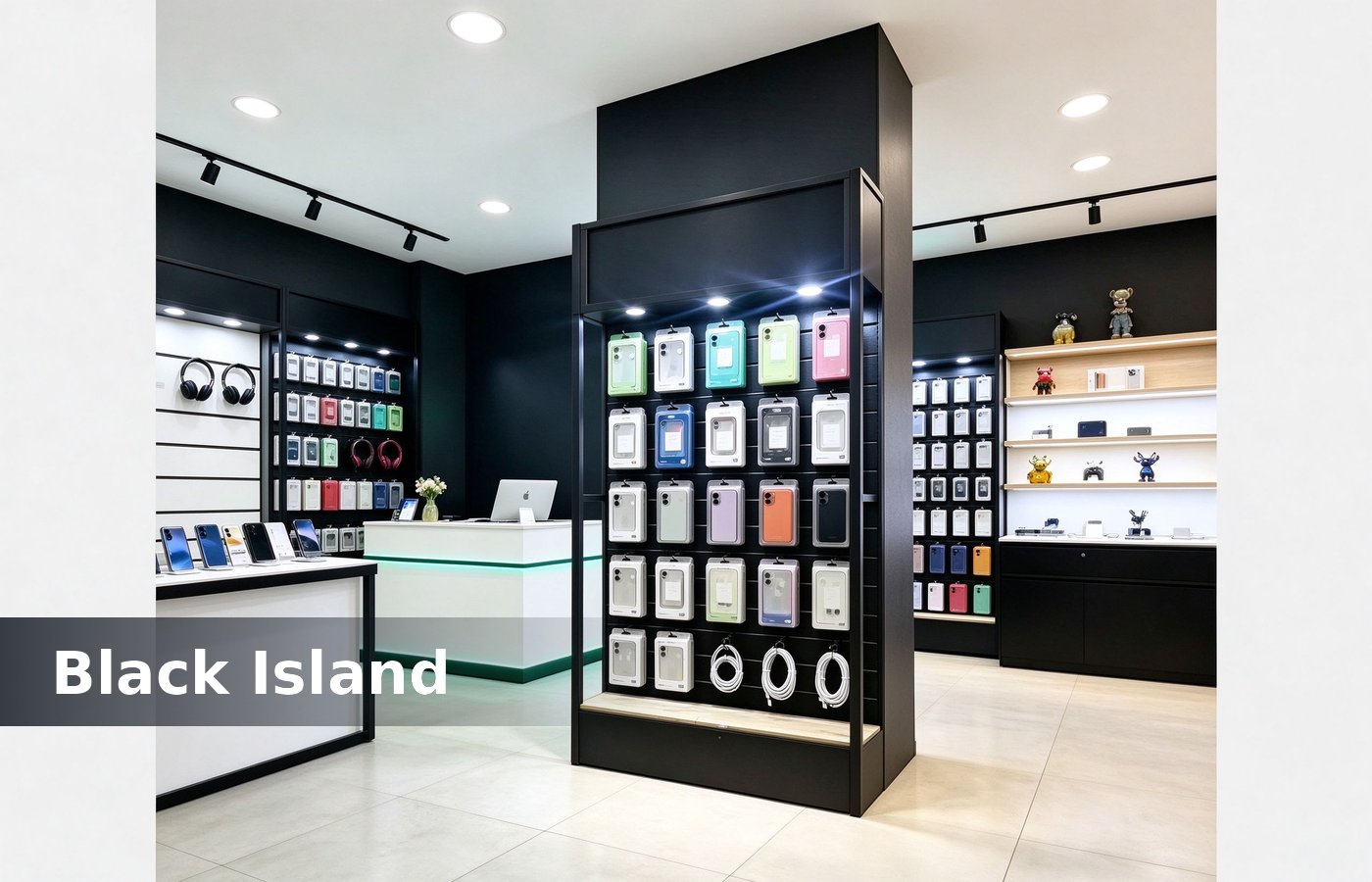
A phone shop usually needs these six pieces, and each one answers a question the customer asks in the first minute. That number belongs on the drawing, because a fixture count agreed verbally rarely survives the first stock delivery. Most of these gaps appear on opening day, which is exactly when the first trade-in arrives. Mark it on the drawing sheet too, so whoever adds a bay later has the reference without guessing.
A slatwall run carries accessories, hooks and lit shelves on one surface, a glass tower with a security cable holds the live phones, and a sales counter at 950 mm keeps a lock drawer under the tray. Behind it sits a repair counter at 1050 mm with a 350 mm riser, a lock case for boxed stock at 1.2 m, and a pickup shelf near the door so a repaired phone leaves without a queue.
Conclusion
Slatwall carries the volume, glass towers carry the phones, and two counters keep repair and sale apart. Light the screen at 500 lux and the wall at 3000 K. One hour with a tape measure settles the question faster than a week of drawing revisions. None of that shows in a render, which is why we check the slatwall pitch on a sample bay first.
Count the SKUs before drawing the wall. A phone shop planned to 420 SKUs on 10 m of slatwall sells from the wall, and one planned by guesswork stocks the counter and empties the wall. Clients who settle it at design stage pay nothing extra, and clients who settle it after opening pay for a rebuild. The same rule holds for a mall unit and a street shop, with the security run mattering more in a mall.
Choose a panel finish that survives a wipe. A matte laminate on the counter hides a screen cloth and a satin panel on the wall hides a fingerprint, and both matter in a shop where people touch everything. We keep the alternative on the same quotation, so the buyer compares a number instead of a preference. That number belongs on the drawing, because a fixture count agreed verbally rarely survives the first stock delivery.