
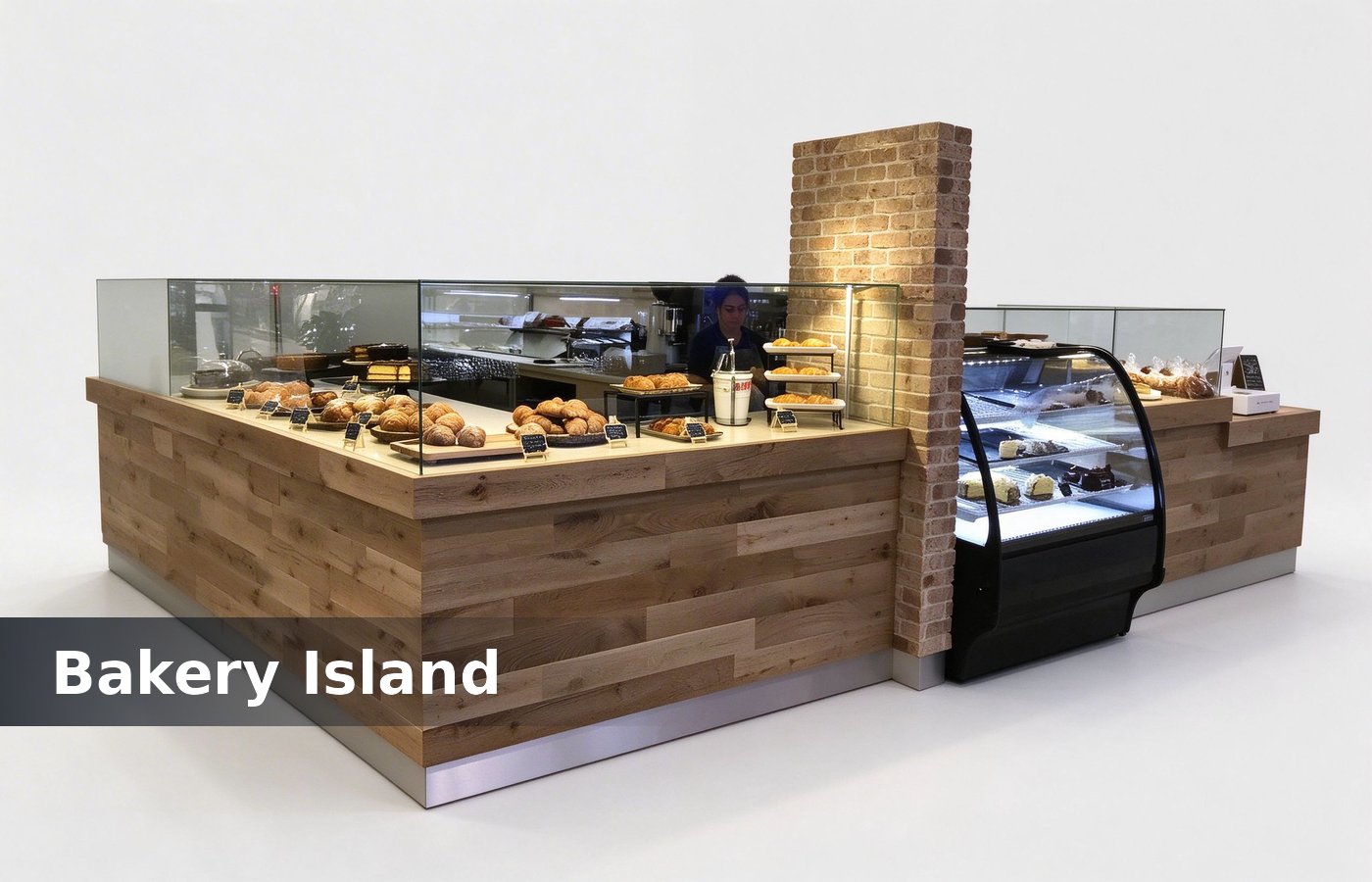
Two snacks, two machines
Pretzels and cookies arrive in a mall bay through different doors. Pretzel dough is shaped on site and baked or warmed on site, and cookies usually arrive baked from a commissary and sit in a case. We keep the alternative on the same quotation, so the buyer compares a number instead of a preference. That number belongs on the bay drawing, because a plan agreed verbally rarely survives a lunch peak.
That single difference sets the equipment list, the power load and the staff count. A cookie counter is a display business, and a pretzel kiosk is a small production line with a display in front. Most of these gaps appear in week one, which is exactly when a mall lease starts running. Mark it on the drawing sheet too, so whoever installs it later has the reference without hunting a folder.
Pretzel dough needs a bench
Shaped dough needs 900 mm of bench, a covered proofing tray and a flour zone that can be wiped. A pretzel kiosk without a dough bench buys shaped dough from a supplier and pays a margin for it. One visit to the mall plant room settles the question faster than an hour of catalogue reading. None of that shows in a render, which is why we put the power schedule on the drawing set.
A bench at 900 mm with two 600 by 400 mm trays holds forty pieces in proof. Forty pieces at a two minute bake is about eighty minutes of selling, which covers the lunch peak in a mall bay. Clients who settle it at design stage pay nothing extra, and clients who settle it after opening pay for a rebuild.
Keep the flour zone away from the till. Flour dust travels 2 m on a moving hand, and a card terminal that sits beside a dough bench needs a wipe every hour kiosk design. The same rule holds for a fixed kiosk and for a demountable one, with the wash sink mattering more on the demountable build. We keep the alternative on the same quotation, so the buyer compares a number instead of a preference.
A warmer, not a fridge
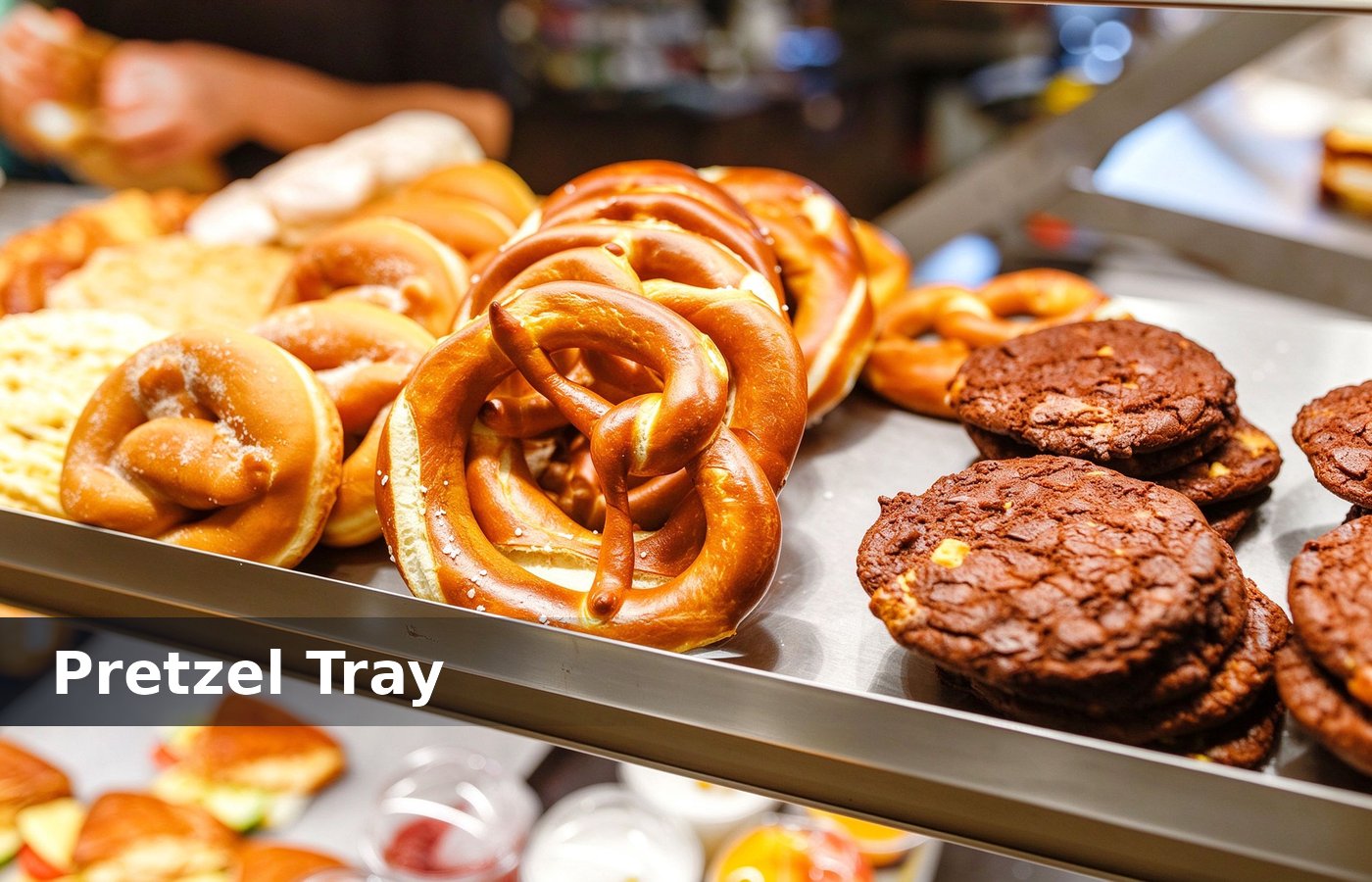
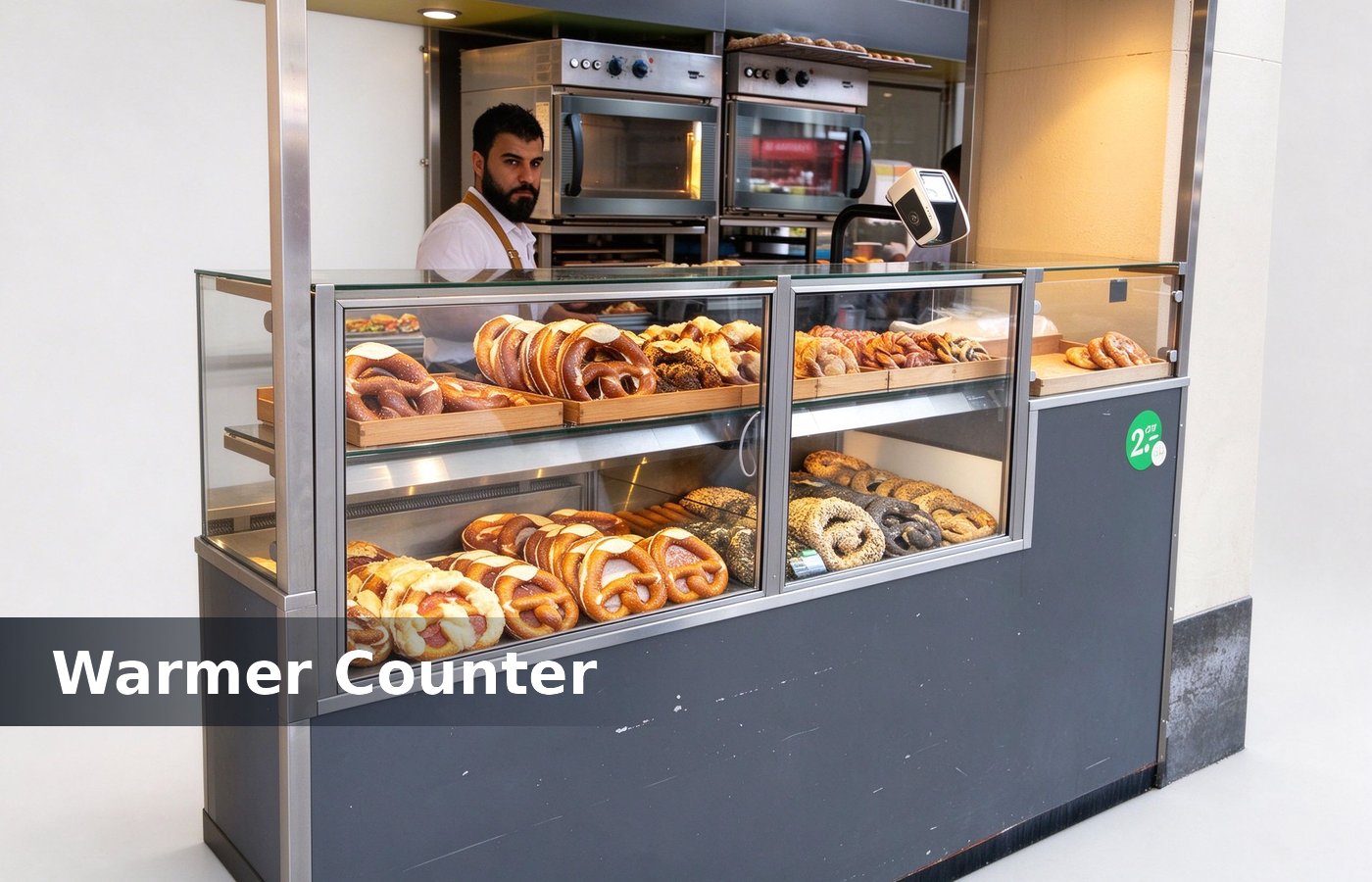
Pretzels sell warm. The display is a heated case at 60 to 70 C with a humidity tray, and the shelf life in the case is about 90 minutes before the crust goes leathery. That number belongs on the bay drawing, because a plan agreed verbally rarely survives a lunch peak. Most of these gaps appear in week one, which is exactly when a mall lease starts running.
Cookies sell at room temperature and a cookie case runs at 18 to 22 C with no heat. A kiosk built for cookies cannot hold pretzels, and a pretzel case used for cookies dries them out in an hour. Mark it on the drawing sheet too, so whoever installs it later has the reference without hunting a folder.
Salt, grease and paper
Pretzel service is messy in a way that surprises first time operators. Coarse salt lands on the counter, butter grease marks the glass, and paper bags stack faster than a cookie counter ever needs. One visit to the mall plant room settles the question faster than an hour of catalogue reading. None of that shows in a render, which is why we put the power schedule on the drawing set.
Allow a salt tray with a lip, a glass cleaner station under the counter and a bag bin within reach. A kiosk that keeps these three on the customer side wipes down in five minutes and looks clean all day. Clients who settle it at design stage pay nothing extra, and clients who settle it after opening pay for a rebuild.
Choose a laminate that resists grease and salt. A sealed edge laminate wipes clean, and an open MDF edge absorbs both, and a salt stained edge is the first thing a customer sees glass showcases. The same rule holds for a fixed kiosk and for a demountable one, with the wash sink mattering more on the demountable build.
Cookie counters run on racks
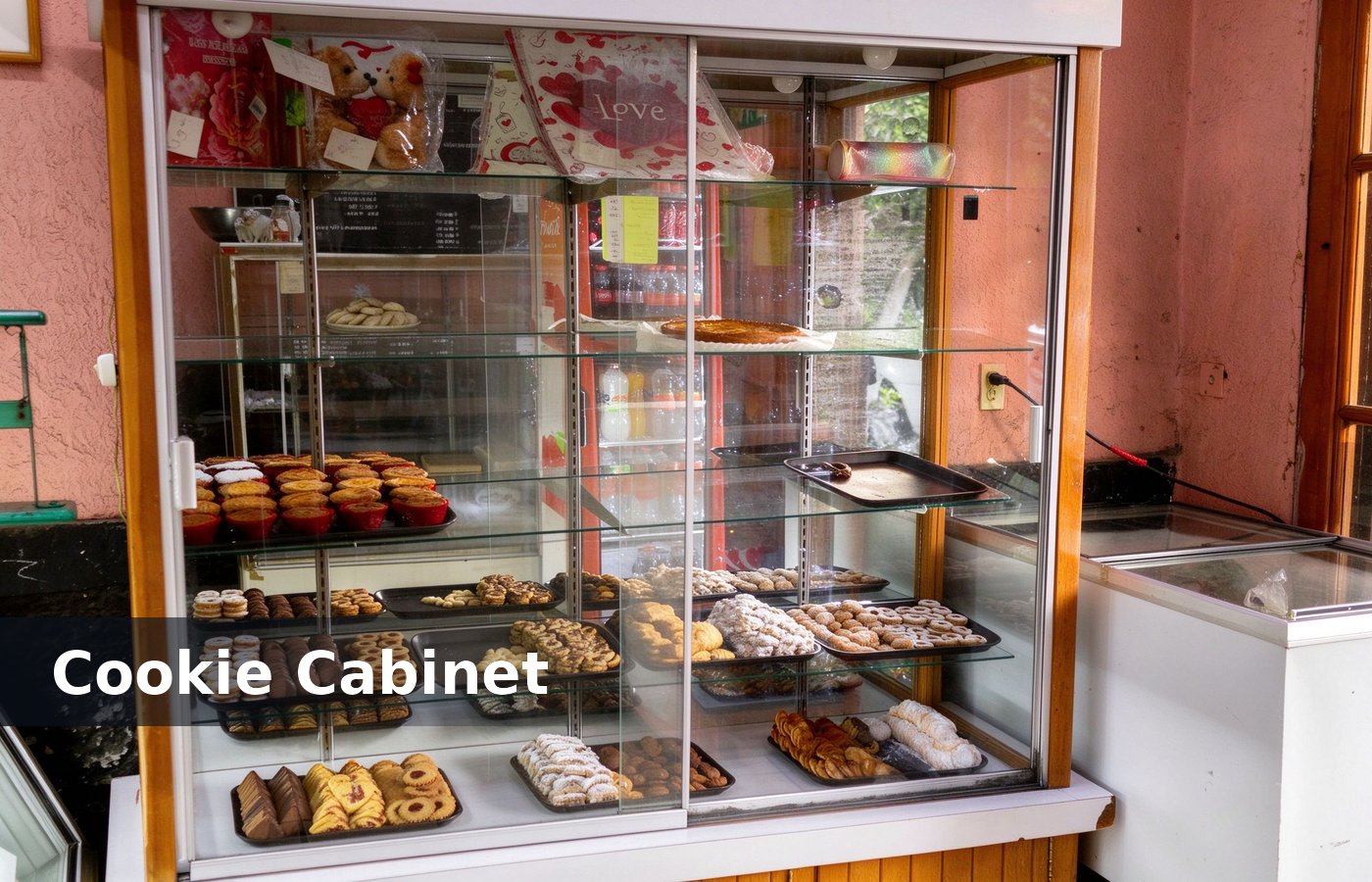
A cookie counter is a shelving problem. Trays sit at 350 mm pitch in a glass case, and 4 shelves of 600 by 400 mm trays hold about 240 cookies, which is a full day for a small mall bay. We keep the alternative on the same quotation, so the buyer compares a number instead of a preference. That number belongs on the bay drawing, because a plan agreed verbally rarely survives a lunch peak.
Freshness is the selling point, so the case needs a date card per tray and a clear front. A cookie counter with a stacked case and no labels sells the top tray and retail displays. Most of these gaps appear in week one, which is exactly when a mall lease starts running. Mark it on the drawing sheet too, so whoever installs it later has the reference without hunting a folder.
Power and water difference
A pretzel kiosk draws 6 to 9 kW with a warmer, an oven and a proofing cabinet. A cookie counter draws 2 to 3 kW, mostly light and a chiller for the dough if it bakes on site. One visit to the mall plant room settles the question faster than an hour of catalogue reading. None of that shows in a render, which is why we put the power schedule on the drawing set.
Water is the other split. Pretzel equipment needs a wash sink for trays and tongs, and a cookie counter needs only a hand basin. A bay with no water point can run cookies and cannot run pretzels cleanly. Clients who settle it at design stage pay nothing extra, and clients who settle it after opening pay for a rebuild.
Check the circuit before the equipment list. A warmer plus an oven on one 20 amp circuit trips at the lunch peak, and the trip always happens display cases. The same rule holds for a fixed kiosk and for a demountable one, with the wash sink mattering more on the demountable build. We keep the alternative on the same quotation, so the buyer compares a number instead of a preference.
Bay size and depth
A pretzel kiosk needs 3 to 4 m of frontage for a warmer, a bench and a till, and 1.8 m of depth to keep production behind the display. A cookie counter works at 2.5 m front and 1.2 m depth. That number belongs on the bay drawing, because a plan agreed verbally rarely survives a lunch peak.
The depth number matters more than the front. Production equipment behind a counter needs 900 mm of working aisle, and a 1.2 m bay leaves 300 mm, which is a shuffle fixture depth. Most of these gaps appear in week one, which is exactly when a mall lease starts running. Mark it on the drawing sheet too, so whoever installs it later has the reference without hunting a folder.
Staff and throughput
A pretzel kiosk runs on two people at peak: one shapes and bakes, one serves and takes payment. A cookie counter runs on one person plus a second at the lunch rush, because nothing is produced on site. One visit to the mall plant room settles the question faster than an hour of catalogue reading. None of that shows in a render, which is why we put the power schedule on the drawing set.
Throughput follows the same line. A pretzel position serves about 25 customers an hour with a warm case, and a cookie position serves 40, because the transaction is a pick and a bag. Clients who settle it at design stage pay nothing extra, and clients who settle it after opening pay for a rebuild. The same rule holds for a fixed kiosk and for a demountable one, with the wash sink mattering more on the demountable build.
Design the till for the faster of the two. A cookie counter with a 1.4 m till run handles two queues, and a pretzel kiosk needs the till beside the warmer so the server counters and towers. We keep the alternative on the same quotation, so the buyer compares a number instead of a preference. That number belongs on the bay drawing, because a plan agreed verbally rarely survives a lunch peak.
Five checks before choosing
These five questions settle which snack the bay can carry, and they take one visit to the mall plant room to answer. Most of these gaps appear in week one, which is exactly when a mall lease starts running. Mark it on the drawing sheet too, so whoever installs it later has the reference without hunting a folder.
- Power: 6 kW or more means pretzels are possible, under 4 kW means cookies.
- Water: a wash sink decides whether trays can be cleaned on site.
- Depth: 1.8 m for production, 1.2 m for display only.
- Staff: two people at peak for pretzels, one plus rush cover for cookies.
- Waste: grease and salt need a bin route, cookie trays need a crumb route.
Which snack fits which bay
Take pretzels where the bay has depth, water and 6 kW, and where the mall allows baking on site. A pretzel kiosk at a mall entrance with a lunch crowd earns on warmth and smell, not on display. One visit to the mall plant room settles the question faster than an hour of catalogue reading. None of that shows in a render, which is why we put the power schedule on the drawing set.
Take cookies where the bay is shallow, the power is light and the site is a food court with a commissary nearby. A cookie counter with a tray case and dated labels is the lowest risk food unit in a mall. Clients who settle it at design stage pay nothing extra, and clients who settle it after opening pay for a rebuild.
Conclusion
Pretzels need a bench, a warmer and a wash sink. Cookies need a tray case, dated labels and light power. Match the equipment to the bay, and the snack follows the building instead of fighting it. The same rule holds for a fixed kiosk and for a demountable one, with the wash sink mattering more on the demountable build.
We build both in Shenzhen and quote the power schedule on the same sheet, so a mall bay with 4 kW is told what it can run before the deposit is paid. We keep the alternative on the same quotation, so the buyer compares a number instead of a preference. That number belongs on the bay drawing, because a plan agreed verbally rarely survives a lunch peak.