
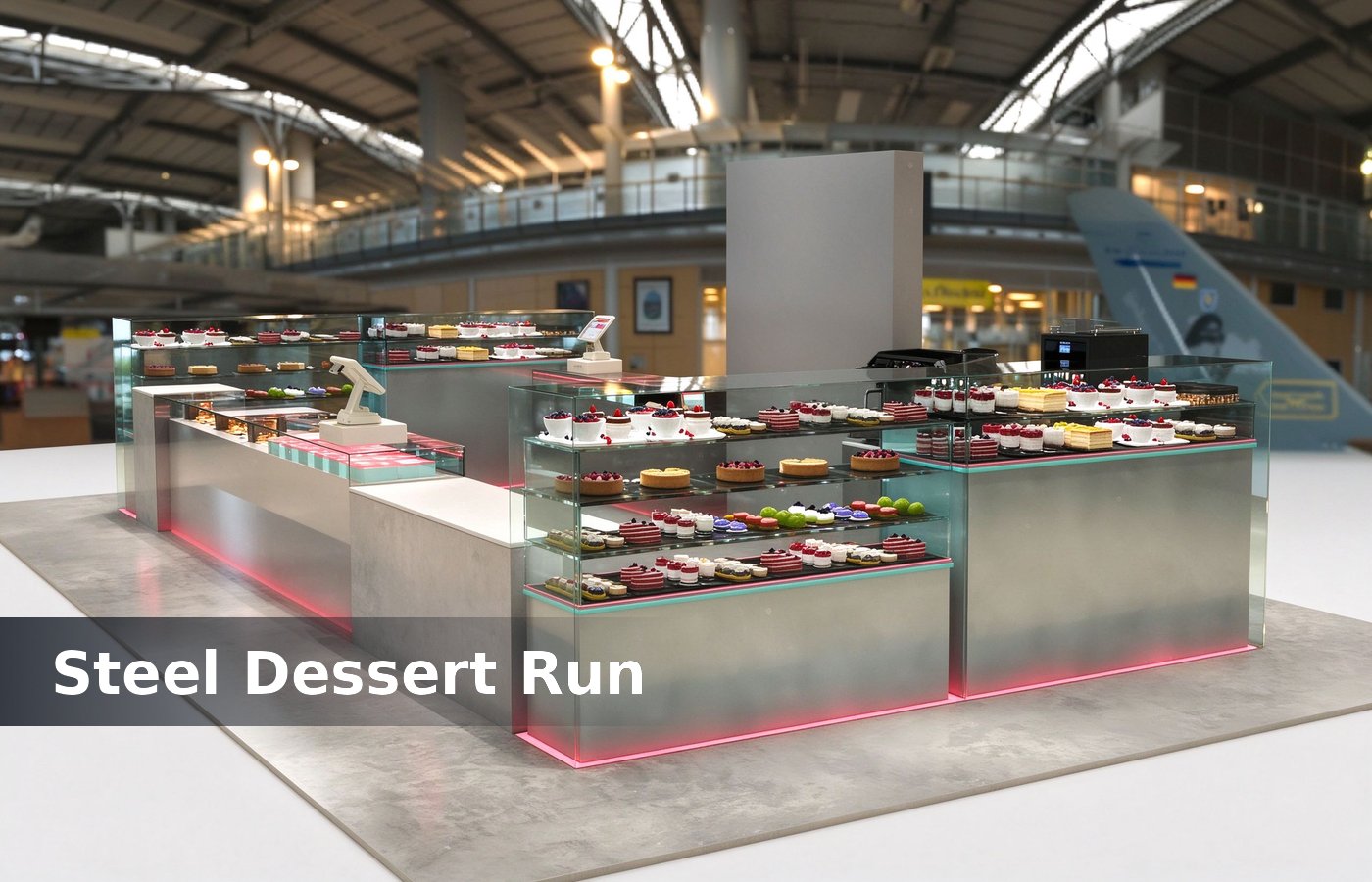
Sell what survives the mall
A dessert kiosk sells four families: chilled cake, frozen scoop, dry cookie and a drink. Each family needs its own cold chain, and the cold chain decides the case, not the menu. None of that shows in a render, which is why we mark the case sizes and the power load on the plan. Clients who settle it at design stage pay nothing extra, and clients who settle it after opening pay for a rebuild.
Most kiosks start with ten products and end with six. Pick six that hold a temperature for eight hours, and the kiosk runs a clean day on one delivery. The same rule holds for a mall kiosk and a street cart, with the power supply mattering more in a mall. We keep the alternative on the same quotation, so the buyer compares a number instead of a preference.
Family one: chilled cake
Chilled cake runs at 2 to 8 C in a curved glass case with three shelves. A 1.5 m case holds 12 cakes per shelf, so 36 cakes at a time and 90 on a good day. That number belongs on the kiosk drawing, because a case length agreed verbally rarely survives the first delivery. Most of these gaps appear on day one, which is exactly when the first delivery lands.
Cream cakes last 8 hours at the case, and a cake past 8 hours is a refund. Stock a fixed bake count each morning and top up with a mid-day run, not with a second bake. Mark it on the drawing sheet too, so whoever swaps a case later has the reference without guessing. One trading day with a clicker settles the question faster than a week of drawing revisions.
Keep the cake case at 600 mm from the kiosk front. A case behind the counter hides the sponge, and the sponge is the reason a glass showcases. None of that shows in a render, which is why we mark the case sizes and the power load on the plan. Clients who settle it at design stage pay nothing extra, and clients who settle it after opening pay for a rebuild.
Family two: frozen scoop
Gelato and ice cream need a chest freezer at minus 18 C, and a display freezer at minus 14 C where the tubs sit. Two temperatures, two units, one meter of floor each. The same rule holds for a mall kiosk and a street cart, with the power supply mattering more in a mall. We keep the alternative on the same quotation, so the buyer compares a number instead of a preference.
A scoop case at 900 mm shows 8 to 12 tubs and sells three scoops per customer kiosk design. A kiosk without a scoop case loses the walk-by trade in summer, and summer is half the year. That number belongs on the kiosk drawing, because a case length agreed verbally rarely survives the first delivery. Most of these gaps appear on day one, which is exactly when the first delivery lands.
Set the scoop case beside the till so the queue sees it. A freezer at the far end of a kiosk gets walked past, and a walked-past freezer display cases. Mark it on the drawing sheet too, so whoever swaps a case later has the reference without guessing. One trading day with a clicker settles the question faster than a week of drawing revisions.
Family three: dry cookie
Cookies, brownies and packed candy need no cold chain, so they go on the open shelf at the kiosk end. A 300 mm shelf at 200 mm pitch holds 40 boxes and costs nothing to run. None of that shows in a render, which is why we mark the case sizes and the power load on the plan. Clients who settle it at design stage pay nothing extra, and clients who settle it after opening pay for a rebuild.
Dry goods carry the best margin because there is no chill and no waste. Price a boxed cookie at 4 times cost, and it pays the kiosk rent on its own in a busy month. The same rule holds for a mall kiosk and a street cart, with the power supply mattering more in a mall. We keep the alternative on the same quotation, so the buyer compares a number instead of a preference.
Family four: the drink
A drink lifts the average ticket more than any dessert. A 500 ml cup at 4 with a cake at 6 makes a 10 sale, and a kiosk that sells only cake averages 6. That number belongs on the kiosk drawing, because a case length agreed verbally rarely survives the first delivery. Most of these gaps appear on day one, which is exactly when the first delivery lands.
Plan a 600 mm drink prep area with an ice bin and a syrup rack. A drink made on a 400 mm counter spills on the cake case and slows the queue at peak. Mark it on the drawing sheet too, so whoever swaps a case later has the reference without guessing. One trading day with a clicker settles the question faster than a week of drawing revisions.
Power, water and the lease
A dessert kiosk draws 3 to 6 kW: cake case 1 kW, freezer 1.5 kW, drink unit 1 kW, light 0.5 kW. Ask the mall for a dedicated 32 A circuit before signing. None of that shows in a render, which is why we mark the case sizes and the power load on the plan. Clients who settle it at design stage pay nothing extra, and clients who settle it after opening pay for a rebuild.
Water matters if you sell drinks with ice. A kiosk without a water line carries 40 bottles a day, and 40 bottles a day is a staff cost of retail displays. The same rule holds for a mall kiosk and a street cart, with the power supply mattering more in a mall. We keep the alternative on the same quotation, so the buyer compares a number instead of a preference.
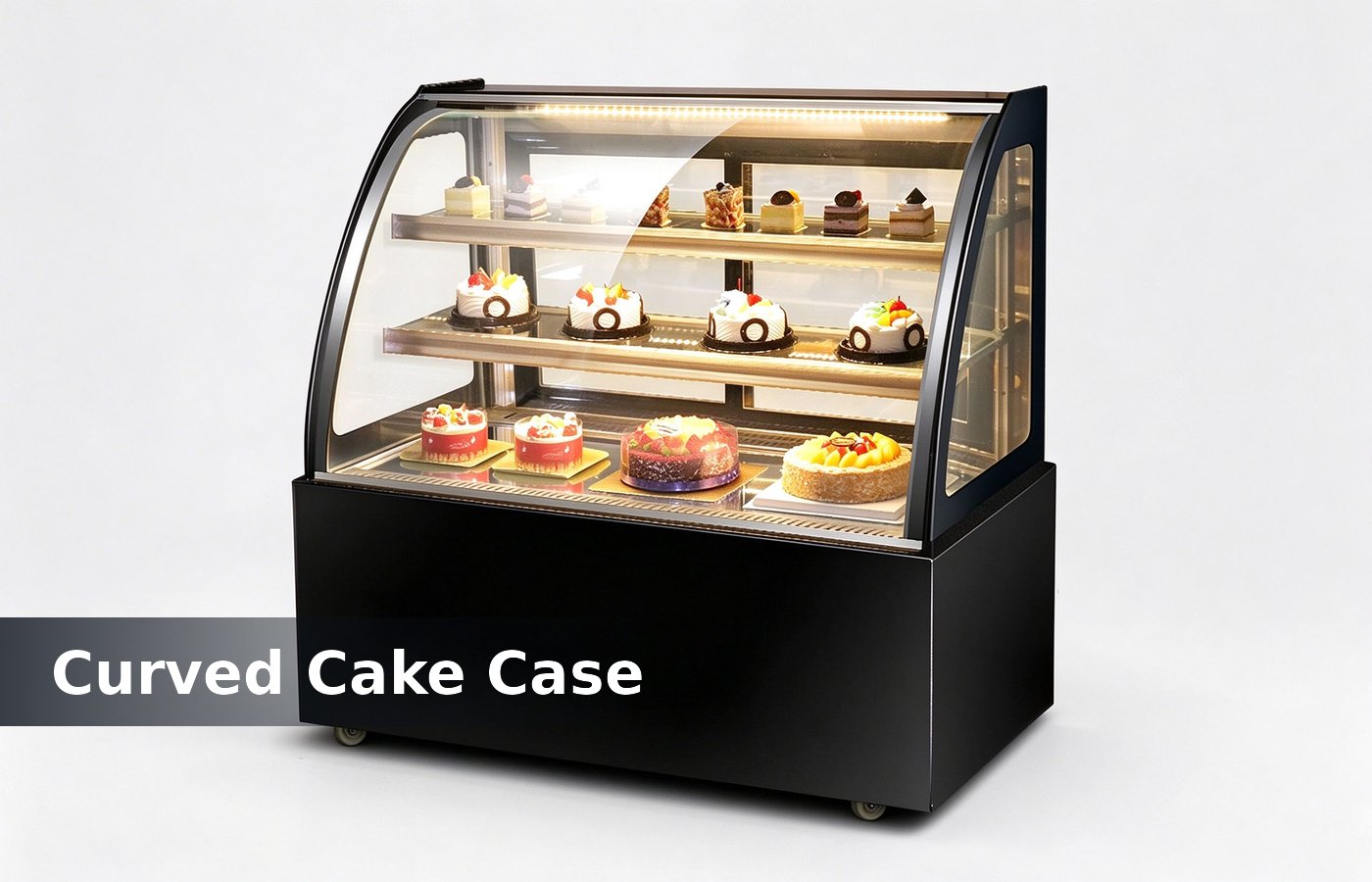
The case size by floor
A 3 by 3 m kiosk holds a 1.5 m cake case, a 1 m scoop case, a 2.6 m counter and a 0.6 m drink bay. That is the whole kit and it leaves a 1.2 m walk. That number belongs on the kiosk drawing, because a case length agreed verbally rarely survives the first delivery. Most of these gaps appear on day one, which is exactly when the first delivery lands.
A 2 by 2 m kiosk holds a 1 m cake case and a counter. A kiosk under 2 m wide sells cake only, and cake only means a 6 ticket and a low day. Mark it on the drawing sheet too, so whoever swaps a case later has the reference without guessing. One trading day with a clicker settles the question faster than a week of drawing revisions.
Depth the cake case at 700 mm and the counter at 600 mm. A case at 500 mm cannot take a 250 mm cake board, and a board that does not fit is a cake that fixture depth. None of that shows in a render, which is why we mark the case sizes and the power load on the plan.
What a kiosk sells in a day
The table below is a realistic day for a 3 by 3 m kiosk in a mid-range mall, based on 6 products and a 12 hour trade. Clients who settle it at design stage pay nothing extra, and clients who settle it after opening pay for a rebuild. The same rule holds for a mall kiosk and a street cart, with the power supply mattering more in a mall.
| Product | Units | Price |
|---|---|---|
| Cake slice | 60 | 4.0 |
| Whole cake | 12 | 18.0 |
| Scoop | 80 | 3.0 |
| Cookie box | 30 | 5.0 |
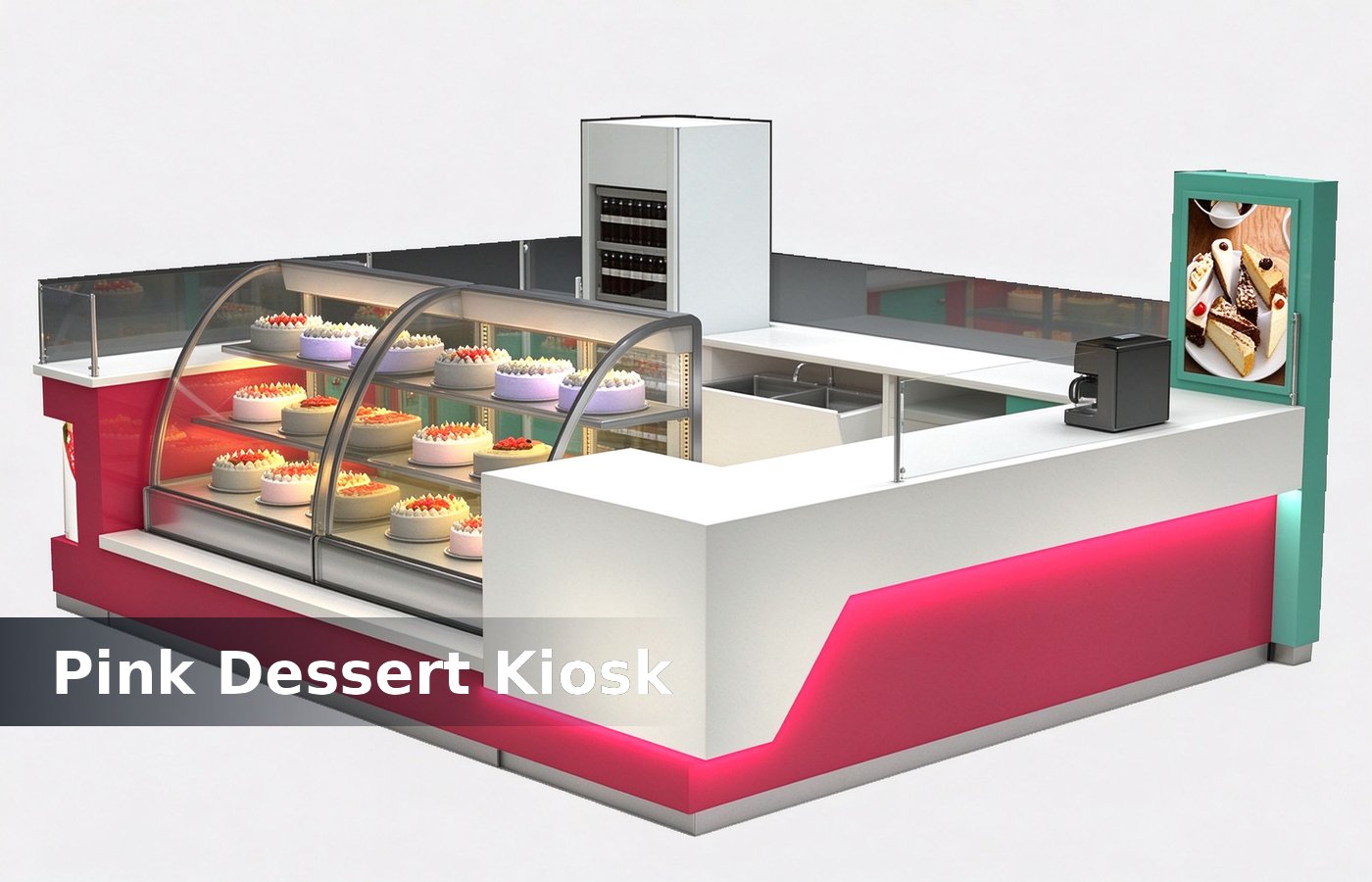
Waste is the real cost
A kiosk throwing 15 percent of its cake loses more than a kiosk paying 5 percent more rent. Bake to a count, not to a display, and fill the case with slices after 6 pm. We keep the alternative on the same quotation, so the buyer compares a number instead of a preference. That number belongs on the kiosk drawing, because a case length agreed verbally rarely survives the first delivery.
Track the last hour. A kiosk that sells 30 percent of its day in the last two hours should bake twice, and a kiosk that sells 5 percent should close an hour early. Most of these gaps appear on day one, which is exactly when the first delivery lands. Mark it on the drawing sheet too, so whoever swaps a case later has the reference without guessing.
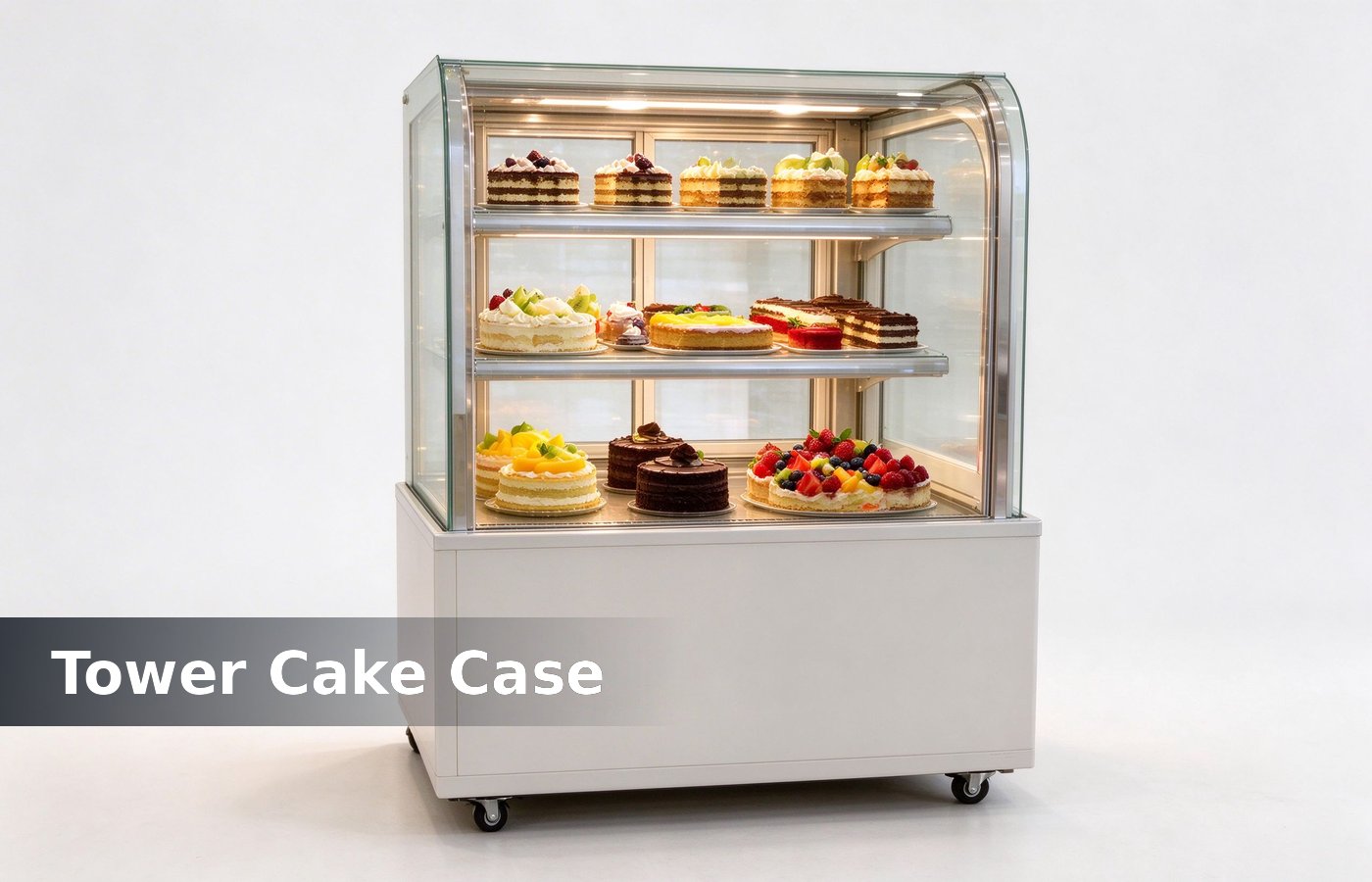
Conclusion
Six products, two temperatures, one case at 700 mm and a drink bay at 600 mm. That kit fits 3 by 3 m and sells 10 per customer instead of 6. One trading day with a clicker settles the question faster than a week of drawing revisions. None of that shows in a render, which is why we mark the case sizes and the power load on the plan.
Sell cake for the stop and drinks for the ticket. A kiosk is a cold case with a queue in front of it, and the queue decides the day. Clients who settle it at design stage pay nothing extra, and clients who settle it after opening pay for a rebuild. The same rule holds for a mall kiosk and a street cart, with the power supply mattering more in a mall.
Choose a case with a removable crumb tray. A tray that lifts out takes two minutes to clean, and a case cleaned in place takes twenty and shop fixtures. We keep the alternative on the same quotation, so the buyer compares a number instead of a preference. That number belongs on the kiosk drawing, because a case length agreed verbally rarely survives the first delivery.