
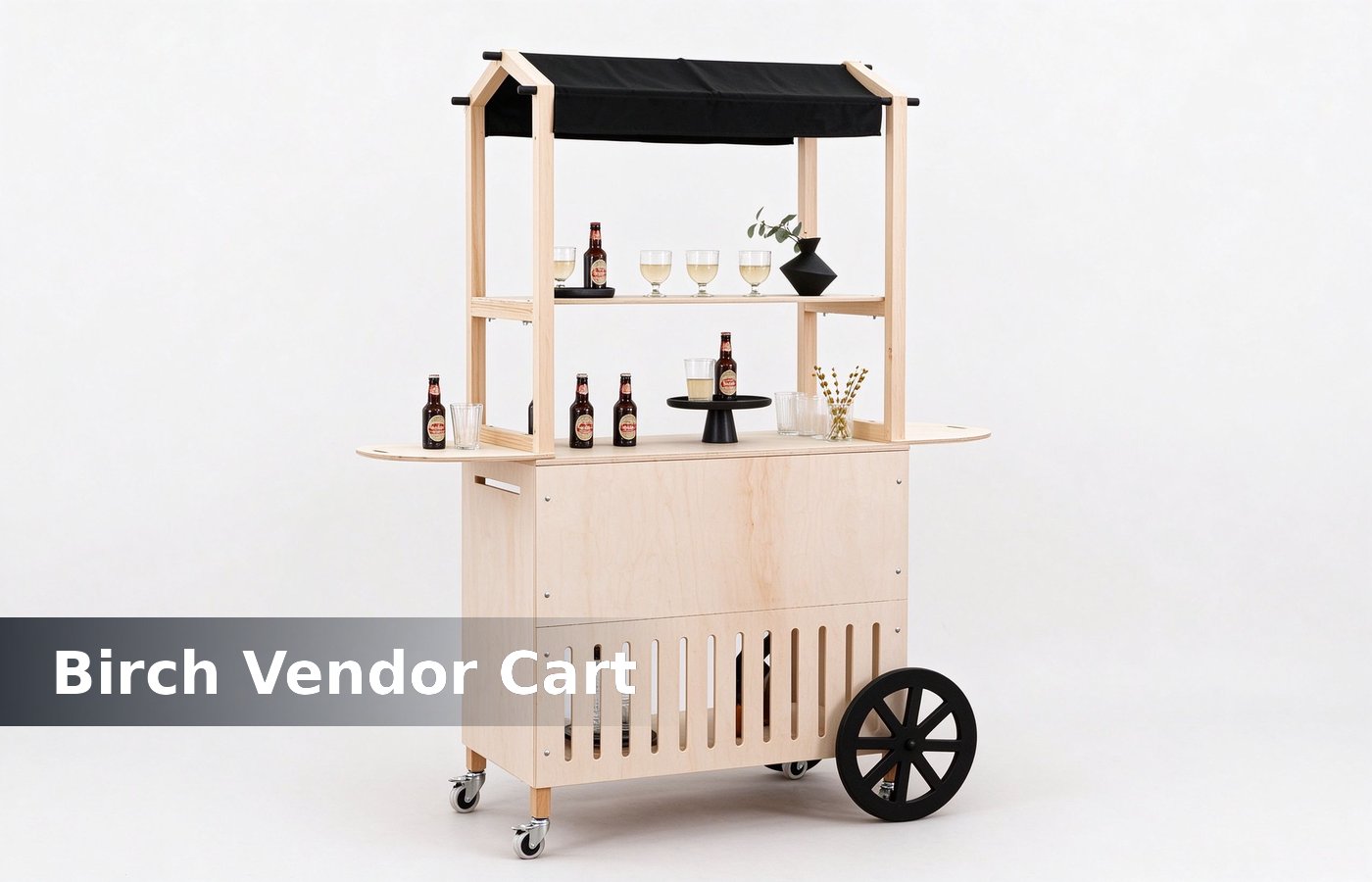
A cart is a lease with wheels
A movable cart rents a 1 by 1.5 m patch instead of a shop, and that patch can move 3 times a day. A mall cart in the morning and a market cart at the weekend share one asset. None of that shows in a render, which is why we mark the deck size and the caster type on the plan.
The trade-off is volume. A cart holds 20 SKUs and a shop holds 200, so a cart sells a narrow line with high margin and a shop sells depth at a glass showcases. Clients who settle it at design stage pay nothing extra, and clients who settle it after opening pay for a rebuild. The same rule holds for a mall pitch and a market stall, with the floor mattering more on tile.
The 1 by 1.5 deck
A cart deck runs 1 by 1.5 m with a 900 mm work top and a 600 mm shelf span. That footprint holds 20 SKUs on the counter and 60 in boxes under the deck. We keep the alternative on the same quotation, so the buyer compares a number instead of a preference. That number belongs on the cart drawing, because a deck size agreed verbally rarely survives the first move.
A deck over 1.5 m will not turn in a mall aisle. A 1.8 m cart needs 2.4 m to pivot, and a mall aisle at 2 m leaves the cart stuck kiosk design. Most of these gaps appear on the first move, which is exactly when the cart has to be pushed 200 m. Mark it on the drawing sheet too, so whoever changes a caster later has the reference without guessing.
Keep the cart to 600 kg loaded. A 700 kg cart needs a 100 kg puller, and one staff member cannot push a cart they cannot stop. One trading week with a count sheet settles the question faster than a month of negotiating. None of that shows in a render, which is why we mark the deck size and the caster type on the plan.
Wheels and the floor
Four casters at 100 mm with two braked and two swivel. A cart that will not lock slides in a mall, and a sliding cart is a claim, fixture materials. Clients who settle it at design stage pay nothing extra, and clients who settle it after opening pay for a rebuild. The same rule holds for a mall pitch and a market stall, with the floor mattering more on tile.
Check the floor before the wheels. Mall tile takes a hard caster, and a soft caster on tile leaves a mark that the landlord bills at the fit out end. We keep the alternative on the same quotation, so the buyer compares a number instead of a preference. That number belongs on the cart drawing, because a deck size agreed verbally rarely survives the first move.
The 15 minute changeover
A cart changes location in 15 minutes: unload 20 SKUs, drop the deck to 40 kg, push 200 m, reload. A 30 minute changeover means one fewer location per day. Most of these gaps appear on the first move, which is exactly when the cart has to be pushed 200 m. Mark it on the drawing sheet too, so whoever changes a caster later has the reference without guessing.
Plan the cart light and the stock in trays. A cart with loose stock takes 40 minutes to pack, and 40 minutes at 3 locations a day costs 2 food kiosk. One trading week with a count sheet settles the question faster than a month of negotiating. None of that shows in a render, which is why we mark the deck size and the caster type on the plan.
Power on a cart
A cart runs on a 12 V battery or a 16 A socket. Lights and a card reader draw 120 W and a battery at 100 Ah runs 8 hours, which covers a full trading day. Clients who settle it at design stage pay nothing extra, and clients who settle it after opening pay for a rebuild. The same rule holds for a mall pitch and a market stall, with the floor mattering more on tile.
Do not put a fridge on a cart battery. A 200 W fridge flattens a 100 Ah battery in 5 hours, and a flat battery mid-shift is retail displays. We keep the alternative on the same quotation, so the buyer compares a number instead of a preference. That number belongs on the cart drawing, because a deck size agreed verbally rarely survives the first move.
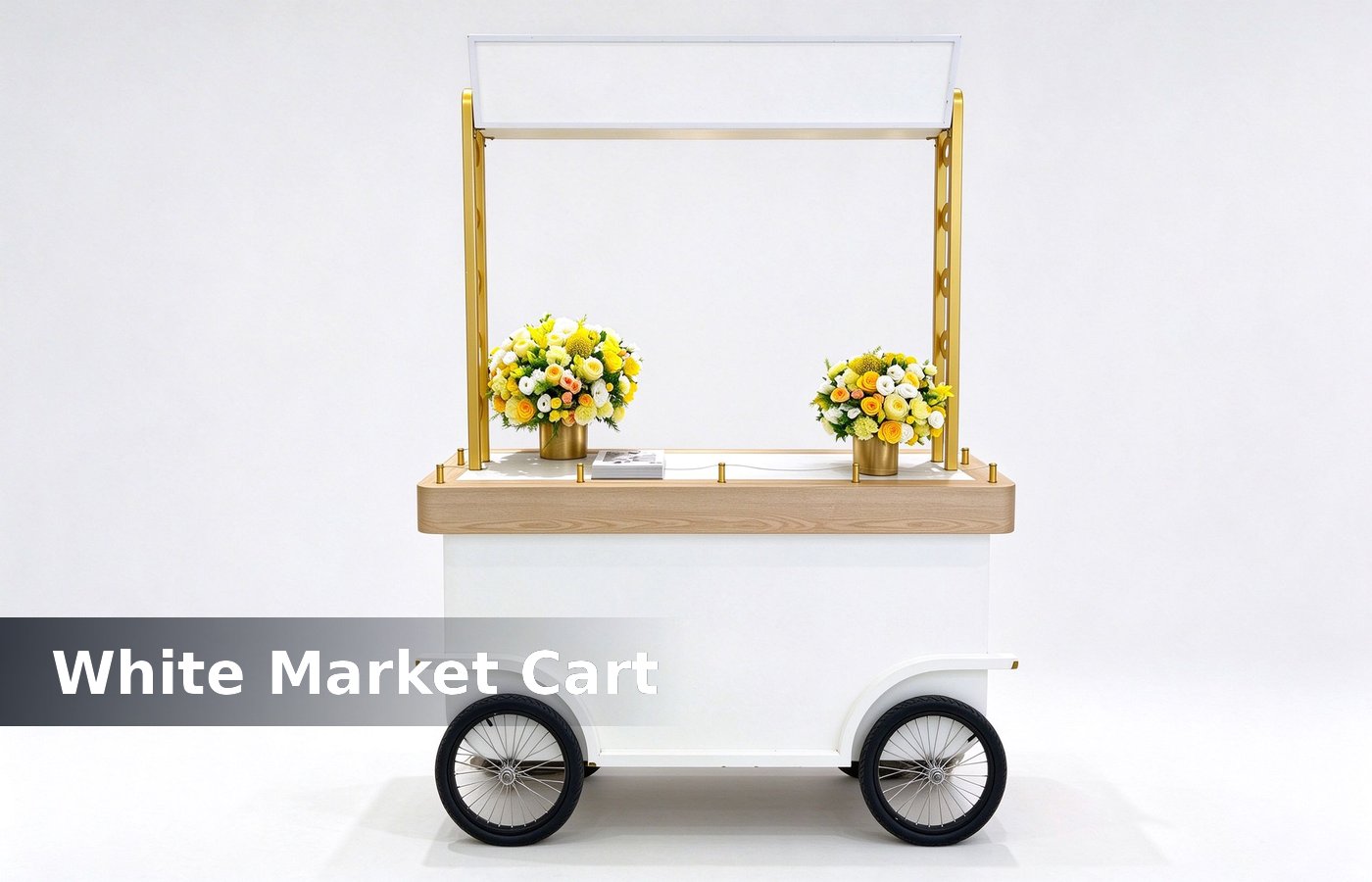
Permits and the paperwork
A mall cart needs a trading licence, a public liability certificate and a fire rating on the canopy. A market cart needs a stall permit and a food hygiene rating if it sells food. Most of these gaps appear on the first move, which is exactly when the cart has to be pushed 200 m. Mark it on the drawing sheet too, so whoever changes a caster later has the reference without guessing.
Keep a folder with the COC, the fire certificate and the insurance on the cart. A mall officer who cannot find the fire rating in 2 minutes moves the cart shop fixtures. One trading week with a count sheet settles the question faster than a month of negotiating. None of that shows in a render, which is why we mark the deck size and the caster type on the plan.
The product mix that fits
A cart sells 20 SKUs in 3 lines: 12 best sellers, 6 seasonal, 2 showpieces. A cart with 40 SKUs looks full and sells slow, because the customer cannot choose. Clients who settle it at design stage pay nothing extra, and clients who settle it after opening pay for a rebuild. The same rule holds for a mall pitch and a market stall, with the floor mattering more on tile.
Change 6 lines every 4 weeks. A cart that never changes reads as unsold stock, and a cart with 6 new lines has a reason for a customer counters and towers. We keep the alternative on the same quotation, so the buyer compares a number instead of a preference. That number belongs on the cart drawing, because a deck size agreed verbally rarely survives the first move.
One location, one hour, one number
A mall cart does 20 to 30 units in a 4 hour evening slot and 40 to 60 on a weekend day. Those numbers set the stock at 3 days of cover per SKU. Most of these gaps appear on the first move, which is exactly when the cart has to be pushed 200 m. Mark it on the drawing sheet too, so whoever changes a caster later has the reference without guessing.
At 300 units a week and a 4 margin per unit the cart returns 1200 a week. A mall pitch at 300 a week and one staff at 400 leaves 500 before fixture systems. One trading week with a count sheet settles the question faster than a month of negotiating. None of that shows in a render, which is why we mark the deck size and the caster type on the plan.
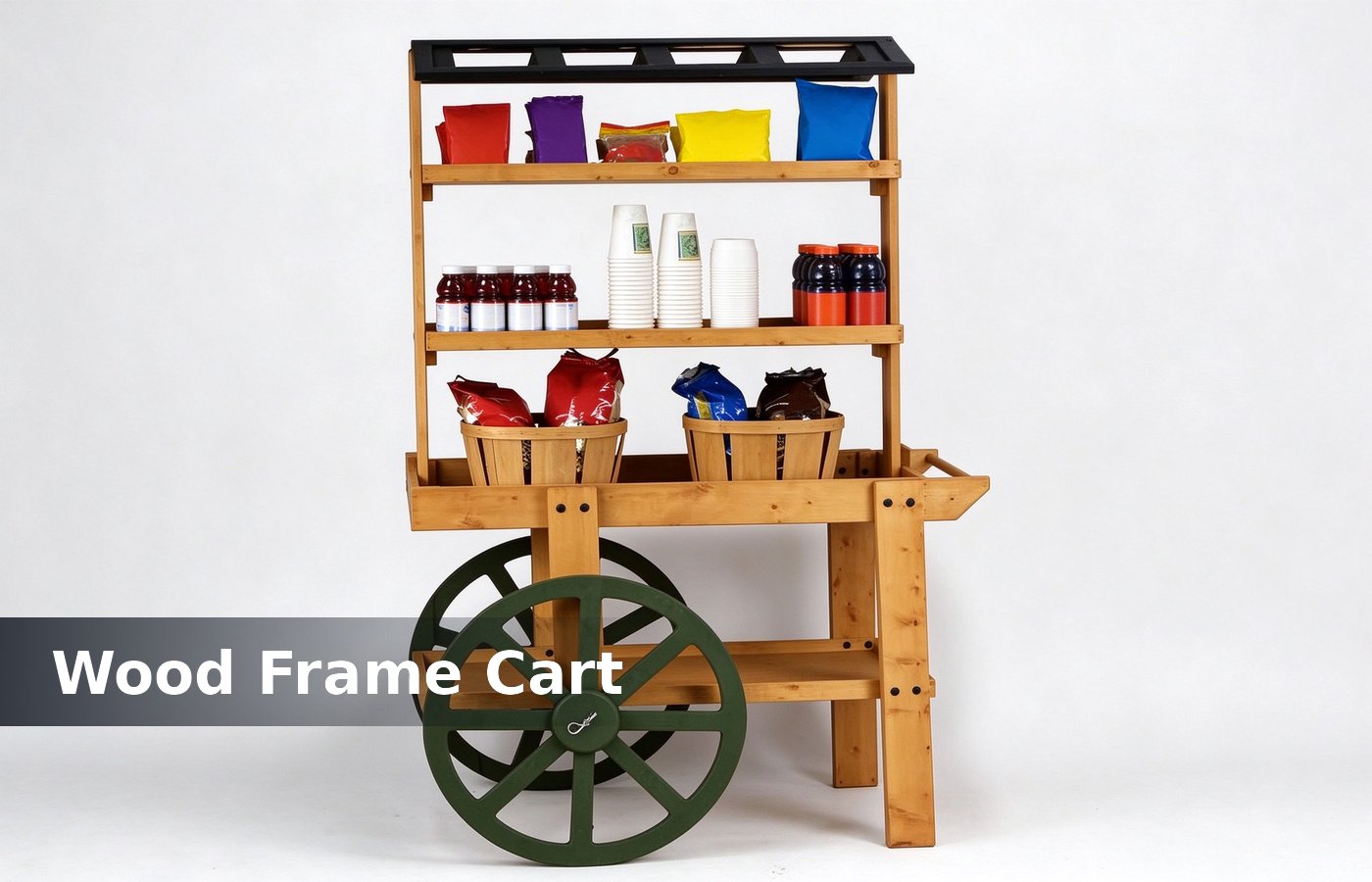
Cart versus kiosk versus shop
The table compares the three formats on the four numbers that decide a small retail start: floor, capital, stock depth and locations per day. Clients who settle it at design stage pay nothing extra, and clients who settle it after opening pay for a rebuild. The same rule holds for a mall pitch and a market stall, with the floor mattering more on tile.
| Format | Floor | Capital | Locations |
|---|---|---|---|
| Cart | 1 by 1.5 m | 4 to 8k | 3 a day |
| Kiosk | 4 to 12 sqm | 12 to 30k | 1 a day |
| Shop | 30 sqm up | 60k up | 1 fixed |
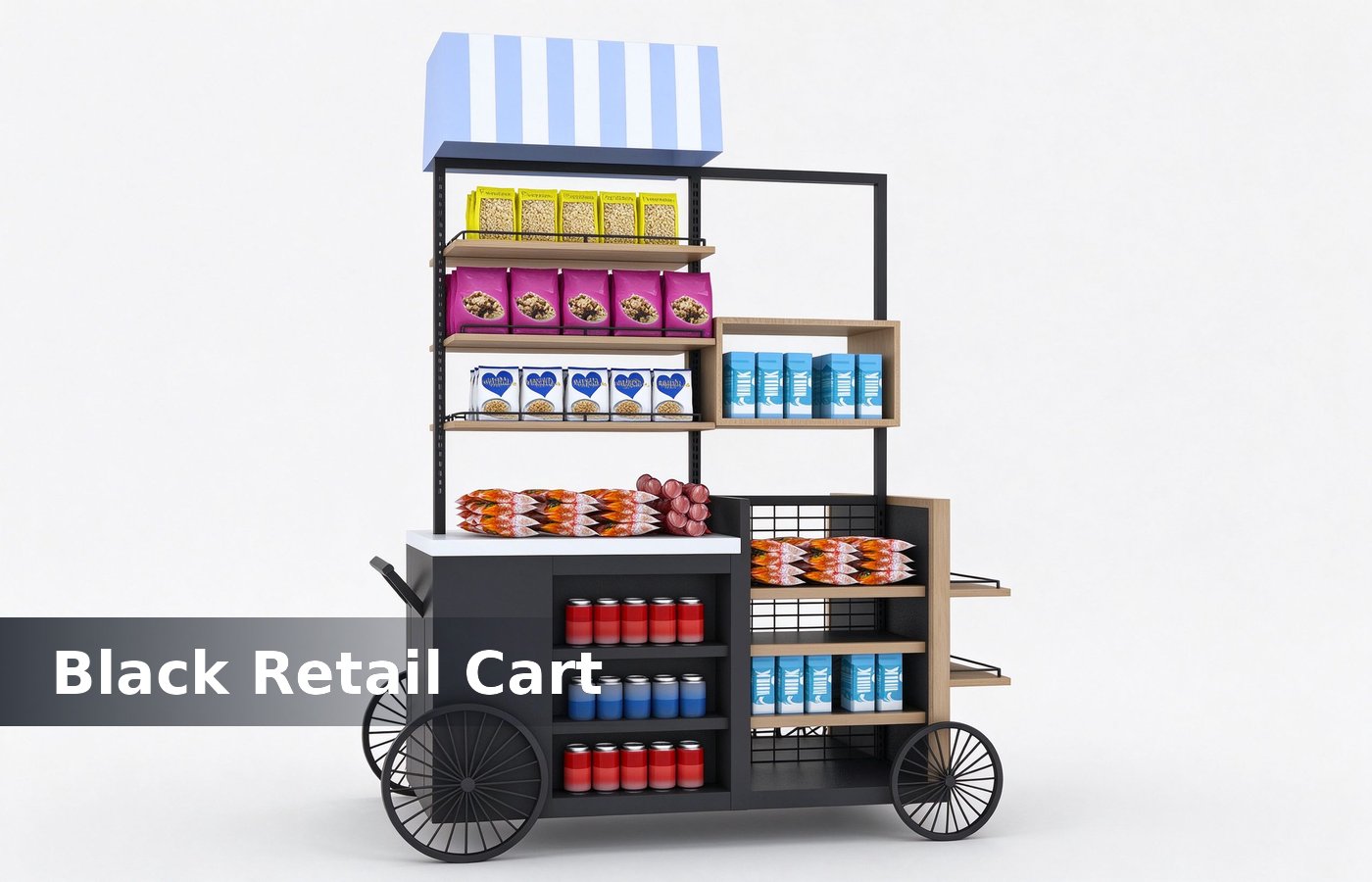
Start on a cart, grow into a kiosk
Most operators start on a cart to test a line, then move to a kiosk when 3 SKUs sell 60 percent of the volume. A cart proves demand without a 3 year lease. We keep the alternative on the same quotation, so the buyer compares a number instead of a preference. That number belongs on the cart drawing, because a deck size agreed verbally rarely survives the first move.
A cart pays for itself in 6 to 9 months at 300 units a week. A kiosk takes 18 to 24 months, and a kiosk on an unproven line is a lock-in. Most of these gaps appear on the first move, which is exactly when the cart has to be pushed 200 m. Mark it on the drawing sheet too, so whoever changes a caster later has the reference without guessing.
Conclusion
One by 1.5 m, 20 SKUs, four casters and a 15 minute changeover. A cart is the cheapest way to test a line in 3 places before signing a lease. One trading week with a count sheet settles the question faster than a month of negotiating. None of that shows in a render, which is why we mark the deck size and the caster type on the plan.
Test on wheels, commit on a floor. A cart tells you what sells in a week, and a lease tells you for three years. Clients who settle it at design stage pay nothing extra, and clients who settle it after opening pay for a rebuild. The same rule holds for a mall pitch and a market stall, with the floor mattering more on tile.
Depth the cart deck at 600 mm and the shelf at 400 mm. A 500 mm deck cannot take a shipping box, and a box on the deck hides the display cases. We keep the alternative on the same quotation, so the buyer compares a number instead of a preference. That number belongs on the cart drawing, because a deck size agreed verbally rarely survives the first move.