Two doors, one reason
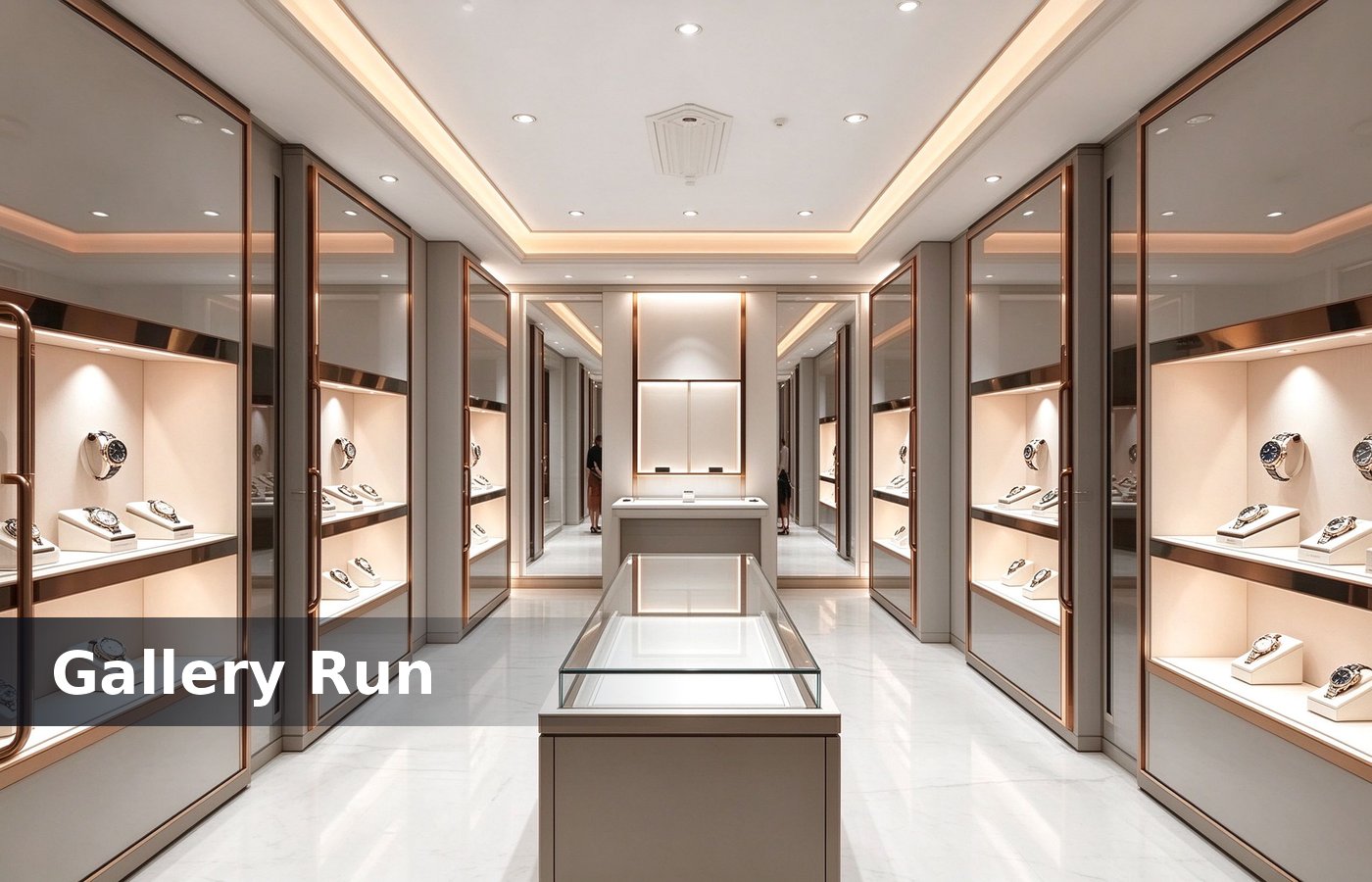
A watch shop needs a customer door and a service door, and they exist for two different jobs. The customer door opens to a counter and the service door opens to a bench, a safe and a courier. The same rule holds for a mall unit and a street shop, with the service door mattering more in a mall. We keep the alternative on the same quotation, so the buyer compares a number instead of a preference.
Watch stock moves more than jewellery stock. A shop that receives, services and ships through the front door turns its own entrance into a stock corridor, and a customer standing at a counter sees a courier box. That number belongs on the drawing, because a route agreed verbally rarely survives a stock count. Most of these gaps appear in week one, which is exactly when the insurance file is opened.
The vault is part of the plan
A vault or a strong room takes 4 to 6 sqm and belongs behind the service door. Plan it before the counters, because its walls decide where a counter can sit and where a wall can be cut. Mark it on the drawing sheet too, so whoever fits the second shop later has the reference. One walk through the empty unit settles the question faster than a week of drawing revisions.
Size the vault to the stock value, not to the floor. A shop holding 300 references at an average of 900 dollars needs 8 cubic metres of trays, which is a 2 by 2 m room at 2 m high. None of that shows in a render, which is why we mark the vault wall and the tray count on the plan.
Line the vault with adjustable trays, not fixed drawers. A tray that slides out shows forty watches in one movement, and a drawer that pulls out shows one layer and hides the rest jewellery cases. Clients who settle it at design stage pay nothing extra, and clients who settle it after opening pay for a rebuild. The same rule holds for a mall unit and a street shop, with the service door mattering more in a mall.
Counter height and tray count
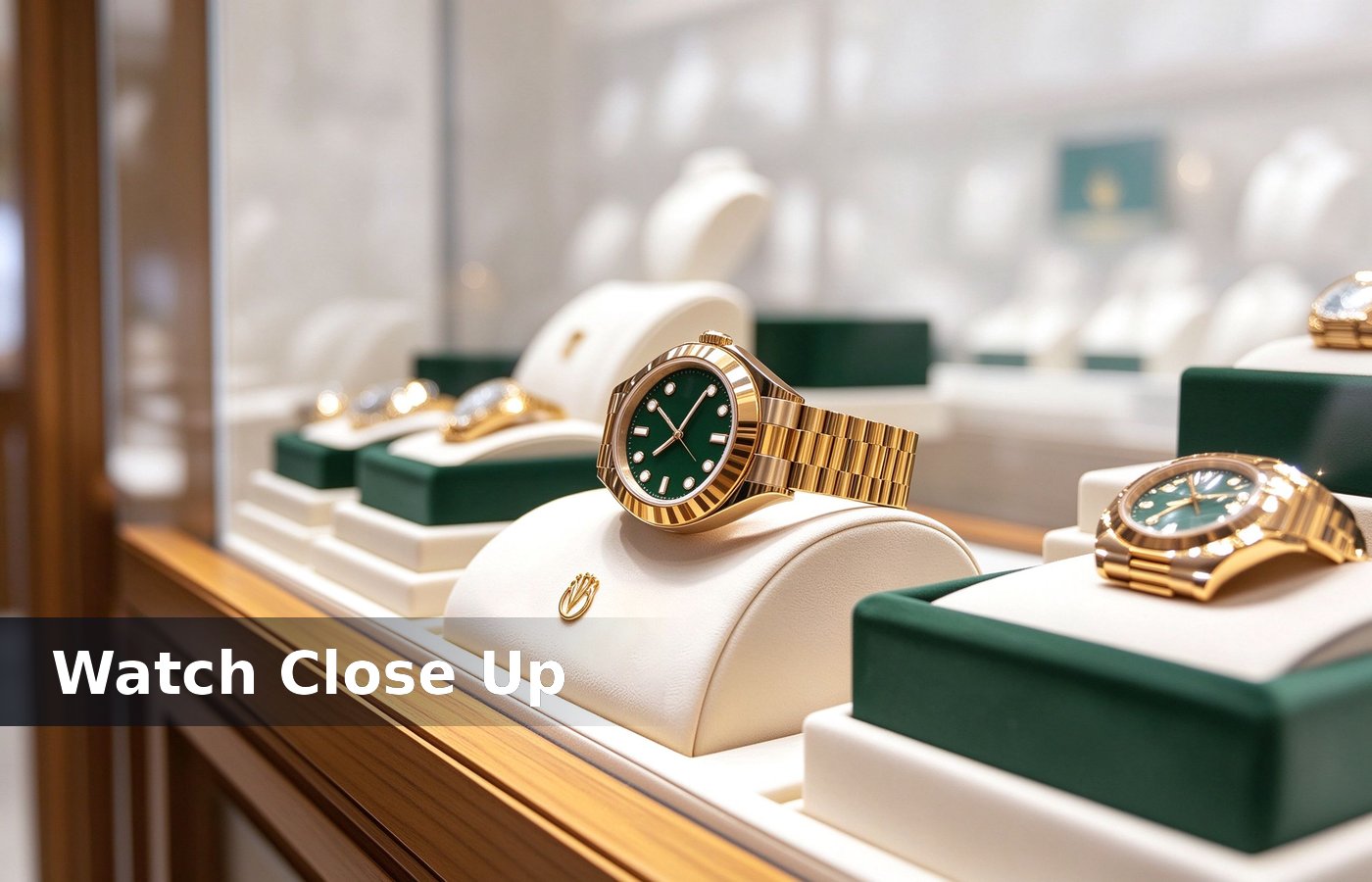
Watch counters sit at 950 to 1000 mm, higher than jewellery because the customer looks down at a wrist. A counter at 900 mm makes the customer bend, and a bend at a counter reads as a shop that sells cheaper stock. We keep the alternative on the same quotation, so the buyer compares a number instead of a preference.
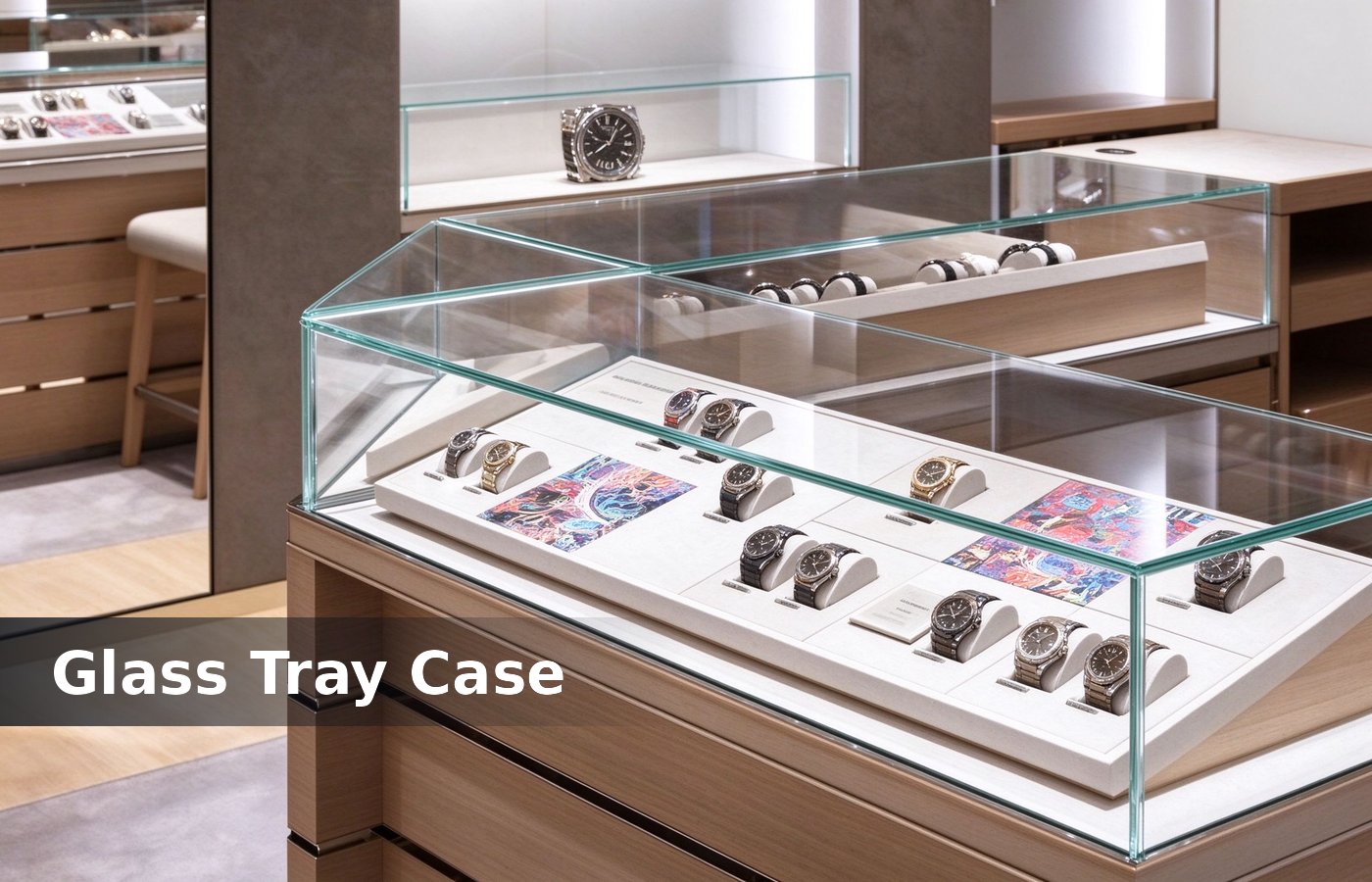
Each metre of counter run holds 24 trays at 300 mm wide, and each tray shows 8 to 12 watches. A 3 m run therefore shows between 570 and 860 references at rest. That number belongs on the drawing, because a route agreed verbally rarely survives a stock count. Most of these gaps appear in week one, which is exactly when the insurance file is opened.
Light without glare
Watch glass reflects, so the light design is a glare problem before it is a brightness problem. Use 4000 K at 500 lux with a CRI above 90, and keep the source out of the reflected cone. Mark it on the drawing sheet too, so whoever fits the second shop later has the reference. One walk through the empty unit settles the question faster than a week of drawing revisions.
Put the strip inside the case at the back edge, aimed at the dial. A strip at the front edge throws a line across every crystal, and a customer photographs that line and glass showcases. None of that shows in a render, which is why we mark the vault wall and the tray count on the plan. Clients who settle it at design stage pay nothing extra, and clients who settle it after opening pay for a rebuild.
Test one tray before lighting the run. A dial that reads green under 3000 K reads black under 4000 K, and the same watch on a different shelf looks like a different reference to the same customer. The same rule holds for a mall unit and a street shop, with the service door mattering more in a mall. We keep the alternative on the same quotation, so the buyer compares a number instead of a preference.
Glass, locks and alarms
Use 8 mm tempered glass on a watch counter, laminated where the case sits near a door. A 6 mm glass takes a knock from a bag and a 10 mm glass costs a third more for the same protection. That number belongs on the drawing, because a route agreed verbally rarely survives a stock count. Most of these gaps appear in week one, which is exactly when the insurance file is opened.
Lock every case, and put the lock on the staff side. A case that locks on the customer side invites a customer to try the handle, and a handle that opens display cases. Mark it on the drawing sheet too, so whoever fits the second shop later has the reference. One walk through the empty unit settles the question faster than a week of drawing revisions.
The service bench
A watch bench needs 1.5 m of bench at 900 mm with a lamp at 1200 lux and a mat. That is a separate room from the counter, because a strap change at a counter blocks the sale of a watch. None of that shows in a render, which is why we mark the vault wall and the tray count on the plan.
Allow a 1.2 m square for the bench, a stool and a drawer unit. A bench squeezed into 900 mm cannot hold a movement tray and a tool roll at the same time, and the technician kiosk design. Clients who settle it at design stage pay nothing extra, and clients who settle it after opening pay for a rebuild.
Depth the counter at 600 mm. A watch tray is 300 mm deep and a counter at 450 mm leaves the second tray on the floor, and a counter at 700 mm puts the stock out of the customer reach. The same rule holds for a mall unit and a street shop, with the service door mattering more in a mall.
Consultation at a table
High value watches sell at a table, not at a counter. Set one table at 750 mm with two chairs, a mat and a loupe, 2 m from the counter run, so a customer can sit while the case is opened. We keep the alternative on the same quotation, so the buyer compares a number instead of a preference. That number belongs on the drawing, because a route agreed verbally rarely survives a stock count.
Place the table where it is not visible from the door. A customer trying a 12,000 dollar watch does not want to be watched from the corridor, and a table in the window is a table nobody uses. Most of these gaps appear in week one, which is exactly when the insurance file is opened. Mark it on the drawing sheet too, so whoever fits the second shop later has the reference.
Keep the table clear of the till. A till on the same table turns the consultation into a transaction too early, and a customer who feels sold to cash counters. One walk through the empty unit settles the question faster than a week of drawing revisions. None of that shows in a render, which is why we mark the vault wall and the tray count on the plan.
Six things a watch shop must plan
These six items decide whether a watch shop works, and each one costs far more to fix after opening than to plan. Clients who settle it at design stage pay nothing extra, and clients who settle it after opening pay for a rebuild. The same rule holds for a mall unit and a street shop, with the service door mattering more in a mall.
- A separate service door with a bench, a safe and a courier route.
- A vault of 4 to 6 sqm sized to stock value, not to floor area.
- Counters at 950 to 1000 mm with 24 trays per metre.
- Light at 500 lux, 4000 K, CRI 90, strip inside the case.
- 8 mm tempered glass with locks on the staff side.
- One consultation table 2 m from the counter, out of the door view.
Stock turn and counter depth
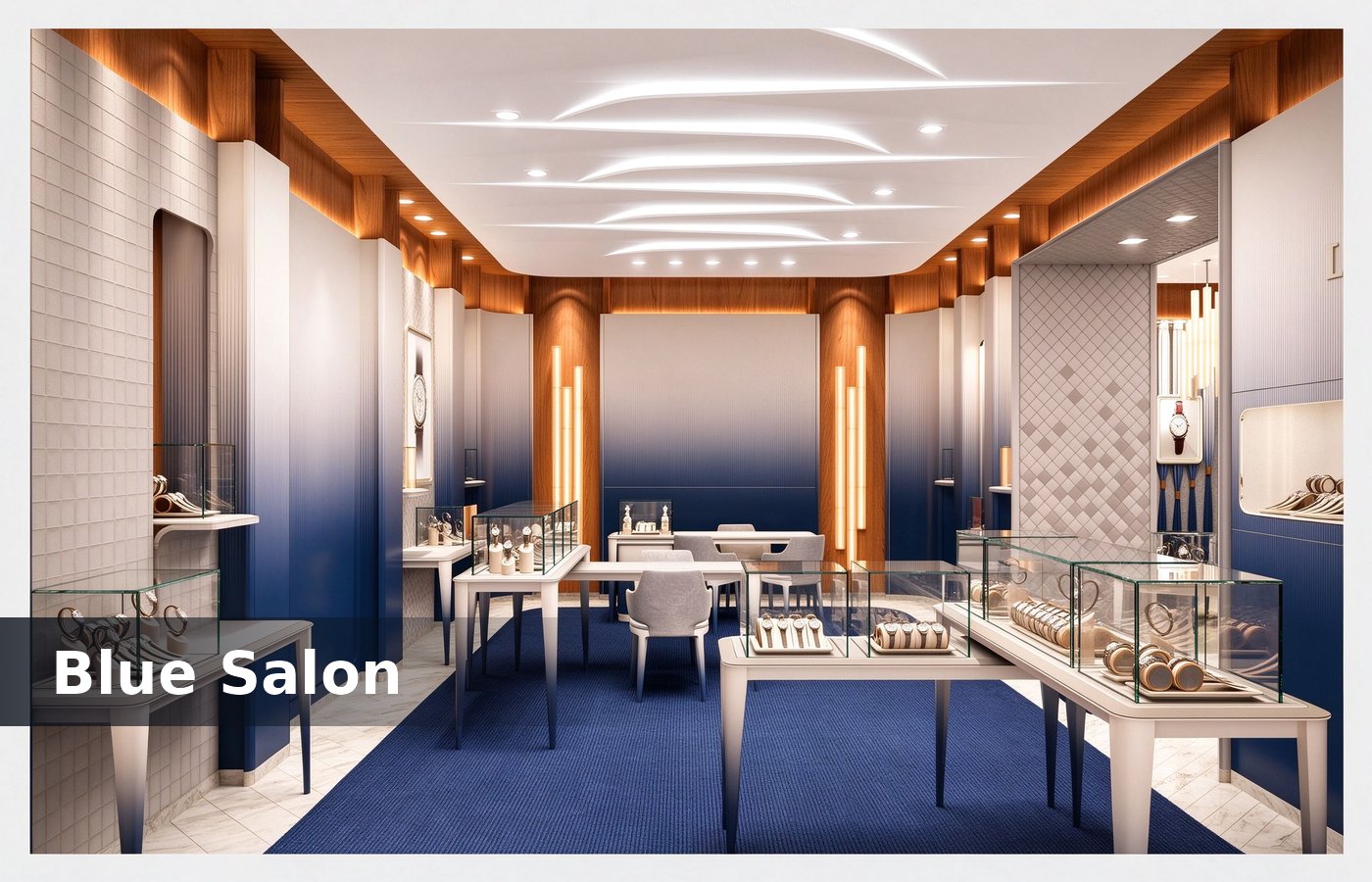
A watch shop turns stock slowly, so the counter shows the range and the vault holds the depth. Plan 60 references on show and 240 in the vault for a 60 sqm shop, and restock twice a week. We keep the alternative on the same quotation, so the buyer compares a number instead of a preference. That number belongs on the drawing, because a route agreed verbally rarely survives a stock count.
Count the trays, not the watches. A shop that counts watches spends a day on a count, and a shop that counts trays spends an hour and finds the same gap. Most of these gaps appear in week one, which is exactly when the insurance file is opened. Mark it on the drawing sheet too, so whoever fits the second shop later has the reference.
Choose a counter finish that hides a fingerprint. A gloss lacquer shows every touch, and a satin laminate at 950 mm stays clean through a Saturday, which matters on a surface a customer leans on. One walk through the empty unit settles the question faster than a week of drawing revisions. None of that shows in a render, which is why we mark the vault wall and the tray count on the plan.
Conclusion
Two doors keep stock off the sales floor, a vault keeps the depth, and a 950 mm counter with 24 trays a metre keeps the range visible. Light inside the case, not above it. Clients who settle it at design stage pay nothing extra, and clients who settle it after opening pay for a rebuild. The same rule holds for a mall unit and a street shop, with the service door mattering more in a mall.
Plan the vault and the service route first. A watch shop that separates stock from sale sells more per square metre, and one that mixes them retail displays. We keep the alternative on the same quotation, so the buyer compares a number instead of a preference. That number belongs on the drawing, because a route agreed verbally rarely survives a stock count.