
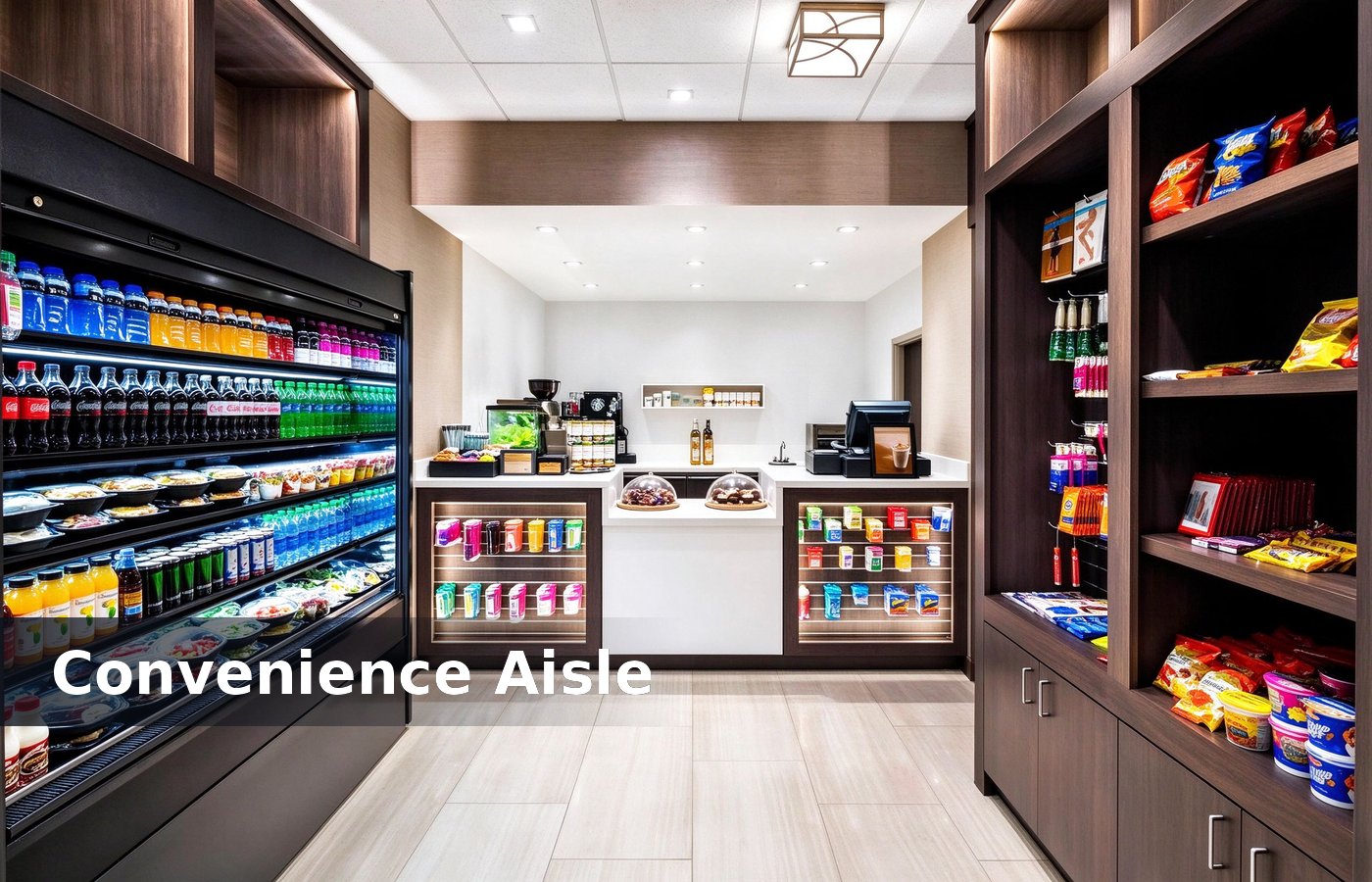
Two thousand lines, not forty thousand
A small supermarket lives on 2000 lines and a big one carries 20 thousand. The 2000 is the whole business, because each line has to turn 3 times a month glass showcases. One trading week with a count sheet settles the question faster than a month of fittings. None of that shows in a render, which is why we mark the walk width and the cooler position on the plan.
A store with 4000 lines and a 40 sqm floor looks full and sells slow. The shelf is a cost, and every line that turns once a month is a line paying rent without earning it. Clients who settle it at design stage pay nothing extra, and clients who settle it after opening pay for a refit. The same rule holds for a mall unit and a street store, with the delivery access mattering more on a street.
The 80 sqm layout
An 80 sqm convenience store runs 2 gondolas at 1.2 m, a 1.5 m checkout and a 4 door cooler. That kit takes 80 percent of the floor and leaves 20 percent as the walk. We keep the alternative on the same quotation, so the buyer compares a number instead of a preference. That number belongs on the store drawing, because a gondola run agreed verbally rarely survives the first delivery.
Keep the walk at 1.5 m between gondolas and 1.2 m at food kiosk. A 900 mm walk fits one customer and blocks the second, and the second is the one who kiosk design. Most of these gaps appear in week one, which is exactly when the first delivery lands. Mark it on the drawing sheet too, so whoever resets a gondola later has the reference without guessing.
Put the cooler at the entry, not at the back. A cooler at the entry sells a cold drink to 1 in 3 walk-ins, and a cooler at the back sells to 1 in 8. One trading week with a count sheet settles the question faster than a month of fittings. None of that shows in a render, which is why we mark the walk width and the cooler position on the plan.
Gondola height and the reach
Gondolas at 1500 mm in a small store, not 1800. A 1500 mm shelf lets a customer see the whole aisle from the entry, and sight lines sell the next category. Clients who settle it at design stage pay nothing extra, and clients who settle it after opening pay for a refit. The same rule holds for a mall unit and a street store, with the delivery access mattering more on a street.
Top shelf at 1400 mm, bottom at 300 mm. Product above 1600 mm needs a step, and a customer will not step refrigerated cases. We keep the alternative on the same quotation, so the buyer compares a number instead of a preference. That number belongs on the store drawing, because a gondola run agreed verbally rarely survives the first delivery.
The 1.5 m checkout
A checkout at 1.5 m with a 600 mm bag bay and a 400 mm card reader serves 18 customers an hour. A checkout at 1.2 m serves 14 and the queue hits the aisle. Most of these gaps appear in week one, which is exactly when the first delivery lands. Mark it on the drawing sheet too, so whoever resets a gondola later has the reference without guessing.
Put 40 impulse lines at the checkout, at 120 to 1400 mm. Impulse adds 8 percent to the basket, and a basket at 12 pays the fixture materials. One trading week with a count sheet settles the question faster than a month of fittings. None of that shows in a render, which is why we mark the walk width and the cooler position on the plan.
Cold, ambient and the 4 C line
A small store runs one 4 door cooler at 4 C, one freezer at minus 18, and 3 ambient runs. That mix covers drinks, dairy, frozen and dry in 12 m of shelf. Clients who settle it at design stage pay nothing extra, and clients who settle it after opening pay for a refit. The same rule holds for a mall unit and a street store, with the delivery access mattering more on a street.
Do not put dairy beside the door. A door that opens 200 times a day warms the milk case, and milk at 8 C loses 2 days shop fixtures. We keep the alternative on the same quotation, so the buyer compares a number instead of a preference. That number belongs on the store drawing, because a gondola run agreed verbally rarely survives the first delivery.
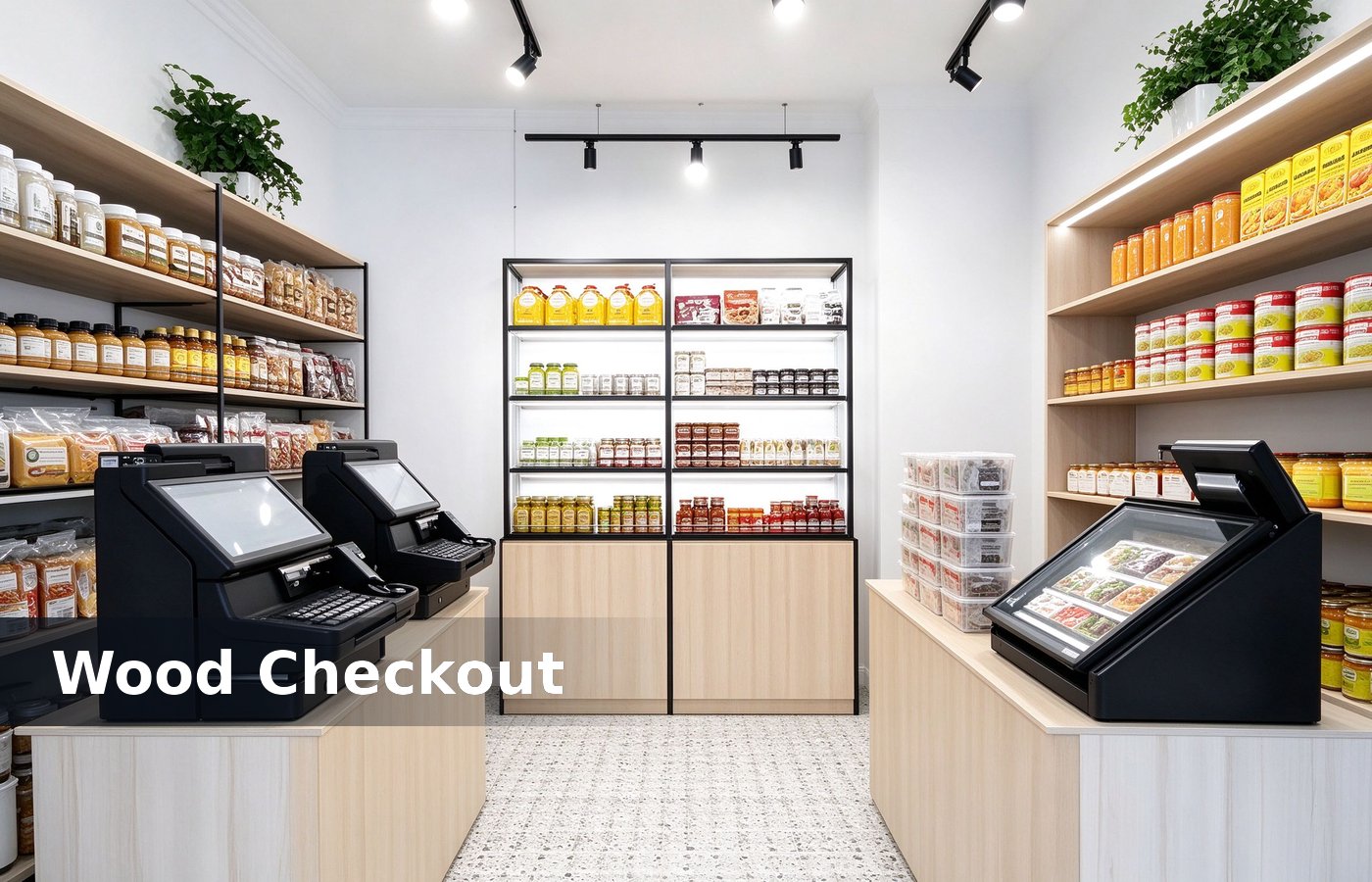
The basket and the 12 line
A convenience basket lands at 8 to 12 with 2.4 items. A basket under 8 does not cover the staff hour, so the mix has to lift the basket, not the price. Most of these gaps appear in week one, which is exactly when the first delivery lands. Mark it on the drawing sheet too, so whoever resets a gondola later has the reference without guessing.
Bundle a drink with a snack at 3.50 instead of 4 separately. A bundle lifts the basket by 12 percent in a store that runs it, and it costs no extra retail displays. One trading week with a count sheet settles the question faster than a month of fittings. None of that shows in a render, which is why we mark the walk width and the cooler position on the plan.
Delivery and the 2 day rule
A small store takes 3 deliveries a week and holds 2 days of stock on the shelf and 4 days in the back. A store that holds 10 days ties up cash in the back room. Clients who settle it at design stage pay nothing extra, and clients who settle it after opening pay for a refit. The same rule holds for a mall unit and a street store, with the delivery access mattering more on a street.
Back room at 15 percent of the floor, not 30. A back room at 30 percent is a warehouse with a shop in front, and the rent is counters and towers. We keep the alternative on the same quotation, so the buyer compares a number instead of a preference. That number belongs on the store drawing, because a gondola run agreed verbally rarely survives the first delivery.
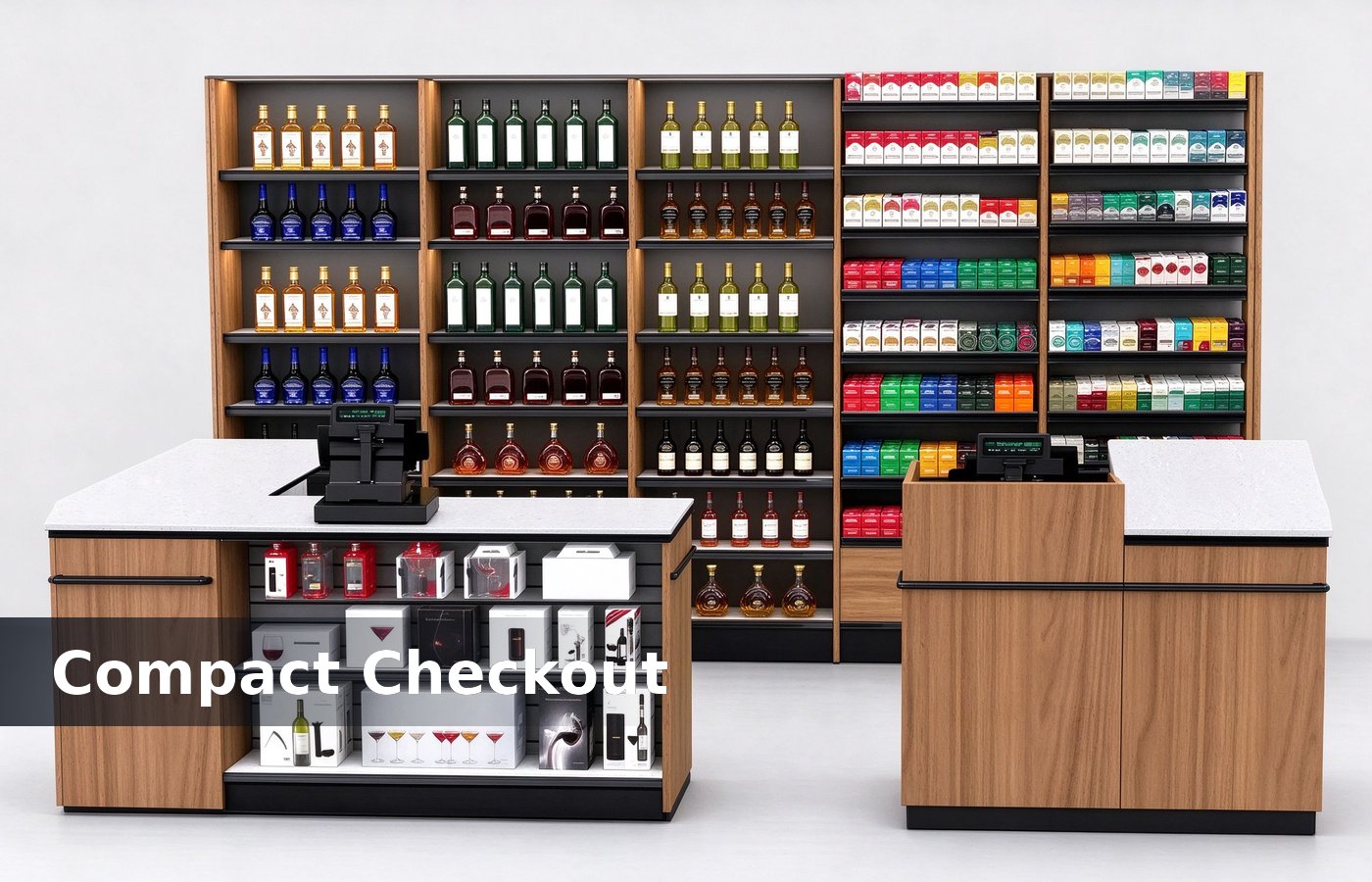
The numbers that run a small store
The table is the operating shape of an 80 sqm convenience store, and each line is a decision the owner makes once and lives with. Most of these gaps appear in week one, which is exactly when the first delivery lands. Mark it on the drawing sheet too, so whoever resets a gondola later has the reference without guessing.
| Item | Number |
|---|---|
| Lines | 2000, 80 percent of floor |
| Gondola | 2 at 1.2 m, 1500 mm high |
| Walk | 1.5 m aisle, 1.2 m checkout |
| Checkout | 1.5 m, 40 impulse lines |
| Basket | 8 to 12, 2.4 items |
| Back room | 15 percent of floor |
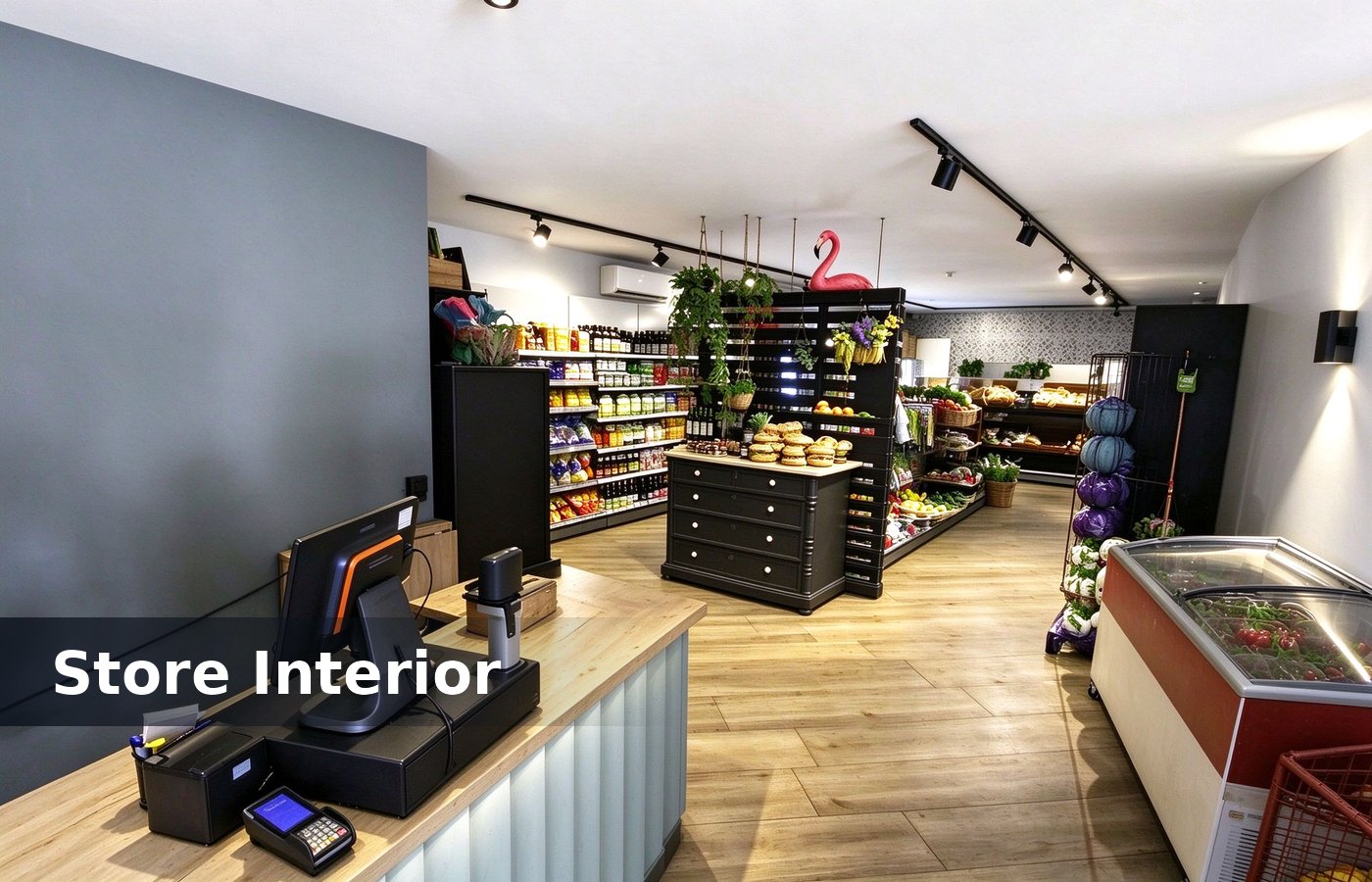
Stock control without software
A small store can run on a daily order sheet and a weekly count. Count 20 key lines every Monday, and the 20 lines tell you 60 percent of the stock position. One trading week with a count sheet settles the question faster than a month of fittings. None of that shows in a render, which is why we mark the walk width and the cooler position on the plan.
A store that counts nothing orders by feel and holds 3 weeks of the wrong item. A store that counts 20 lines holds 2 weeks of the cash counters. Clients who settle it at design stage pay nothing extra, and clients who settle it after opening pay for a refit. The same rule holds for a mall unit and a street store, with the delivery access mattering more on a street.
Staff, shifts and the peak
A 12 hour store needs 2 staff at peak and 1 off peak. Peak runs 7 to 9 am and 5 to 7 pm, which is 5 hours, and 5 hours at 2 staff is the labour bill. We keep the alternative on the same quotation, so the buyer compares a number instead of a preference. That number belongs on the store drawing, because a gondola run agreed verbally rarely survives the first delivery.
One staff member at 18 customers an hour covers a store at 200 customers a day. Two staff at 400. Above 400 a day, the third staff member is the checkout. Most of these gaps appear in week one, which is exactly when the first delivery lands. Mark it on the drawing sheet too, so whoever resets a gondola later has the reference without guessing.
Conclusion
Two thousand lines, 1.5 m aisles, a 1.5 m checkout and a cooler at the entry. Those four carry an 80 sqm store through a 12 hour day. One trading week with a count sheet settles the question faster than a month of fittings. None of that shows in a render, which is why we mark the walk width and the cooler position on the plan.
Run the shelf, not the store. A store that counts 20 lines and turns 2000 lines beats a store that stocks 4000 and counts nothing. Clients who settle it at design stage pay nothing extra, and clients who settle it after opening pay for a refit. The same rule holds for a mall unit and a street store, with the delivery access mattering more on a street.
Depth the gondola at 500 mm and the checkout at 700 mm. A 400 mm gondola cannot take a 300 mm product box, and a box that does not fit sits fixture systems. We keep the alternative on the same quotation, so the buyer compares a number instead of a preference. That number belongs on the store drawing, because a gondola run agreed verbally rarely survives the first delivery.