
A taste, not a trend
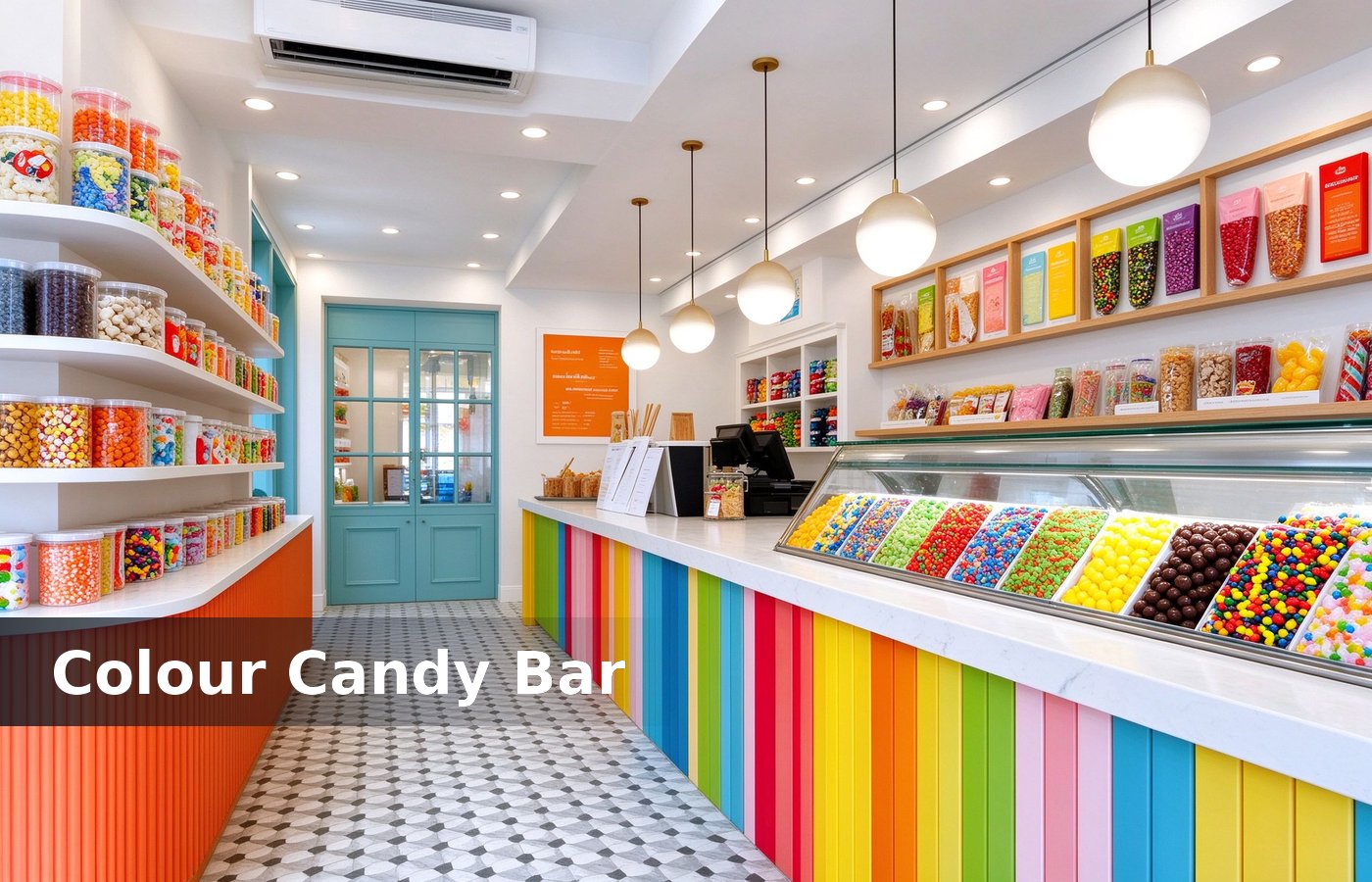
Licorice sells in the Netherlands, Denmark, Finland and Sweden, and it barely sells in Spain or Italy. That difference is taste, not marketing, and it changes how a candy shop stacks its shelves. None of that shows in a render, which is why we mark the bin heights and the aisle on the plan. Clients who settle it at design stage pay nothing extra, and clients who settle it after opening pay for a rebuild.
Salt licorice is the northern version, and a shop that opens in Amsterdam without it loses the local half of the trade on the first weekend. A shop in Barcelona that stacks four facings of it wastes a shelf. The same rule holds for a street shop and a mall unit, with the inspectable lid mattering more in a mall.
Bulk, by weight
Northern candy shops sell most of their stock from bulk bins at 15 to 25 dollars a kilo. A shop with 40 bins at 5 kg each carries 200 kg, which is two weeks of trade for a small unit. We keep the alternative on the same quotation, so the buyer compares a number instead of a preference.
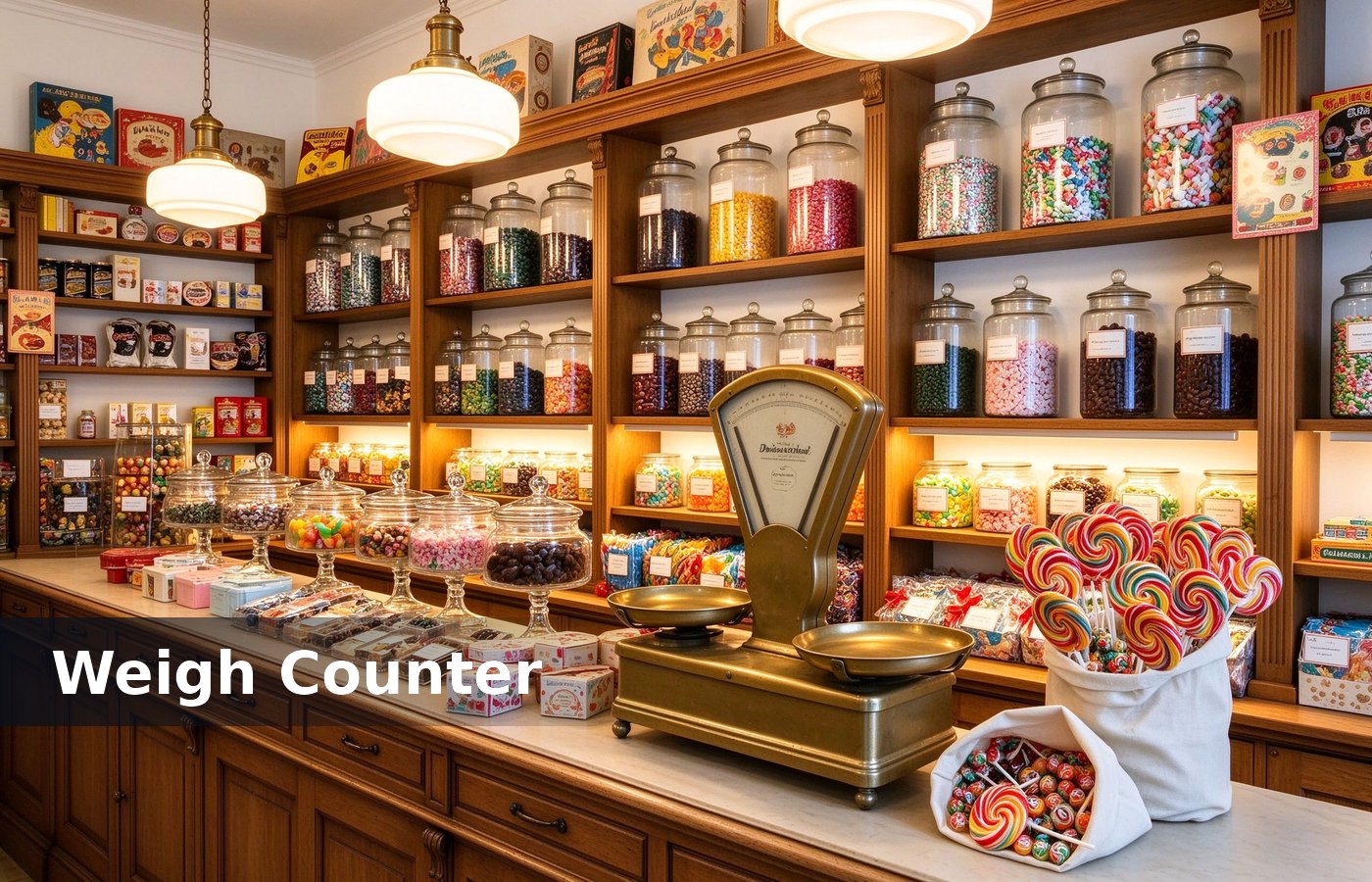
Weigh at the counter, not at the bin. A scale at 950 mm beside the till handles a bag, a scoop and a price label, and a scale on the bin wall forces a customer to hold a bag in one hand. That number belongs on the shop drawing, because a bin height agreed verbally rarely survives the first delivery.
Keep the scoop in the bin, one per bin. A shop that shares scoops mixes salt licorice into the sweet bin, and a customer who wanted sweet gets salt and glass showcases. Most of these gaps appear in week one, which is exactly when the first stock lands. Mark it on the drawing sheet too, so whoever restocks the wall later has the reference without guessing.
Bin height and reach
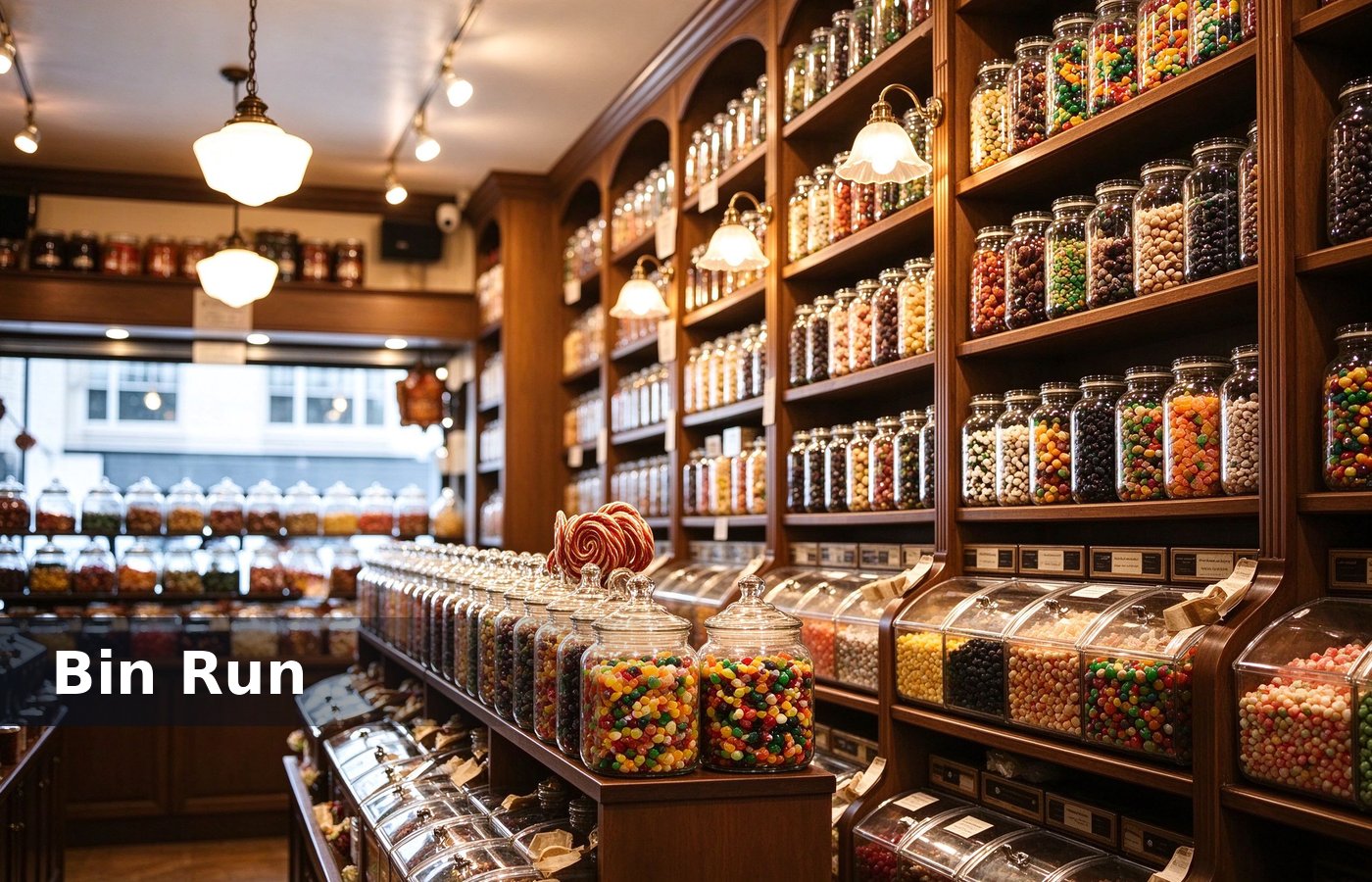
Bins run at 700 to 1100 mm on a counter, and 400 mm deep for a gravity bin. A bin above 1200 mm hides the last third of the range, and a bin below 600 mm makes every scoop a bend. One walk with a scoop in hand settles the question faster than a week of drawing revisions.
Keep 900 mm between bin runs. A shop with 600 mm aisles turns a bulk pick into a queue, and a queue at a bulk wall stops the tasting that kiosk design. None of that shows in a render, which is why we mark the bin heights and the aisle on the plan. Clients who settle it at design stage pay nothing extra, and clients who settle it after opening pay for a rebuild.
Jars and the old wall
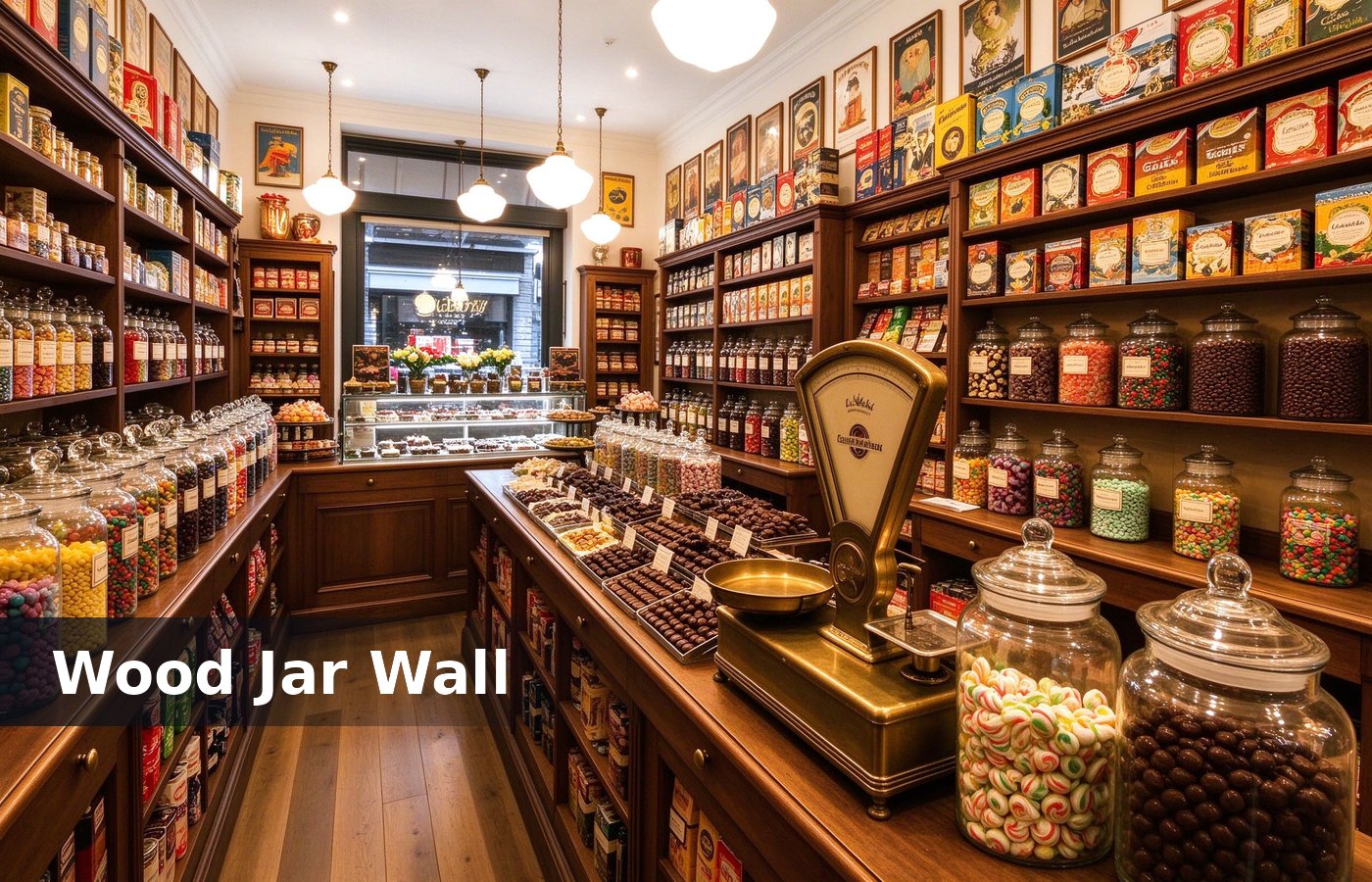
A jar wall at 300 mm pitch with glass jars holds 240 facings in a 2.4 m run. Jars sell the top price lines, bins sell the volume, and a shop needs both to look stocked at two price points. The same rule holds for a street shop and a mall unit, with the inspectable lid mattering more in a mall.
Set the jar shelf at 250 mm depth and the jars at 1.2 kg maximum. A 2 kg jar is too heavy to lift in one hand, and a customer who needs two hands puts the jar down and display cases. We keep the alternative on the same quotation, so the buyer compares a number instead of a preference.
Salt, sweet and the label
Label salt licorice in the local language, not in English only. A shop in Copenhagen that labels only in English sells to tourists and misses the weekday local trade. That number belongs on the shop drawing, because a bin height agreed verbally rarely survives the first delivery. Most of these gaps appear in week one, which is exactly when the first stock lands.
Keep the salt line at eye level and the sweet line below. A salt customer looks for salt, and a shop that hides the salt at the bottom shelf reads as a shop without it. Mark it on the drawing sheet too, so whoever restocks the wall later has the reference without guessing. One walk with a scoop in hand settles the question faster than a week of drawing revisions.
Use closed glass on the salt line. Salt licorice absorbs moisture and turns soft in an open bin, and a soft piece reads as old stock even when it arrived the same week. None of that shows in a render, which is why we mark the bin heights and the aisle on the plan. Clients who settle it at design stage pay nothing extra, and clients who settle it after opening pay for a rebuild.
Colour and light
Candy needs 400 to 500 lux with a CRI above 90, and a warm 3000 K. A cool 5000 K light turns a red sweet brown, and a customer cannot tell two reds apart. The same rule holds for a street shop and a mall unit, with the inspectable lid mattering more in a mall. We keep the alternative on the same quotation, so the buyer compares a number instead of a preference.
Light the bins from the front, not from above. A downlight above a bin puts the scoop shadow across the candy, and a shadow on a bulk bin makes a full bin look shop fixtures. That number belongs on the shop drawing, because a bin height agreed verbally rarely survives the first delivery. Most of these gaps appear in week one, which is exactly when the first stock lands.
Hygiene and the scoop rule
Bulk candy is food, and a bulk wall needs a bin lid, a scoop rest and a wipe cloth at each run. A wall without lids fails an inspection in most European markets. Mark it on the drawing sheet too, so whoever restocks the wall later has the reference without guessing. One walk with a scoop in hand settles the question faster than a week of drawing revisions.
Plan a bag station at the end of the run: bags, ties, labels and a pen. A customer who has to walk to the till for a bag drops the scoop on the counter and the next customer fixture materials. None of that shows in a render, which is why we mark the bin heights and the aisle on the plan.
Six numbers for a candy shop
These six numbers cover most of a candy shop fit out, and each one is cheaper to plan than to change after the bins arrive. Clients who settle it at design stage pay nothing extra, and clients who settle it after opening pay for a rebuild. The same rule holds for a street shop and a mall unit, with the inspectable lid mattering more in a mall.
- Bins: 40 at 5 kg, 400 mm deep, at 700 to 1100 mm height.
- Jar wall: 300 mm pitch, 250 mm shelf, 1.2 kg per jar.
- Weigh counter at 950 mm beside the till.
- Aisle 900 mm between bin runs.
- Light 400 to 500 lux, CRI 90, 3000 K.
- Lid, scoop rest and wipe at every run.
Margin and waste
Bulk candy runs a 45 to 55 percent margin, and waste runs 4 to 8 percent on open bins. A shop with lids and a scoop rest keeps waste at the low end, and a shop without them loses the difference. We keep the alternative on the same quotation, so the buyer compares a number instead of a preference.
Order little and often. Candy has a six to nine month shelf life, and a shop that buys a year of stock ends with a sale table in month seven. That number belongs on the shop drawing, because a bin height agreed verbally rarely survives the first delivery. Most of these gaps appear in week one, which is exactly when the first stock lands.
Depth the bin counter at 500 mm. A 400 mm bin plus a lip needs 500 mm of counter, and a 450 mm counter leaves the fixture depth. Mark it on the drawing sheet too, so whoever restocks the wall later has the reference without guessing. One walk with a scoop in hand settles the question faster than a week of drawing revisions.
Conclusion
Sell the local taste first: salt in the north, sweet in the south, and both in a city with mixed trade. Bulk bins at 700 to 1100 mm, jars at 300 mm pitch, and a scale beside the till. None of that shows in a render, which is why we mark the bin heights and the aisle on the plan.
A candy shop lives on the pick, not the display. A wall a customer can reach sells twice the weight of a wall they only look at. Clients who settle it at design stage pay nothing extra, and clients who settle it after opening pay for a rebuild. The same rule holds for a street shop and a mall unit, with the inspectable lid mattering more in a mall.
Set the till at 1000 mm and 1.3 m long. A candy bag is light and a queue moves fast, and a counter that fits a bag and a scale keeps that queue at retail displays. We keep the alternative on the same quotation, so the buyer compares a number instead of a preference. That number belongs on the shop drawing, because a bin height agreed verbally rarely survives the first delivery.