
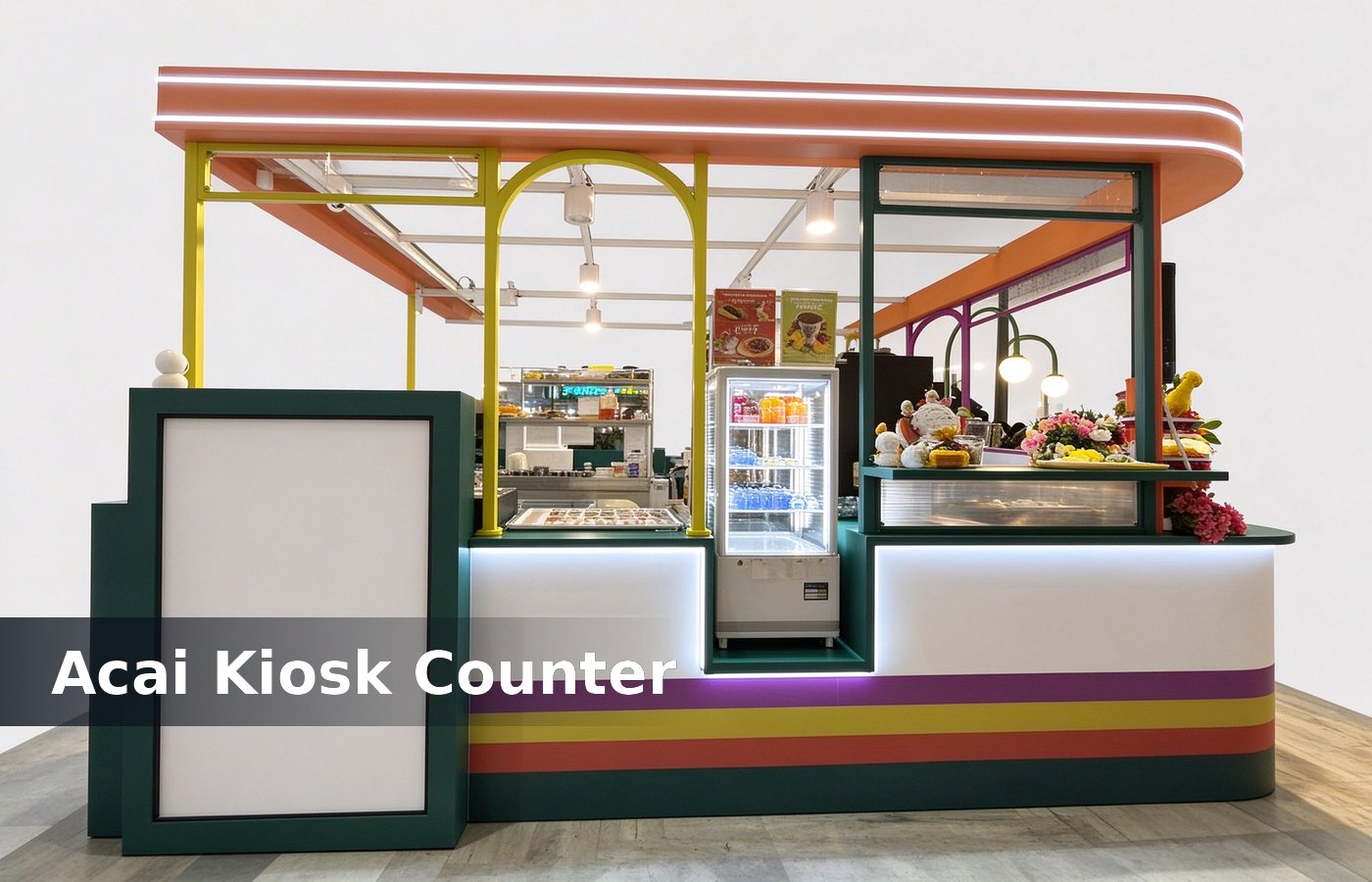
The bowl is 90 seconds
An acai kiosk in a mall lives on 90 seconds: scoop the base, add 4 toppings, weigh, seal. A kiosk that takes 2 minutes has a queue at 12 pm and an empty counter at 2. None of that shows in a render, which is why we mark the topping bar and the freezer on the plan. Clients who settle it at design stage pay nothing extra, and clients who settle it after opening pay for a rebuild.
90 seconds at 2 staff is 50 bowls an hour. A kiosk with one person on the base and one on toppings does 50, glass showcases. The same rule holds for a mall bay and a food court unit, with the freezer line mattering more in a mall. We keep the alternative on the same quotation, so the buyer compares a number instead of a preference.
The blend, not the scoop
An acai bowl is blended, not scooped from a tub. The base runs through a blender with 100 ml of liquid for 20 seconds, and a kiosk with no blender sells a kiosk design. That number belongs on the kiosk drawing, because a tray count agreed verbally rarely survives the first lunch. Most of these gaps appear in week one, which is exactly when the first queue forms.
Plan a 2500 W blender at the back, 300 mm from the base freezer. A blender 1 m away costs 5 seconds per bowl, and 5 seconds at 50 bowls is 4 minutes of queue. Mark it on the drawing sheet too, so whoever changes a tray later has the reference without guessing. One lunch hour with a stopwatch settles the question faster than a week of drawing revisions.
Four toppings, twelve trays
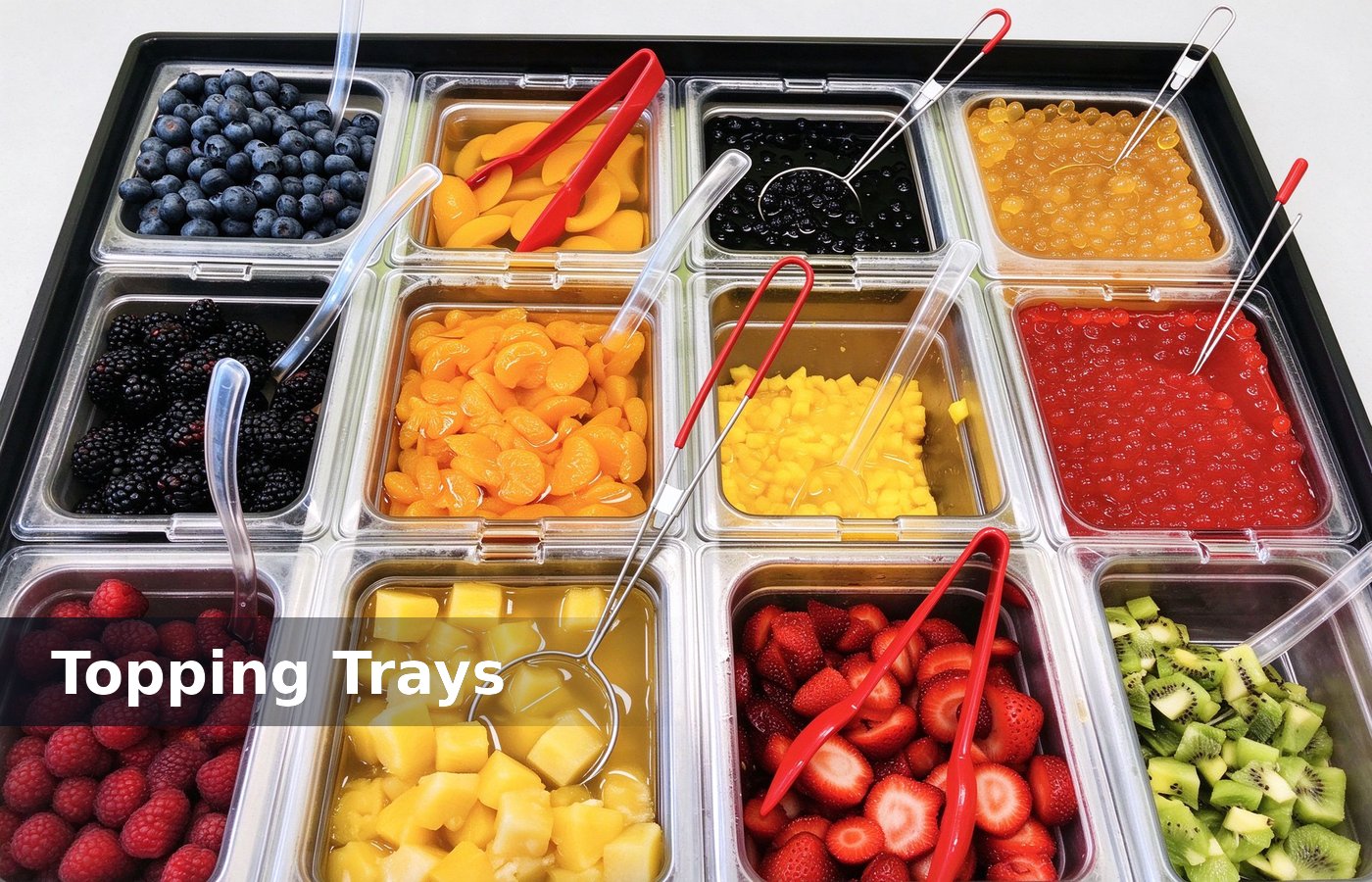
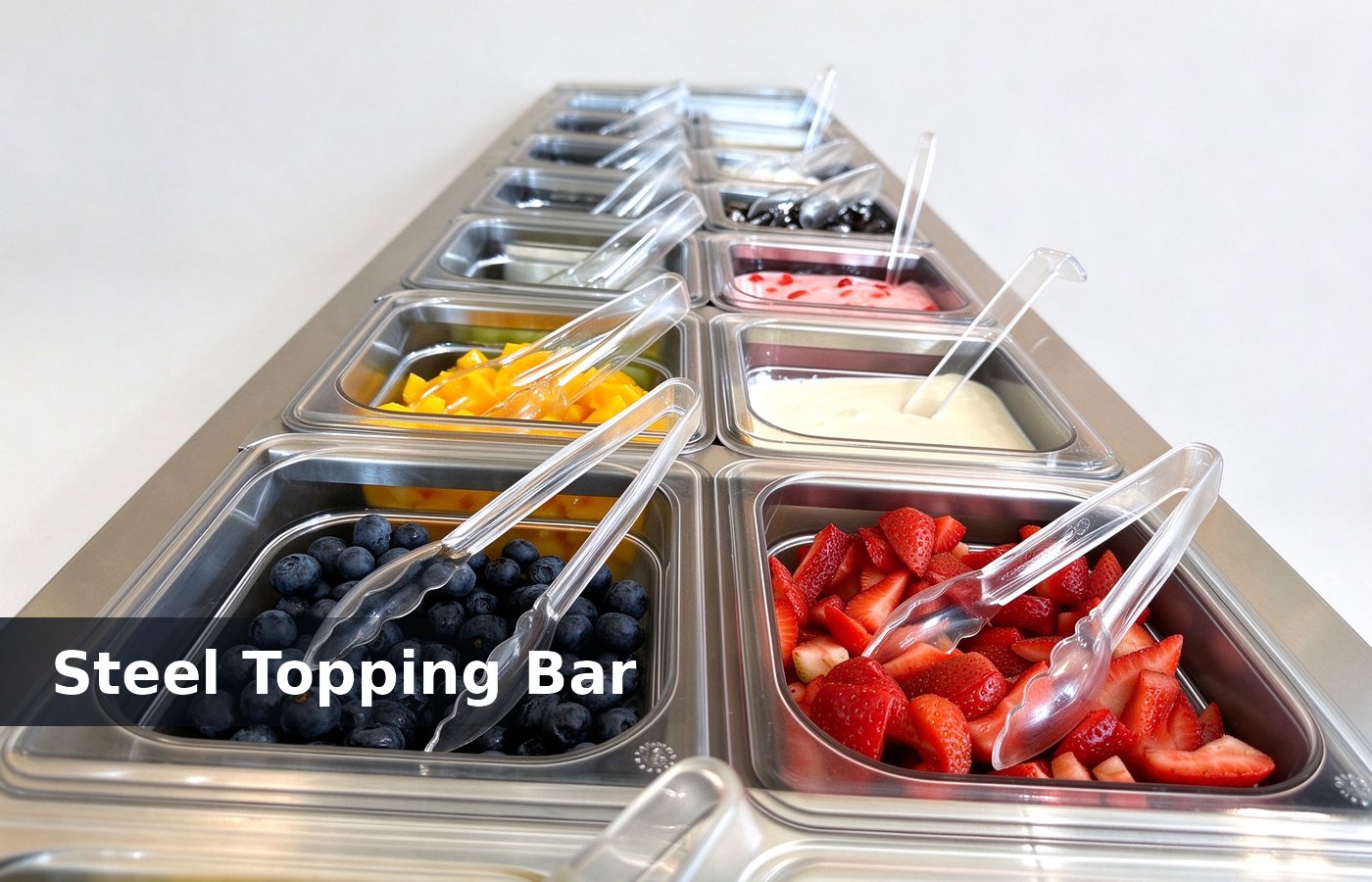
The topping bar runs 12 trays at 1.2 m, not 30. Twelve trays in 4 colours read in one glance, and 30 trays slow the choice by 20 seconds. None of that shows in a render, which is why we mark the topping bar and the freezer on the plan. Clients who settle it at design stage pay nothing extra, and clients who settle it after opening pay for a rebuild.
Keep the trays at 4 C on an ice pan, 150 mm above the counter. A tray on ice at counter height stays at 4 C for 3 hours, and a tray at room temperature sours in 45 minutes. The same rule holds for a mall bay and a food court unit, with the freezer line mattering more in a mall.
Put the topping bar at 900 mm on the customer side. A bar at 1000 mm hides the tray from a shorter customer, and a hidden tray gets skipped, which fixture materials. We keep the alternative on the same quotation, so the buyer compares a number instead of a preference. That number belongs on the kiosk drawing, because a tray count agreed verbally rarely survives the first lunch.
The 5 sqm kiosk plan
A 5 sqm kiosk runs 1.8 m of counter, a 1.2 m topping bar and a 0.6 m base freezer. That kit holds 2 staff and serves 50 bowls an hour drink kiosk. Most of these gaps appear in week one, which is exactly when the first queue forms. Mark it on the drawing sheet too, so whoever changes a tray later has the reference without guessing.
Order flows left to right: order, blend, top, pay. A kiosk laid out right to left crosses two staff paths and drops to 35 bowls an hour. One lunch hour with a stopwatch settles the question faster than a week of drawing revisions. None of that shows in a render, which is why we mark the topping bar and the freezer on the plan.
Freezer and the 4 C line
The base freezer sits at minus 18 C and the fruit at 4 C, and the two units cannot share a circuit. Plan a 32 A supply and one dedicated line for the freezer. Clients who settle it at design stage pay nothing extra, and clients who settle it after opening pay for a rebuild. The same rule holds for a mall bay and a food court unit, with the freezer line mattering more in a mall.
A freezer on a shared line trips at the lunch blend. A freezer that trips at 4 pm loses the base overnight, and a thawed base cannot be refrozen food kiosk. We keep the alternative on the same quotation, so the buyer compares a number instead of a preference. That number belongs on the kiosk drawing, because a tray count agreed verbally rarely survives the first lunch.
The fruit order, in kilos
A kiosk at 200 bowls a week uses 18 kg of banana, 12 kg of strawberry, 8 kg of blueberry and 5 kg of granola. Order twice a week, not daily. Most of these gaps appear in week one, which is exactly when the first queue forms. Mark it on the drawing sheet too, so whoever changes a tray later has the reference without guessing.
Order in 5 kg cases and prep in 2 hour blocks. A kiosk that preps 8 hours of fruit at 6 am has brown banana by 2 pm, and brown banana retail displays. One lunch hour with a stopwatch settles the question faster than a week of drawing revisions. None of that shows in a render, which is why we mark the topping bar and the freezer on the plan.
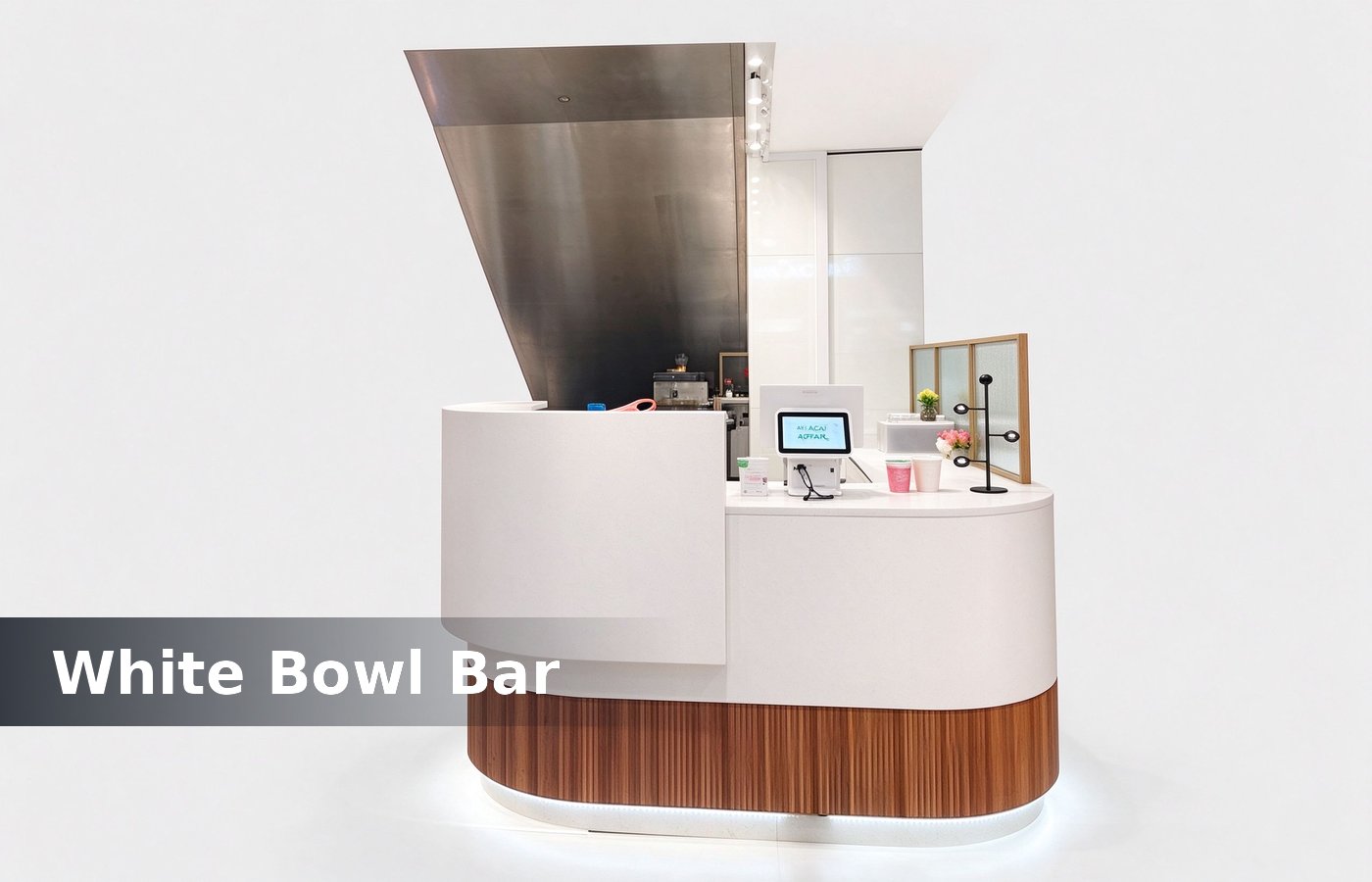
Price and the 9 line
An acai bowl sells at 9 to 12 in a mall, with a 30 percent food cost. A bowl under 8 loses money at 5 sqm rent, and a bowl over 13 loses the student. Clients who settle it at design stage pay nothing extra, and clients who settle it after opening pay for a rebuild. The same rule holds for a mall bay and a food court unit, with the freezer line mattering more in a mall.
Add a 3 topping extra at 1.50. The extra lifts the basket by 16 percent and costs 0.40 in fruit, and it is the cheapest margin add shop fixtures. We keep the alternative on the same quotation, so the buyer compares a number instead of a preference. That number belongs on the kiosk drawing, because a tray count agreed verbally rarely survives the first lunch.
Six numbers for an acai kiosk
The table is the kit we quote for a mall acai bay, and every line is a decision that shows up in the first week of trade. Most of these gaps appear in week one, which is exactly when the first queue forms. Mark it on the drawing sheet too, so whoever changes a tray later has the reference without guessing.
| Item | Number |
|---|---|
| Bowl time | 90 seconds |
| Output | 50 an hour, 2 staff |
| Topping bar | 1.2 m, 12 trays at 4 C |
| Floor | 5 sqm, 1.8 m counter |
| Freezer | Minus 18 C, 0.6 m |
| Price | 9 to 12, 30 percent food |
The health angle, honestly
Acai sells as a better choice, and the claim only holds if the fruit is fresh and the granola is measured. A bowl with 60 g of granola is a dessert, not a health food. One lunch hour with a stopwatch settles the question faster than a week of drawing revisions. None of that shows in a render, which is why we mark the topping bar and the freezer on the plan.
Print the base weight on the menu, not the calories. A customer who sees 180 g of base and 40 g of granola trusts the bowl, and trust sells the second visit. Clients who settle it at design stage pay nothing extra, and clients who settle it after opening pay for a rebuild. The same rule holds for a mall bay and a food court unit, with the freezer line mattering more in a mall.
Staff and the 3 hour shift
A kiosk needs 2 staff at peak and 1 off peak, and a 3 hour peak needs 2 staff on 4 hour shifts. A kiosk with 3 staff at peak wastes one, because the topping bar is the bottleneck. We keep the alternative on the same quotation, so the buyer compares a number instead of a preference. That number belongs on the kiosk drawing, because a tray count agreed verbally rarely survives the first lunch.
Train one staff member to blend and one to top, and rotate every 2 hours. A staff member on toppings for 6 hours loses accuracy in the tray and the bowl gets heavy. Most of these gaps appear in week one, which is exactly when the first queue forms. Mark it on the drawing sheet too, so whoever changes a tray later has the reference without guessing.
Conclusion
Ninety seconds, a 2500 W blender, 12 trays at 4 C and a 5 sqm kiosk. Those four make an acai kiosk a service line instead of a dessert stand. One lunch hour with a stopwatch settles the question faster than a week of drawing revisions. None of that shows in a render, which is why we mark the topping bar and the freezer on the plan.
Sell the bowl you can repeat. A kiosk that lands the same bowl in 90 seconds earns the second visit, and the second visit is the whole margin. Clients who settle it at design stage pay nothing extra, and clients who settle it after opening pay for a rebuild. The same rule holds for a mall bay and a food court unit, with the freezer line mattering more in a mall.
Depth the counter at 700 mm and the topping bar at 450 mm. A 400 mm bar cannot take 12 trays and a scoop, and the scoop end lands on the floor at peak. We keep the alternative on the same quotation, so the buyer compares a number instead of a preference. That number belongs on the kiosk drawing, because a tray count agreed verbally rarely survives the first lunch.