
Checklist before the lease
Perfume is the hardest small retail category to start badly. Stock is expensive, testers disappear, and a bay with the wrong light makes a ninety dollar bottle look like a nine dollar one. That number belongs on the drawing, because a plan agreed verbally rarely survives a mall inspection. Most of these gaps appear in week one, which is exactly when a mall lease starts running.
Nine items decide whether a perfume shop opens clean or opens in correction mode. Work through them in order, because the licence and the format change every number after it. Mark it on the crate label too, so whoever installs it later has the reference without hunting a folder. Two minutes with a tape measure settles the question faster than an hour of catalogue reading.
Step one: licence and packing
Fragrance is alcohol based, so it counts as a regulated good in most markets. A shop selling imported bottles needs an importer of record, a customs file per SKU and a label in the local language. None of that shows in a render, which is why we check it on a sample shelf before the run is released. Clients who settle it at design stage pay nothing extra, and clients who settle it after opening pay for a rebuild.
Mall leases add a second layer. Some centres restrict alcohol based product near food bays, and a perfume unit placed beside a bakery can be asked to move after opening, at the tenant cost. The same rule holds for a fixed kiosk and for a shop unit, with the removal clause mattering more on the kiosk build. We keep the alternative on the same quotation, so the buyer compares a number instead of a preference.
Check the fire code as well. A storeroom holding more than a set volume of flammable liquid needs a rated cabinet, and a shop with six hundred bottles in open shelving kiosk design. That number belongs on the drawing, because a plan agreed verbally rarely survives a mall inspection. Most of these gaps appear in week one, which is exactly when a mall lease starts running.
Step two: pick the format
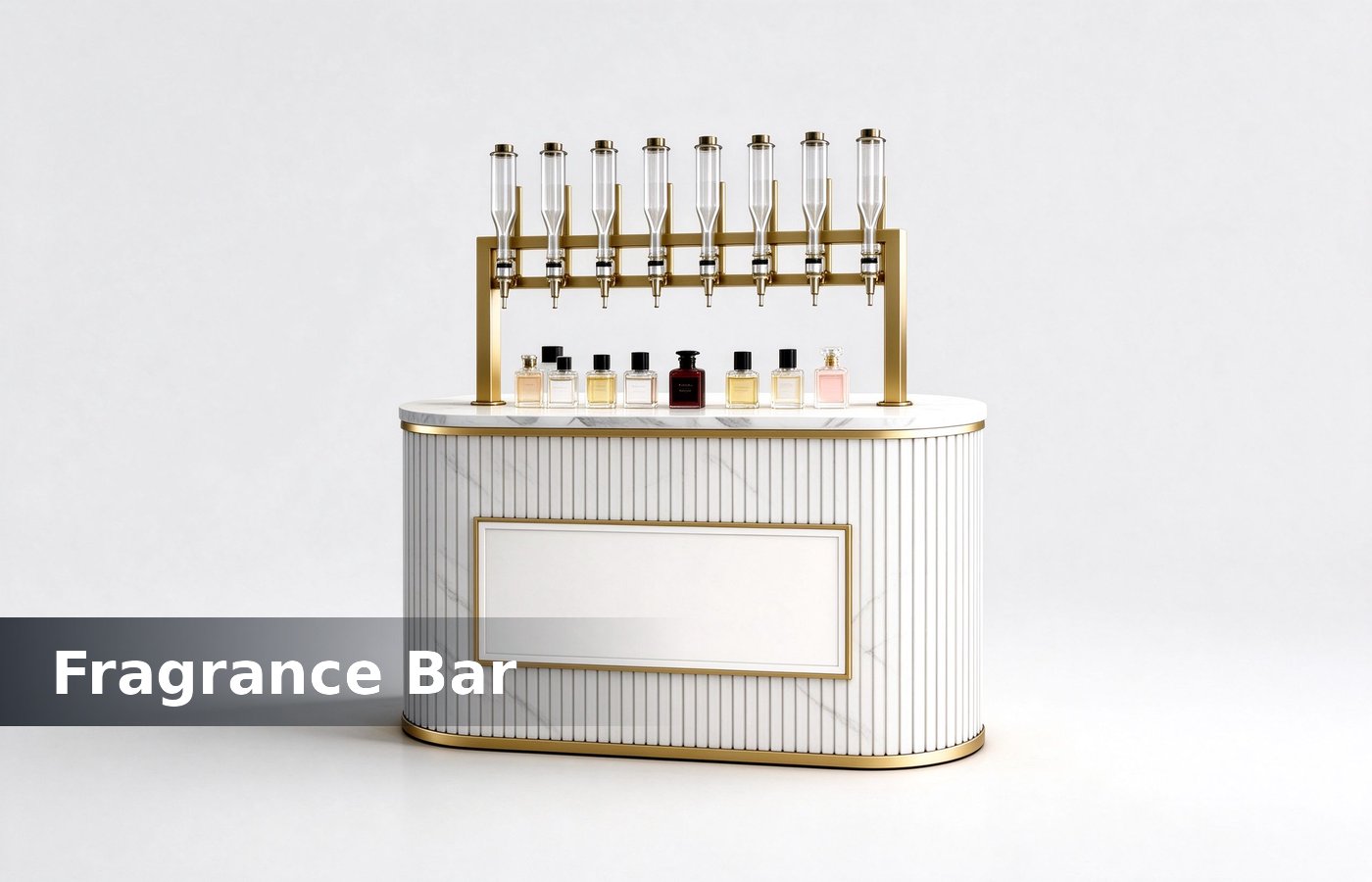
Three formats sell perfume: a mall kiosk at three to five square metres, a shop unit at twenty to forty, and a counter inside an existing beauty store. Each carries a different stock count and rent. Mark it on the crate label too, so whoever installs it later has the reference without hunting a folder. Two minutes with a tape measure settles the question faster than an hour of catalogue reading.
A kiosk suits a curated range of one hundred and twenty to two hundred SKUs and a fast tester model. A shop unit suits six hundred to nine hundred SKUs with a consultation table, and a counter suits a brand that already has traffic. None of that shows in a render, which is why we check it on a sample shelf before the run is released.
Start with the format the rent allows, not the format the brand imagines. A three square metre kiosk at a strong mall entrance often outsells a thirty square metre unit in a quiet corridor, and the build costs a fifth. Clients who settle it at design stage pay nothing extra, and clients who settle it after opening pay for a rebuild.
Step three: layout for bottles
Perfume needs shallow shelves, not deep ones. A 300 mm shelf shows six bottles in a row and keeps the label facing the aisle, and a 450 mm shelf hides the back row for good. The same rule holds for a fixed kiosk and for a shop unit, with the removal clause mattering more on the kiosk build.
Plan on 80 mm of frontage per bottle at 100 ml. A 2.4 m wall at three shelves then holds about ninety SKUs, which is a working kiosk range once duplicates sit in stock. We keep the alternative on the same quotation, so the buyer compares a number instead of a preference. That number belongs on the drawing, because a plan agreed verbally rarely survives a mall inspection.
Keep the top shelf at 1.5 m. A fragrance wall above eye level gets no test, and a wall below 700 mm gets handled by children, and both cases end in a write off. Most of these gaps appear in week one, which is exactly when a mall lease starts running. Mark it on the crate label too, so whoever installs it later has the reference without hunting a folder.
Step four: light decides price
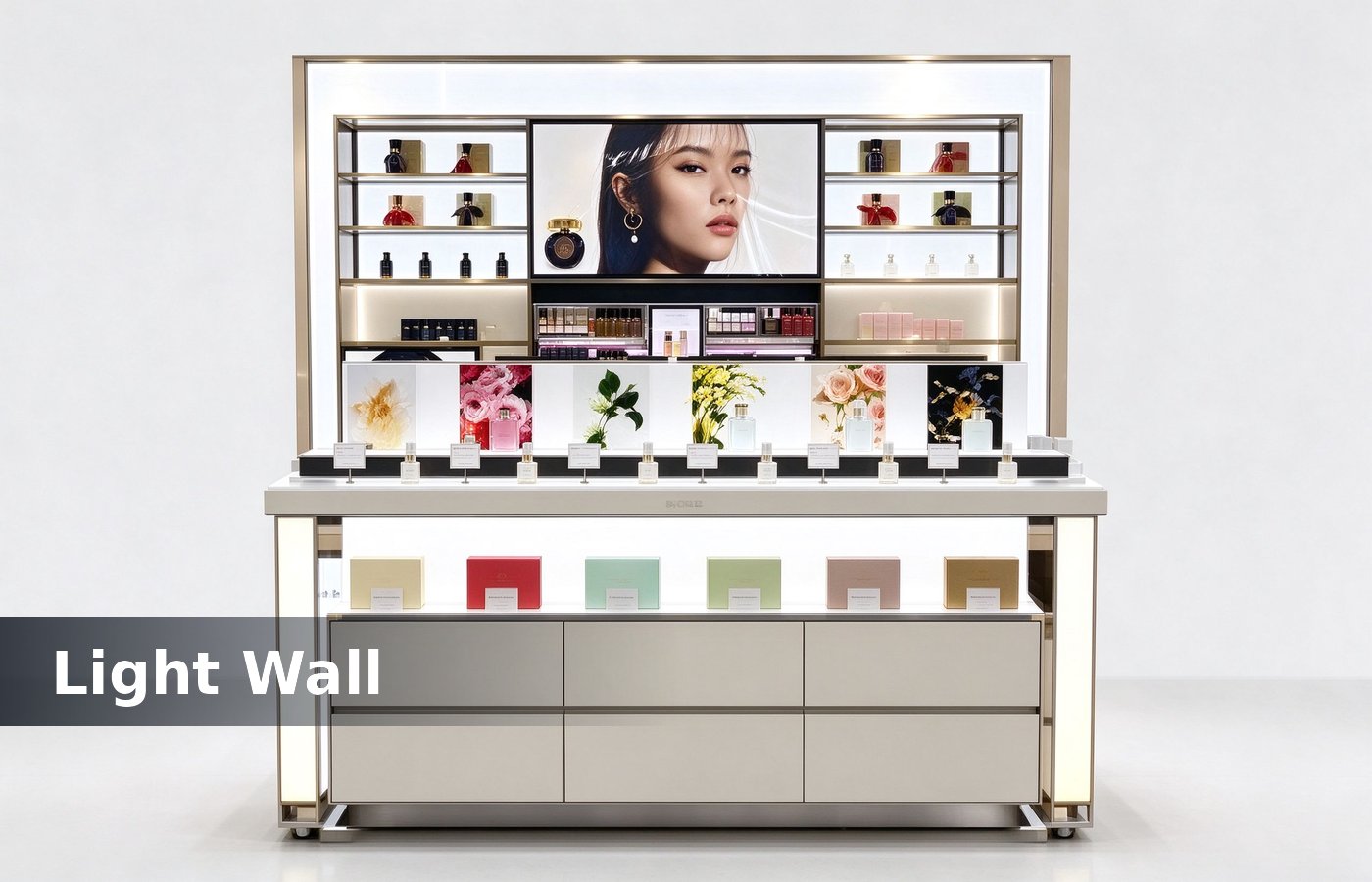
Light does more for perfume than any other fixture. A 3000 K spot at a 24 degree beam makes amber glass glow, and a cool 6000 K strip flattens every bottle into the same grey. Two minutes with a tape measure settles the question faster than an hour of catalogue reading. None of that shows in a render, which is why we check it on a sample shelf before the run is released.
Use a warm neutral around 3000 to 3500 K with a high colour rendering index. A low index light turns a rose note brown on the shelf, and the customer display cases. Clients who settle it at design stage pay nothing extra, and clients who settle it after opening pay for a rebuild. The same rule holds for a fixed kiosk and for a shop unit, with the removal clause mattering more on the kiosk build.
Step five: stock and testers
Testers are a stock line, not an afterthought. Budget one tester per SKU per season, and a kiosk with ninety SKUs then carries ninety testers in the open and ninety sealed bottles behind. We keep the alternative on the same quotation, so the buyer compares a number instead of a preference. That number belongs on the drawing, because a plan agreed verbally rarely survives a mall inspection.
That doubles the capital on the shelf. A hundred dollar wholesale bottle means roughly eighteen thousand dollars tied up in a three square metre bay before the first sale, which is why range control matters. Most of these gaps appear in week one, which is exactly when a mall lease starts running. Mark it on the crate label too, so whoever installs it later has the reference without hunting a folder.
Keep sealed stock in a lockable drawer under the counter and refill from it twice a day. A shop that refills from the display loses two bottles a week to shrinkage and cash counters. Two minutes with a tape measure settles the question faster than an hour of catalogue reading. None of that shows in a render, which is why we check it on a sample shelf before the run is released.
Step six: what the build costs
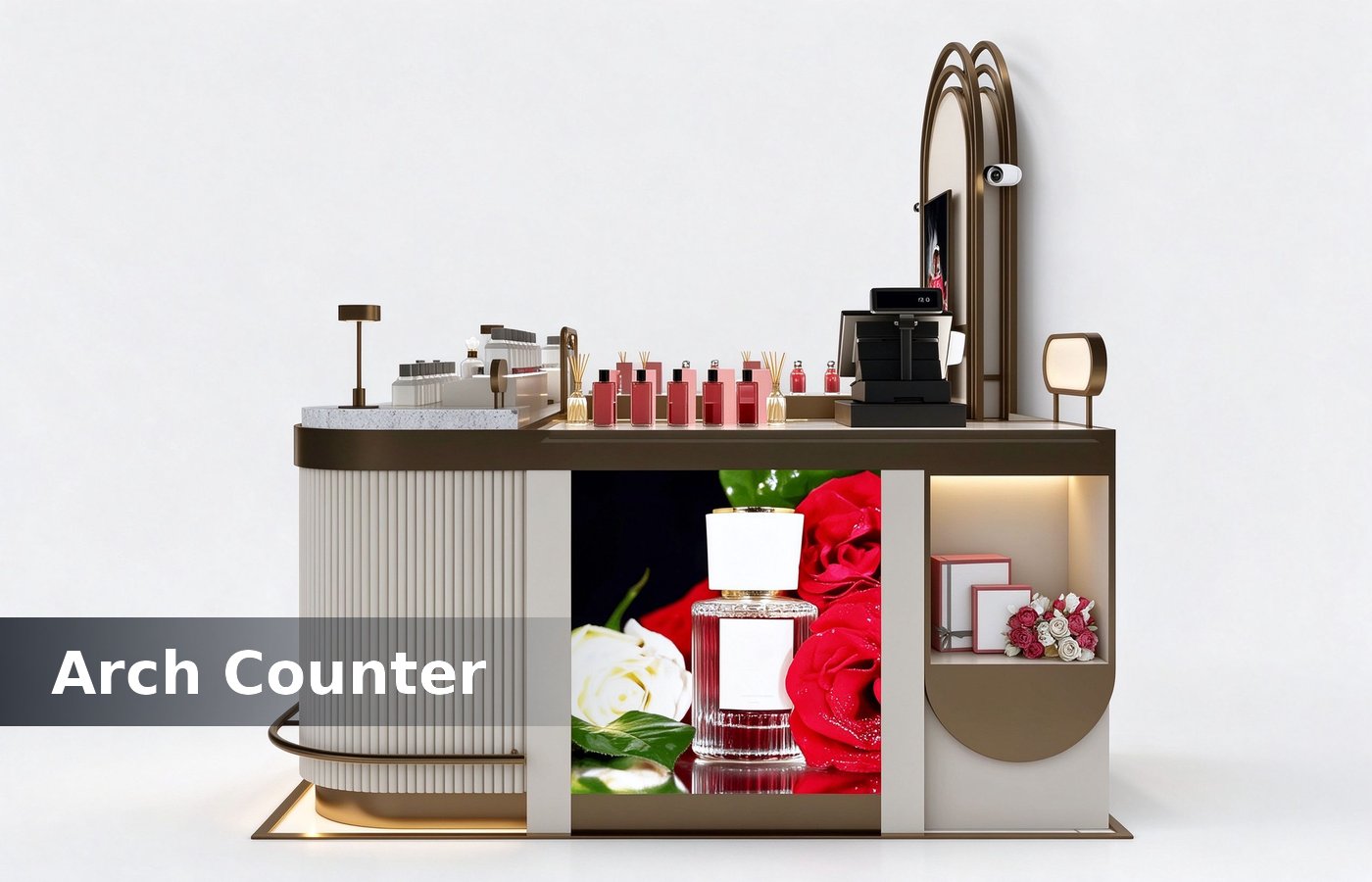
The table is the short version we send a client who asks what a perfume kiosk costs at factory terms. Clients who settle it at design stage pay nothing extra, and clients who settle it after opening pay for a rebuild. The same rule holds for a fixed kiosk and for a shop unit, with the removal clause mattering more on the kiosk build.
| Item | Kiosk, 3 sqm | Shop, 25 sqm |
|---|---|---|
| Fixture build | USD 5,000 to 8,000 | USD 14,000 to 22,000 |
| Lighting | Included, track and spots | USD 2,000 to 4,000 |
| Stock at cost | USD 12,000 to 20,000 | USD 40,000 and up |
| Lead time | 4 to 5 weeks | 6 to 8 weeks |
Step seven: power and storage
A fragrance unit is light heavy and power light. Track spots, a lit fascia and a small fridge for heat sensitive stock pull under 2 kW, so a standard single phase supply covers it. We keep the alternative on the same quotation, so the buyer compares a number instead of a preference. That number belongs on the drawing, because a plan agreed verbally rarely survives a mall inspection.
Storage is the real constraint. Sealed stock needs a lockable cabinet out of customer reach, and a shop unit needs a back room at least four square metres for cartons and a packing bench. Most of these gaps appear in week one, which is exactly when a mall lease starts running. Mark it on the crate label too, so whoever installs it later has the reference without hunting a folder.
Depth drives the plan. A 1.2 m kiosk gives one shelf wall and a counter, and a 1.8 m kiosk gives two wall runs plus a consultation end, and the second layout kiosk depth. Two minutes with a tape measure settles the question faster than an hour of catalogue reading. None of that shows in a render, which is why we check it on a sample shelf before the run is released.
Step eight: staff and sampling
Sampling is the sale. A customer who tests three scents buys more often than one who reads three labels, and a kiosk without a tester protocol turns a fragrance shop into a bottle shelf. Clients who settle it at design stage pay nothing extra, and clients who settle it after opening pay for a rebuild. The same rule holds for a fixed kiosk and for a shop unit, with the removal clause mattering more on the kiosk build.
Train two staff on a fixed order: skin test, wait two minutes, ask one question, then offer a second scent. A script that pushes the top seller first raises the average ticket and kills repeat visits. We keep the alternative on the same quotation, so the buyer compares a number instead of a preference. That number belongs on the drawing, because a plan agreed verbally rarely survives a mall inspection.
Keep blotter strips, mirror, water and a small tray on the counter. Four items that cost almost nothing separate a shop that feels professional from a stall that retail displays. Most of these gaps appear in week one, which is exactly when a mall lease starts running. Mark it on the crate label too, so whoever installs it later has the reference without hunting a folder.
Step nine: price ladder
Set three price bands and keep them visible. An entry band at twenty to forty dollars pulls the walk in, a core band at sixty to ninety carries the rent, and a top band above one hundred and twenty builds the brand. Two minutes with a tape measure settles the question faster than an hour of catalogue reading.
Margin follows the band. Entry product at a 40 percent margin needs volume, core product at 55 percent carries the fixed cost, and the top band at 65 percent pays for testers and shrinkage. None of that shows in a render, which is why we check it on a sample shelf before the run is released. Clients who settle it at design stage pay nothing extra, and clients who settle it after opening pay for a rebuild.
Put the entry band at the aisle end of the counter. A customer who sees an accessible price first stops, and a wall that opens with the top band reads as a museum and glass showcases. The same rule holds for a fixed kiosk and for a shop unit, with the removal clause mattering more on the kiosk build.
Step ten: opening day
Open with the stock counted, the testers filled, the price labels printed and the till tested. A soft opening that runs out of testers on day one leaves the range half sold for a week. We keep the alternative on the same quotation, so the buyer compares a number instead of a preference. That number belongs on the drawing, because a plan agreed verbally rarely survives a mall inspection.
Book the mall inspection a week before opening, not after. Centres check signage, the fire cabinet and the waste route, and a unit that fails on opening day pays rent while it corrects itself. Most of these gaps appear in week one, which is exactly when a mall lease starts running. Mark it on the crate label too, so whoever installs it later has the reference without hunting a folder.
Keep the first week stock sheet on the counter for a reason. Sales data from seven days tells you which band to refill and which two SKUs to drop shop fixtures. Two minutes with a tape measure settles the question faster than an hour of catalogue reading. None of that shows in a render, which is why we check it on a sample shelf before the run is released.
Conclusion
Licence first, format second, then shallow shelves, warm light, tester discipline and a three band price ladder. The nine steps cost a week of planning and save a year of correction. Clients who settle it at design stage pay nothing extra, and clients who settle it after opening pay for a rebuild. The same rule holds for a fixed kiosk and for a shop unit, with the removal clause mattering more on the kiosk build.
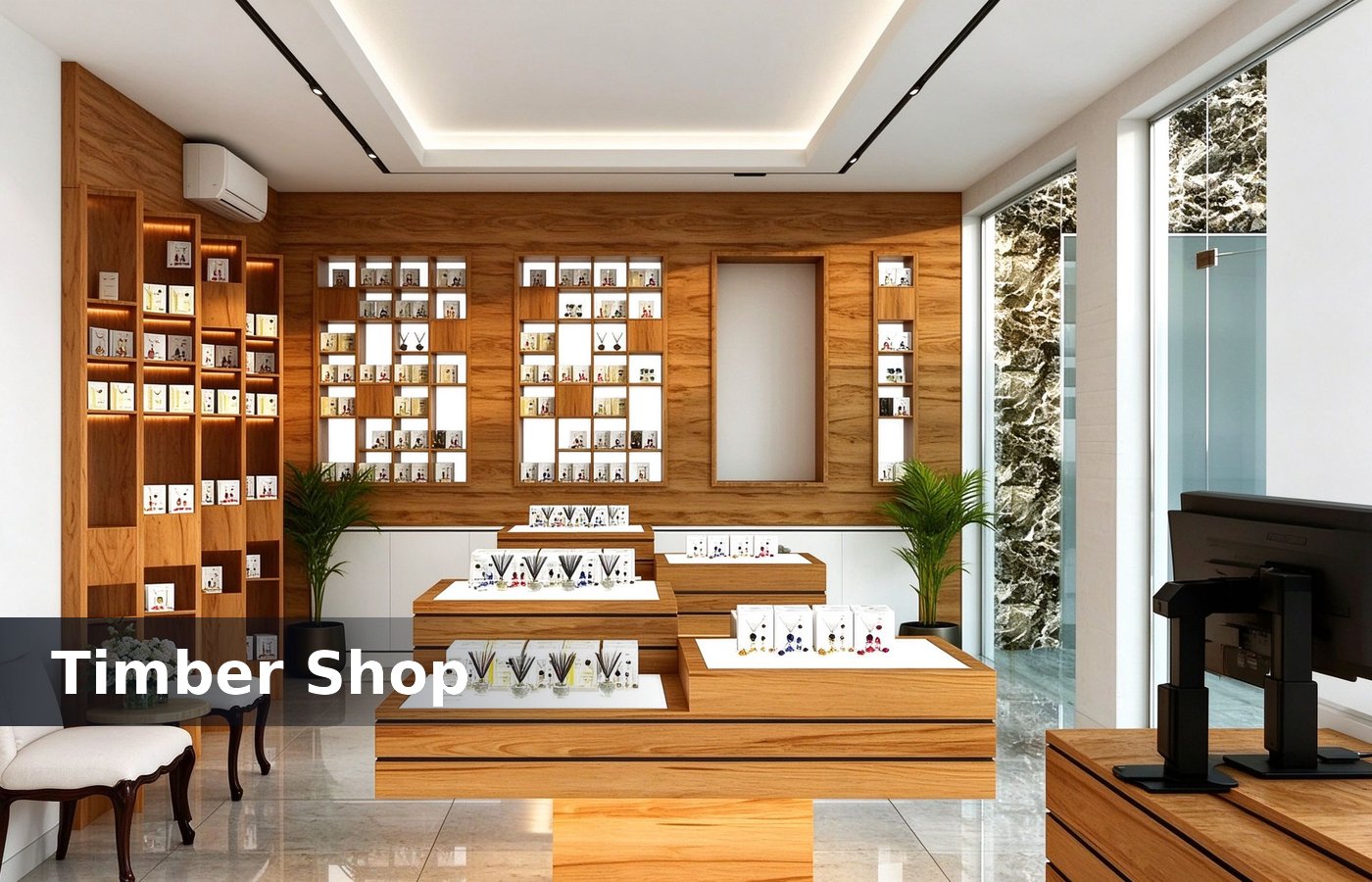
We build fragrance kiosks and shop fixtures in Shenzhen with the light plan, shelf pitch and counter in one drawing set, so the mall approval and the install kiosk materials. We keep the alternative on the same quotation, so the buyer compares a number instead of a preference. That number belongs on the drawing, because a plan agreed verbally rarely survives a mall inspection.