
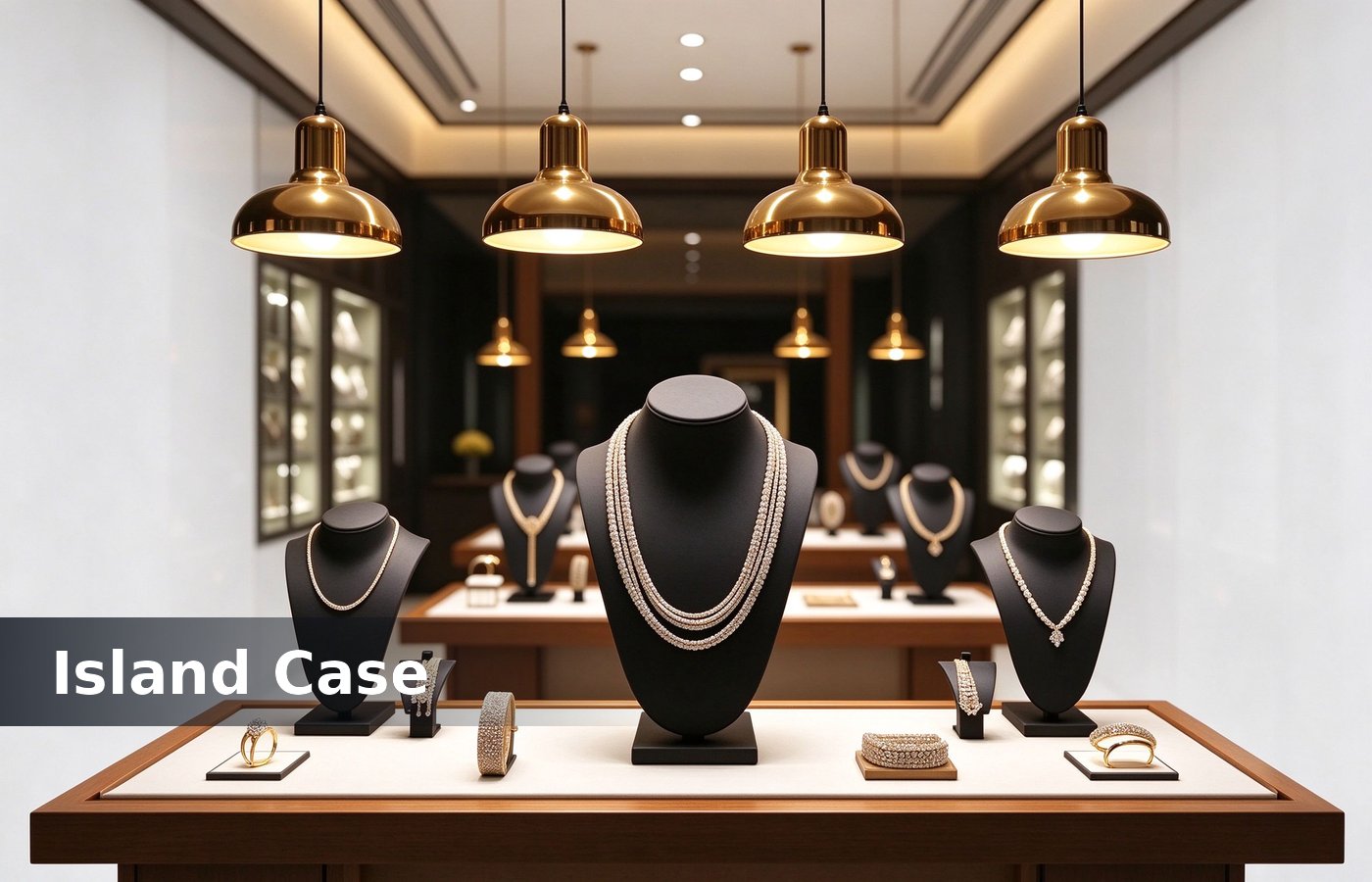
Three cases, one sightline
A jewelry shop works on three case types: a wall case, an island case and a counter case. Put them on one sightline from the door and the shop reads as a gallery instead of a storage room. The same rule holds for a mall unit and a street shop, with the shutter recess mattering more in a mall. We keep the alternative on the same quotation, so the buyer compares a number instead of a preference.
A 3 m wall case at 1000 mm counter height shows a necklace at eye level when the customer stands 500 mm away. A case at 900 mm shows the top of a bust and glass showcases. That number belongs on the shop drawing, because a case height agreed verbally rarely survives the first tray. Most of these gaps appear in week one, which is exactly when the first tray lands.
Case height and the seat
A wall case runs 950 to 1000 mm with a 300 mm glass box on top, and an island case runs 900 mm with a 250 mm box. A customer sits at 450 mm and looks down 20 degrees into the box. Mark it on the drawing sheet too, so whoever resets the trays later has the reference without guessing.
A case over 1050 mm forces a customer to stand, and a standing customer buys in four minutes. A seated customer at a jewelry counter stays fifteen. One sit at the counter settles the question faster than a week of drawing revisions. None of that shows in a render, which is why we mark the sightline and the spot count on the plan.
Set the glass box at 300 mm depth for a wall case. A 200 mm box cannot hold a bust, and a 400 mm box puts the back row jewellery cases. Clients who settle it at design stage pay nothing extra, and clients who settle it after opening pay for a rebuild. The same rule holds for a mall unit and a street shop, with the shutter recess mattering more in a mall.
Glass that shows the stone
Use low iron glass at 6 mm, not standard float. Standard float carries a green edge that turns a white diamond yellow, and the customer blames the stone. We keep the alternative on the same quotation, so the buyer compares a number instead of a preference. That number belongs on the shop drawing, because a case height agreed verbally rarely survives the first tray.
Keep the glass clean on the inside face and the light off the surface. A spot at 30 degrees from vertical lands on the stone, and a spot straight down lands on the lid and glares. Most of these gaps appear in week one, which is exactly when the first tray lands. Mark it on the drawing sheet too, so whoever resets the trays later has the reference without guessing.
Light for colour and fire
Jewelry light runs 3000 K with a CRI above 90 and a beam of 15 to 24 degrees. A narrow beam on a solitaire gives fire, and a wide beam washes the tray display cases. One sit at the counter settles the question faster than a week of drawing revisions. None of that shows in a render, which is why we mark the sightline and the spot count on the plan.
Plan 4 to 6 spots per metre of wall case. A wall lit at two spots a metre reads as a corridor, and a corridor does not sell a ring. Clients who settle it at design stage pay nothing extra, and clients who settle it after opening pay for a rebuild. The same rule holds for a mall unit and a street shop, with the shutter recess mattering more in a mall.
The sit-down counter
A jewelry counter needs two seats and a 700 mm working width for the tray and the loupe. A 600 mm counter leaves no space for a tray, and a tray on the glass scratches it. We keep the alternative on the same quotation, so the buyer compares a number instead of a preference. That number belongs on the shop drawing, because a case height agreed verbally rarely survives the first tray.
Put the seat on the customer side at 450 mm and the mirror at 120 degrees. A mirror flat to the counter shows the ring from above, and a customer wants the side view on the hand. Most of these gaps appear in week one, which is exactly when the first tray lands. Mark it on the drawing sheet too, so whoever resets the trays later has the reference without guessing.
Keep the loupe, the cloth and the ring sizer in one drawer under the tray. A staff member who has to walk for a sizer loses the sale fixture materials. One sit at the counter settles the question faster than a week of drawing revisions. None of that shows in a render, which is why we mark the sightline and the spot count on the plan.
Security and the shutter
A jewelry shop needs a roller shutter, a safe and a panic button. Plan the shutter recess at 300 mm above the case line so the case can be cleared in one minute. Clients who settle it at design stage pay nothing extra, and clients who settle it after opening pay for a rebuild. The same rule holds for a mall unit and a street shop, with the shutter recess mattering more in a mall.
Keep the safe behind the counter, not in the window. A safe in the window is a sign to a thief, and a safe behind the counter buys the two minutes kiosk design. We keep the alternative on the same quotation, so the buyer compares a number instead of a preference. That number belongs on the shop drawing, because a case height agreed verbally rarely survives the first tray.
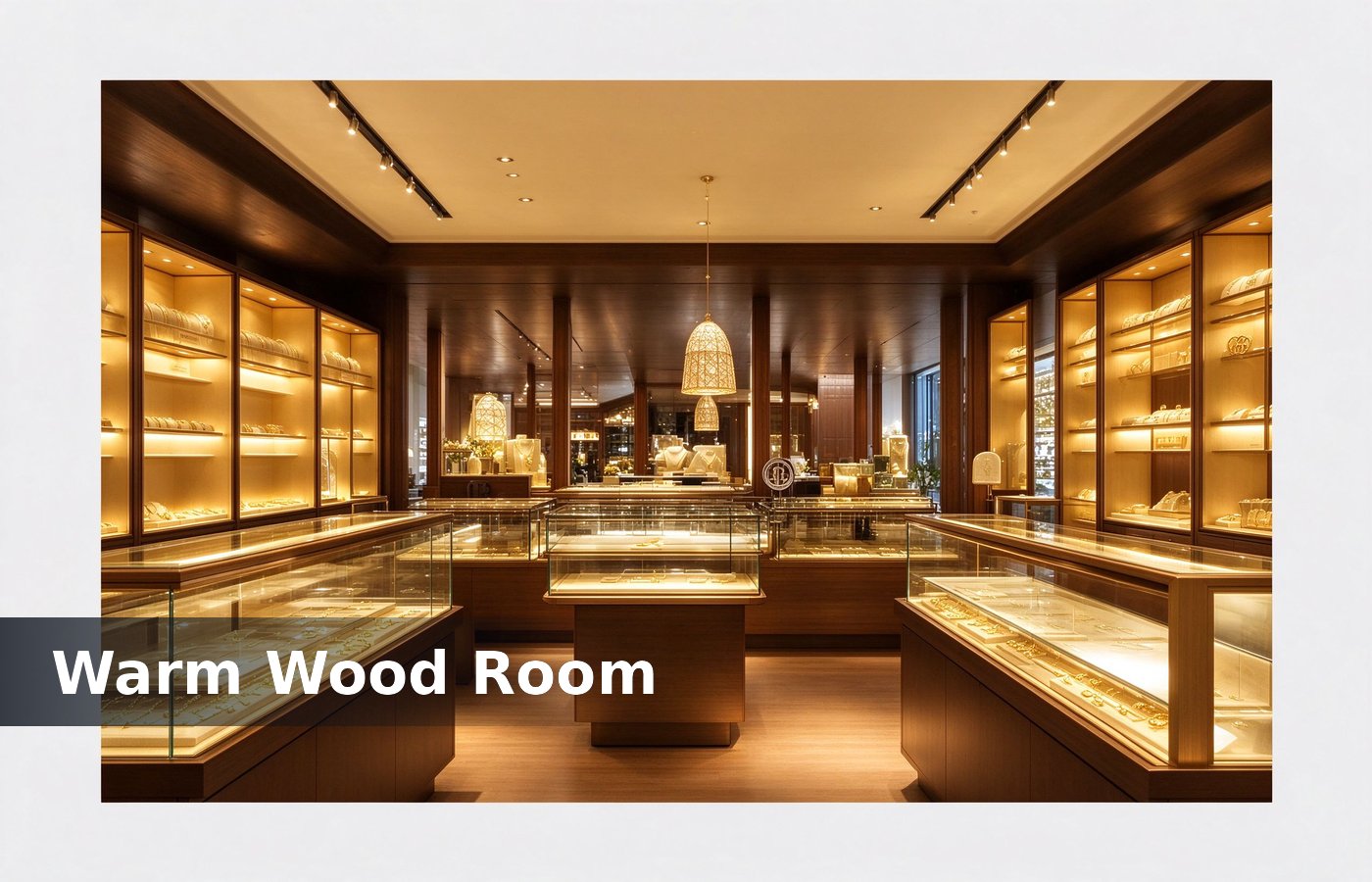
Wall finish and storage
A jewelry wall reads best in a matte finish, and a matte wall hides the seams that a gloss wall shows. Choose a laminate at 0.8 mm or a veneer at 0.6 mm on a 18 mm core. Most of these gaps appear in week one, which is exactly when the first tray lands. Mark it on the drawing sheet too, so whoever resets the trays later has the reference without guessing.
Plan a drawer for every tray. A shop with 40 trays needs 40 drawer slots, and a shop that stacks trays on a shelf loses a piece shop fixtures. One sit at the counter settles the question faster than a week of drawing revisions. None of that shows in a render, which is why we mark the sightline and the spot count on the plan.
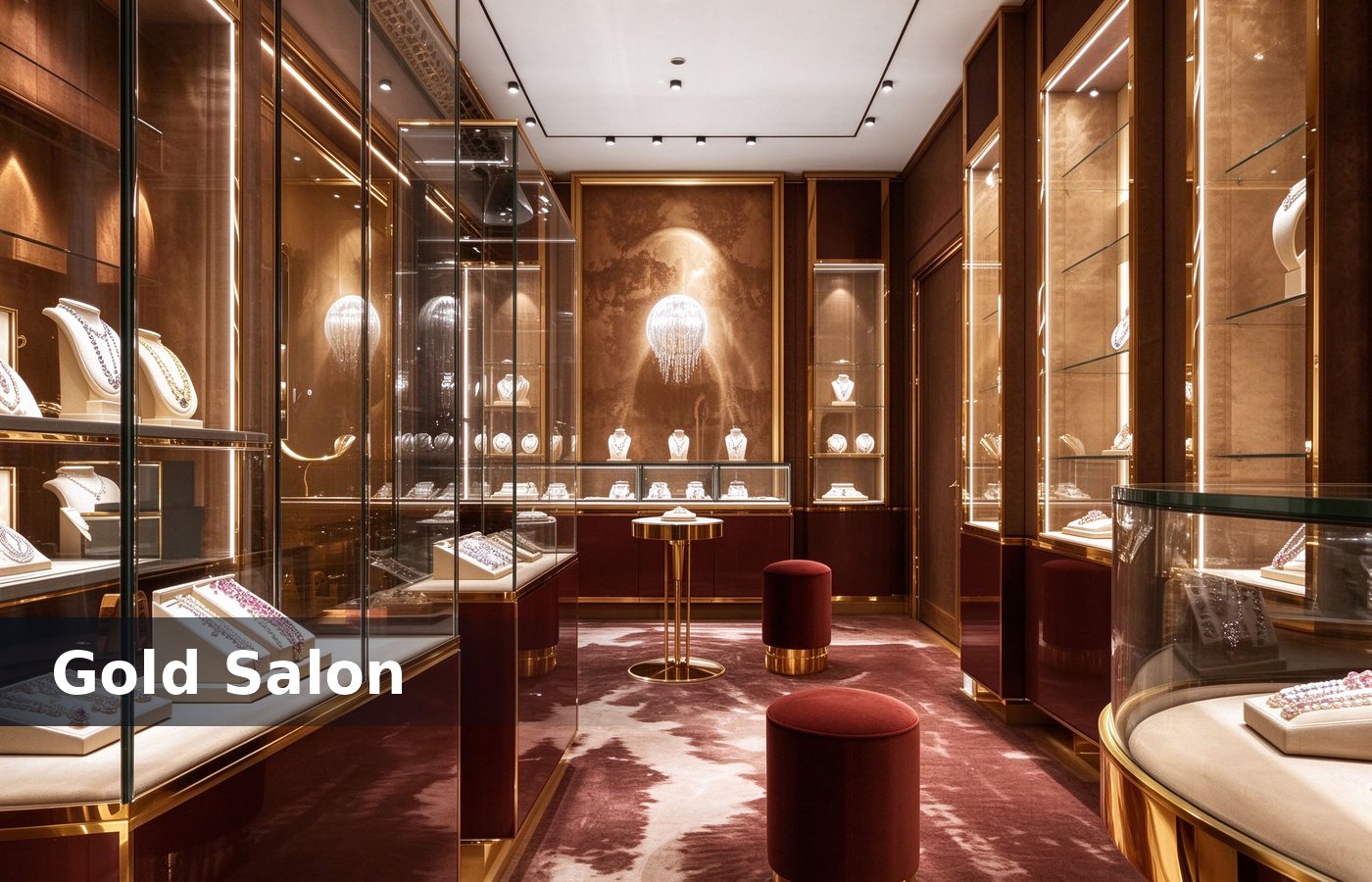
Six numbers for a jewelry shop
These six numbers hold for most jewelry shops under 80 sqm, and each one is cheap to set at drawing stage. Clients who settle it at design stage pay nothing extra, and clients who settle it after opening pay for a rebuild. The same rule holds for a mall unit and a street shop, with the shutter recess mattering more in a mall.
- Wall case 950 to 1000 mm, box 300 mm deep.
- Island case 900 mm, box 250 mm.
- Low iron glass 6 mm, no green edge.
- Light 3000 K, CRI 90, 4 to 6 spots per metre.
- Counter 700 mm per seat, seat at 450 mm.
- One drawer per tray, 40 trays, 40 slots.

Margin and the tray count
A jewelry shop turns stock slowly, so the tray count sets the range. A 40 tray shop at 12 pieces a tray carries 480 pieces and sells 15 a week. We keep the alternative on the same quotation, so the buyer compares a number instead of a preference. That number belongs on the shop drawing, because a case height agreed verbally rarely survives the first tray.
Keep the top price line in the wall case and the entry line in the island. A shop that mixes price points in one case teaches the customer to compare, and comparison at a counter retail displays. Most of these gaps appear in week one, which is exactly when the first tray lands. Mark it on the drawing sheet too, so whoever resets the trays later has the reference without guessing.
Conclusion
Three case types on one sightline, low iron glass, 3000 K light and a seat at every counter. The layout sells the stone before the price comes up. One sit at the counter settles the question faster than a week of drawing revisions. None of that shows in a render, which is why we mark the sightline and the spot count on the plan.
A jewelry shop is a room with light in it. Get the light and the seat right and the stock looks twice its cost. Clients who settle it at design stage pay nothing extra, and clients who settle it after opening pay for a rebuild. The same rule holds for a mall unit and a street shop, with the shutter recess mattering more in a mall.
Depth the wall case at 450 mm including the box. A 300 mm box on a 150 mm base gives the tray a lip, and a wall case at 350 mm total fixture depth. We keep the alternative on the same quotation, so the buyer compares a number instead of a preference. That number belongs on the shop drawing, because a case height agreed verbally rarely survives the first tray.