
Winter is the season
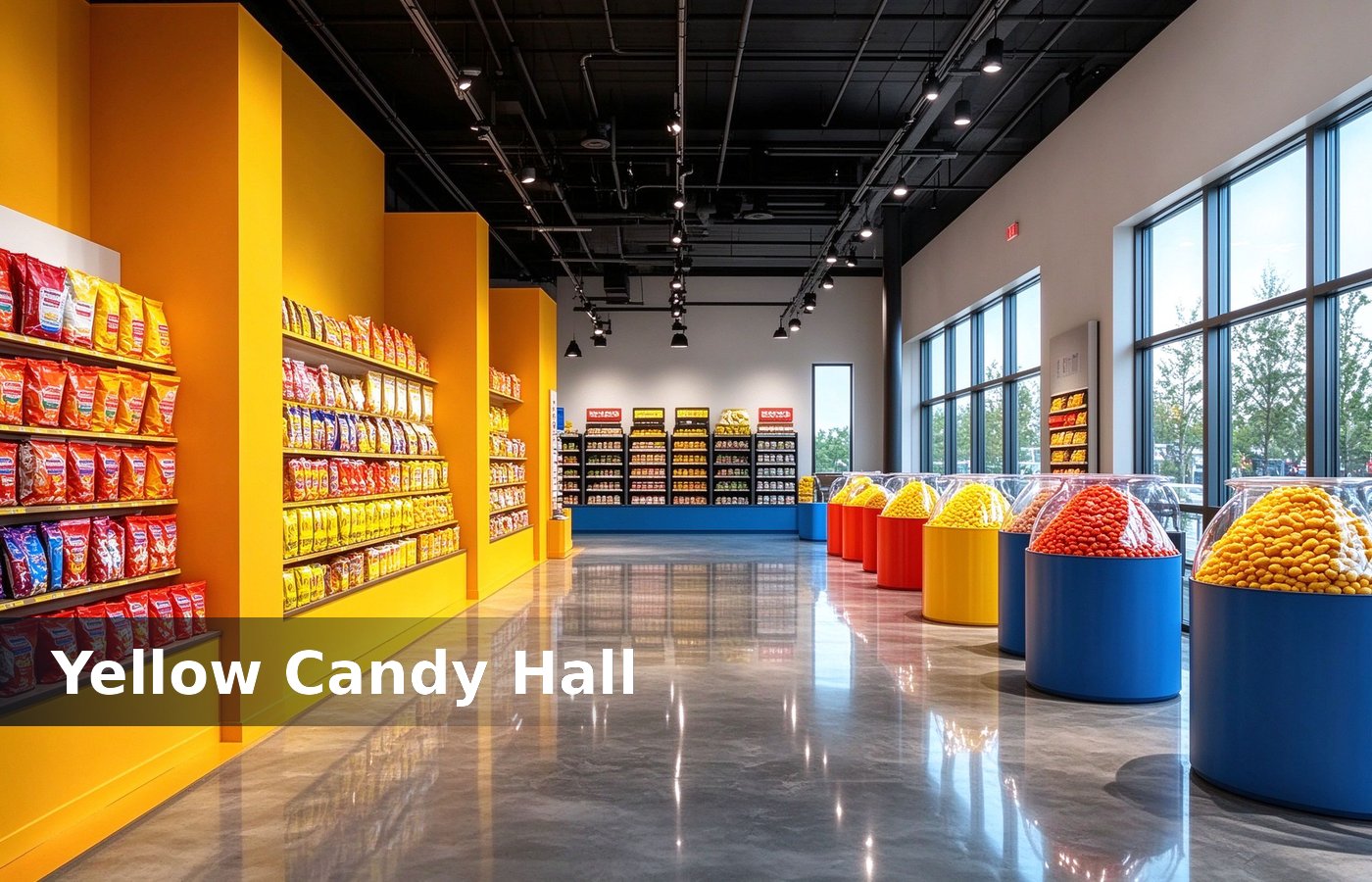
A candy shop in Canada sells seven months of indoor footfall and five months of thin traffic. Design for the mall concourse, not the summer high street. One December Saturday with a clicker settles the question faster than a week of drawing revisions. None of that shows in a render, which is why we mark the scale height and the bin wall on the plan.
A Canadian mall draws 60 percent of its traffic between October and March. A shop sited on a concourse does 70 percent of its year in heating season, and a shop on a street does the opposite. Clients who settle it at design stage pay nothing extra, and clients who settle it after opening pay for a rebuild. The same rule holds for a mall concourse and a street shop, with winter traffic mattering more in a mall.
Two languages on every label
Federal rules require English and French on prepackaged food labels, and Quebec adds its own signage rules under Bill 96. Plan bin cards at 100 by 150 mm with both languages. We keep the alternative on the same quotation, so the buyer compares a number instead of a preference. That number belongs on the shop drawing, because a bin pitch agreed verbally rarely survives the first health visit.
Bilingual cards double the text, so plan a 60 mm header and a 90 mm body. A card with two languages squeezed into 60 mm reads at 300 mm only, and a customer stands 500 mm away. Most of these gaps appear in week one, which is exactly when the first family arrives. Mark it on the drawing sheet too, so whoever resets the bins later has the reference without guessing.
Keep the French first on the card in Quebec and the English first elsewhere. A card that leads with the wrong language reads as a store that is not local, and glass showcases. One December Saturday with a clicker settles the question faster than a week of drawing revisions. None of that shows in a render, which is why we mark the scale height and the bin wall on the plan.
Bulk bins and the hygiene line
A bulk bin wall runs 92 mm scoop per bin, one scoop per flavour, and a 300 mm bin front. A shared scoop is the first thing a health inspector checks and the last thing a shop fixes. Clients who settle it at design stage pay nothing extra, and clients who settle it after opening pay for a rebuild.
Plan 40 bins on 1.2 m of wall at 300 mm pitch. A wall with 60 bins at 200 mm pitch looks dense and blocks the scoop, and a blocked scoop slows kiosk design. The same rule holds for a mall concourse and a street shop, with winter traffic mattering more in a mall. We keep the alternative on the same quotation, so the buyer compares a number instead of a preference.
Price by weight, not by piece
Pick and mix sells by weight in Canada, so the scale belongs at the counter, not the bin. A 200 mm platform scale at 1000 mm height with a readable display is the whole till process. That number belongs on the shop drawing, because a bin pitch agreed verbally rarely survives the first health visit. Most of these gaps appear in week one, which is exactly when the first family arrives.
Price per 100 g, not per kg. A customer sees 2.49 per 100 g and buys 300 g, and the same candy at 24.90 per kg reads as expensive and cash counters. Mark it on the drawing sheet too, so whoever resets the bins later has the reference without guessing. One December Saturday with a clicker settles the question faster than a week of drawing revisions.
The 4 sqm counter that carries the shop
A candy shop needs 4 sqm of counter: a 1.2 m scale bay, a 1.2 m bag and tie bay, a 900 mm till and a 700 mm pick-up end. That is enough for 40 bins and 60 customers an hour. None of that shows in a render, which is why we mark the scale height and the bin wall on the plan.
Keep the counter at 950 mm for a scale and 1000 mm for the till. A scale at 1050 mm hides the display from a customer at 1.6 m, and a hidden display turns every weighing into a retail displays. Clients who settle it at design stage pay nothing extra, and clients who settle it after opening pay for a rebuild.
Maple, and the local line
Maple candy is the line visitors buy, and it sits at the front of the shop, not the back. A tourist buys maple on the way in and pick and mix on the way out. The same rule holds for a mall concourse and a street shop, with winter traffic mattering more in a mall. We keep the alternative on the same quotation, so the buyer compares a number instead of a preference.
Stock three maple lines, not fifteen. A shop with three local lines sells them at 6 and rotates them, and a shop with fifteen sells three and marks down fixture systems. That number belongs on the shop drawing, because a bin pitch agreed verbally rarely survives the first health visit. Most of these gaps appear in week one, which is exactly when the first family arrives.
Keep maple at room temperature and away from the window. Maple at 25 C in direct light sugars in a week, and sugared maple is a refund with a review attached. Mark it on the drawing sheet too, so whoever resets the bins later has the reference without guessing. One December Saturday with a clicker settles the question faster than a week of drawing revisions.
Light and colour temperature
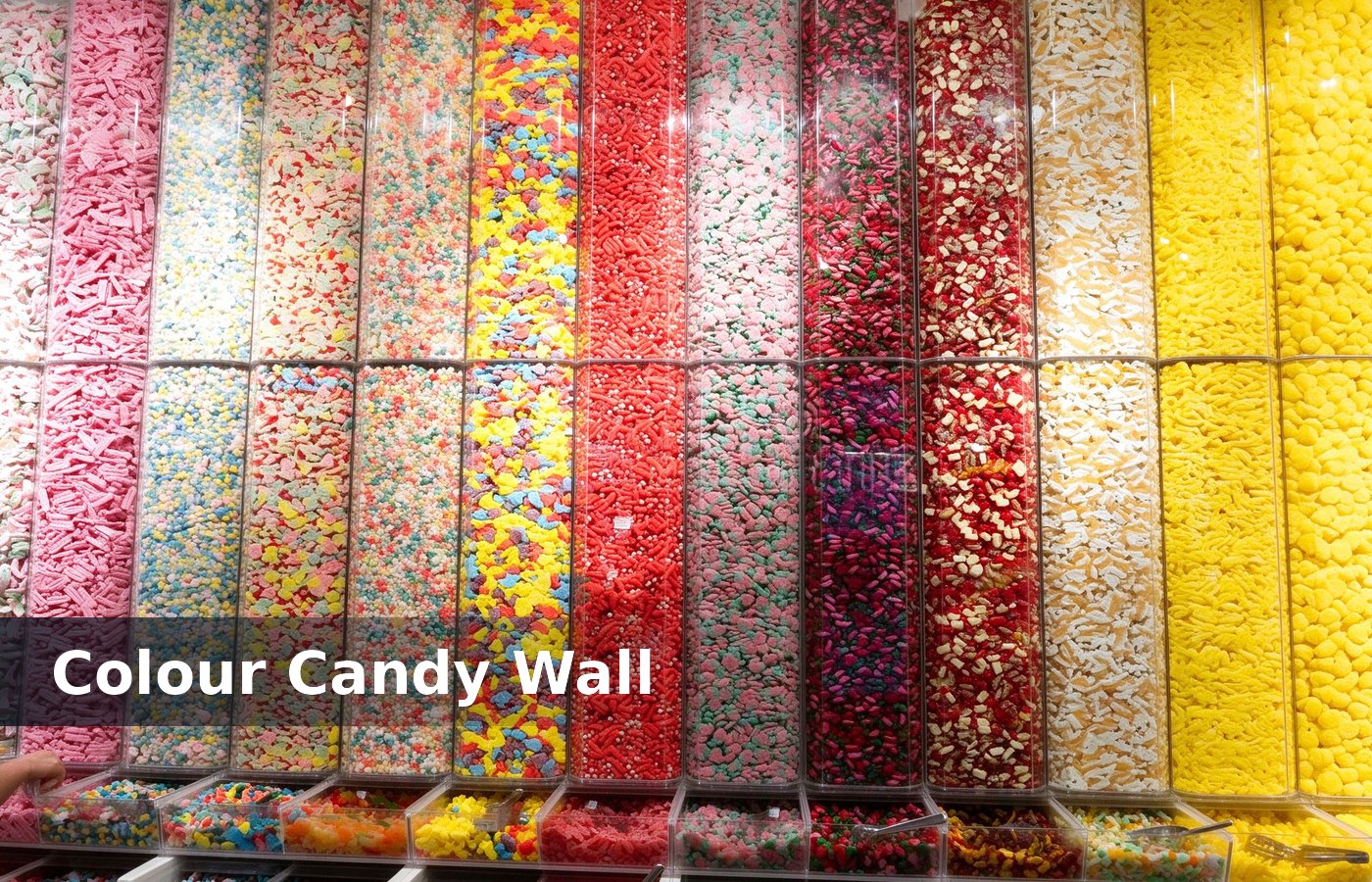
Candy needs 3500 K at a CRI above 90 and 500 lux on the bins. A light at 6500 K turns a red gummy pink, and a pink gummy sells half of a red one. None of that shows in a render, which is why we mark the scale height and the bin wall on the plan. Clients who settle it at design stage pay nothing extra, and clients who settle it after opening pay for a rebuild.
Keep the light off the bin lids. A spot on a plastic lid glares and hides the candy, so angle the fixture at 35 degrees to the wall. The same rule holds for a mall concourse and a street shop, with winter traffic mattering more in a mall. We keep the alternative on the same quotation, so the buyer compares a number instead of a preference.
Tax, weight and the honest label
Candy is zero rated as a basic grocery in some provinces and taxed as a snack in others. Check the rule for your province before the price cards go to print, because the price on the card must match the till. That number belongs on the shop drawing, because a bin pitch agreed verbally rarely survives the first health visit. Most of these gaps appear in week one, which is exactly when the first family arrives.
Sell by net weight and print the net weight on the bag. A bag weighed with the candy and the tie reads heavy and gets a complaint, and a complaint at a candy counter is a lost family. Mark it on the drawing sheet too, so whoever resets the bins later has the reference without guessing. One December Saturday with a clicker settles the question faster than a week of drawing revisions.
Depth the bin wall at 350 mm and the counter at 600 mm. A bin at 250 mm holds 8 kg and needs a refill every hour at peak, and a refill at peak shop fixtures. None of that shows in a render, which is why we mark the scale height and the bin wall on the plan.
Six numbers for a Canadian candy shop
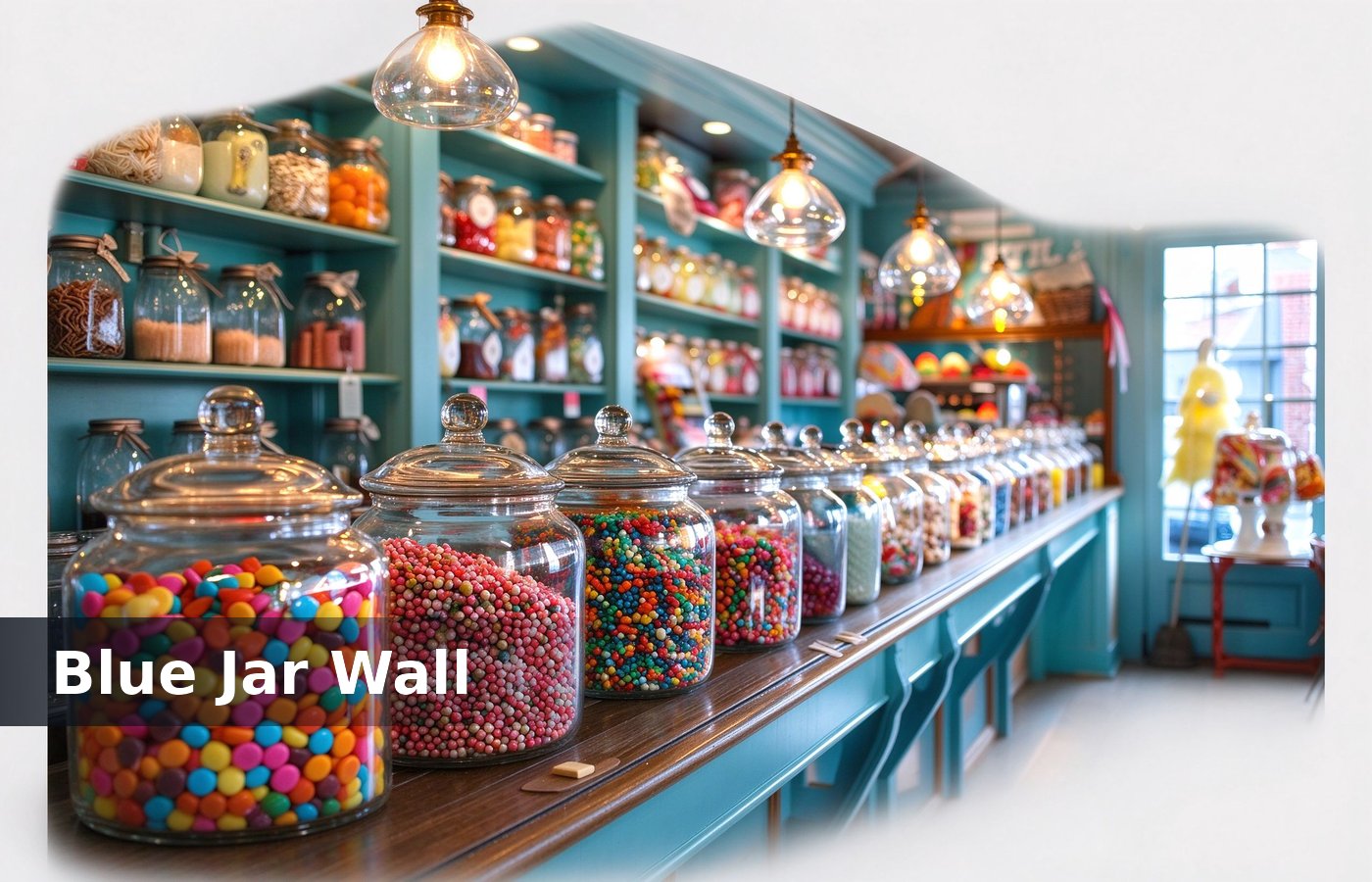
These six numbers hold for a 40 bin shop in a Canadian mall, and each one is cheap at design stage and expensive after the lease starts. Clients who settle it at design stage pay nothing extra, and clients who settle it after opening pay for a rebuild. The same rule holds for a mall concourse and a street shop, with winter traffic mattering more in a mall.
- Two languages on every bin card, French first in Quebec.
- 92 mm scoop per bin, one scoop per flavour.
- 40 bins on 1.2 m wall at 300 mm pitch.
- Scale at 1000 mm, price per 100 g.
- Counter 4 sqm, 950 mm scale bay, 1000 mm till.
- 3500 K, CRI 90, 500 lux on the bins.
Staffing the winter rush
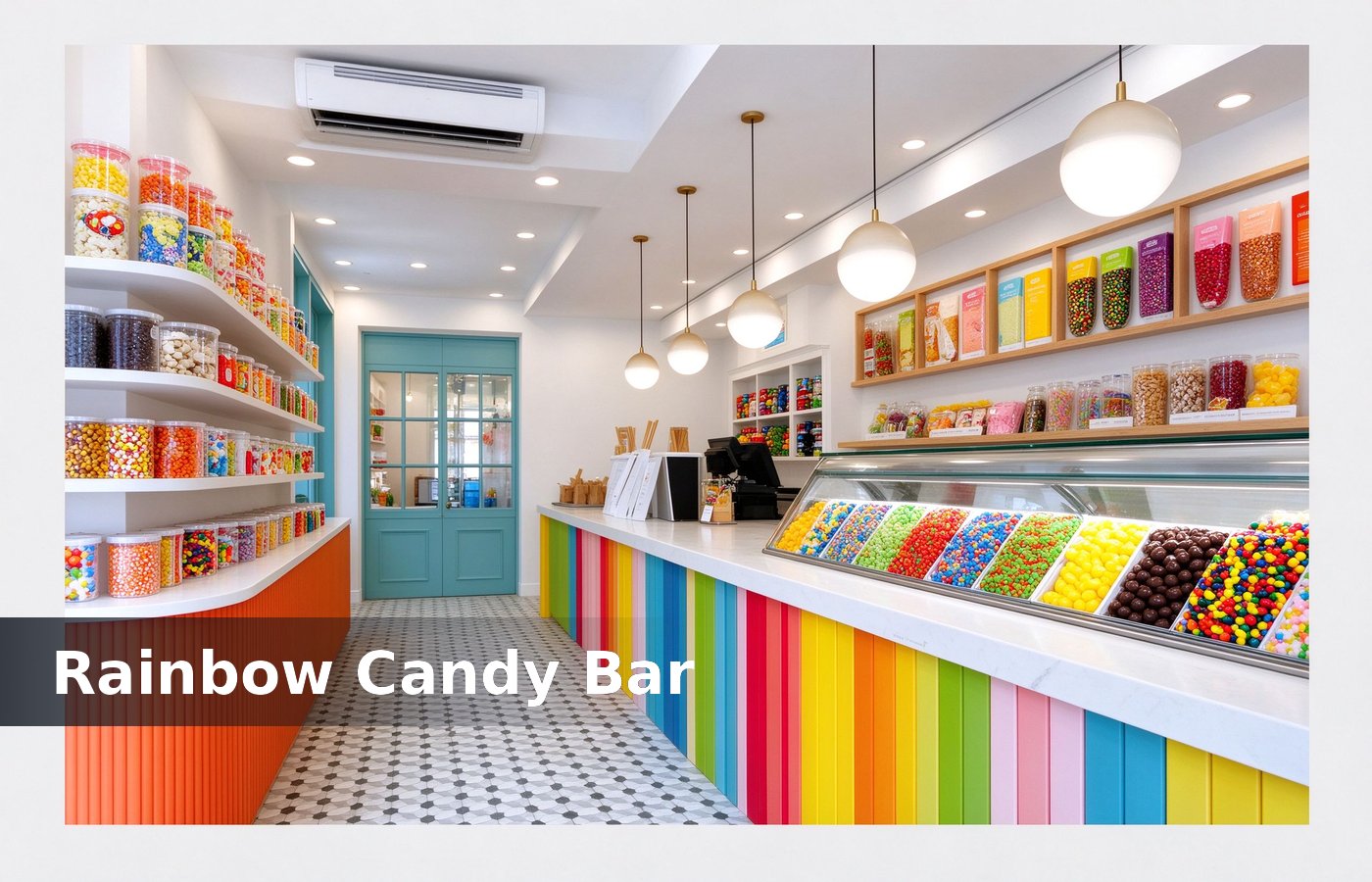
A candy shop runs 2 staff on a weekday and 4 on a December Saturday. Plan 1.4 m of counter per staff member and a 900 mm back walk, and the rush takes care of itself. We keep the alternative on the same quotation, so the buyer compares a number instead of a preference. That number belongs on the shop drawing, because a bin pitch agreed verbally rarely survives the first health visit.
Train one person on the scale and one on the bins. A staff member who does both slows the queue by 40 percent, and 40 percent at a December Saturday is a queue out the door. Most of these gaps appear in week one, which is exactly when the first family arrives. Mark it on the drawing sheet too, so whoever resets the bins later has the reference without guessing.
Conclusion
Winter traffic, two languages, 92 mm scoops, a scale at 1000 mm and a price per 100 g. Those five items make a Canadian candy shop work. One December Saturday with a clicker settles the question faster than a week of drawing revisions. None of that shows in a render, which is why we mark the scale height and the bin wall on the plan.
Sell the local line on the way in and the pick and mix on the way out. A candy shop is a colour wall with a scale in front of it, and the scale decides the ticket. Clients who settle it at design stage pay nothing extra, and clients who settle it after opening pay for a rebuild. The same rule holds for a mall concourse and a street shop, with winter traffic mattering more in a mall.
Choose a bin that takes a wipe and a lid that seals. A bin that does not seal pulls moisture in winter and turns a gummy hard, and hard candy is a display cases. We keep the alternative on the same quotation, so the buyer compares a number instead of a preference. That number belongs on the shop drawing, because a bin pitch agreed verbally rarely survives the first health visit.