Register before you cook
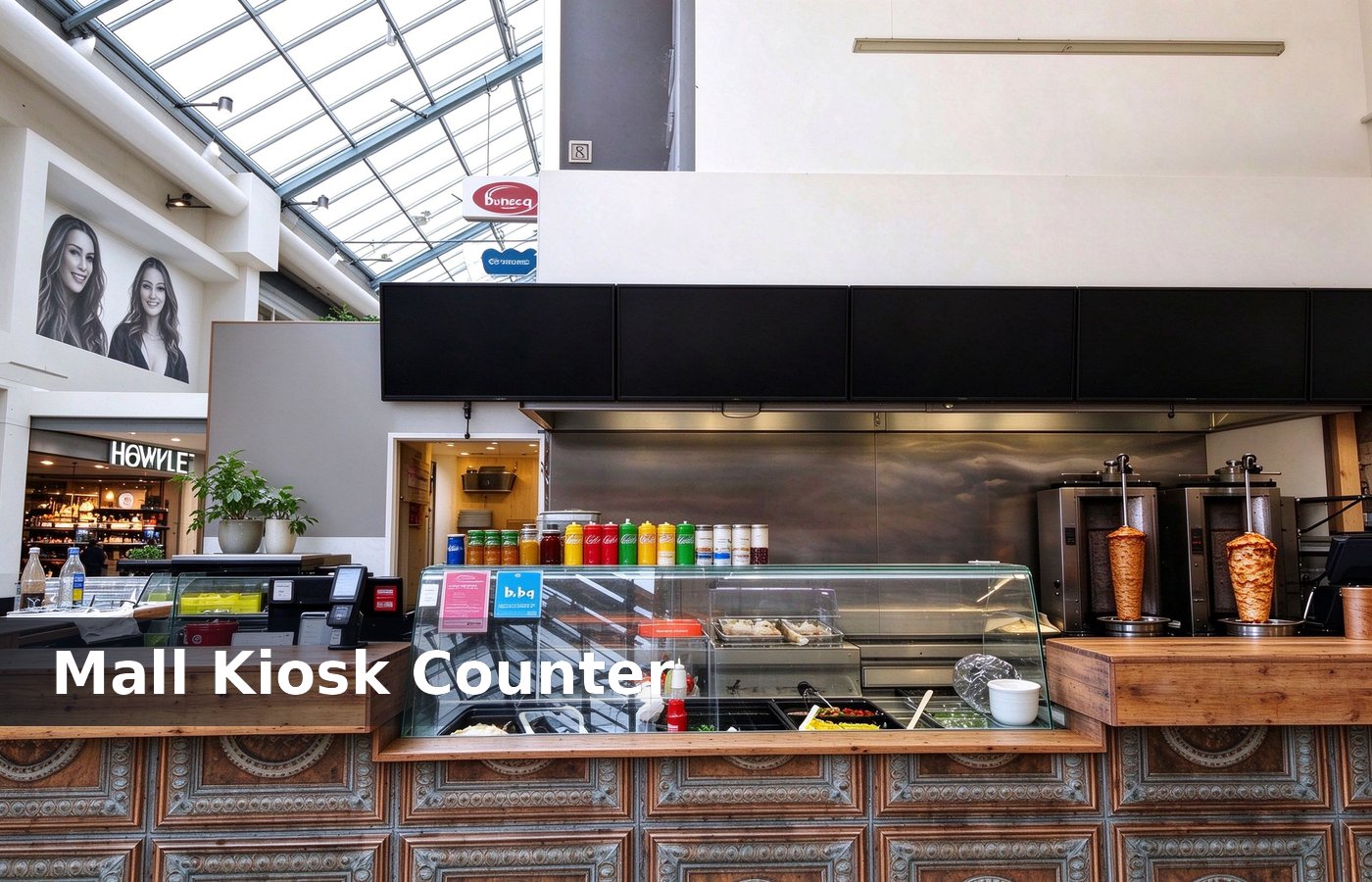
A food kiosk in a Swedish mall registers with the municipality before the first wok is lit. Registration is free, takes 2 to 6 weeks and needs a floor plan and a menu. None of that shows in a sketch, which is why we mark the permits, the counter depth and the case length on the plan. Owners who settle it at design stage pay nothing extra, and owners who settle it after opening pay a month of rent.
A kiosk that cooks before registering is an unregistered food business. A control visit at week 2 closes the counter for 3 weeks, and 3 weeks in a mall is a rent you pay retail displays. The same rule holds for a Stockholm mall and a regional mall, with the December rent mattering in both. We keep the alternative on the same quotation, so the owner compares a number instead of a style.
The 3 permits
Three permits carry a Swedish food kiosk: the municipal food registration, the fire and emergency plan for the mall, and the lease with the mall owner for the pitch. That number belongs on the pitch plan, because a permit timetable agreed verbally rarely survives the first control visit. Most of these gaps appear in the first month, which is exactly when the lunch queue is longest.
A fourth appears for a gas wok: a gas installation certificate from a certified installer. A gas line at 30 kg needs a certificate, and a certificate takes kiosk design. Mark it on the drawing sheet too, so whoever adds an item later has the reference without guessing. One control visit settles the question faster than a week of drawing revisions.
Kiosk size in a Swedish mall
A Swedish mall pitch runs 6 to 12 sqm and a food kiosk needs 9. A 6 sqm pitch fits a grill and a till and a 9 sqm pitch fits a grill, a fryer, a fridge and 2 staff. None of that shows in a sketch, which is why we mark the permits, the counter depth and the case length on the plan.
Swedish malls price the pitch by sqm and by the season. A 9 sqm pitch in a Stockholm mall runs 25,000 to 45,000 SEK a month, and cash counters. Owners who settle it at design stage pay nothing extra, and owners who settle it after opening pay a month of rent. The same rule holds for a Stockholm mall and a regional mall, with the December rent mattering in both.
The 600 mm counter
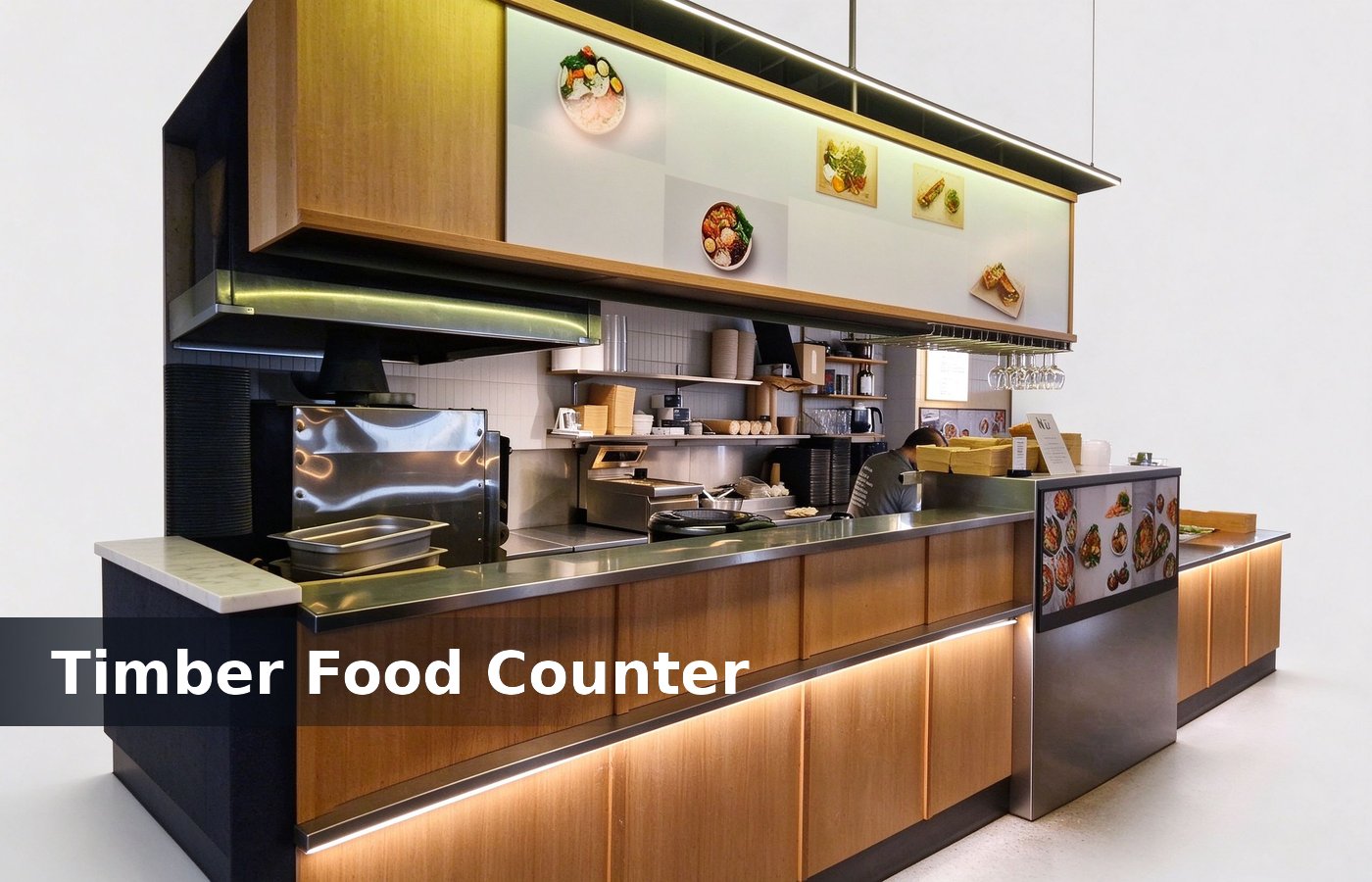
A food counter runs 900 mm high at the front and 600 mm deep for a service line. A 900 mm counter hides the till and a 1,100 mm counter hides the fryer. We keep the alternative on the same quotation, so the owner compares a number instead of a style. That number belongs on the pitch plan, because a permit timetable agreed verbally rarely survives the first control visit.
Set a 300 mm splash at the back. A splash at 300 mm keeps a grease wall clean, and a mall that finds grease on a wall charges the deposit fixture materials. Most of these gaps appear in the first month, which is exactly when the lunch queue is longest. Mark it on the drawing sheet too, so whoever adds an item later has the reference without guessing.
Menu at 8 items
A food kiosk menu runs 8 items on a Swedish mall. Eight items hold one grill, one fryer and one fridge, and 20 items hold a second grill and a second cook. One control visit settles the question faster than a week of drawing revisions. None of that shows in a sketch, which is why we mark the permits, the counter depth and the case length on the plan.
Price at 95 to 145 SEK for a main. A Swedish mall lunch sits at 110 SEK, and a main at 95 reads cheap and a main at 165 sits above the mall food court. Owners who settle it at design stage pay nothing extra, and owners who settle it after opening pay a month of rent. The same rule holds for a Stockholm mall and a regional mall, with the December rent mattering in both.
Build the menu around one protein and one base. One protein and one base lets a kiosk serve 60 an hour with 2 staff, and 3 proteins counters and towers. We keep the alternative on the same quotation, so the owner compares a number instead of a style. That number belongs on the pitch plan, because a permit timetable agreed verbally rarely survives the first control visit.
The cooler and the 4 C
A Swedish food kiosk holds stock at 4 C and a display case at 4 to 8 C. A case that runs at 10 C fails a control visit and a case at 4 C passes on the thermometer log. Most of these gaps appear in the first month, which is exactly when the lunch queue is longest.
Log the temperature twice a day. A log at 2 lines per day is the first document a control officer asks for, and a kiosk without a log starts the visit on the glass showcases. Mark it on the drawing sheet too, so whoever adds an item later has the reference without guessing. One control visit settles the question faster than a week of drawing revisions.
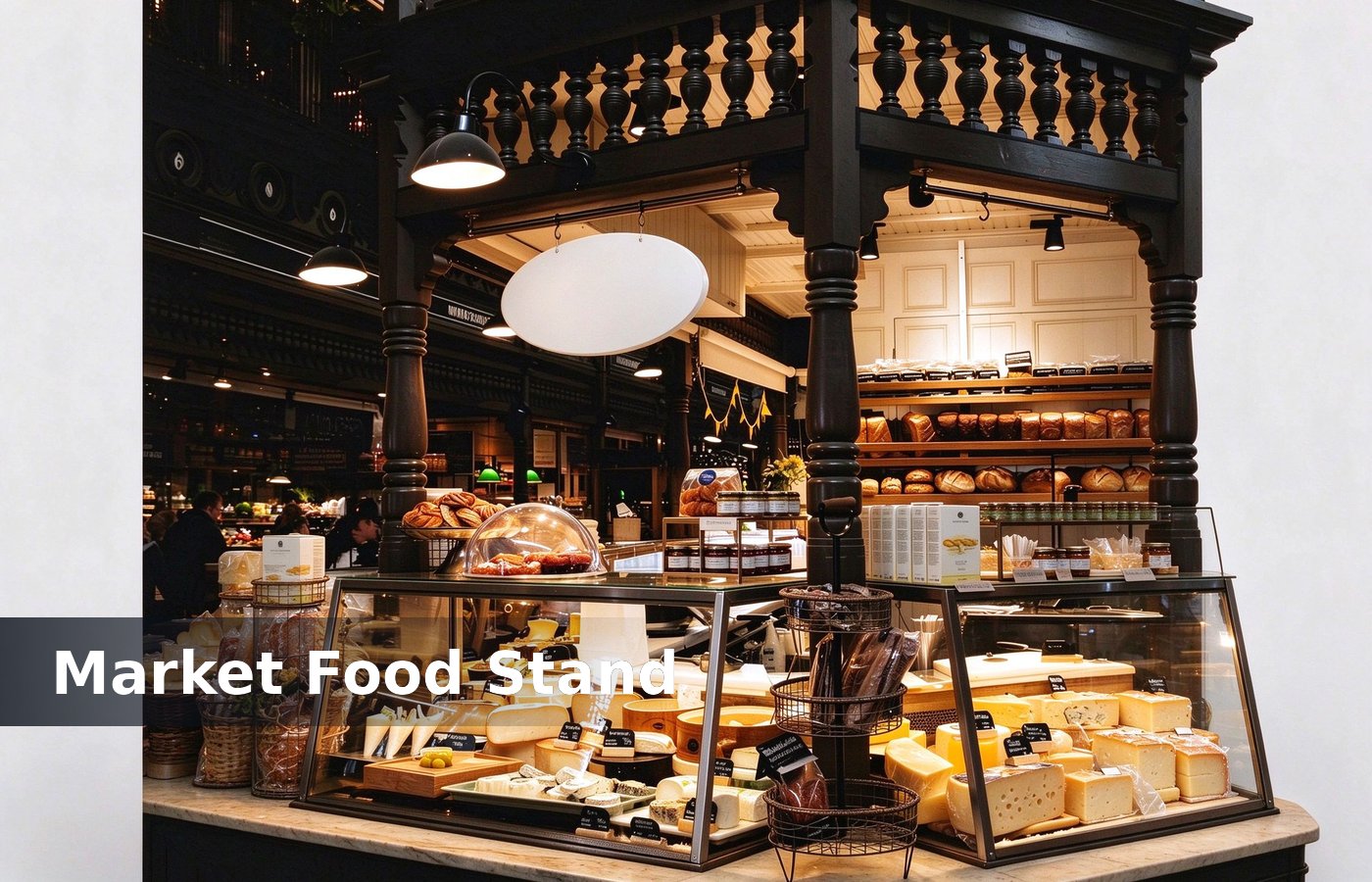
Pick a case at 1,200 mm for 12 trays. A 1,200 mm case fits a kiosk at 9 sqm and a 1,500 mm case forces the till off the counter. None of that shows in a sketch, which is why we mark the permits, the counter depth and the case length on the plan. Owners who settle it at design stage pay nothing extra, and owners who settle it after opening pay a month of rent.
Seven numbers for a Swedish kiosk
The table is the kiosk we quote for a Swedish mall pitch, and each line answers a permit, a rent or a service speed rather than display cases. The same rule holds for a Stockholm mall and a regional mall, with the December rent mattering in both. We keep the alternative on the same quotation, so the owner compares a number instead of a style.
| Item | Number |
|---|---|
| Pitch | 9 sqm of 6 to 12 |
| Counter | 900 mm high, 600 mm deep |
| Splash | 300 mm |
| Menu | 8 items at 95 to 145 SEK |
| Case length | 1,200 mm, 12 trays |
| Registration | 2 to 6 weeks |
| Rent | 25,000 to 45,000 SEK a month |
Staff and the 60 hour
A kiosk at 60 customers an hour runs 2 staff at the counter and 1 in the back. A kiosk at 60 with 1 staff queues at 6 and a queue at 6 is the lunch peak lost. That number belongs on the pitch plan, because a permit timetable agreed verbally rarely survives the first control visit. Most of these gaps appear in the first month, which is exactly when the lunch queue is longest.
A Swedish mall hires at 160 to 190 SEK an hour with payroll tax. A kiosk at 2 staff for 12 hours a day spends 45,000 SEK a month on wages, and a rent of 35,000 sits juice kiosk. Mark it on the drawing sheet too, so whoever adds an item later has the reference without guessing. One control visit settles the question faster than a week of drawing revisions.
Swish and the 1 line
A Swedish kiosk takes Swish and card and needs 1 receipt line. A kiosk with card only loses 15 percent of a queue that carries a phone and service kiosk. None of that shows in a sketch, which is why we mark the permits, the counter depth and the case length on the plan. Owners who settle it at design stage pay nothing extra, and owners who settle it after opening pay a month of rent.
Put a Swish code at the counter at 1,400 mm and a QR at 80 mm. A QR at 80 mm is scanned from 40 cm, and a code at 1,400 mm is the second till for a queue. The same rule holds for a Stockholm mall and a regional mall, with the December rent mattering in both.
Handover and the deposit
A Swedish mall holds a deposit and returns it at handover. A kiosk that leaves a grease wall, a taped sign or a damaged floor tile loses 20 to 40 percent of the deposit. We keep the alternative on the same quotation, so the owner compares a number instead of a style. That number belongs on the pitch plan, because a permit timetable agreed verbally rarely survives the first control visit.
Photograph the pitch at day 1 and at handover. A photo set at both ends the argument over who made the mark, and the deposit returns in 30 days shop fit out. Most of these gaps appear in the first month, which is exactly when the lunch queue is longest. Mark it on the drawing sheet too, so whoever adds an item later has the reference without guessing.
Conclusion
Register, then cook: municipal registration, a fire plan, a lease, a 9 sqm pitch, a 600 mm counter, 8 items, a 1,200 mm case and a Swish code. Those carry a Swedish kiosk. One control visit settles the question faster than a week of drawing revisions. None of that shows in a sketch, which is why we mark the permits, the counter depth and the case length on the plan.
The permits set the calendar and the counter sets the throughput. A kiosk that clears both at week 6 sells 60 an hour from the first Monday, not from week 10. Owners who settle it at design stage pay nothing extra, and owners who settle it after opening pay a month of rent. The same rule holds for a Stockholm mall and a regional mall, with the December rent mattering in both.
Depth the counter at 600 mm and the back bench at 700 mm. A 500 mm bench cannot hold a fryer basket, and a basket over the edge is a burn on dessert kiosk. We keep the alternative on the same quotation, so the owner compares a number instead of a style. That number belongs on the pitch plan, because a permit timetable agreed verbally rarely survives the first control visit.