
Two products, two facilities
Frozen yogurt and ice cream look like the same kiosk. One needs machines and topping bins, the other needs a dipping cabinet and a scoop sink, and the difference shows up in the bay kiosk design. That figure belongs on the bay drawing, because a layout agreed verbally rarely survives a food court with a lunch queue. Most of these decisions fail at the first quiet season, which is exactly when a lease is still running.
Yogurt is a self serve product with a low ticket and a fast queue. Ice cream is a served product with a higher ticket, a slower queue and a colder case. The layout follows that split. Mark it on the crate label too, so whoever installs it later has the reference without hunting a folder. Two minutes with the bay drawing settles the question faster than an hour of brochure reading.
Power load is the first check. Four yogurt machines pull about 8 kW, while a dipping cabinet and a blender station pull 4 to 5 kW, so a bay wired for one product glass showcases. None of that shows in a render, which is why we put the power load on the drawing set. Clients who settle it at design stage pay nothing extra, and clients who settle it after opening pay for a rebuild.
Yogurt: self serve changes everything
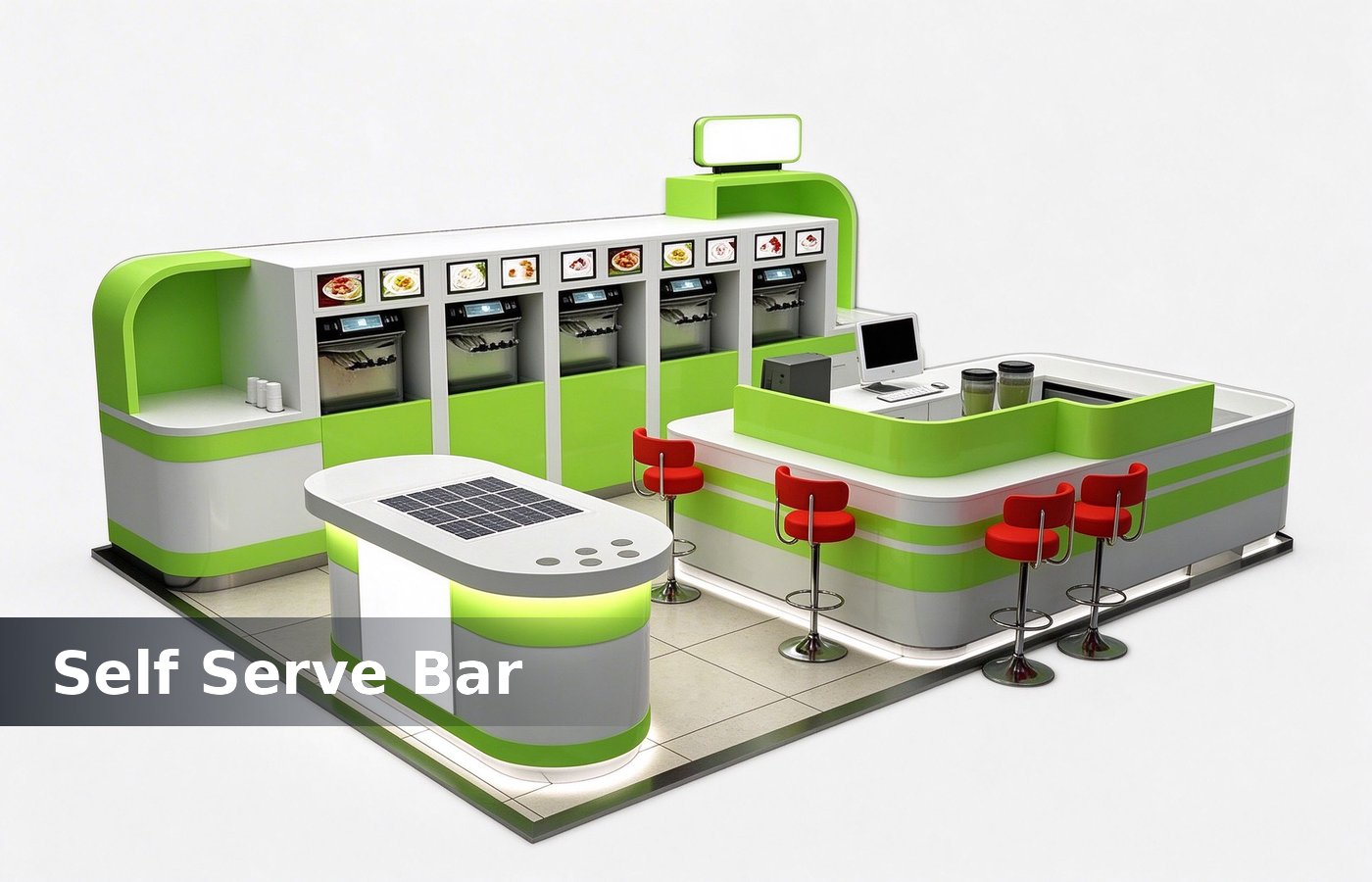
A self serve yogurt kiosk is a queue management problem. The customer walks the line, fills a cup, adds toppings and pays at the end, so the counter is a route rather than a service point. The same rule holds for a fixed kiosk and for a demountable one, with the removal clause mattering more on the demountable build. We keep the alternative on the same quotation, so the buyer compares a number instead of a preference.
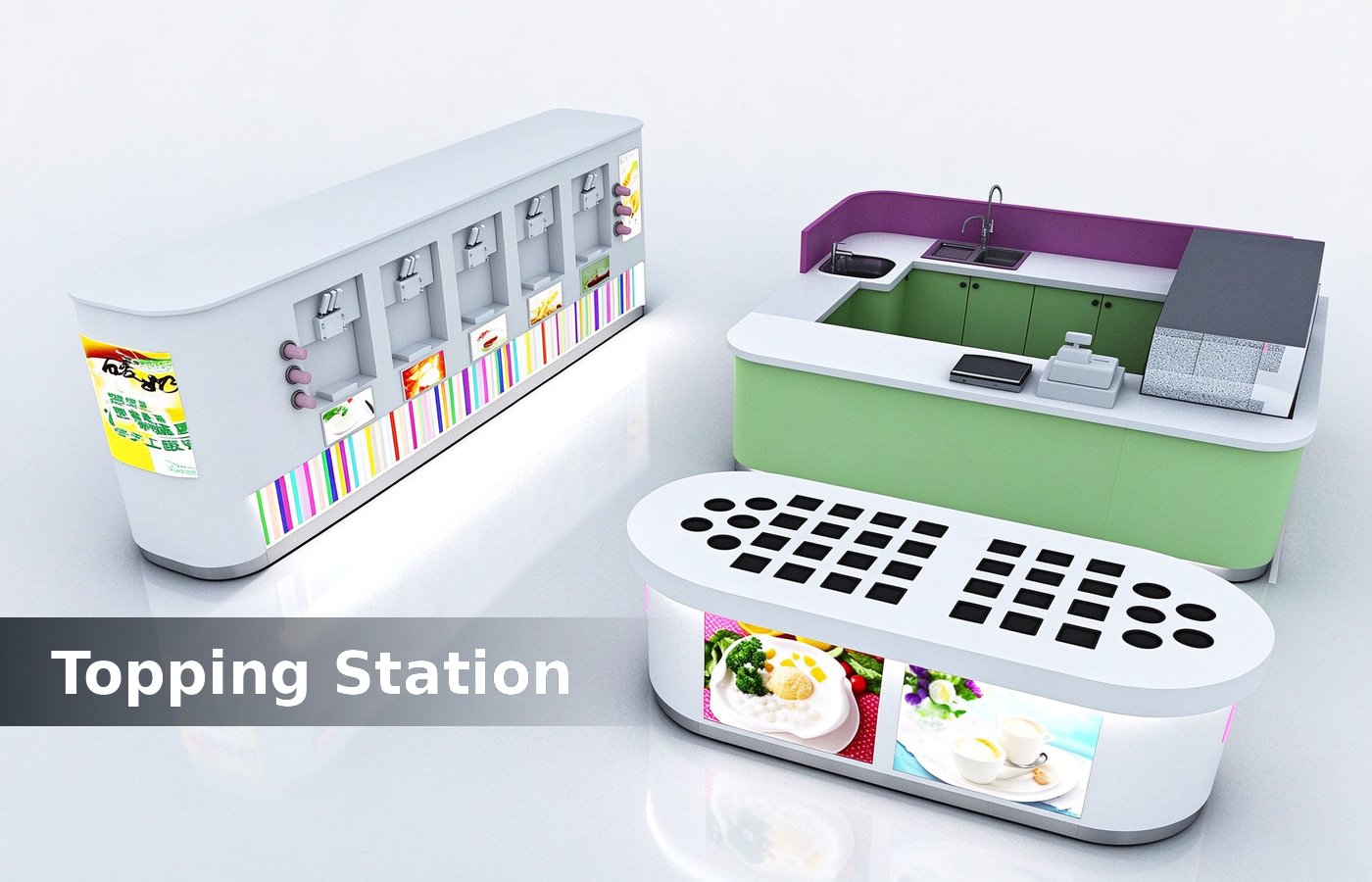
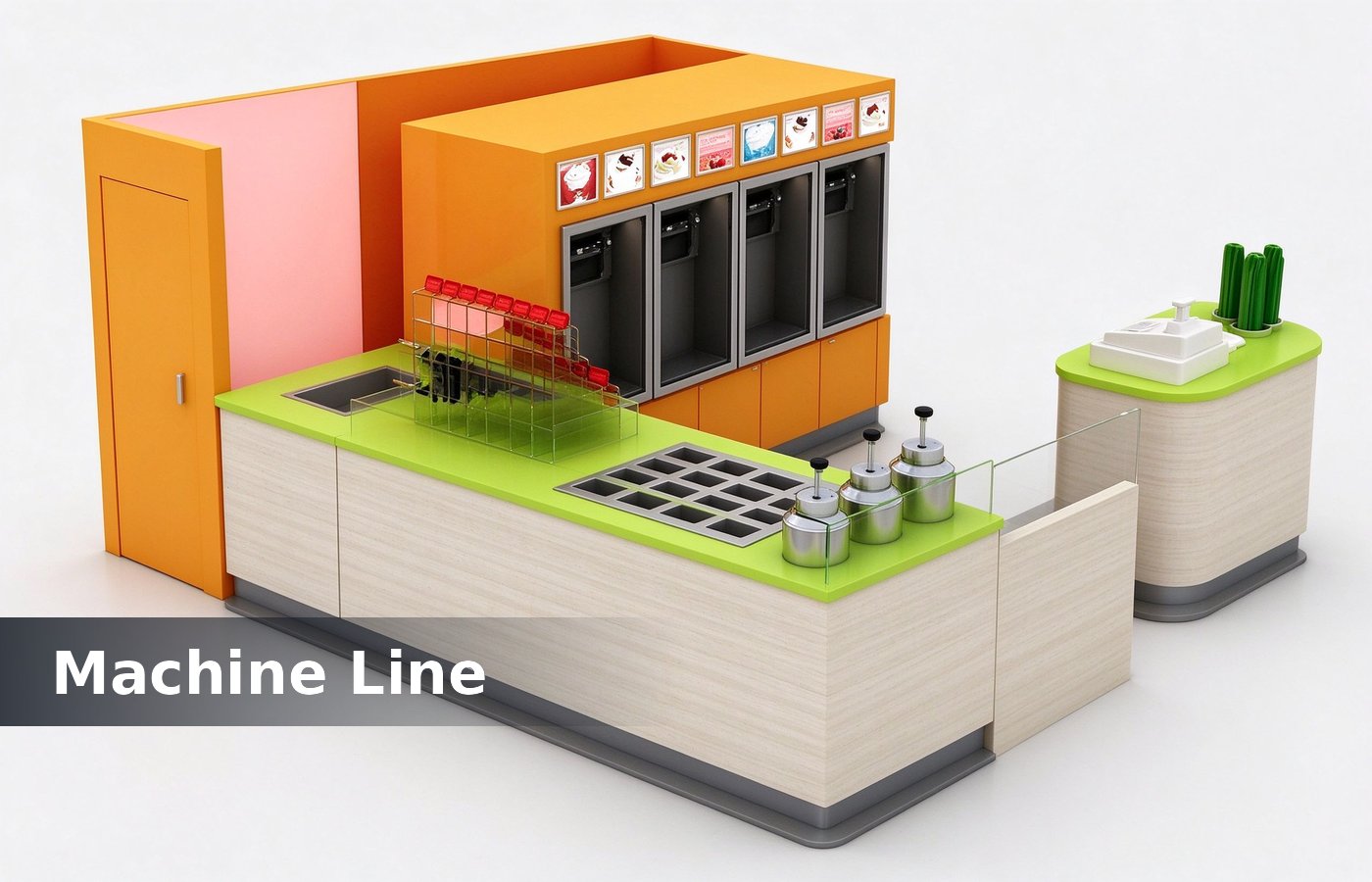
Eight machines need 3.5 m of frontage at 450 mm centres, and a topping bar needs another 2 m with bins at 380 mm spacing. A 3 m bay fits either the machines or the toppings, and rarely both. That figure belongs on the bay drawing, because a layout agreed verbally rarely survives a food court with a lunch queue.
Put the scale and the till at the end of the line, never in the middle. A scale mid line stops the queue twice, and the second stop costs more traffic than the extra till saves cash counters. Most of these decisions fail at the first quiet season, which is exactly when a lease is still running.
Ice cream: the case sets the counter
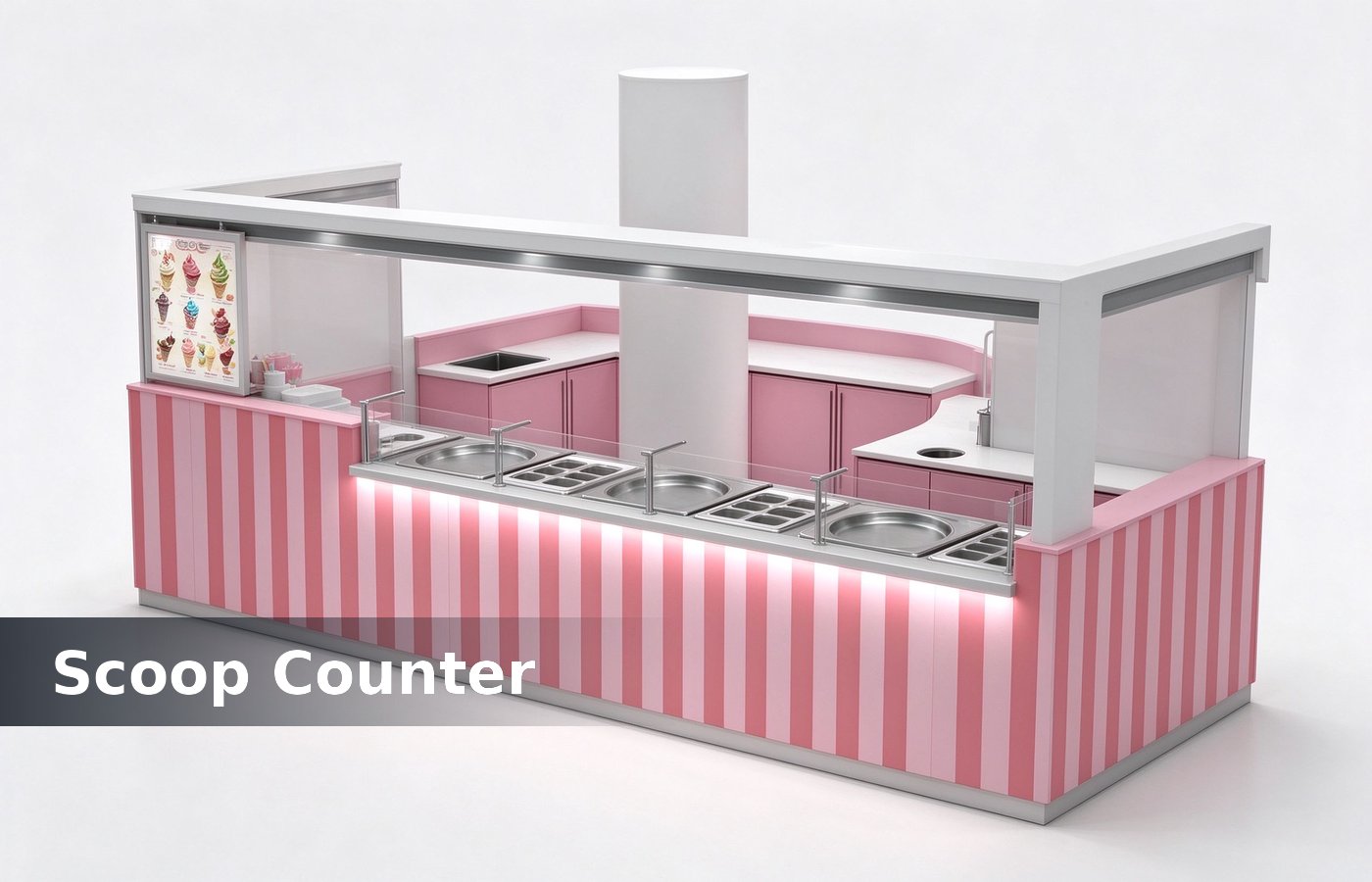
Ice cream runs on a dipping cabinet. A 1.2 m case holds eight to ten tubs and serves about 120 cones a day, and a 1.8 m case holds fourteen tubs and serves twice that with one more scoop position. Mark it on the crate label too, so whoever installs it later has the reference without hunting a folder. Two minutes with the bay drawing settles the question faster than an hour of brochure reading.
The case needs 700 mm of working depth in front for a scoop sink and a cone stack. A counter built at 600 mm leaves the scoop hand hanging over the aisle, and the floor collects a drip line all day. None of that shows in a render, which is why we put the power load on the drawing set.
Order the case and the counter together. A case bought separately often arrives 20 mm proud of the counter line, and the joint becomes a place where syrup collects and display cases. Clients who settle it at design stage pay nothing extra, and clients who settle it after opening pay for a rebuild. The same rule holds for a fixed kiosk and for a demountable one, with the removal clause mattering more on the demountable build.
Side by side table
The table below is what we send a client who is choosing between the two, with the numbers we build to in Shenzhen. We keep the alternative on the same quotation, so the buyer compares a number instead of a preference. That figure belongs on the bay drawing, because a layout agreed verbally rarely survives a food court with a lunch queue.
| Item | Frozen yogurt | Ice cream |
|---|---|---|
| Frontage for 4 lines | Two machines, 1.8 m | One case, 1.8 m |
| Power load | 7 to 9 kW | 4 to 5 kW |
| Staff per shift | Two at peak | Two to three |
| Waste risk | Machine clean down daily | Tub melt at close |
Power, water and waste
Yogurt needs more power and less water. Ice cream needs less power and a scoop sink with hot water, plus a drain that takes melted product without clogging, which is the failure most ice cream kiosks hit in week two. Most of these decisions fail at the first quiet season, which is exactly when a lease is still running.
Both need a grease style trap for sugar waste. A mall that inspects yogurt and ice cream units looks for a floor drain and a bin route, and a unit with neither gets a corrective notice shop fixtures. Mark it on the crate label too, so whoever installs it later has the reference without hunting a folder.
Ticket size and payback
Yogurt pays on volume. A self serve cup at 3 to 5 USD needs 120 cups a day to carry a mall rent, and the margin comes from topping control rather than price. Two minutes with the bay drawing settles the question faster than an hour of brochure reading. None of that shows in a render, which is why we put the power load on the drawing set.
Ice cream pays on ticket. A cone at 5 to 7 USD with a 60 percent margin reaches the same daily revenue at 80 sales, which is an easier target in a food court bay with a steady afternoon crowd. Clients who settle it at design stage pay nothing extra, and clients who settle it after opening pay for a rebuild.
Model both at the quiet season. A yogurt kiosk loses volume fast in winter in a cold city, while ice cream holds a smaller but steadier line retail displays. The same rule holds for a fixed kiosk and for a demountable one, with the removal clause mattering more on the demountable build. We keep the alternative on the same quotation, so the buyer compares a number instead of a preference.
Which to build in a 3 m bay
In a 3 m bay with a 4 kW supply, build ice cream. The case, a scoop sink and a small prep counter fit, and the ticket carries the rent without a long line. That figure belongs on the bay drawing, because a layout agreed verbally rarely survives a food court with a lunch queue. Most of these decisions fail at the first quiet season, which is exactly when a lease is still running.
In a 3 m bay with 9 kW and a corner position, build yogurt. The machines sit on one wall and the topping bar runs along the other, and the self serve line keeps the queue out of the aisle. Mark it on the crate label too, so whoever installs it later has the reference without hunting a folder. Two minutes with the bay drawing settles the question faster than an hour of brochure reading.
Depth decides the rest. A 1.2 m depth fits one product line and a till, and a 1.8 m depth fits a machine wall plus a topping island, so the bay drawing settles the argument before the menu does. None of that shows in a render, which is why we put the power load on the drawing set.
Conclusion
Yogurt is a route with machines and toppings, ice cream is a case with a scoop station. Check power, frontage and depth first, then pick the product the bay can actually carry. Clients who settle it at design stage pay nothing extra, and clients who settle it after opening pay for a rebuild. The same rule holds for a fixed kiosk and for a demountable one, with the removal clause mattering more on the demountable build.
We build both in Shenzhen and quote them on one sheet, so the client compares a bay and a product rather than two brochures. We keep the alternative on the same quotation, so the buyer compares a number instead of a preference. That figure belongs on the bay drawing, because a layout agreed verbally rarely survives a food court with a lunch queue.