
Four practical layouts
Mall jewellery kiosks work in 4 practical layouts: a 4 m glass line, a 6 m U shape, a 9 sqm corner and a 12 sqm double row. Four layouts cover 2, 4, 6 and 8 staff positions. That number belongs on the kiosk sheet, because a layout agreed verbally rarely survives a first lease. Most of these gaps appear at the first festive weekend, which is exactly when the cases are fullest.
A 4 m glass line at 6 sqm holds 120 pieces and a 12 sqm double row holds 320. The four layouts differ by 3 metres of case and 200 pieces of stock, not by style. Mark it on the sheet too, so whoever fits the next kiosk has the reference without guessing. One site visit settles the question faster than a week of render browsing.
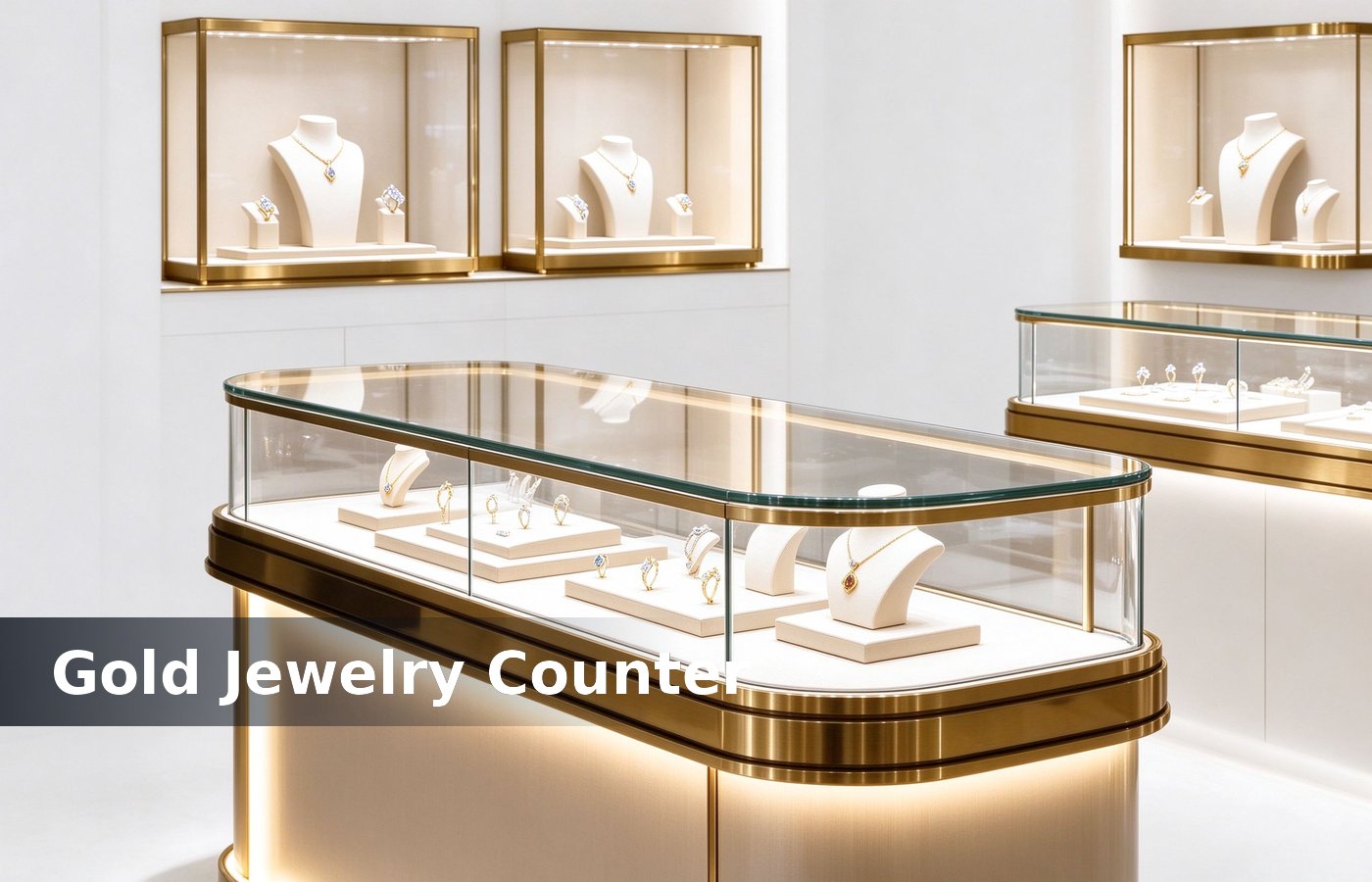
Layout 1: the 4 m glass line
A 4 m glass line at 1,200 mm depth puts 6 cases end to end and 3 staff behind, and each case holds 20 rings. Six cases at 20 is 120 pieces and a 900 mm gap between staff. None of that shows in a picture, which is why we mark the case count and the height on the sheet.
A 4 m line costs 9,400 dollars and serves 40 customers an hour at 90 seconds a sale. A line at 4 m fits a 6 sqm mall lease at 1,800 dollars monthly and mall kiosk layout. Owners who settle it before an order pay nothing extra, and owners who settle it after a fit-out pay a rebuild. The same rule holds for a mall island and a department store counter, with the return mattering in both.
Layout 2: the 6 m U shape
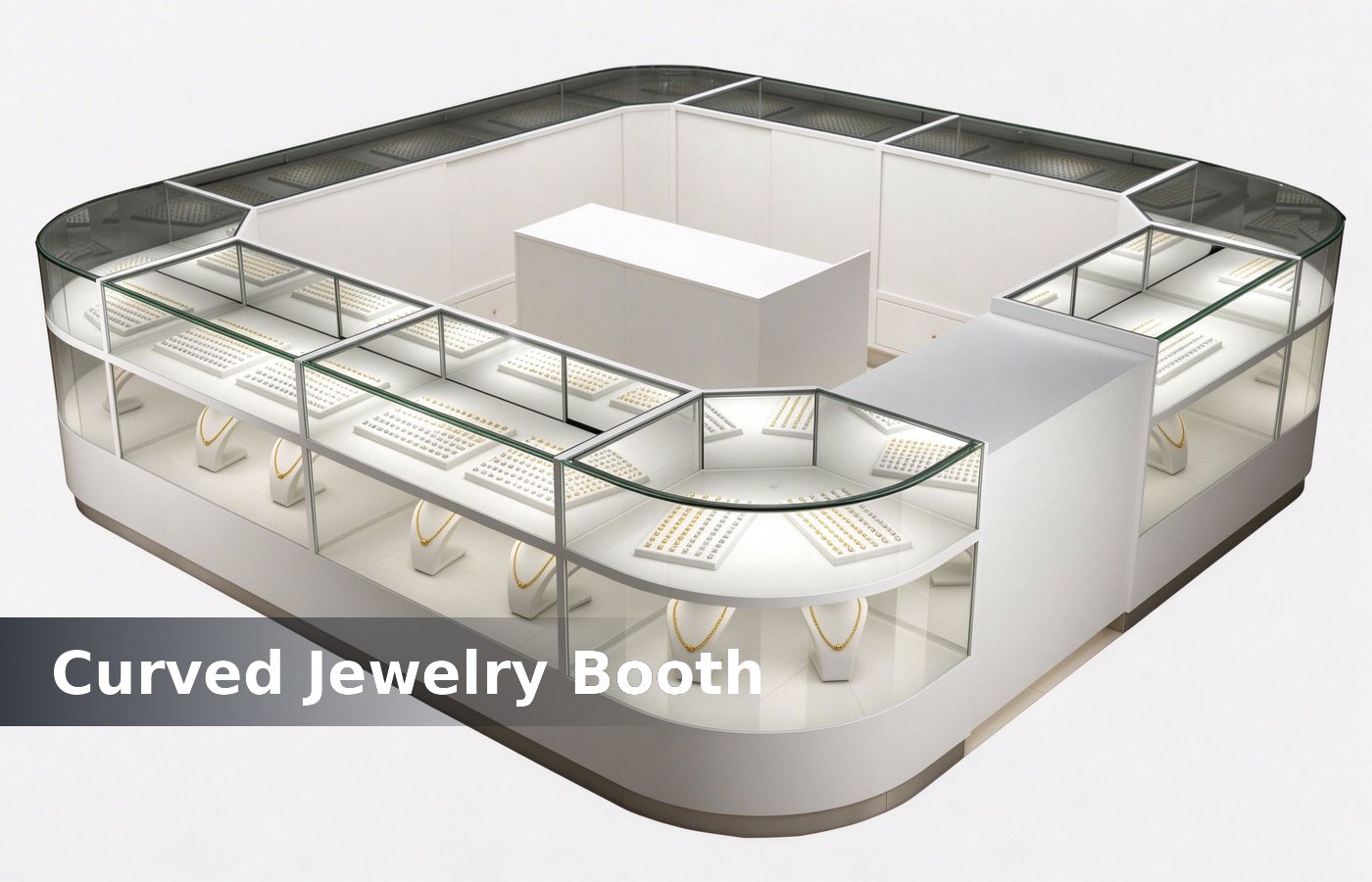
A 6 m U shape wraps 3 sides of a 2 m core and shows 180 pieces on 9 cases, and staff stands inside the U. Nine cases at 20 is 180 pieces and a 2 m core holds the safe. We keep the alternative on the same sheet, so the owner compares a case count instead of a render.
A U at 6 m serves 60 customers an hour and costs 13,800 dollars. A line at 4 m serves 40 and a U adds 20 an hour for 4,400 dollars, which is fixture materials. That number belongs on the kiosk sheet, because a layout agreed verbally rarely survives a first lease. Most of these gaps appear at the first festive weekend, which is exactly when the cases are fullest.
Layout 3: the 9 sqm corner
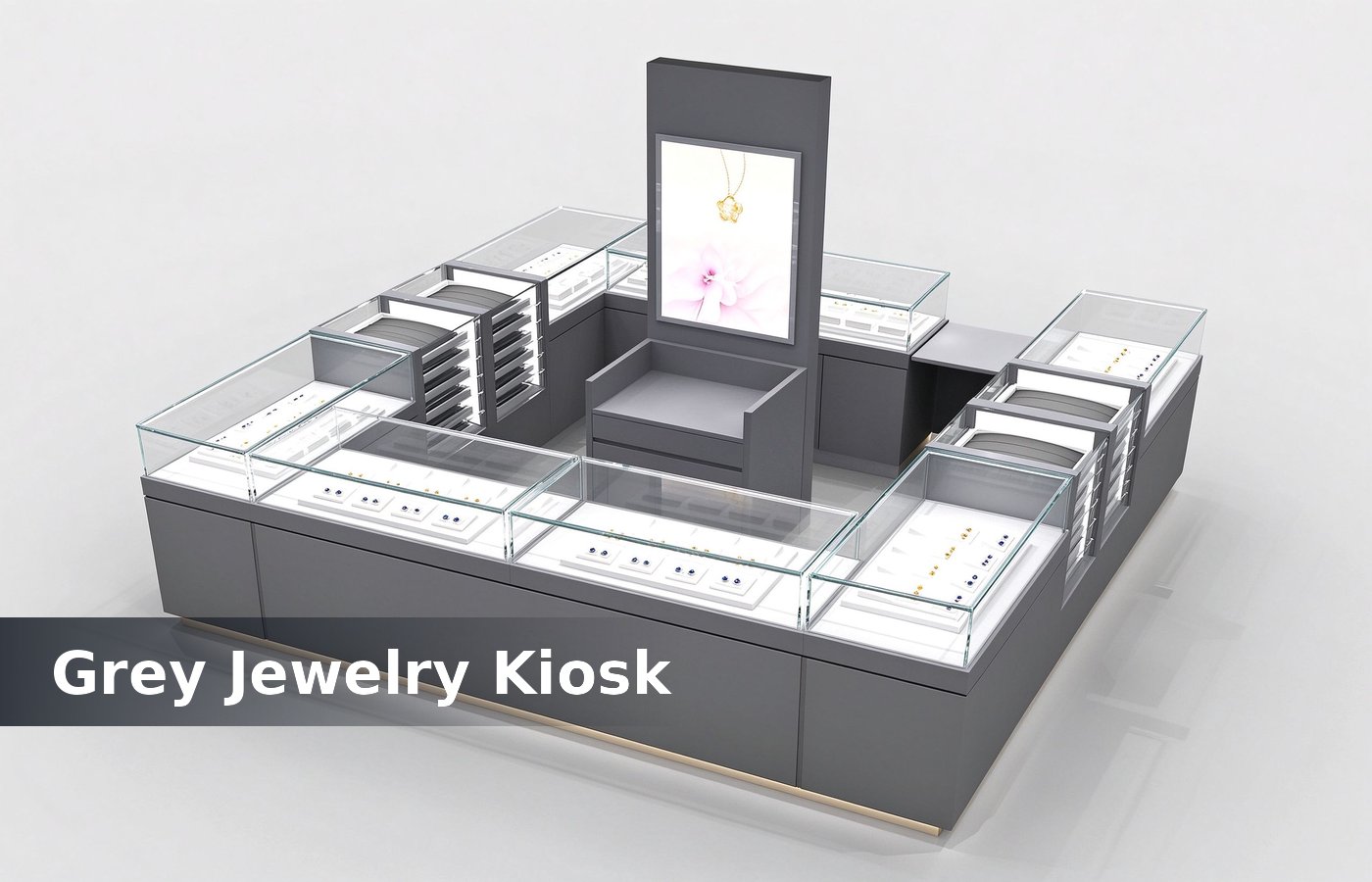
A 9 sqm corner at 3 m by 3 m puts 2 faces against a mall wall and 2 open faces on a walkway, and a corner needs a 1 m return. Two open faces read 6 m of a 9 sqm island. Mark it on the sheet too, so whoever fits the next kiosk has the reference without guessing. One site visit settles the question faster than a week of render browsing.
A corner at 9 sqm costs 11,200 dollars and holds 150 pieces on 7 cases. A corner at a mall wall saves a rear panel of 3 m, which is 600 dollars shop fixtures. None of that shows in a picture, which is why we mark the case count and the height on the sheet. Owners who settle it before an order pay nothing extra, and owners who settle it after a fit-out pay a rebuild.
Layout 4: the 12 sqm double row
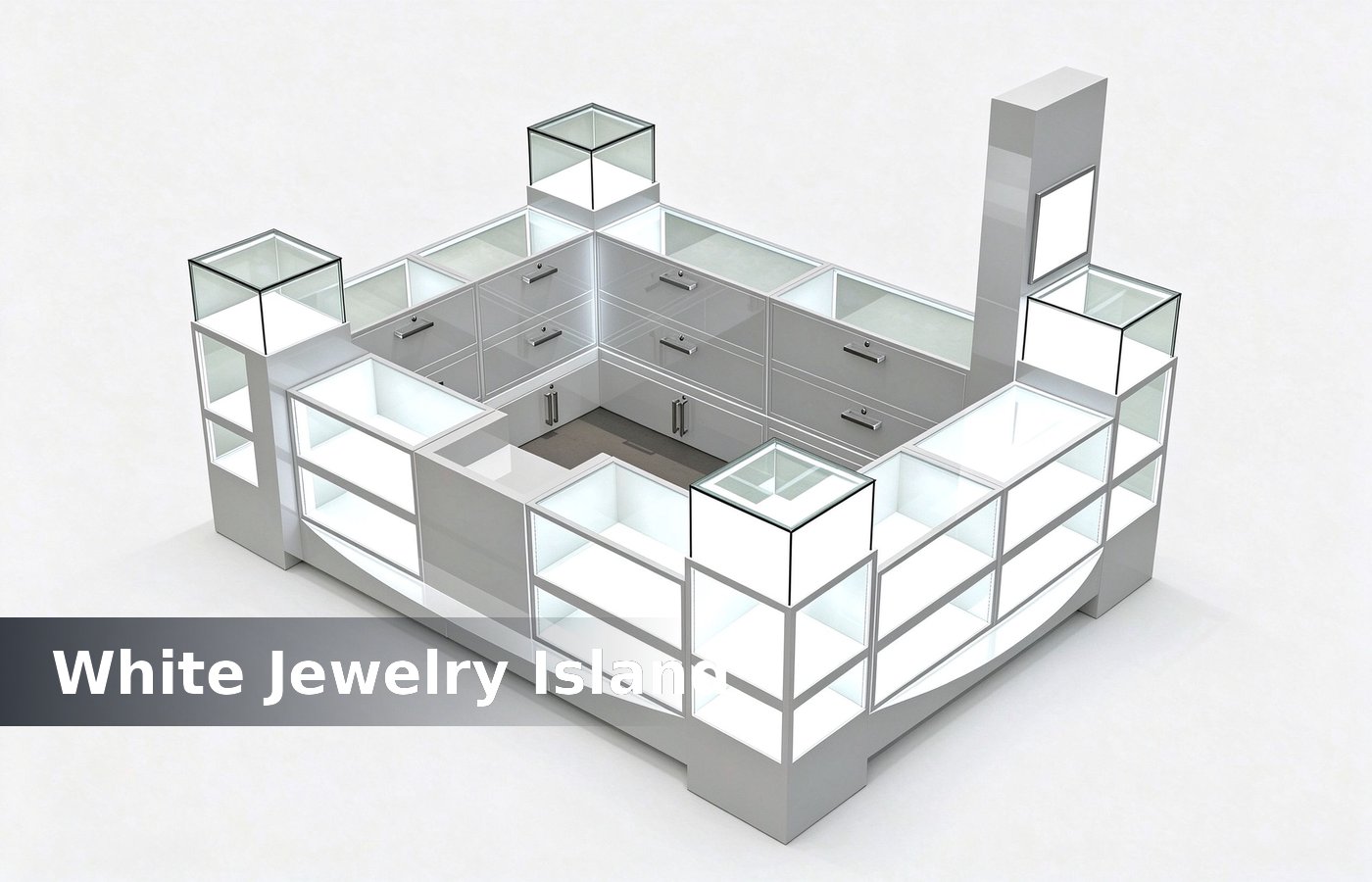
A 12 sqm double row at 6 m by 2 m seats 2 staff per side and shows 320 pieces on 16 cases. Sixteen cases at 20 is 320 pieces and a 6 m row reads 2 flows of walkway. The same rule holds for a mall island and a department store counter, with the return mattering in both.
A double row at 12 sqm costs 16,500 dollars and serves 80 customers an hour at 2 counters. Two counters at 80 is the ceiling of a mall kiosk before a queue retail displays. We keep the alternative on the same sheet, so the owner compares a case count instead of a render. That number belongs on the kiosk sheet, because a layout agreed verbally rarely survives a first lease.
Five numbers across four layouts
The table is the sheet we use across 4 mall layouts, and each line answers a case, a piece or a dollar rather than a mood board. Most of these gaps appear at the first festive weekend, which is exactly when the cases are fullest. Mark it on the sheet too, so whoever fits the next kiosk has the reference without guessing. One site visit settles the question faster than a week of render browsing.
| Layout | Area | Cases | Pieces |
|---|---|---|---|
| 4 m glass line | 6 sqm | 6 | 120 |
| 6 m U shape | 9 sqm | 9 | 180 |
| 9 sqm corner | 9 sqm | 7 | 150 |
| 12 sqm double row | 12 sqm | 16 | 320 |
The 90 second sale
A jewellery sale at 90 seconds needs a 3 second read and a 12 second try, and a case at 900 mm height lets a customer reach a tray without a staff hand. A reach at 900 mm saves 20 seconds. None of that shows in a picture, which is why we mark the case count and the height on the sheet.
Twenty seconds on 40 sales is 800 seconds, which is 13 minutes of an hour and 2 more customers. A 900 mm case height is the number that turns display cases. Owners who settle it before an order pay nothing extra, and owners who settle it after a fit-out pay a rebuild. The same rule holds for a mall island and a department store counter, with the return mattering in both.
Why the U beats the line
A U at 6 m shows 180 pieces against kiosk design and serves 60 against 40, for a 4,400 dollar difference. A U adds 60 pieces and 20 customers on 3 more metres of case. We keep the alternative on the same sheet, so the owner compares a case count instead of a render. That number belongs on the kiosk sheet, because a layout agreed verbally rarely survives a first lease.
A 4,400 dollar gap is 110 pieces at 40 dollars, which is 3 days of trade at 40 sales. A U clears the gap in 3 days and a line at 40 sales takes 6 days to jewellery counters. Most of these gaps appear at the first festive weekend, which is exactly when the cases are fullest. Mark it on the sheet too, so whoever fits the next kiosk has the reference without guessing.
Conclusion
Four layouts, 120 to 320 pieces, 40 to 80 customers, and 9,400 to 16,500 dollars. Four layouts and their numbers settle a mall jewellery kiosk. One site visit settles the question faster than a week of render browsing. None of that shows in a picture, which is why we mark the case count and the height on the sheet.
Pick the layout by pieces and not by render. A 6 m U at 180 pieces sells 60 an hour where cash counters at 120 sells 40 on the same 1,800 rent. Owners who settle it before an order pay nothing extra, and owners who settle it after a fit-out pay a rebuild. The same rule holds for a mall island and a department store counter, with the return mattering in both.
Check a case at 900 mm and a gap at 900 mm. A 900 mm case lets a customer reach a tray and a 900 mm staff gap keeps 3 sellers behind a 4 m line. We keep the alternative on the same sheet, so the owner compares a case count instead of a render. That number belongs on the kiosk sheet, because a layout agreed verbally rarely survives a first lease.