
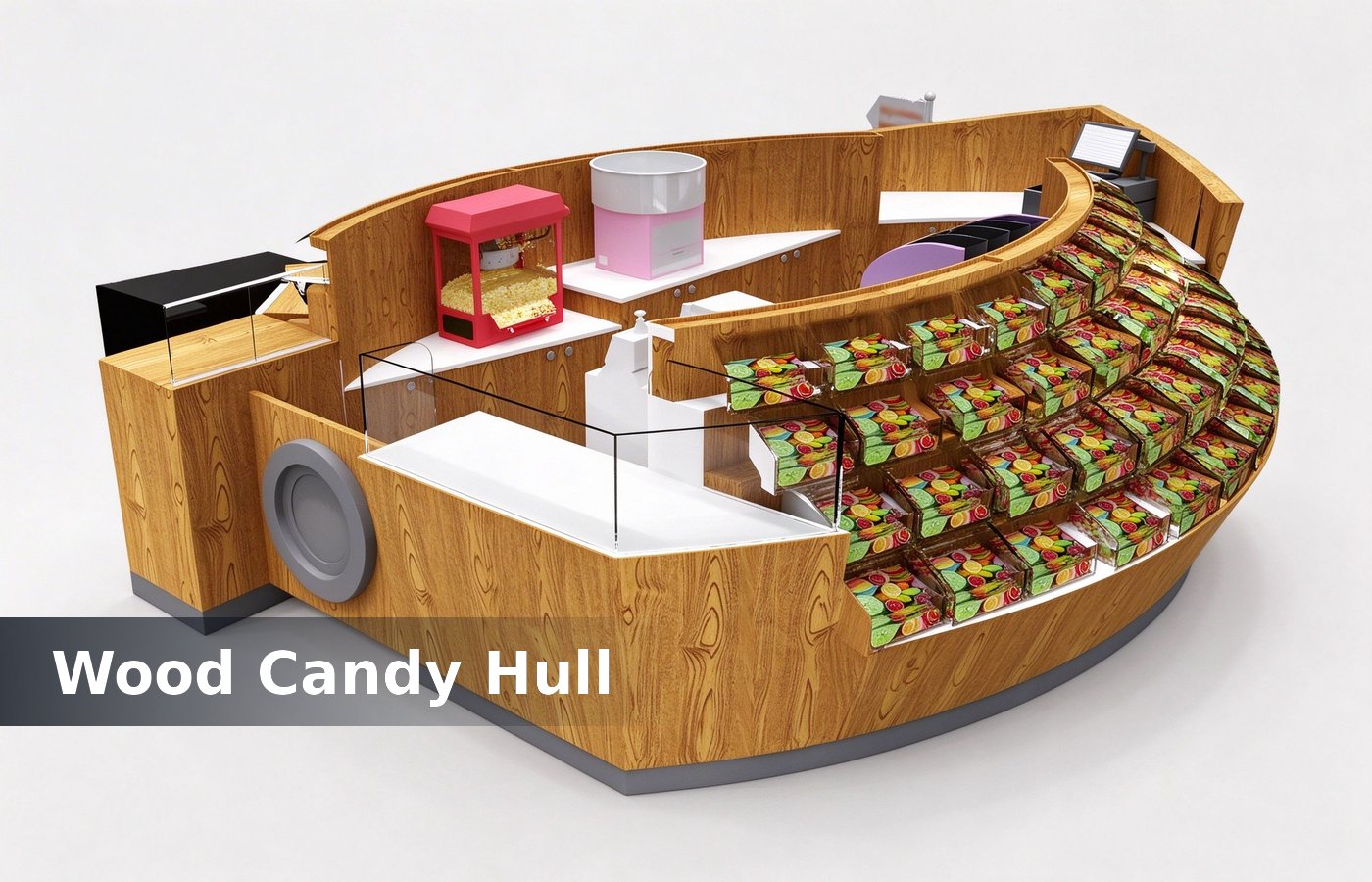
The jig comes first
A boat candy kiosk starts with a jig, not with candy, because a 4.2 m hull curve is cut on a 2 part template and every later panel follows that curve. A hull built without a jig kiosk design. We keep the alternative on the same sheet, so the buyer compares a jig instead of a render. That number belongs on the build sheet, because a millimetre agreed verbally rarely survives a first container.
A 2 part jig costs 2,300 dollars in ply and labour and holds 5 units, and 2,300 on 5 hulls is 460 a boat. A hull off by 20 mm needs a 1,800 re-skin and 9 days, so the jig is the cheaper first purchase. Most of these gaps appear at the first container load, which is exactly when a 20 mm curve shows.
Three millimetre bending ply
A hull skin uses 3 mm bending ply over 12 mm structural ribs at 300 mm spacing, and 3 mm bends to a 900 mm radius without a kerf. A 5 mm skin cracks at 700 mm radius. Mark it on the sheet too, so whoever builds the next hull has the reference without guessing. One factory visit settles the question faster than a week of render browsing.
A 3 mm bending ply costs 34 dollars a sheet and a 5 mm 52, and a 4.2 m hull takes 14 sheets. Seven hundred and thirty-six against 728 for a skin that cracks at 6 of 10 bends, which is fixture materials. None of that shows in a picture, which is why we mark the radius and the bins on the sheet.
Five days for one hull
A hull takes 5 days: 1 day ribs, 2 days skin and 2 days filler and sand, and a second unit on the same jig takes 3 days. The jig is why the 5th unit costs 40 percent less than the first. Buyers who settle it before an order pay nothing extra, and buyers who settle it after delivery pay a re-skin.
A 5 day first hull at 220 dollars a day is 1,100 of labour and a 3 day repeat 660, and 440 saved per unit on 5 is 2,200. The jig at 2,300 is paid back by the 5th hull glass showcases. The same rule holds for a Shenzhen workshop and a Dubai one, with the rib spacing mattering in both.
Four numbers on the sheet
The table is the sheet we use on boat shaped candy kiosks, and each line answers a millimetre, a day or a dollar rather than a mood board. We keep the alternative on the same sheet, so the buyer compares a jig instead of a render. That number belongs on the build sheet, because a millimetre agreed verbally rarely survives a first container.
| Item | Number |
|---|---|
| Hull length | 4.2 m |
| Skin | 3 mm bending ply |
| Rib spacing | 300 mm |
| Build time | 5 days |
| Price | $12,400 |
Five millimetre bins, 120 of them
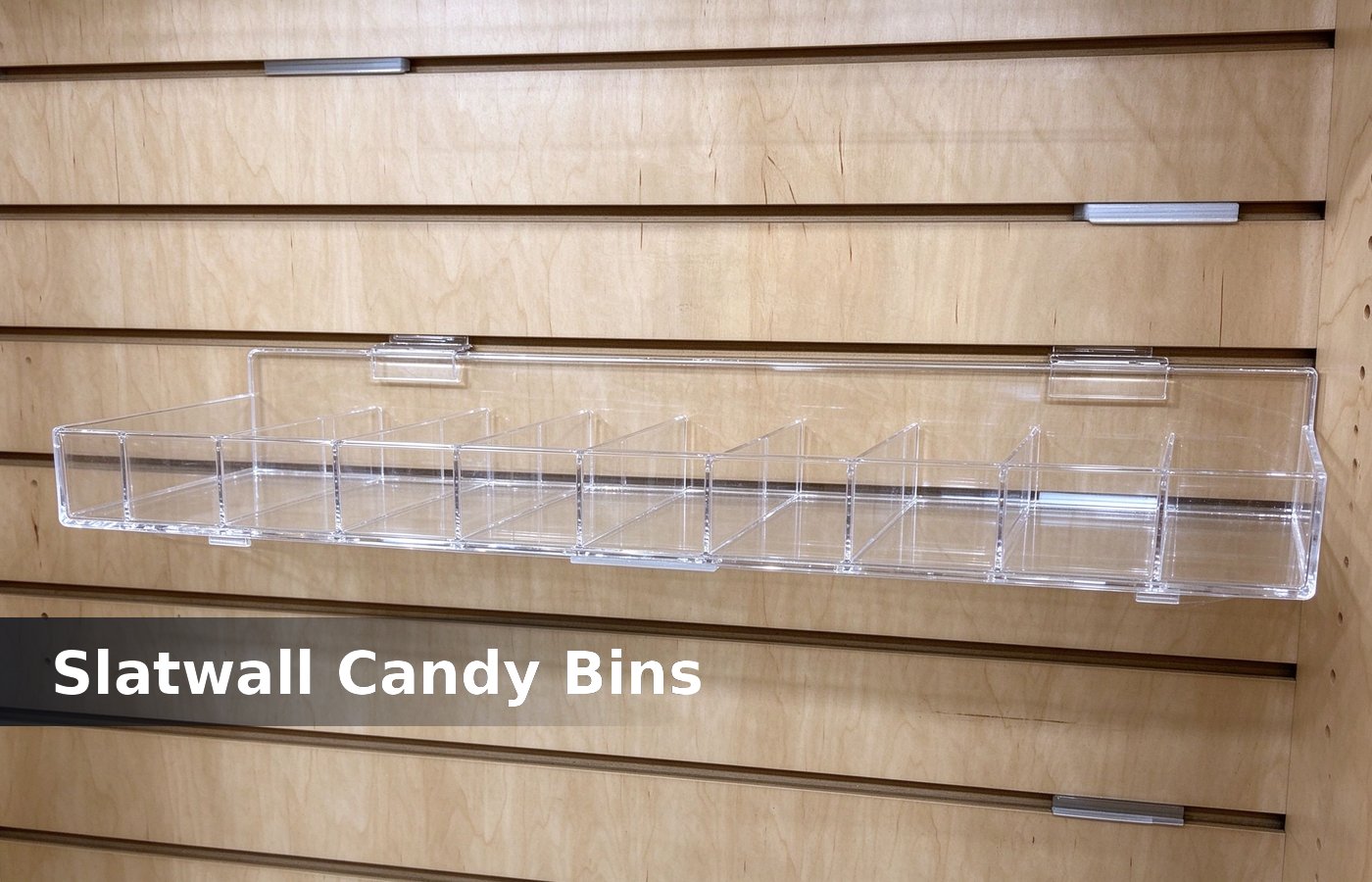
A hull carries 120 acrylic bins at 5 mm on a slatwall at 100 mm pitch, and 5 mm holds 4 kg of candy per bin without a bow. A 3 mm bin bows 3 mm at 3 kg and drops candy retail displays. Most of these gaps appear at the first container load, which is exactly when a 20 mm curve shows.
A 5 mm bin costs 11 dollars and a 3 mm 7, and 120 bins is 1,320 against 840. Four hundred and eighty dollars buys 120 bins that do not drop candy, and a dropped bin costs 6 dollars of stock and 20 seconds. Mark it on the sheet too, so whoever builds the next hull has the reference without guessing. One factory visit settles the question faster than a week of render browsing.
Two hulls in a 40 foot
A 4.2 m hull ships 2 per 40 foot container in knocked down panels, and a 5.2 m hull ships 1. Shipping 2 hulls at 2,100 dollars is 1,050 each, and 1 hull at 1,900 is 1,900. None of that shows in a picture, which is why we mark the radius and the bins on the sheet. Buyers who settle it before an order pay nothing extra, and buyers who settle it after delivery pay a re-skin.
A 1,050 freight per hull against 1,900 is 850 dollars of margin on the same candy kiosk, and 850 is 7 percent of a 12,400 build. A 4.2 m hull is the size that pays for cash counters. The same rule holds for a Shenzhen workshop and a Dubai one, with the rib spacing mattering in both. We keep the alternative on the same sheet, so the buyer compares a jig instead of a render.
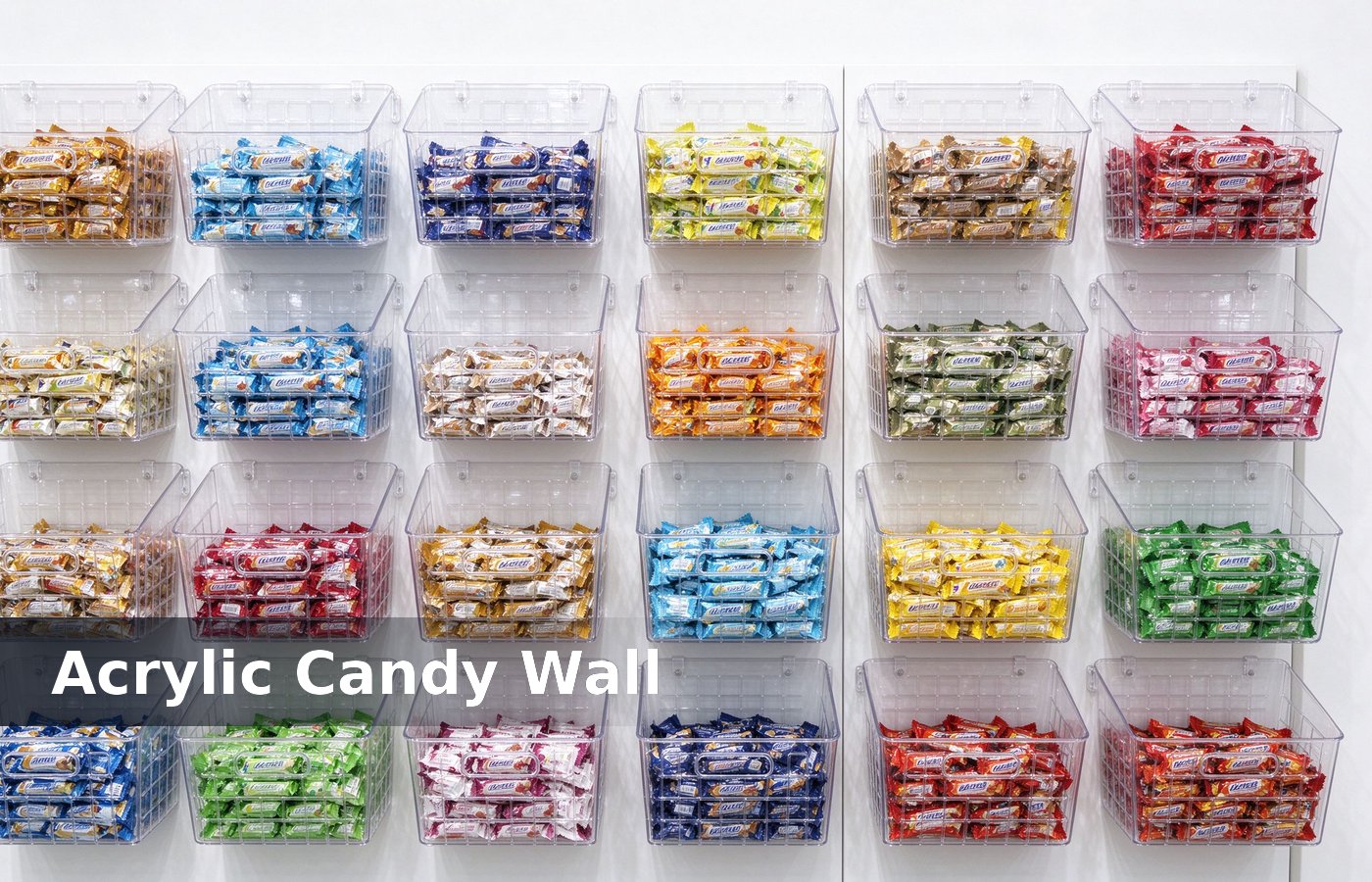
Candy at 4.8 per kg
A boat kiosk sells candy at 16 dollars a kg against a 4.8 cost, and a 120 bin hull holding 4 kg a bin is 480 kg of display. A 480 kg display at 11.2 of margin is 5,376 dollars of stock margin. That number belongs on the build sheet, because a millimetre agreed verbally rarely survives a first container.
A 480 kg display turns in 12 days at 40 kg a day, and 12 days of turn on 5,376 is 448 a day. A 240 bin hull turns in 24 days and ties 5,376 in stock display cases. Most of these gaps appear at the first container load, which is exactly when a 20 mm curve shows.
Conclusion
A jig, 3 mm skin, 5 days, 120 bins and 12,400 dollars. Five numbers cosmetic kiosk. Mark it on the sheet too, so whoever builds the next hull has the reference without guessing. One factory visit settles the question faster than a week of render browsing. None of that shows in a picture, which is why we mark the radius and the bins on the sheet.
Buy the jig and the 5 mm bins. A 2,300 jig saves 440 a hull from the second unit and 5 mm bins stop a 3 mm bow that drops stock shop fixtures. Buyers who settle it before an order pay nothing extra, and buyers who settle it after delivery pay a re-skin. The same rule holds for a Shenzhen workshop and a Dubai one, with the rib spacing mattering in both.
Check a rib at 300 mm and a skin at 3 mm. Three hundred millimetres holds a 900 mm radius and 3 mm bends without a kerf or a crack. We keep the alternative on the same sheet, so the buyer compares a jig instead of a render. That number belongs on the build sheet, because a millimetre agreed verbally rarely survives a first container.