
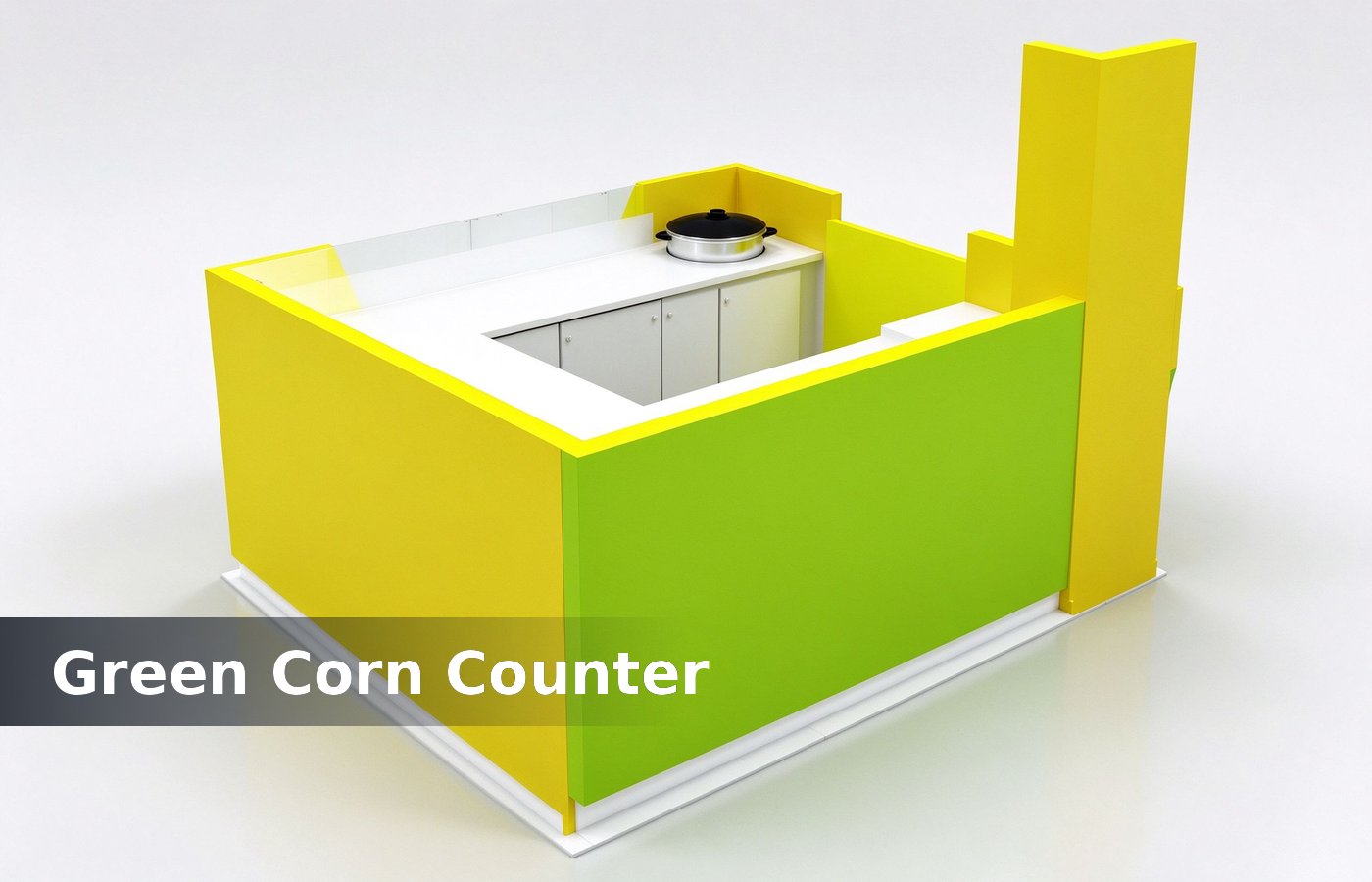
What Canadian owners changed
A sweet corn kiosk in Canada runs through a 5 month corn season, so an owner gets one chance to learn and 7 months to regret. Feedback from three Toronto and Calgary kiosks changed 5 things kiosk design. Owners who settle it before an order pay nothing extra, and owners who settle it after a fit-out pay a rebuild.
A 10 sqm corn kiosk at 2,800 dollars a month earns 14,000 in a 5 month season, and 5 changes that lift 4 cobs an hour add 1,900. Small fixes matter shop fixtures. The same rule holds for a Toronto mall and a Calgary one, with the butter rail mattering in both. We keep the alternative on the same sheet, so the owner compares a steamer instead of a render.
Two steamers at 90 C
A corn steamer at 90 C holds 120 cobs and a 2 steamer bay turns 400 cobs in a 10 hour day, and 400 at 4 dollars is 1,600 dollars. One steamer caps at 220 and a Saturday queue stops at 3 pm. That number belongs on the kiosk sheet, because a cob count agreed verbally rarely survives a first Saturday.
A second steamer costs 780 dollars with its 6 kW element and doubles a day from 220 to 400. One hundred and eighty cobs at 3.2 of margin is 576 a day, so a 780 steamer pays in 8 hours. Most of these gaps appear in the August peak, which is exactly when both steamers run flat out.
Butter at the counter, not behind
A Canadian corn kiosk puts butter and salt at the customer side because a 90 C cob handed over plain loses 40 percent of repeat buyers. A 300 mm butter rail moves 400 cobs in 3 hours instead of 5. Mark it on the sheet too, so whoever fits the next kiosk has the reference without guessing. One site visit settles the question faster than a week of render browsing.
A butter rail at 300 mm costs 210 dollars and holds 2 trays, and 210 buys 2 hours of a Saturday. Two hours of a Saturday is 80 cobs at 3.2, which is 256 dollars fixture materials. None of that shows in a picture, which is why we mark the steamer and the bay on the sheet.
Four numbers on the sheet
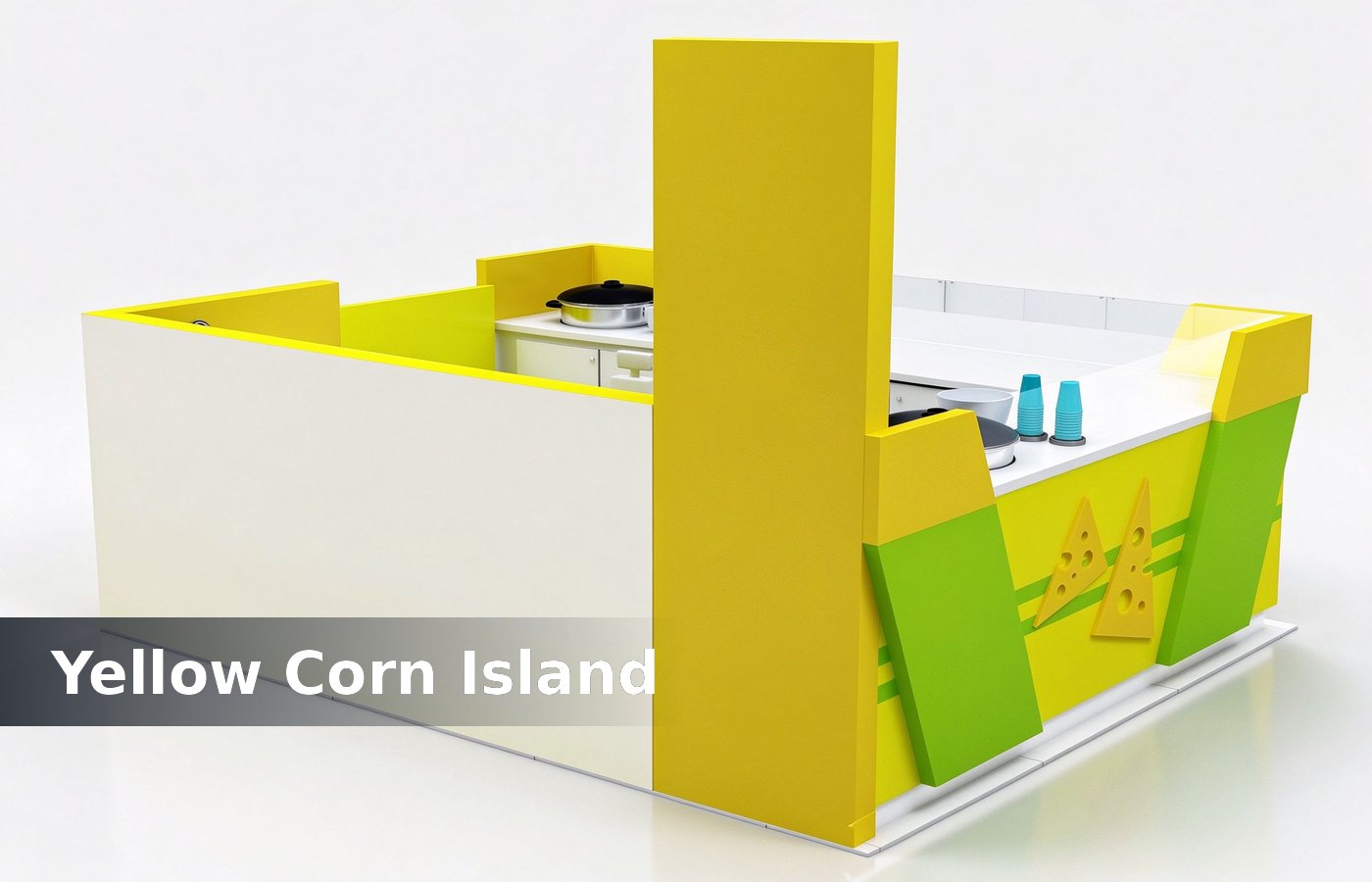
The table is the sheet we use on corn and steamed food kiosks, and each line answers a cob, a steamer or a dollar rather than a mood board. Owners who settle it before an order pay nothing extra, and owners who settle it after a fit-out pay a rebuild. The same rule holds for a Toronto mall and a Calgary one, with the butter rail mattering in both.
| Item | Number |
|---|---|
| Footprint | 10 sqm |
| Steamers | 2 |
| Steam temp | 90 C |
| Cobs per day | 400 |
| Build | $9,800 |
The 6 kW bay in winter
A corn kiosk in a Canadian mall draws 6 kW with 2 steamers retail displays, and a mall bay feeds 6 kW on a 240 volt 30 amp circuit. Six kilowatts leaves no room for a second circuit. We keep the alternative on the same sheet, so the owner compares a steamer instead of a render. That number belongs on the kiosk sheet, because a cob count agreed verbally rarely survives a first Saturday.
A 6 kW bay needs a 30 amp breaker and an upgrade to 9 kW costs 2,400 dollars. Two thousand four hundred is 24 percent of a 9,800 build, so a 6 kW bay must be sized glass showcases. Most of these gaps appear in the August peak, which is exactly when both steamers run flat out.
Corn at 35 cents a cob
A Canadian cob costs 0.35 dollars in season and sells at 4, which is 3.65 of margin, and 400 cobs is 1,460 dollars a day. A 3.65 margin at 400 is 1,460 and at 220 is 803. Mark it on the sheet too, so whoever fits the next kiosk has the reference without guessing. One site visit settles the question faster than a week of render browsing.
A 180 cob gap is 657 a day and 19,710 across a 30 day peak, which is twice a 9,800 build. Margin per cob is fixed, so cobs per hour cash counters. None of that shows in a picture, which is why we mark the steamer and the bay on the sheet. Owners who settle it before an order pay nothing extra, and owners who settle it after a fit-out pay a rebuild.
Five month payback
A 5 month season at 400 cobs and 26 selling days a month is 52,000 cobs, which is 189,000 dollars of margin on a 9,800 build. Payback lands in the first 3 weeks of the season. The same rule holds for a Toronto mall and a Calgary one, with the butter rail mattering in both. We keep the alternative on the same sheet, so the owner compares a steamer instead of a render.
A 9,800 build against 14,000 a month of season trade returns in 21 days, and the remaining 4 months pay rent. Season length, not rent, decides whether a kiosk is display cases. That number belongs on the kiosk sheet, because a cob count agreed verbally rarely survives a first Saturday. Most of these gaps appear in the August peak, which is exactly when both steamers run flat out.
Conclusion
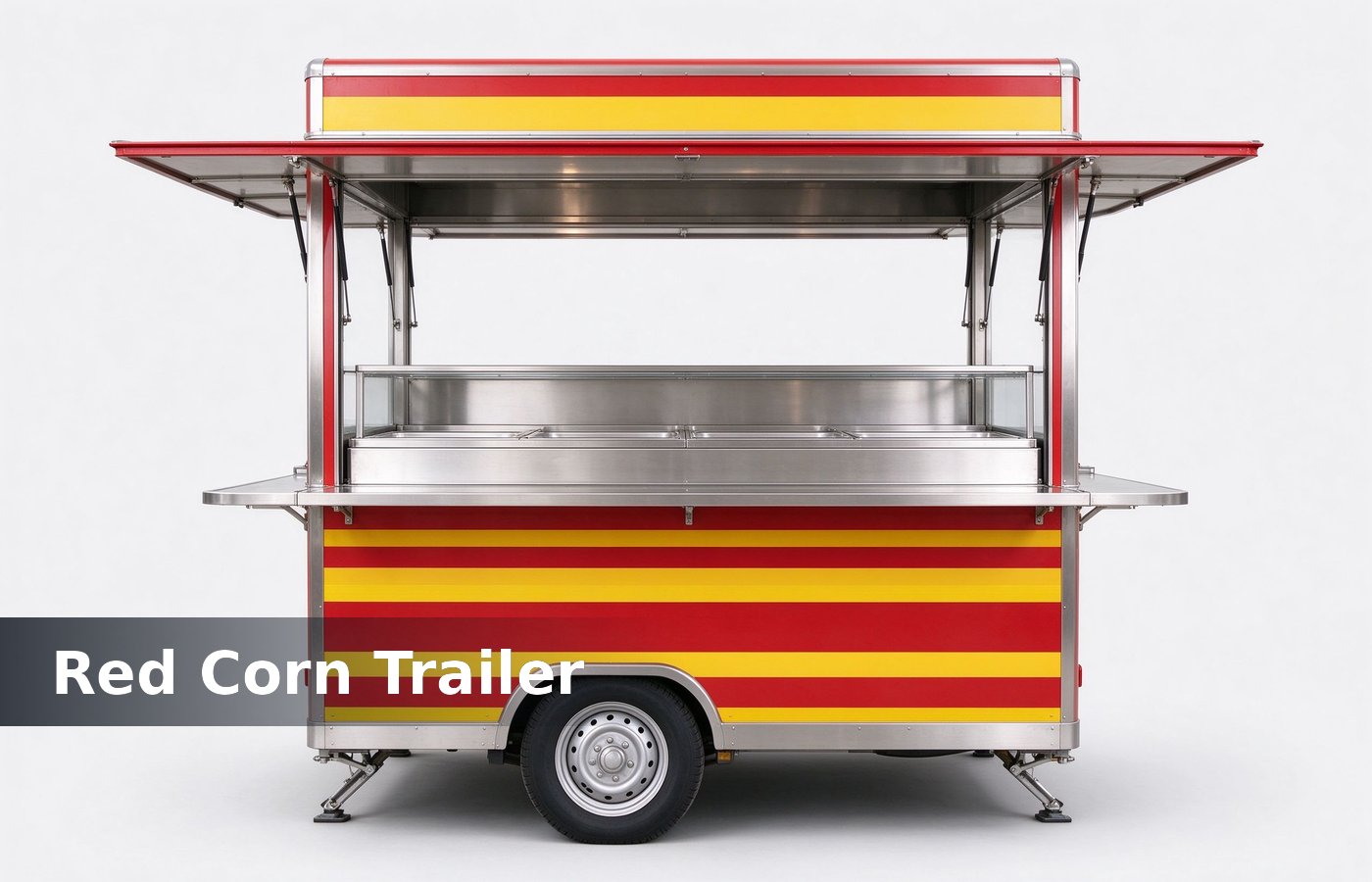
Ten square metres, 2 steamers, 90 C, 400 cobs and 9,800 dollars. Five numbers settle a sweet corn kiosk for Canada. Mark it on the sheet too, so whoever fits the next kiosk has the reference without guessing. One site visit settles the question faster than a week of render browsing. None of that shows in a picture, which is why we mark the steamer and the bay on the sheet.
Buy the second steamer and the butter rail, and size the bay at 6 kW. Two steamers lift 220 cobs to 400 and a 300 mm butter rail holds a queue food kiosk design. Owners who settle it before an order pay nothing extra, and owners who settle it after a fit-out pay a rebuild. The same rule holds for a Toronto mall and a Calgary one, with the butter rail mattering in both.
Check a steamer at 90 C and a bay at 6 kW. Ninety degrees keeps a cob sweet for 3 hours and 6 kW carries 2 steamers on one 30 amp circuit. We keep the alternative on the same sheet, so the owner compares a steamer instead of a render. That number belongs on the kiosk sheet, because a cob count agreed verbally rarely survives a first Saturday.