
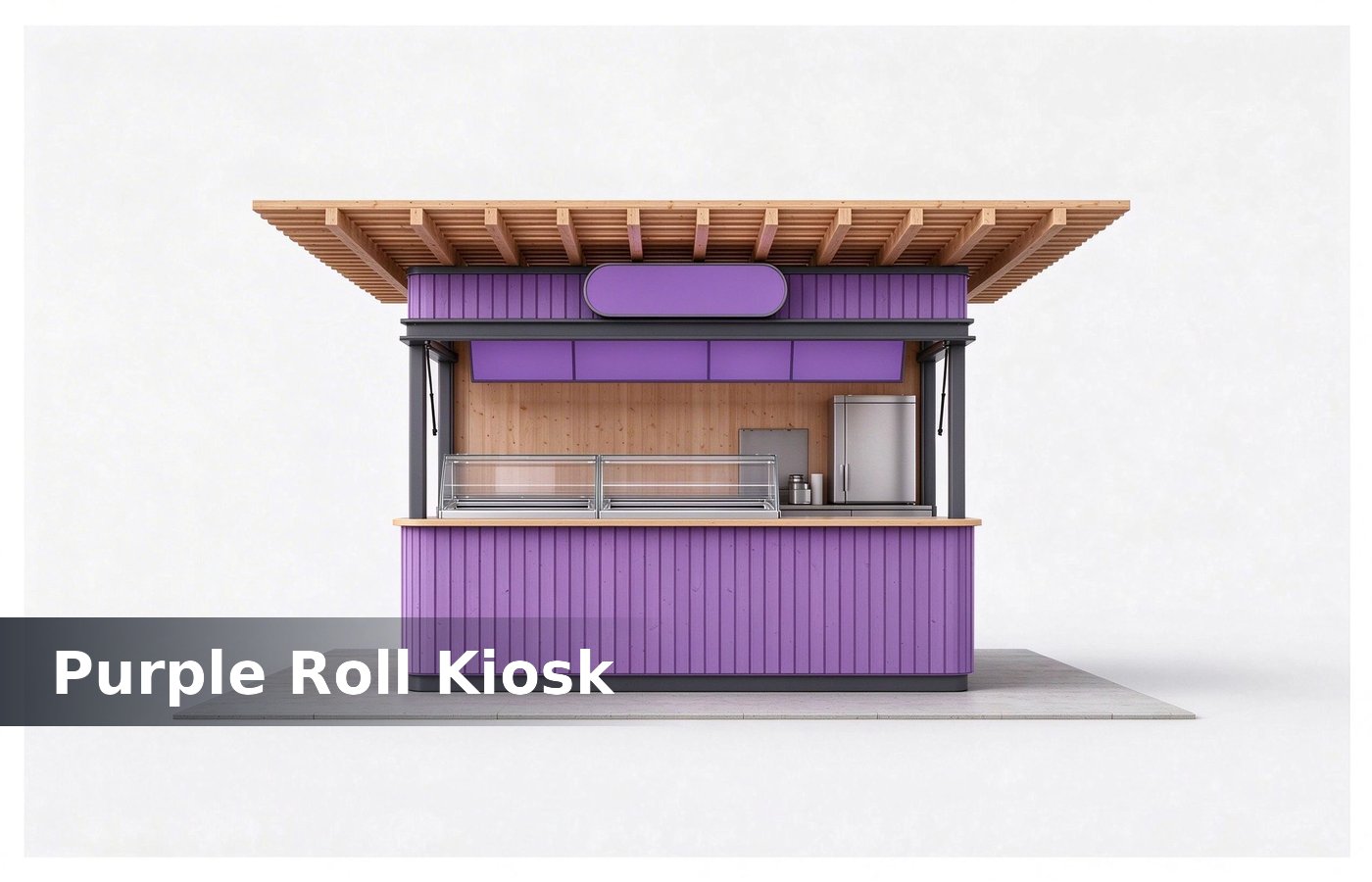
Ninety seconds on a cold plate
A roll ice cream kiosk is a 90 second performance, and every part of the build exists to keep that 90 seconds from becoming 150. Plate temperature, topping reach and queue space decide the show. None of that shows in a picture, which is why we mark the degrees and the seconds on the sheet. Owners who settle it before an order pay nothing extra, and owners who settle it after a fit-out pay a rebuild.
A roll pours at 120 ml and spreads across a plate at minus 20 C, and at minus 12 C the same pour takes 45 seconds longer. Forty-five seconds on 40 orders is 30 minutes kiosk design. The same rule holds for a Bangkok mall and a Dubai one, with the recovery time mattering in both. We keep the alternative on the same sheet, so the owner compares a compressor instead of a render.
Minus 20 C, not minus 15
A roll plate runs at minus 20 C with a 1.5 kW compressor and a 6 mm stainless surface, and minus 15 C leaves a roll too soft to stand. A soft roll is a scoop, not a roll. That number belongs on the kiosk sheet, because a plate temperature agreed verbally rarely survives a first Saturday. Most of these gaps appear on a Saturday afternoon, which is exactly when one plate runs flat out.
A minus 20 C unit costs 3,400 dollars and a minus 15 C 2,300, and 1,100 buys a 90 second roll instead of 150. Forty orders at 4.6 of margin is 184 dollars, so 1,100 shop fixtures. Mark it on the sheet too, so whoever fits the next kiosk has the reference without guessing. One site visit settles the question faster than a week of render browsing.
Six square metres, three stations
A 6 sqm roll kiosk splits into a plate station at 1.2 m, a topping bar at 1.8 m and a cash point at 600 mm, and 3 stations keep one roll in hand and one in payment. Two stations cross the queues. None of that shows in a picture, which is why we mark the degrees and the seconds on the sheet.
A 6 sqm bay at 2,600 dollars a month holds 3 stations, and a 9 sqm at 3,900 adds one plate but 1,300 fixture materials. One more plate at 40 rolls an hour is 184 dollars against 1,300 of rent. Owners who settle it before an order pay nothing extra, and owners who settle it after a fit-out pay a rebuild.
Four numbers on the sheet
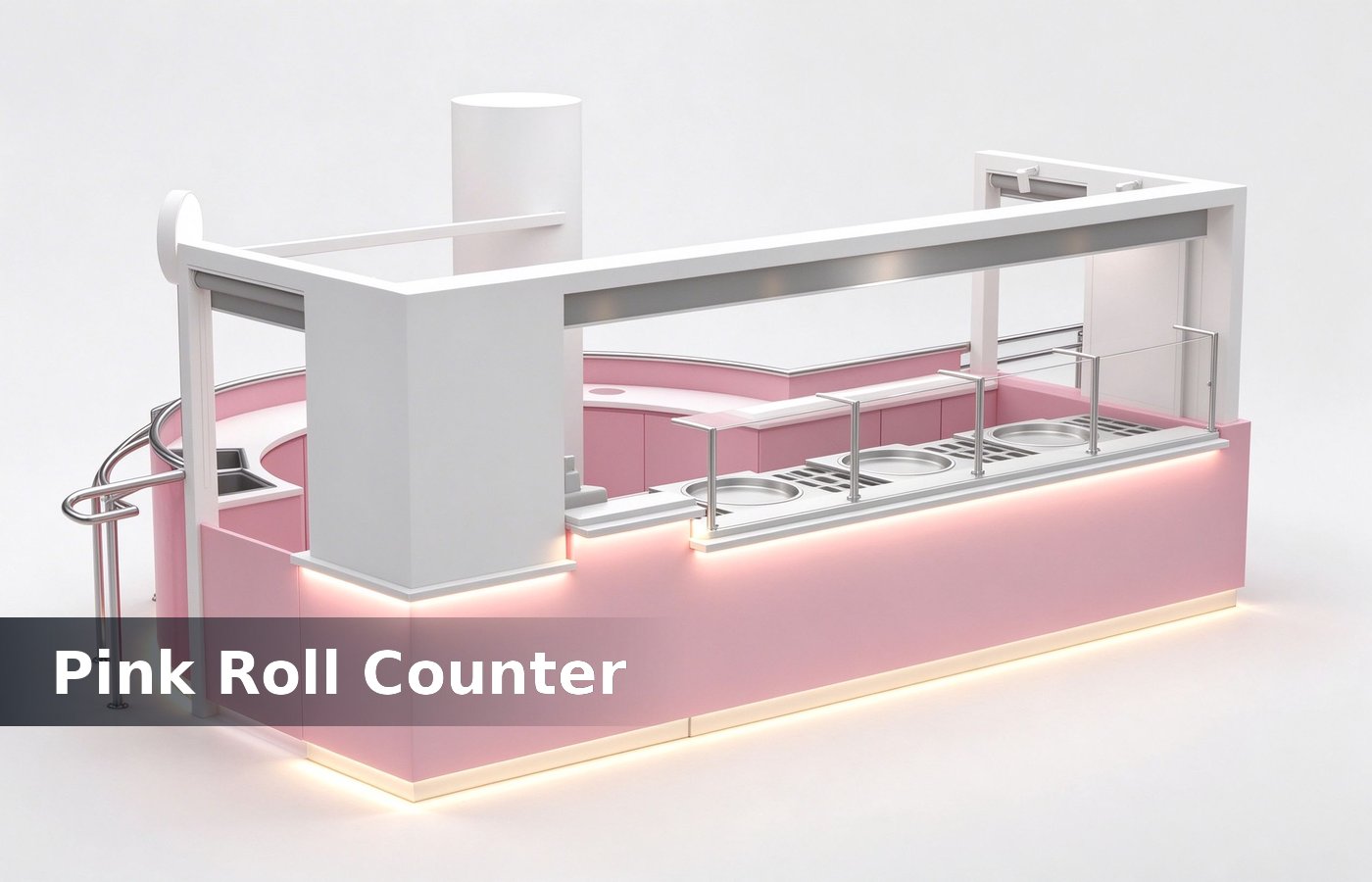
The table is the sheet we use on roll ice cream kiosks, and each line answers a degree, a second or a dollar rather than a mood board. The same rule holds for a Bangkok mall and a Dubai one, with the recovery time mattering in both. We keep the alternative on the same sheet, so the owner compares a compressor instead of a render.
| Item | Number |
|---|---|
| Footprint | 6 sqm |
| Plate temp | -20 C |
| Roll time | 90 seconds |
| Compressor | 1.5 kW |
| Build | $9,400 |
Eight toppings within 700 mm
A roll topping bar holds 8 tubs within a 700 mm reach, and 8 tubs cover fruit, cookie, nut and syrup for 40 rolls. A 12 tub bar at 1,000 mm makes the server step back twice per order. That number belongs on the kiosk sheet, because a plate temperature agreed verbally rarely survives a first Saturday. Most of these gaps appear on a Saturday afternoon, which is exactly when one plate runs flat out.
An 8 tub bar costs 420 dollars and a 12 tub 620, and 200 buys a reach a server keeps for 10 hours. A step back costs 4 seconds per order, which is 160 seconds glass showcases. Mark it on the sheet too, so whoever fits the next kiosk has the reference without guessing. One site visit settles the question faster than a week of render browsing.
Eighteen minutes of cold
A roll plate at minus 20 C recovers in 18 minutes after a 40 roll lunch, and a plate without a second compressor takes 25. Recovery time is the real capacity, not the roll time. None of that shows in a picture, which is why we mark the degrees and the seconds on the sheet. Owners who settle it before an order pay nothing extra, and owners who settle it after a fit-out pay a rebuild.
A dual compressor plate costs 4,600 dollars and a single 3,400, and 1,200 buys 7 minutes of recovery. Seven minutes at 4.6 a roll is 6 rolls a day, which is 28 dollars and 43 days retail displays. The same rule holds for a Bangkok mall and a Dubai one, with the recovery time mattering in both.
It started in a 3 sqm bay
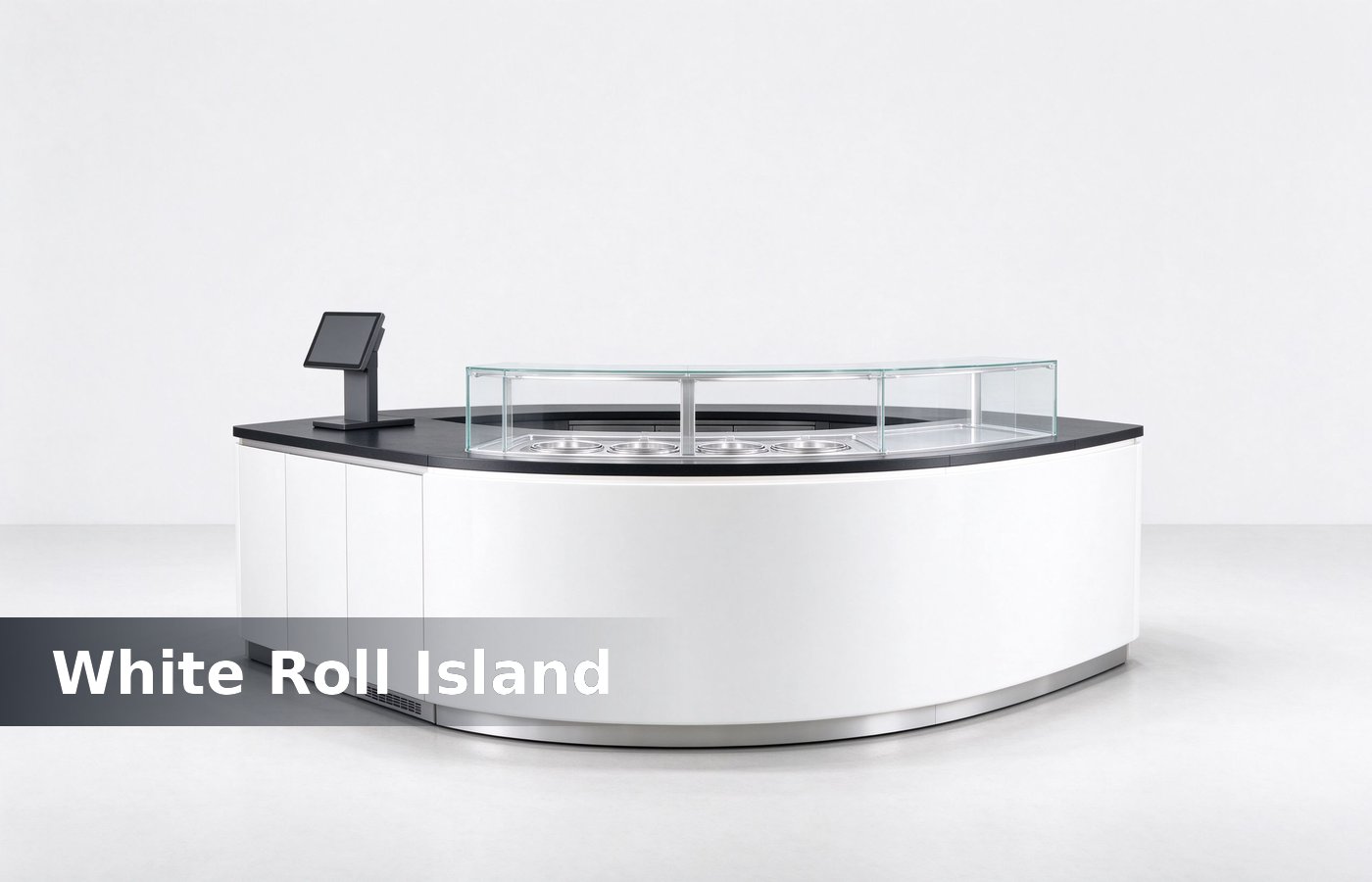
The first roll kiosk we built ran in a 3 sqm bay with one plate and a folding table, and it sold 90 rolls a day on a 90 second cycle. The show, not the size, display cases. We keep the alternative on the same sheet, so the owner compares a compressor instead of a render. That number belongs on the kiosk sheet, because a plate temperature agreed verbally rarely survives a first Saturday.
A 3 sqm bay at 1,900 a month and 90 rolls at 4.6 of margin is 414 a day, which is 12,420 a month against 1,900 of rent. A small bay with a fast plate beats a big bay mall kiosk layout. Most of these gaps appear on a Saturday afternoon, which is exactly when one plate runs flat out.
Conclusion
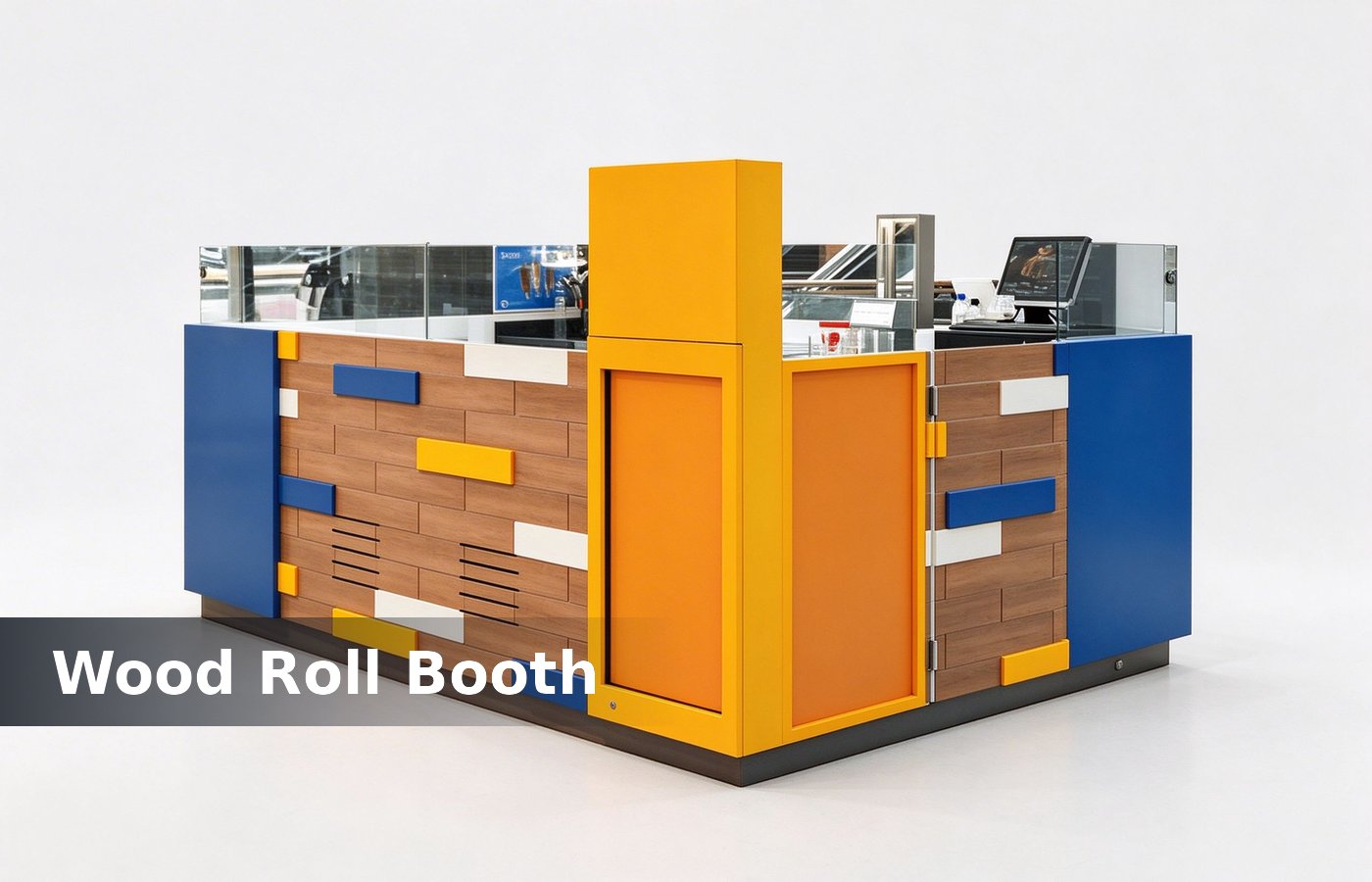
Six square metres, minus 20 C, 90 seconds, 8 tubs and 9,400 dollars. Five numbers dessert kiosk design. Mark it on the sheet too, so whoever fits the next kiosk has the reference without guessing. One site visit settles the question faster than a week of render browsing. None of that shows in a picture, which is why we mark the degrees and the seconds on the sheet.
Buy the dual compressor and the 8 tub bar. A dual compressor holds an 18 minute recovery and an 8 tub bar keeps a server inside a 700 mm reach for a full day. Owners who settle it before an order pay nothing extra, and owners who settle it after a fit-out pay a rebuild. The same rule holds for a Bangkok mall and a Dubai one, with the recovery time mattering in both.
Check a plate at minus 20 C and a roll at 90 seconds. Twenty below freezes a 120 ml pour into a standing roll, and 90 seconds is the cycle a queue can watch without leaving. We keep the alternative on the same sheet, so the owner compares a compressor instead of a render. That number belongs on the kiosk sheet, because a plate temperature agreed verbally rarely survives a first Saturday.