
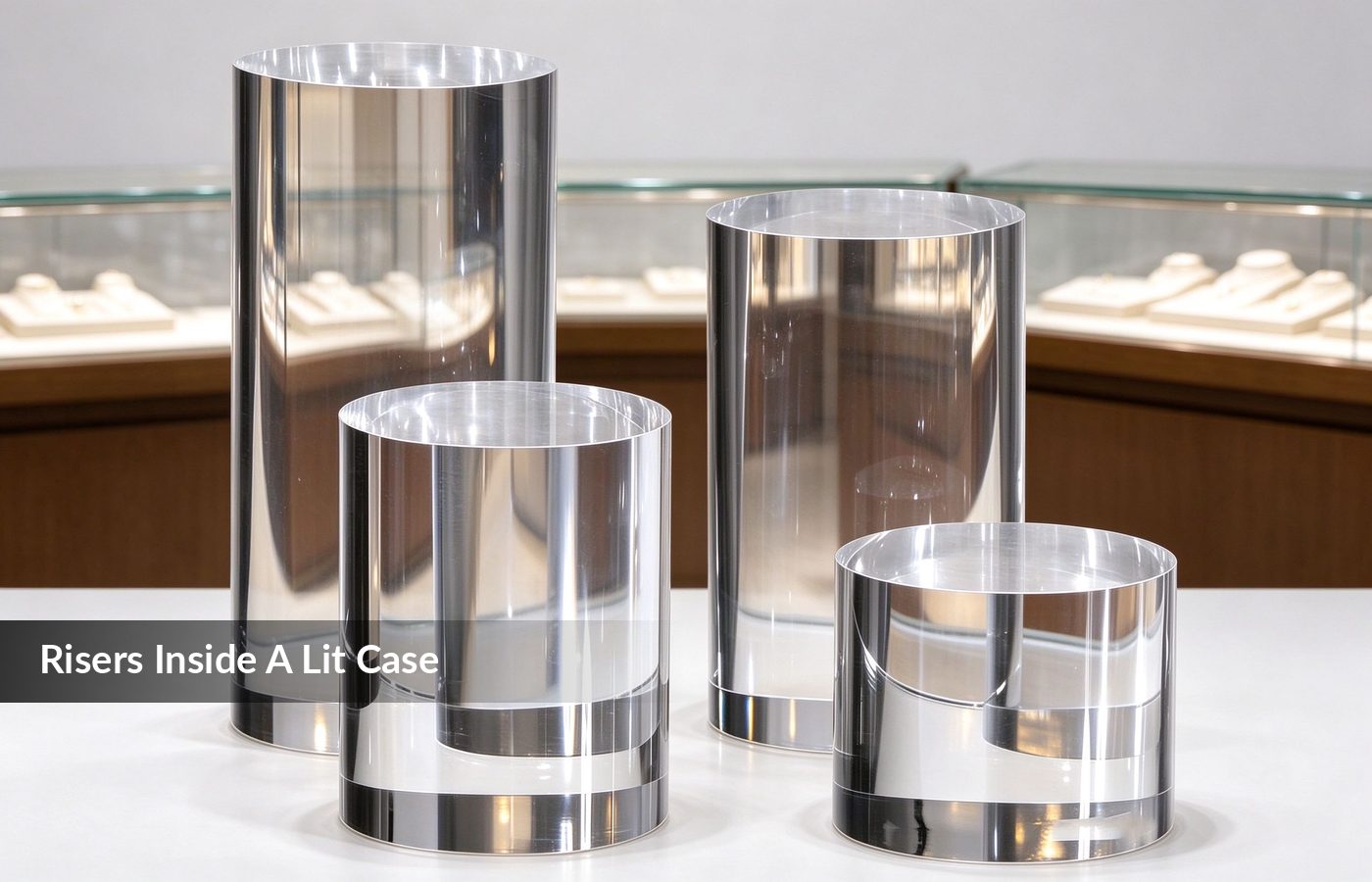
Why Risers Decide What Sells
A display case has one job. It lets a shopper see the goods without asking for help. Height decides how much of that happens. A flat shelf puts every price point at one level, so the front row hides the back row. A riser lifts the back row into view and adds depth to a shallow case. This guide compares clear acrylic risers with wood blocks and shows where each one pays back.
Clear acrylic risers carry no colour of their own, and that is the point. A wood block adds a second surface that competes with the product. The eye reads the block before it reads the ring or the watch. A clear riser disappears against a case floor, a glass shelf or a velvet pad. Retail buyers moved from painted wood to acrylic for this reason alone. Our acrylic displays list the standard sizes.
What An Acrylic Riser Does
A riser is a short platform that lifts one product group above its neighbours. Most units are hollow boxes, cubes, slabs or stepped sets. Cast acrylic sheet of 3 mm to 8 mm forms the body, a range used across retail supply in 2026. Five panels make a cube, with the base left open. A slab uses one thick plate. A stepped set stacks three or four boxes in a fixed order.
The lift stays between 50 mm and 300 mm in most retail cases. A 50 mm slab raises a ring tray off the floor. A 200 mm cube lifts a bag to the middle of a case. A 300 mm column puts a helmet at eye level. Match the lift to the product height, not to the case height. Countertop displays use the same ladder in a smaller size.
Light Is The First Difference
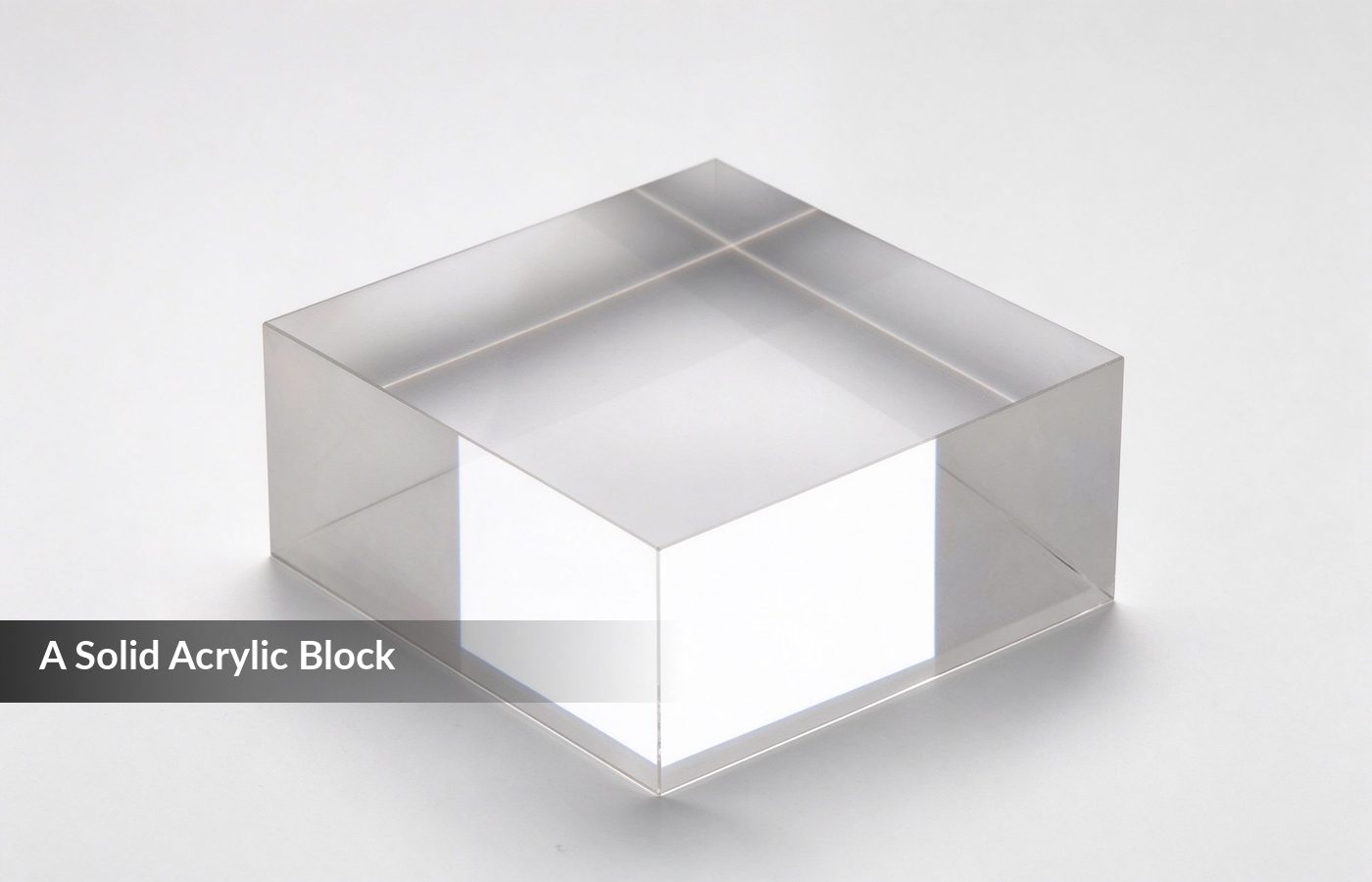
Cast acrylic passes about 92 percent of visible light, a figure from 2026 supplier spec sheets. Wood reflects it. That single property changes how a lit case reads. Light from an LED strip above passes through the riser and lights the product base. A wood block casts a hard shadow under the item. The difference shows most in a case with one light source.
Edge polish matters as much as the sheet. A flame polished rim bends light and shows a bright line along the top. A sawn edge looks dull and grey. Buyers see the dull edge first in a dark case. Ask for a polished top rim on every cube and slab. Retail displays fixtures with polished acrylic read cleaner under mixed light.
Weight And Load In A Case
A hollow 200 mm cube of 5 mm acrylic weighs about 700 g. A solid oak block of the same size lands near 4 kg to 6 kg. Staff move risers during a reset, so that gap matters. A lighter unit also puts less load on a glass shelf. A full case of twelve cubes saves several kilos against a wood set.
Load capacity is a separate number. A 5 mm cube carries 5 kg to 8 kg when the weight sits flat on the top face. A 3 mm cube should stay under 2 kg. Check the shelf rating before you stack a heavy item on a tall column. Display racks with glass shelves often cap at 15 kg per shelf.
Where Wood Still Wins
Wood holds a place in a warm interior. A walnut block suits a denim wall, a hardware counter or a vintage booth. A heavy base steadies a tall hat stand. Wood also costs less per square metre in large panels. A painted MDF block can land at half the price of a clear cube in a bulk order.
Wood fails on two points in a lit case. It blocks light and it hides the case floor line. A dark block also pulls the eye away from a pale product. Use wood where the riser is part of the look. Use acrylic where the product must carry the look. Wall mount fixtures follow the same rule on a vertical plane.
Six Sizes That Cover A Case
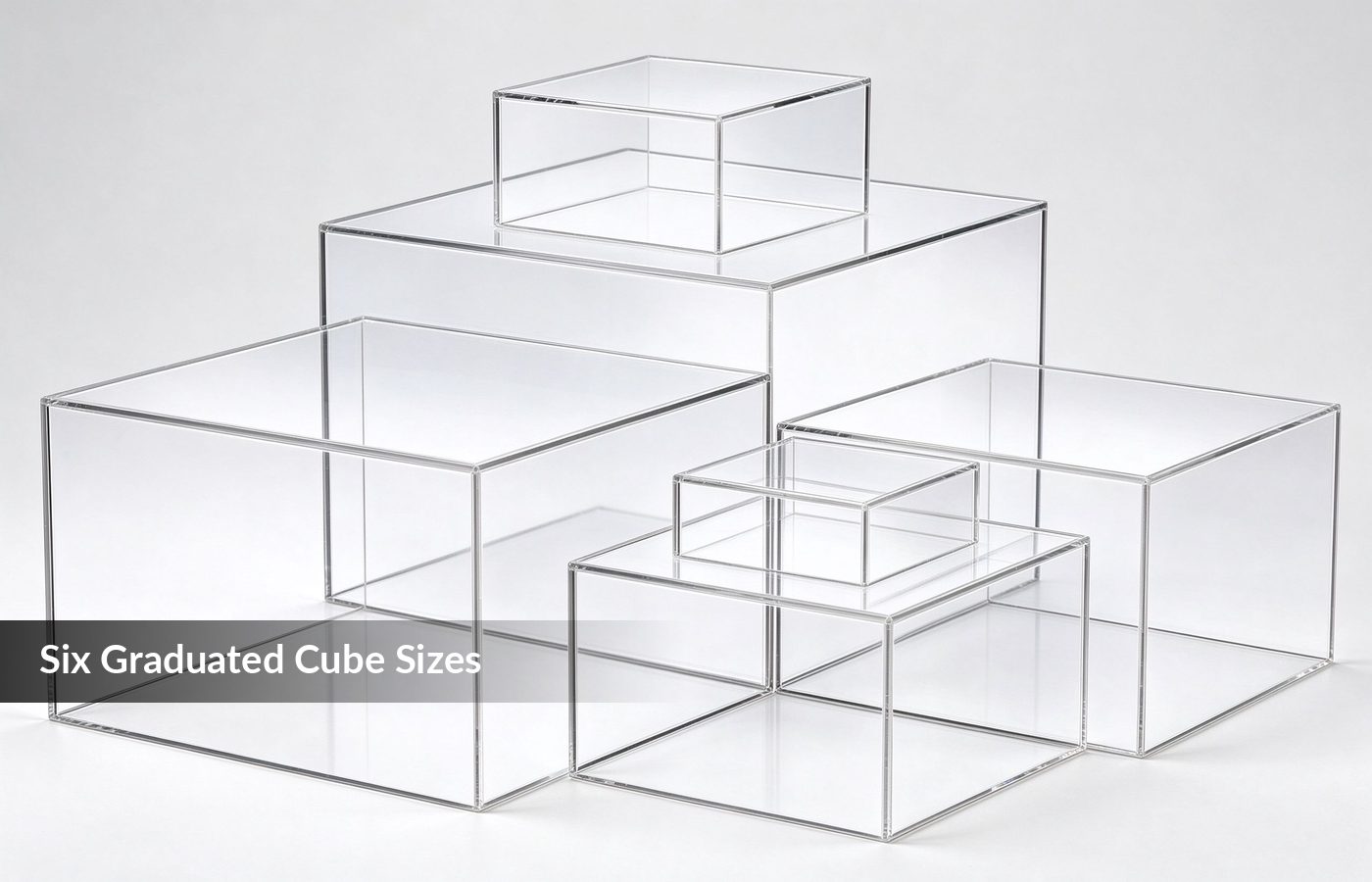
Most suppliers build a six step ladder: 50, 75, 100, 150, 200 and 250 mm. One ladder covers a jewelry case, a watch tray and a small bakery counter. The useful rule is simple. Set the riser at 40 percent to 60 percent of the product height. A 100 mm watch needs a 50 mm lift. A 300 mm bag needs 150 mm to 200 mm.
| Lift | Typical product | Wall | Weight |
|---|---|---|---|
| 50 mm | ring tray, card | 3 mm | 90 g |
| 100 mm | watch, cosmetics | 5 mm | 220 g |
| 150 mm | small bag, shoe | 5 mm | 390 g |
| 200 mm | handbag, helmet | 5 mm | 700 g |
| 250 mm | model, vase | 8 mm | 1.3 kg |
Order the ladder as a set, not as single units. A set lets staff rebuild a case without a new purchase. Keep one spare height in the stock room, and mark the base with the lift in millimetres. One spare height also avoids a second order mid season. Small countertop easels use the same logic on a single shelf.
Cleaning And Wear Over Time
Acrylic sits at 2 to 3 on the Mohs scale, so it scratches. A paper towel leaves fine lines after a month of daily wiping. Use a microfiber cloth and mild soap. Wipe in one direction only, and lift the cube before you clean the base. Avoid alcohol, ammonia and abrasive cream. A plastic polish restores light marks. Deep cuts need a re-polish at the factory.
A busy case shows first wear at the top rim and the base edge. A polished rim hides small marks better than a sawn one. Most shops replace a riser after 5 to 8 years, a range from 2026 repair shop quotes. Wood chips at corners sooner but can be sanded flat. Read more about our bench and the polish we use.
When To Choose Each Type
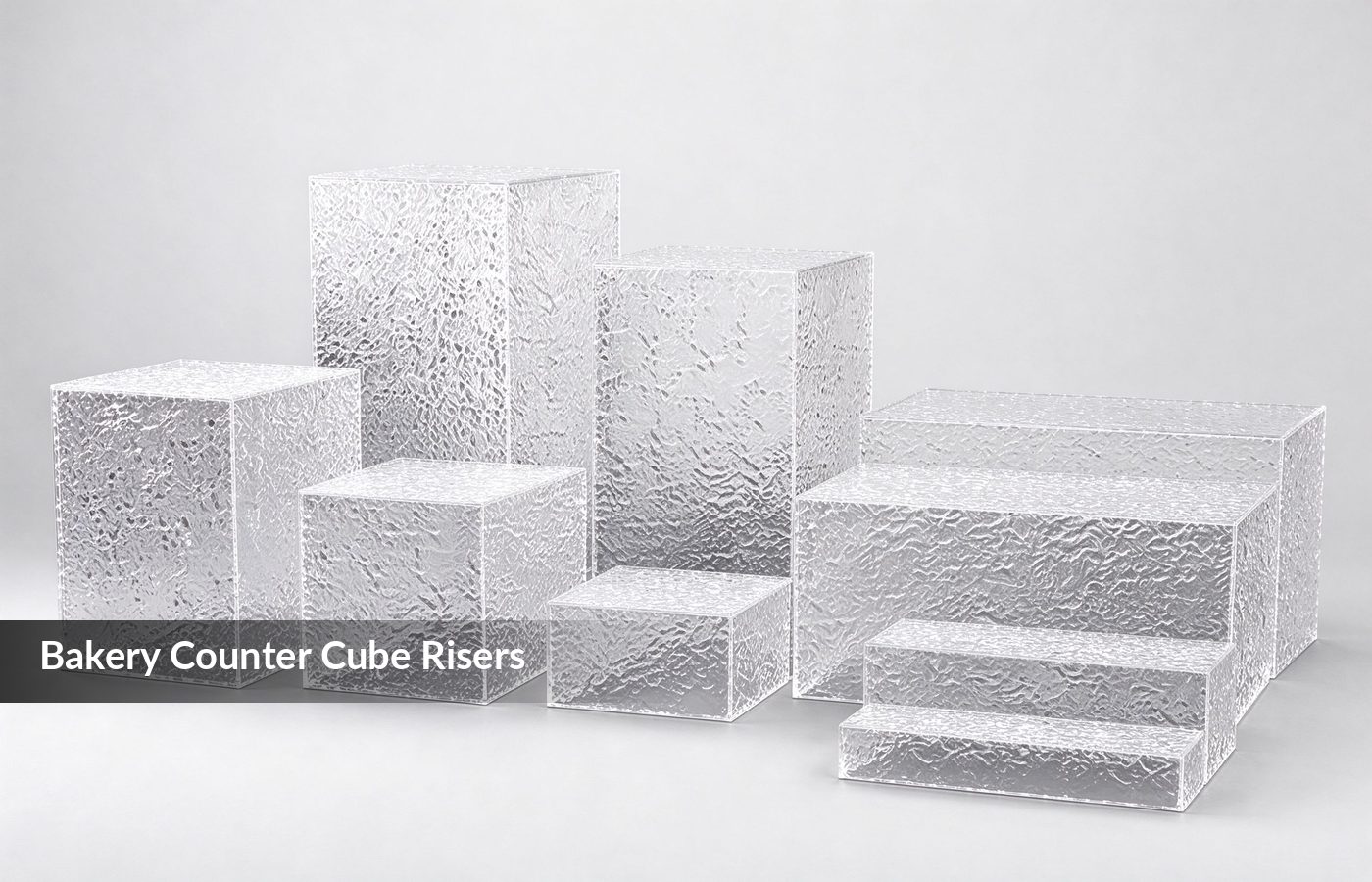
Acrylic suits jewelry, watches, cosmetics, small bakery items, models and museum objects. The product is small, the case is lit, and the floor line should stay visible. Wood suits apparel, hardware, bulk goods and rustic fixtures. The riser is part of the set, not a hidden platform. A sign holder in the same case follows the same call.
A mixed build works well in one case. A wood base block steadies a tall acrylic column. A clear slab keeps the base light. Literature magazine displays pair a wood back with clear front pockets for the same reason. Keep the material count at two, and the case stays calm. Two materials hold a look better than four do.
What To Check Before You Buy
Check four numbers before you order. Case depth sets the maximum riser footprint. Product height sets the lift. The light position sets the wall thickness. The shelf rating sets the load. Then check the finish: a polished top rim, a flat base, and a felt pad. A cheap cube with a dull rim shows in every photo, and shoppers notice it.
Custom sizes settle most case problems, and that is where we work. ukiosks builds acrylic risers in Shenzhen to your case plan. We cut sheet from 3 mm to 8 mm and set the lift in 25 mm steps. Our team can add a printed height mark, a colour tint or an extra open face. Send your case depth and product list through contact us, and we return drawings with a price.