

Why a checklist beats a deep clean
A cosmetics kiosk fails slowly. Nothing breaks on a Tuesday, but the glass loses clarity, the drawer runner dries out, the light strip dims and the laminate edge lifts, and by month eight the unit reads tired from the entrance of the mall. Clients who ask for it up front pay a small premium, and clients who ask after a failure pay for a closed case instead.
A checklist beats a deep clean because the failure is cumulative rather than sudden. Ten minutes a day at the counter removes the cost of a two day shutdown later, and the crew that wipes as part of closing never has to schedule a specialist clean. The same rule applies to a fixed kiosk and to a demountable one, except that fixing points matter more on the demountable build.
We hand every client a printed sheet with the tasks below, because a routine written down gets done and a routine remembered does not. The sheet lives in the drawer under the till, not in a folder in the back office. We keep both options on one quotation, so the choice becomes a number the buyer can defend in a lease meeting.
Daily wipe down that saves glass
Glass is the most expensive surface on the kiosk and the easiest to ruin. A dry cloth drags powder across the top and leaves fine scratches that catch the light, and those scratches cannot be polished out once they are deep enough to feel with a fingernail. Put the figure on the drawing and the workshop can hold it, because a verbal target rarely survives the trip through production.
Wipe with a microfibre cloth and a pH neutral cleaner, then dry with a second cloth. Two cloths matter, because the wet one moves the dust and the dry one removes the streak that otherwise shows every finger mark under a spot light. That is the detail a buyer usually leaves out of the brief, and it is the one that decides how the unit reads after two years of trading.
Do the same for the laminate faces and the drawer fronts. Cosmetic dust is oily, so a plain water wipe spreads it rather than lifting it, and the surface ends up with a film that cosmetic counters. Mark it on the crate label as well, so the person fixing it years later has the reference without searching a folder. Two minutes with an offcut settles the question faster than an hour of specification reading in a meeting room.
Weekly checks for light and locks
Walk the kiosk once a week with a cloth and a screwdriver. Check every LED strip for a dark segment, every lock for a straight bolt, and every sliding door for a smooth run, because a door that sticks in week twenty snaps a hinge in week sixty. None of that shows in a render, which is why we check it on a sample panel before the production run is released.
Write the date on the sheet when the check is done. A signed sheet is the difference between a maintenance record and a maintenance intention, and it is the first thing a mall asks for after an incident at the counter. Clients who ask for it up front pay a small premium, and clients who ask after a failure pay for a closed case instead.
Replace a failed strip straight away rather than waiting for the batch. One dark segment makes the case look broken and it changes the colour of the product directly beneath it, so the customer glass showcases. The same rule applies to a fixed kiosk and to a demountable one, except that fixing points matter more on the demountable build.

Monthly deep clean of trays
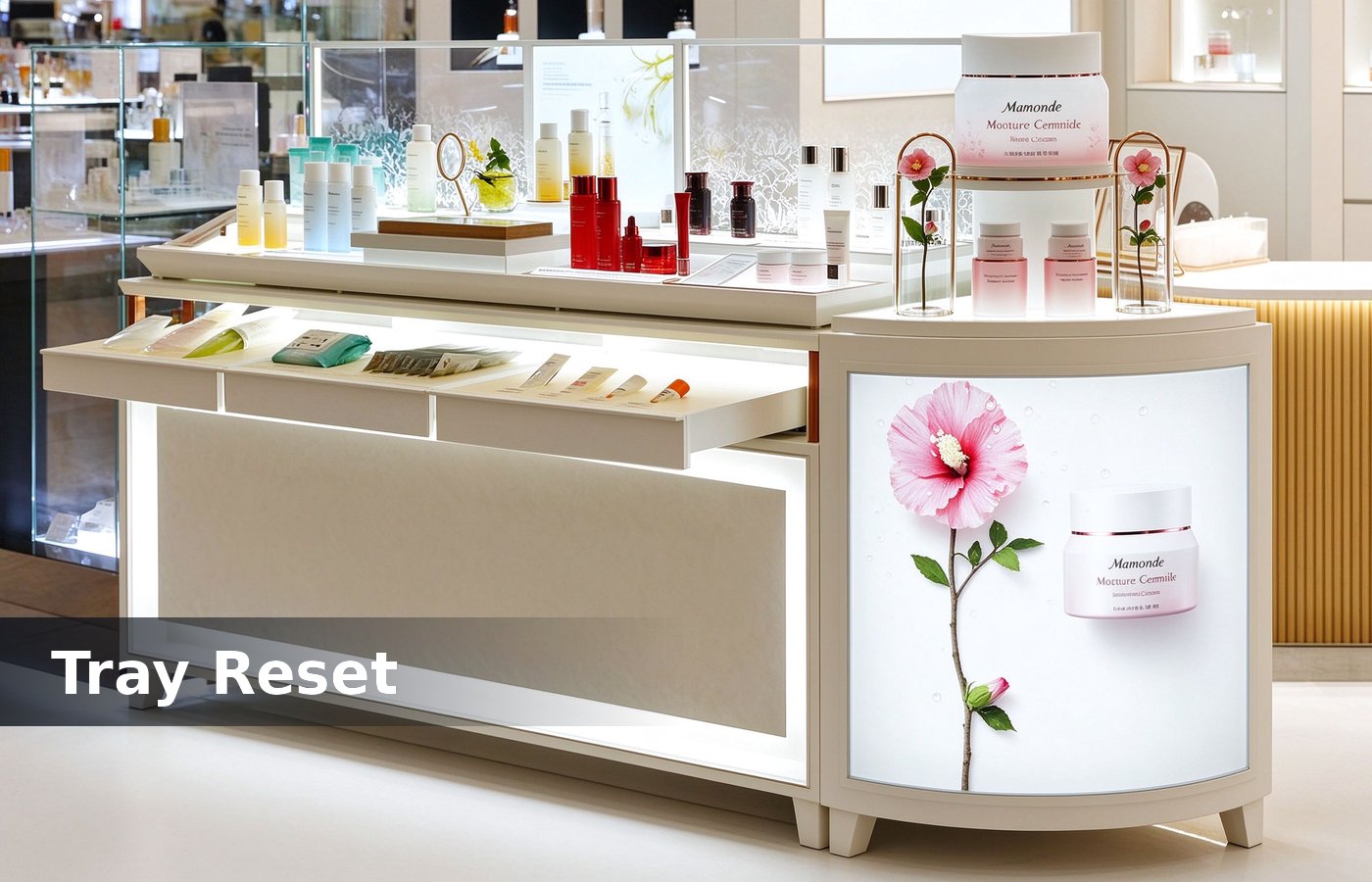
Once a month, empty one tray at a time and clean the tray, the riser and the shelf beneath it. Testers leak, powder settles and a tray that has not been lifted since opening holds a layer of product that stains the acrylic and cannot be removed with a cloth. We keep both options on one quotation, so the choice becomes a number the buyer can defend in a lease meeting.
Check the acrylic for hairline cracks at the corners while the tray is out. A cracked riser is cheap to replace and expensive to ignore, because the next break happens with a customer holding the tester over a full row of stock. Put the figure on the drawing and the workshop can hold it, because a verbal target rarely survives the trip through production.
Rotate the stock while the tray is out. Product that has sat at the back for a month sells slower than product at the front, and a monthly rotation keeps the display looking freshly merchandised display cases. That is the detail a buyer usually leaves out of the brief, and it is the one that decides how the unit reads after two years of trading.
Quarterly panel and edge check
Every quarter, run a hand along every edge at knee height. A lifted laminate edge feels like a step under a fingertip and it is the earliest sign that moisture has reached the core, so catching it at quarter three is far cheaper than catching it at year two. Mark it on the crate label as well, so the person fixing it years later has the reference without searching a folder.
Check the plinth for water marks and the back panel for bowing. A back panel that has moved away from the frame by five millimetres means the panel absorbed humidity, and that panel will need replacing before the next season rather than after it. Two minutes with an offcut settles the question faster than an hour of specification reading in a meeting room.
Tighten every visible screw and check the counter bracket. A counter that flexes when a customer leans on it will crack at the joint within a year, and the crack always appears counters and towers. None of that shows in a render, which is why we check it on a sample panel before the production run is released.
Twelve month schedule
The table below is the schedule we print for a mall kiosk trading six days a week. kiosk materials, because grease moves the deep clean from monthly to weekly in most builds. Clients who ask for it up front pay a small premium, and clients who ask after a failure pay for a closed case instead. The same rule applies to a fixed kiosk and to a demountable one, except that fixing points matter more on the demountable build.
Every line has an owner and a signature column. When a client asks why a case failed, the sheet shows whether the task was done, and that answer is usually the whole conversation. We keep both options on one quotation, so the choice becomes a number the buyer can defend in a lease meeting. Put the figure on the drawing and the workshop can hold it, because a verbal target rarely survives the trip through production.
| Task | Frequency | Owner |
|---|---|---|
| Glass and laminate wipe | Daily, at close | Counter staff |
| Light and lock walk | Weekly | Store manager |
| Tray and riser clean | Monthly | Counter staff |
| Edge and plinth check | Quarterly | Area supervisor |
| Drawer runner service | Every 12 months | Factory technician |
Humidity and air conditioning
Mall air sits at 50 to 60 percent relative humidity in most of Southeast Asia, and a kiosk that stands under a direct vent collects condensation on the glass every morning. That water runs down the pane and lands on the laminate below it, which is where the edge starts to lift. That is the detail a buyer usually leaves out of the brief, and it is the one that decides how the unit reads after two years of trading.
Ask the mall to redirect the vent or fit a deflector above the case. It is a small change at handover and it removes the most common cause of a swollen plinth in the first year, which is water arriving from above cash counters. Mark it on the crate label as well, so the person fixing it years later has the reference without searching a folder.
Keep the inside of the case dry as well. A tester bottle left open overnight changes the humidity inside a small case more than people expect, and that moisture sits on the tray under the stock until the next clean. Two minutes with an offcut settles the question faster than an hour of specification reading in a meeting room.
Spare parts worth keeping
Keep four LED strips, two drawer runners, one lock set and a roll of edge tape on site. These four items cover nine out of ten breakdowns we are called about, and they let a store fix a case the same morning instead of waiting for a crate from Shenzhen. None of that shows in a render, which is why we check it on a sample panel before the production run is released.
Store the spares in the kiosk drawer rather than in a back room, because a part that requires a walk to another floor gets ordered twice. Label each item with the drawing number so the next crew knows exactly kiosk design. Clients who ask for it up front pay a small premium, and clients who ask after a failure pay for a closed case instead.

When to call the factory
Call us for three things: a panel that has swollen, a hinge that has pulled out of its fixing, and a case that has lost more than one light segment in a row. Those three point to a build issue rather than a cleaning issue, and a site repair rarely holds. The same rule applies to a fixed kiosk and to a demountable one, except that fixing points matter more on the demountable build.
Send a photo with the drawing number and the install date. We keep a file per project, so a photo with a date usually gets a same day answer about whether the part is covered and mall kiosk design. We keep both options on one quotation, so the choice becomes a number the buyer can defend in a lease meeting.
Conclusion
A cosmetic kiosk stays sharp through routine rather than through repair. Daily wipe, weekly walk, monthly tray, quarterly edge, and the unit still reads new at month twenty four in front of the same customers who saw it on opening day. Put the figure on the drawing and the workshop can hold it, because a verbal target rarely survives the trip through production.
We build cosmetic counters in Shenzhen and ship them with a maintenance sheet, a spare parts list and the drawing number on every crate, so the crew on site has the information before a failure rather than after it. That is the detail a buyer usually leaves out of the brief, and it is the one that decides how the unit reads after two years of trading.