
What baked paint actually is
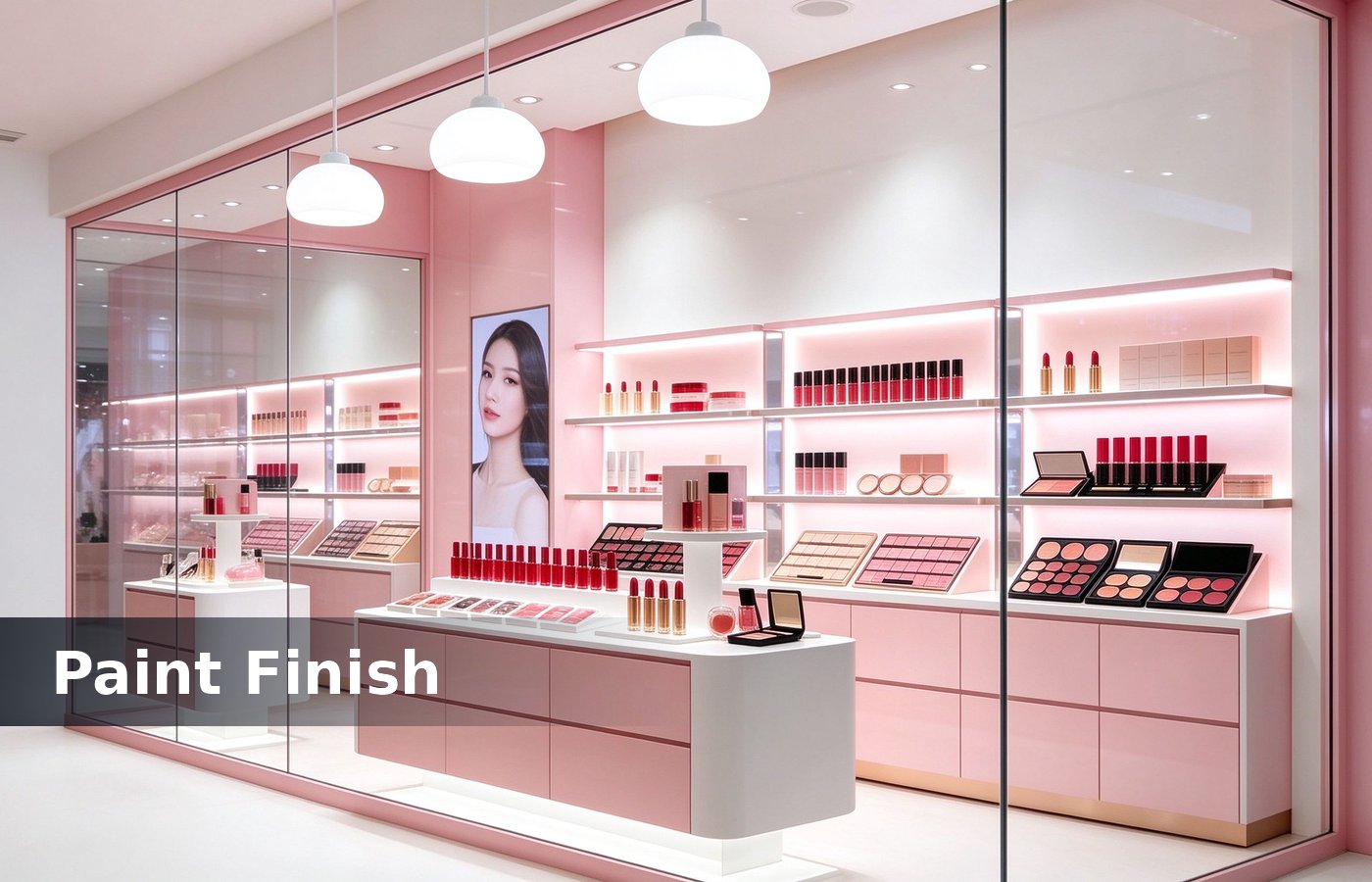
Baked paint is a powder coating cured in an oven at around 180 to 200 degrees Celsius, and the heat is what makes it different from a wet spray finished in open air. The film hardens into a shell that resists a fingernail, a cleaning cloth and a key ring without needing a protective top coat over it.
Because the panel goes into an oven as a whole piece, the coating wraps the edges as well as the face, and that wrap is the reason a baked finish holds up along a kiosk base where a wet spray coat thins out and fails first. Edges are where most finish complaints begin. That is the detail a buyer usually leaves out of the brief, and it is the one that decides how the unit reads after two years of trading.
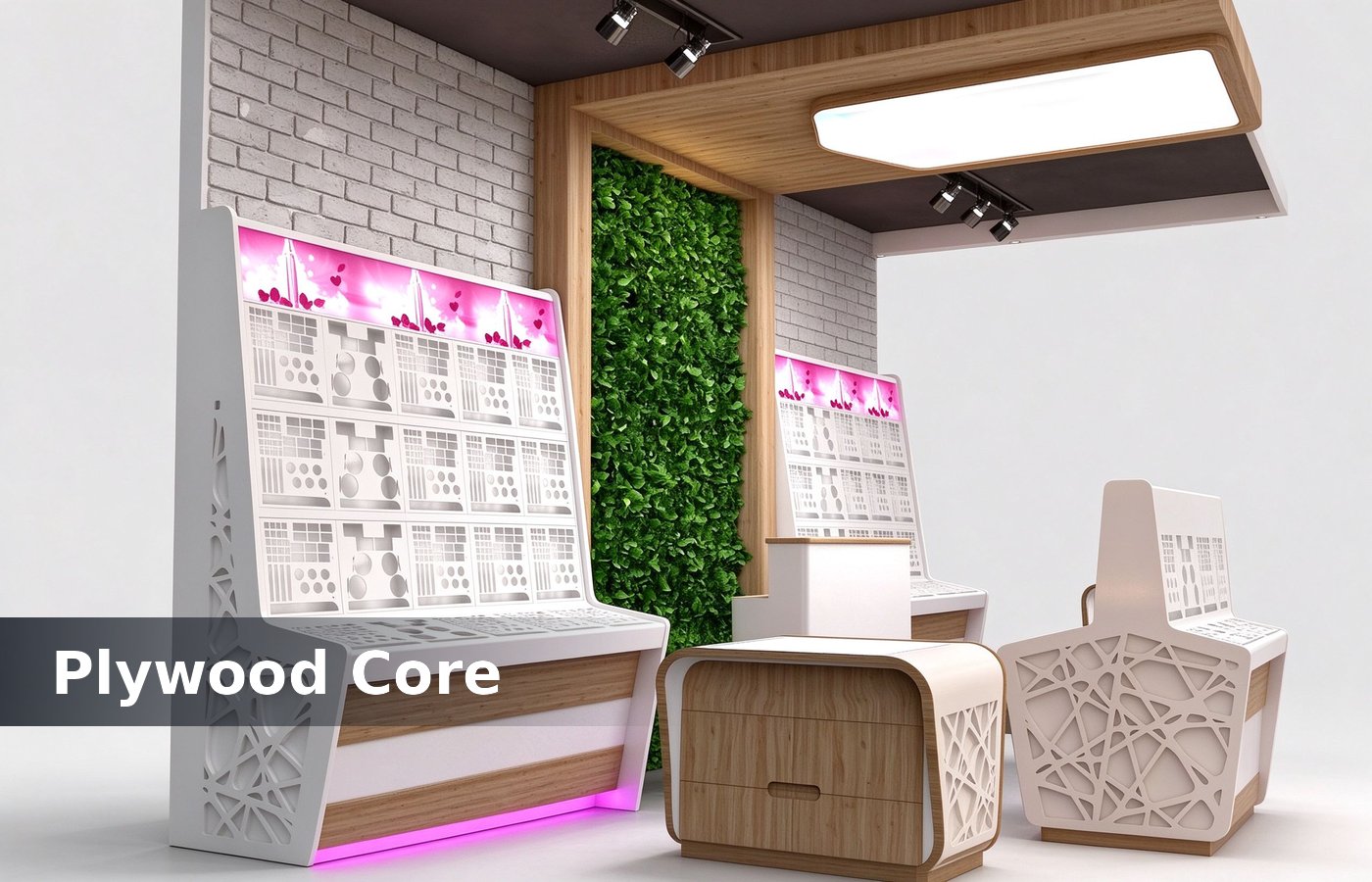
Where plywood wins on structure
Plywood wins wherever a screw has to hold, because crossed veneers grip a thread in a way that pressed fibre cannot match over a service life of five years. Hinges, drawer runners and shelf brackets all sit on plywood in a build we expect to survive a second fit out. Mark it on the crate label as well, so the person fixing it years later has the reference without searching a folder.
The structural argument is simple. A kiosk is a box that gets lifted, crated, shipped and re-erected, and every one of those steps loosens a fixing in a panel that cannot hold a thread. Plywood absorbs that cycle and MDF does not, which is why we specify it for frames and plinths. Two minutes with an offcut settles the question faster than an hour of specification reading in a meeting room.
Where baked paint wins on look
Baked paint wins on any surface the customer touches or reads at close range, because the film is flat, uniform and free of the spray mottle that shows under a downlight on a wet coat. A matte white baked panel next to a spray painted panel looks like a different grade of shop. None of that shows in a render, which is why we check it on a sample panel before the production run is released.
It also wins on colour matching across a batch. Powder is mixed to a code and cured to a fixed temperature, so panel forty arrives jewelry display cases, while a wet spray drifts with humidity, thinner ratio and the hand of the person holding the gun. Clients who ask for it up front pay a small premium, and clients who ask after a failure pay for a closed case instead.
Cleaning is the third advantage. A baked surface takes a commercial degreaser without dulling, and a cosmetics or food kiosk that is wiped down six times a day jewelry kiosk of that routine. The same rule applies to a fixed kiosk and to a demountable one, except that fixing points matter more on the demountable build. We keep both options on one quotation, so the choice becomes a number the buyer can defend in a lease meeting.
Five checks before you choose
Run these five checks against the actual unit, not against a catalogue photo, because the decision usually turns on one of them rather than on the whole list. Put the figure on the drawing and the workshop can hold it, because a verbal target rarely survives the trip through production. That is the detail a buyer usually leaves out of the brief, and it is the one that decides how the unit reads after two years of trading.
- Does the panel carry a hinge, a runner or a shelf bracket? If yes, it is plywood underneath whatever the finish.
- Will the unit be dismantled and moved within three years? If yes, plywood at every fixing point and inserts at every hinge.
- Is the surface wiped with chemicals daily? If yes, baked paint or a laminate face, never a wet spray alone.
- Does the panel sit within 100 mm of a mop line or a mall floor wash? If yes, seal the plinth and expect water at the edge.
- Is the colour a brand code that must match across three shipments? If yes, powder coating, because batch drift on wet paint is real.
Wear and repair in year three
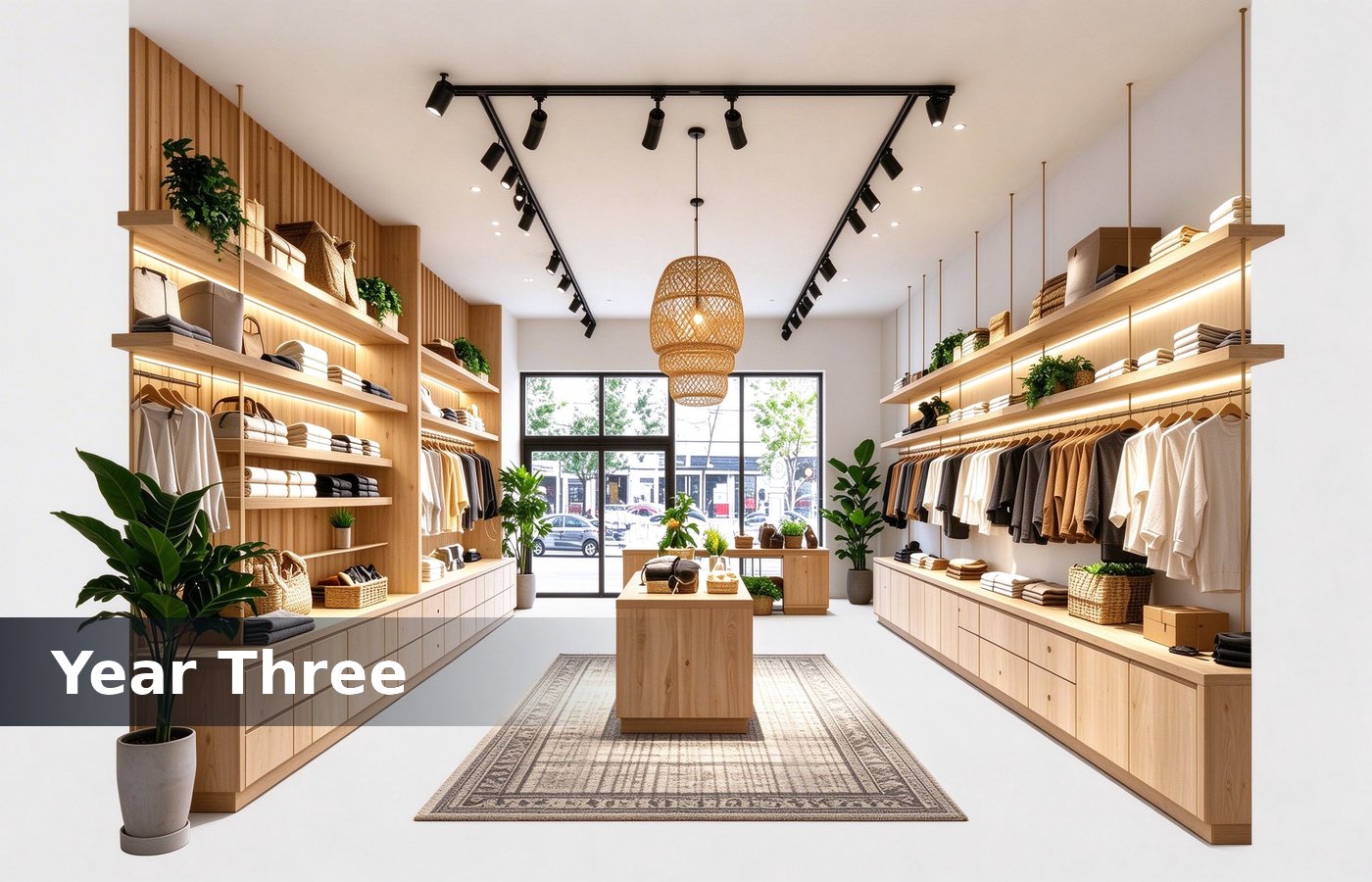
Year three is where the two finishes separate in public. A baked panel that takes a trolley hit chips down to the metal and stops there, while a wet spray panel loses a patch of film the size of a coin and the edge lifts around it after the next clean. Mark it on the crate label as well, so the person fixing it years later has the reference without searching a folder.
Repair tells the same story. A powder coat can be matched on site with a touch up pen for a small chip, but a failed wet spray patch glass showcases, resprayed and refitted, which means a closed case for a day and a colour match against panels that have aged differently. Two minutes with an offcut settles the question faster than an hour of specification reading in a meeting room.
We quote a two panel spare set with every large kiosk for this reason, and the clients who take it are the ones who never call us about a chip two years later. The cost is small against a closed case on a Saturday. None of that shows in a render, which is why we check it on a sample panel before the production run is released.
Cost and lead time in 2026
Baked paint adds roughly 12 to 18 percent to the panel cost against a wet spray in the same colour, and that premium buys the wrap on the edges plus the batch consistency. Plywood adds 8 to 14 percent against MDF for the same thickness. Clients who ask for it up front pay a small premium, and clients who ask after a failure pay for a closed case instead.
Lead time moves more than price. A powder line needs a batch run at a fixed temperature and a fixed colour, so a bespoke shade adds five to eight working days in 2026, while a wet spray can be mixed the same afternoon for a single panel. The same rule applies to a fixed kiosk and to a demountable one, except that fixing points matter more on the demountable build.
Freight is unchanged by the finish and changed by the panel. Plywood is heavier per square metre of usable board, so a full kiosk in crates counters and towers and roughly equal on sea freight, which is where most of our kiosks travel. We keep both options on one quotation, so the choice becomes a number the buyer can defend in a lease meeting.
When both are right
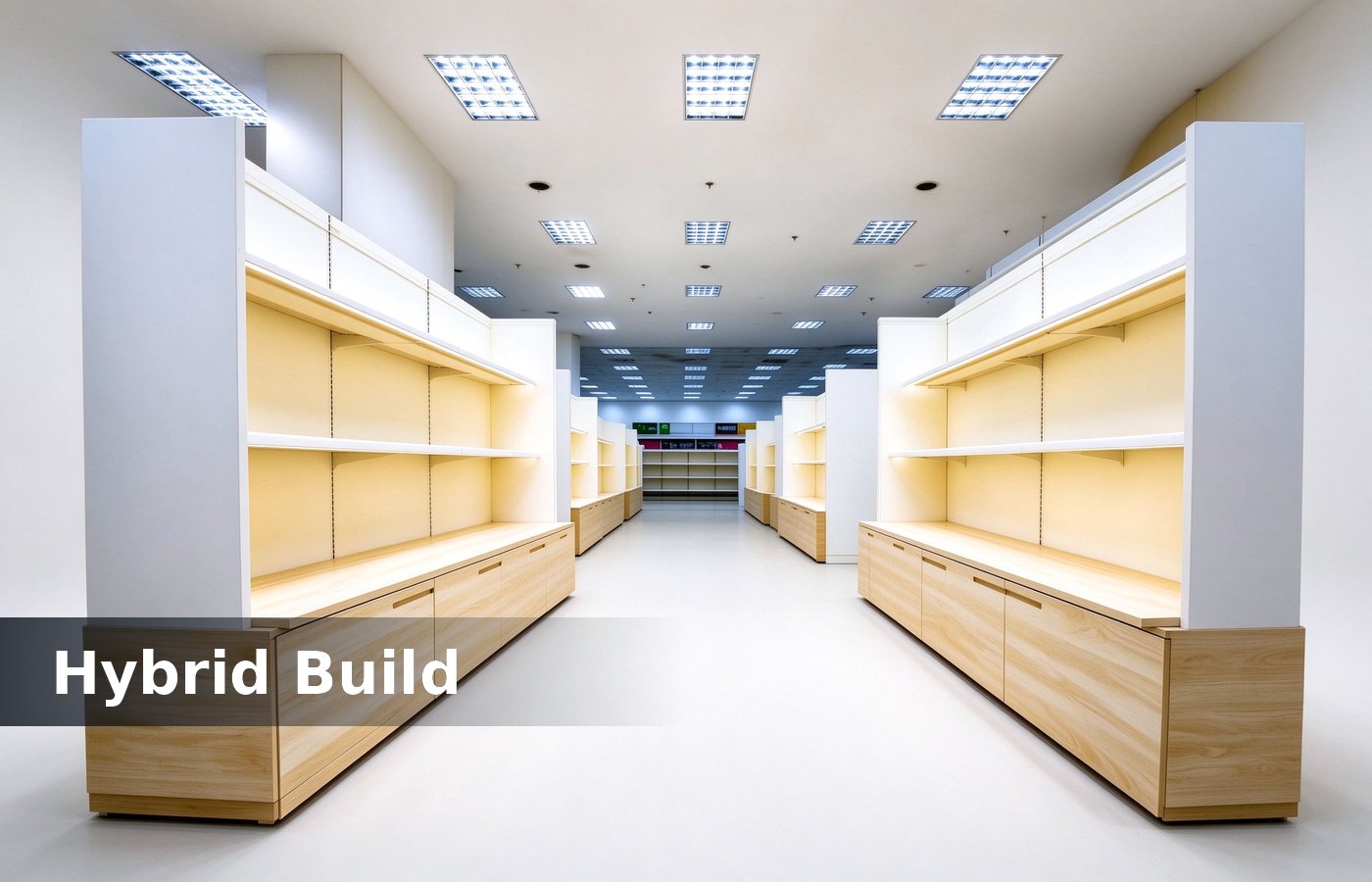
The honest answer for most kiosks is both, with each doing the job it is good at. Plywood carries the frame, the plinth, the counter carcass and every door, while baked paint covers the fascia, the visible end panels and any surface the customer reads at arm length. Put the figure on the drawing and the workshop can hold it, because a verbal target rarely survives the trip through production.
shop fixtures as an all painted unit and lasts longer than an all MDF one, because the money goes to the parts that fail rather than to the parts that only get looked at. It is also the build we quote by default when a client has no preference. That is the detail a buyer usually leaves out of the brief, and it is the one that decides how the unit reads after two years of trading.
Where the mall requires a specific colour for the kiosk frontage, the fascia is the panel to powder coat and the rest can stay laminate, which kiosk design the mall manager actually inspects during handover. Mark it on the crate label as well, so the person fixing it years later has the reference without searching a folder. Two minutes with an offcut settles the question faster than an hour of specification reading in a meeting room.
What to write on the drawing
Write the finish per part on the drawing, in the same place you write the panel per part, because a note in an email is read once and a note on the drawing travels with the job through cutting, edging, coating and crating. None of that shows in a render, which is why we check it on a sample panel before the production run is released.
Add the colour code and the gloss level, not just the colour name. retail displays in the same white read as two different shops under the same lighting, and the difference only shows once the panels are side by side on site. Clients who ask for it up front pay a small premium, and clients who ask after a failure pay for a closed case instead.
Mark the touch up colour on the crate label as well. Two years later the person fixing a chip needs that code, and cash counters nobody opens during a trading week. The same rule applies to a fixed kiosk and to a demountable one, except that fixing points matter more on the demountable build. We keep both options on one quotation, so the choice becomes a number the buyer can defend in a lease meeting.
Conclusion
Plywood for the parts that hold, baked paint for the parts that get read and wiped. That split answers the question for almost every kiosk we quote, and it keeps the budget on the parts that actually fail. Put the figure on the drawing and the workshop can hold it, because a verbal target rarely survives the trip through production.
We build kiosks in Shenzhen with both finishes on one drawing, and we quote the hybrid alongside the all painted option so the difference is a number rather than an argument about taste. That is the detail a buyer usually leaves out of the brief, and it is the one that decides how the unit reads after two years of trading.