
Risers set the height, not the stock
A riser is a small decision with a large effect. It lifts a ring to the level where a shopper looks, and it builds a slope across a case so the tray behind does not disappear in its own shadow. None of that shows in a render, which is why we check it on a sample tray before the run is released.
Five riser types cover almost every jewelry and watch case we build. Each has a job, a cost and a failure, and mixing them badly makes a case look full of props rather than jewelry kiosk. Clients who settle it at design stage pay nothing extra, and clients who settle it after opening pay for a rebuild.
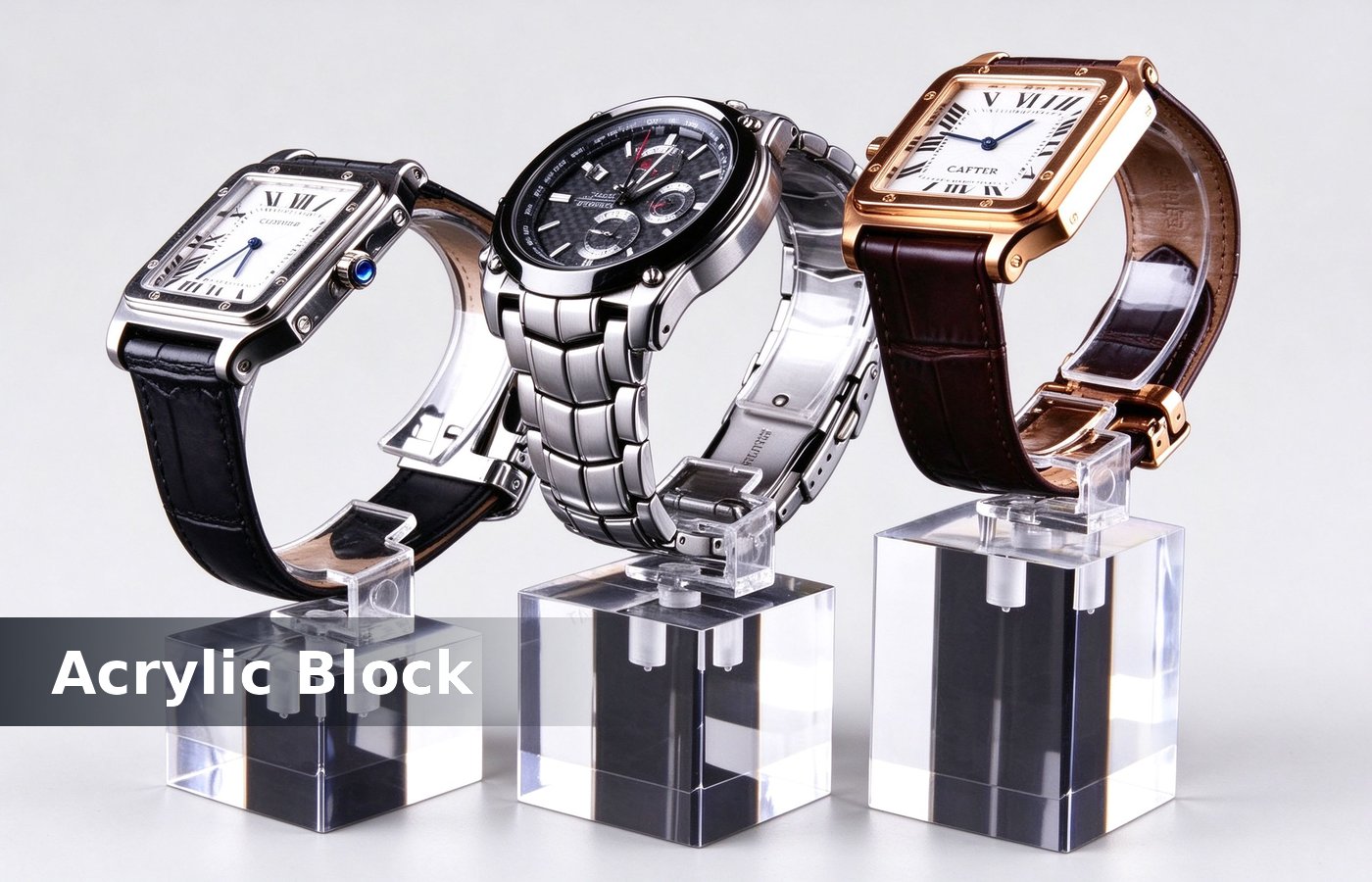
One: clear acrylic blocks
A clear acrylic block disappears under the stock and leaves the watch or bracelet floating on a thin collar. That is the cleanest look for a modern counter, and it costs the least of the five. The same rule holds for a fixed kiosk and for a demountable one, with fixing points mattering more on the demountable build. We keep the alternative on the same quotation, so the buyer compares a number instead of a preference.
Acrylic scratches, and a block on a busy tray shows hairline marks in months. Keep a spare set in the drawer and swap them annually, rather than polishing a block that will never come back to clear. That figure belongs on the drawing, because a riser height agreed verbally rarely survives a second store. Most of these layouts fail at the second store, which is exactly when a roll out is underway.
Cast acrylic at 20 mm wall holds a steel bracelet without a flex, and an extruded block of the same size bows under a heavy watch. Ask which grade is in the quote, because the two look glass showcases. Mark it on the crate label too, so whoever refits the tray later has the reference without hunting a folder.
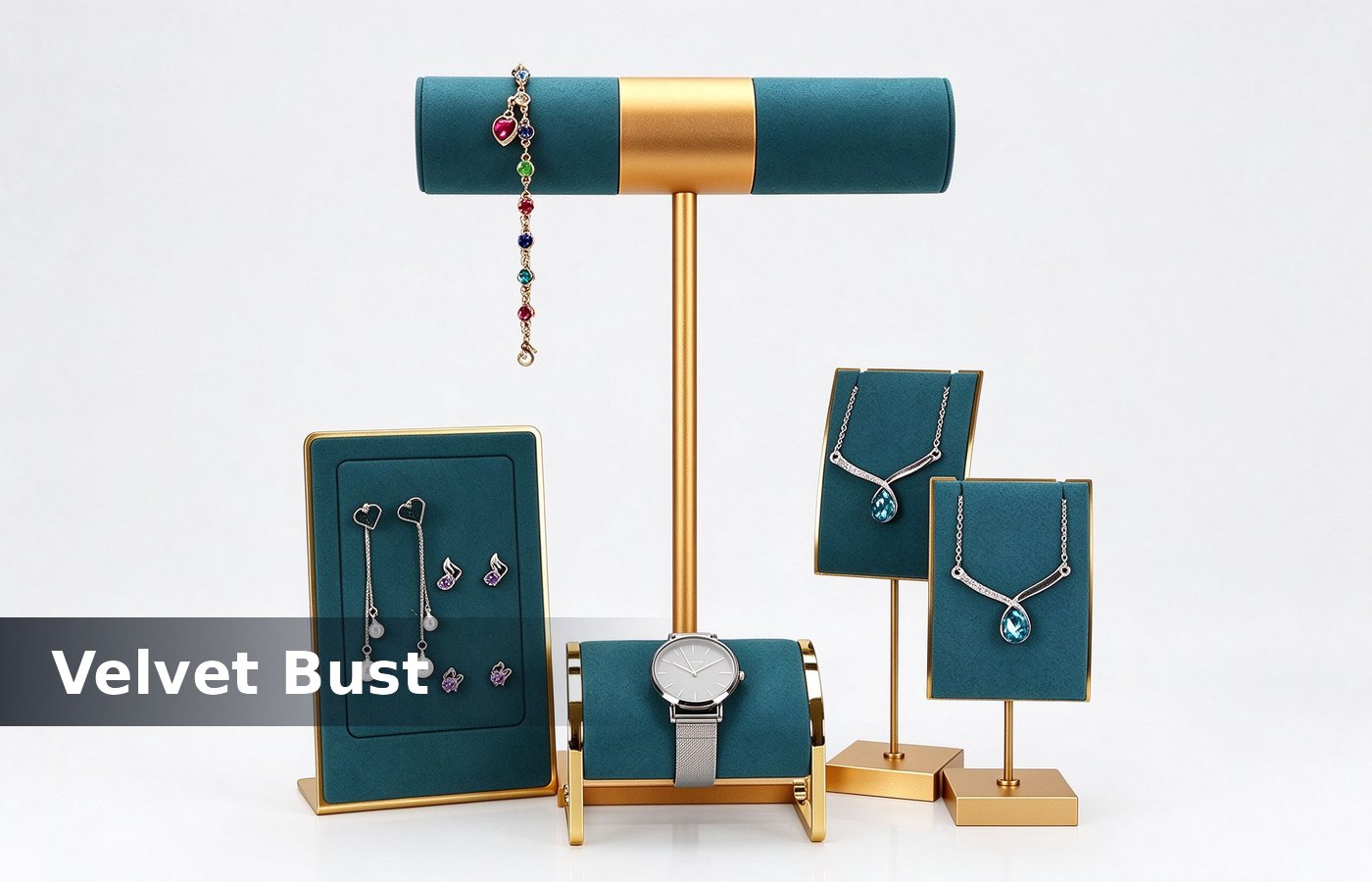
Two: velvet busts and neck forms
A velvet bust gives a necklace a shape, and shape is what sells a chain in a photograph. A chain laid flat reads as a line, and the same chain on a bust reads as a product with weight and drape. Two minutes with a tray and a ruler settles the question faster than an hour of specification reading.
Colour is the whole decision here. Teal and deep green suit white gold and silver, while warm cream and champagne suit yellow gold. A grey bust under yellow gold makes the metal look dull kiosk design. None of that shows in a render, which is why we check it on a sample tray before the run is released.
Velvet collects dust and shows a crease after a season of daily handling. Specify a removable cover, so the bust can be re-covered without replacing the whole form and the tray keeps its colour match. Clients who settle it at design stage pay nothing extra, and clients who settle it after opening pay for a rebuild. The same rule holds for a fixed kiosk and for a demountable one, with fixing points mattering more on the demountable build.
Three: roll stands for watches
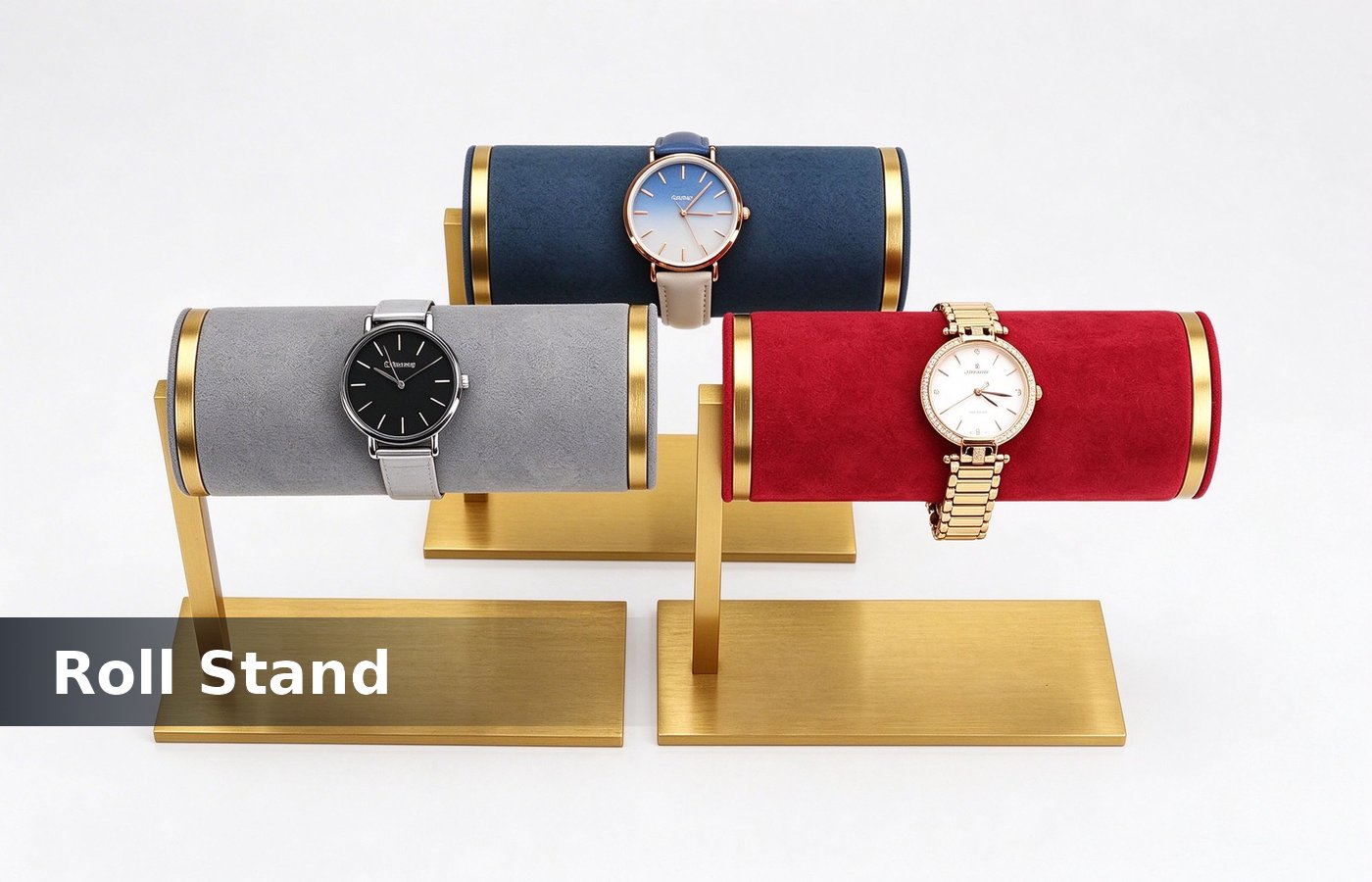
A roll stand holds a bracelet watch around a cylinder, which is the only way a steel link bracelet reads properly in a case. Flat trays make a bracelet look like a chain and lose the clasp detail the buyer wants to see. We keep the alternative on the same quotation, so the buyer compares a number instead of a preference.
Roll diameter matters. A 60 mm roll suits a 40 mm case watch, and a 70 mm roll suits a 44 mm sports watch. Put a small watch on a big roll and the strap lifts off the surface, which reads as a fitting problem to any collector. That figure belongs on the drawing, because a riser height agreed verbally rarely survives a second store.
Height placement is the second half of it. A roll stand at the back of the case should sit higher than the front row, so the whole tray reads as a staircase rather than retail displays. Most of these layouts fail at the second store, which is exactly when a roll out is underway. Mark it on the crate label too, so whoever refits the tray later has the reference without hunting a folder.
Four: hex plinths and stepped platforms
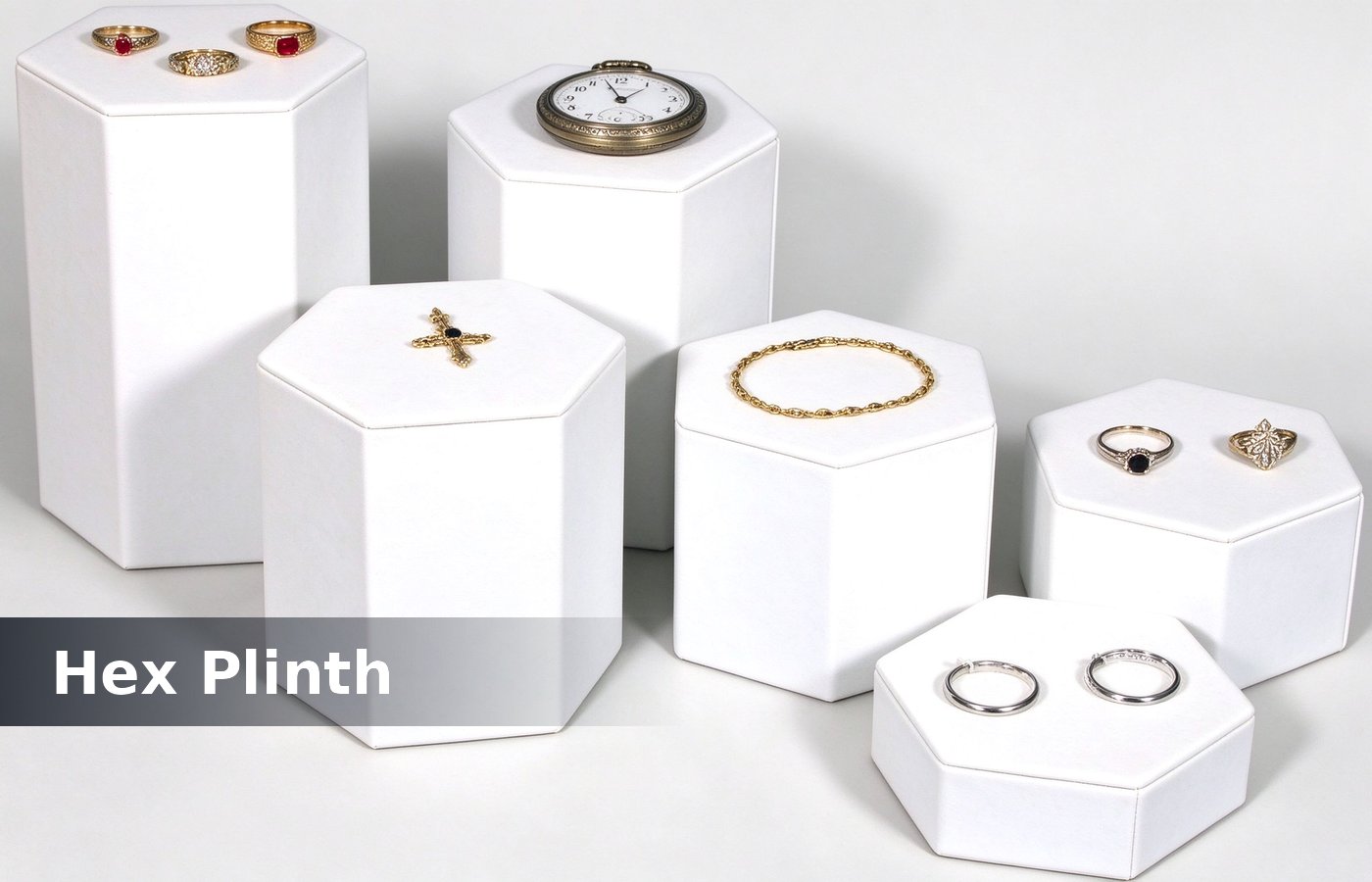
A hex plinth adds height without adding visual weight, and two or three in a row give a case a rhythm. White leather plinths suit a bridal or pearl presentation, and a matte grey plinth suits a men s watch wall. Two minutes with a tray and a ruler settles the question faster than an hour of specification reading.
Steps solve a different problem. A stepped platform raises the back row by 80 to 120 mm, so a shopper standing at the case sees every row rather than the front one and a shadow. None of that shows in a render, which is why we check it on a sample tray before the run is released. Clients who settle it at design stage pay nothing extra, and clients who settle it after opening pay for a rebuild.
Set the step from the customer height, not the designer height. A shopper at 1.65 m looks down into a 1.1 m case, and a back row raised 100 mm lands exactly in her line of sight. The same rule holds for a fixed kiosk and for a demountable one, with fixing points mattering more on the demountable build.
Five: metal stands and T bars
A brass T bar or a slim metal stand carries earrings and pendants with almost no footprint, which lets a tray hold more stock without looking crowded. It is the cheapest way to add vertical interest to a small case. We keep the alternative on the same quotation, so the buyer compares a number instead of a preference.
Weight is the catch. A 3 mm brass rod on a 40 mm base tips when a shopper lifts a pendant, so specify a weighted base or a screwed plate for any stand over 200 mm tall. That figure belongs on the drawing, because a riser height agreed verbally rarely survives a second store. Most of these layouts fail at the second store, which is exactly when a roll out is underway.
Keep the metal tone consistent across one tray. Two gold tones from two suppliers read as a mistake, and the tray looks assembled rather than designed even when every piece is counters and towers. Mark it on the crate label too, so whoever refits the tray later has the reference without hunting a folder. Two minutes with a tray and a ruler settles the question faster than an hour of specification reading.
What to avoid
- Tall riser in front of short stock, which puts the piece in its own shadow.
- Four riser types on one tray, which reads as a prop shelf rather than a display.
- White riser under white metal on a white tray, which hides the stock.
- Unweighted stands over 200 mm, which tip when a shopper lifts a pendant.
Avoid risers that hide the stock they lift. A tall block behind a short ring puts the ring in its own shadow, and the shopper sees a prop rather than a product. None of that shows in a render, which is why we check it on a sample tray before the run is released. Clients who settle it at design stage pay nothing extra, and clients who settle it after opening pay for a rebuild.
Avoid mixing four riser types in one case. Two types per tray is the limit, and one type plus a step is usually enough to give depth, height and a clean reading line. The same rule holds for a fixed kiosk and for a demountable one, with fixing points mattering more on the demountable build. We keep the alternative on the same quotation, so the buyer compares a number instead of a preference.
Avoid white risers under white metal on a white tray. The stock disappears into the surface, and the case reads empty from three metres even when it holds forty pieces. That figure belongs on the drawing, because a riser height agreed verbally rarely survives a second store. Most of these layouts fail at the second store, which is exactly when a roll out is underway.
Order of work
Choose the case height, then the riser, then the stock layout. Doing it backwards produces a tray that fits the props and not the product, which is the most common layout failure we see in a new build. Mark it on the crate label too, so whoever refits the tray later has the reference without hunting a folder. Two minutes with a tray and a ruler settles the question faster than an hour of specification reading.
Ask for a layout drawing with riser heights in millimetres. A drawing with shapes but no heights cannot be built twice, and the second store never matches the first. None of that shows in a render, which is why we check it on a sample tray before the run is released. Clients who settle it at design stage pay nothing extra, and clients who settle it after opening pay for a rebuild.
Conclusion
Clear acrylic for clean lines, velvet busts for necklaces, roll stands for watches, hex plinths for rhythm, metal T bars for pendants. Two types per tray, heights on the drawing, and the case sells the stock. The same rule holds for a fixed kiosk and for a demountable one, with fixing points mattering more on the demountable build.
We sketch riser layouts in Shenzhen with heights marked, and quote the props as a set, so a second store can be fitted from the same sheet. We keep the alternative on the same quotation, so the buyer compares a number instead of a preference. That figure belongs on the drawing, because a riser height agreed verbally rarely survives a second store.