
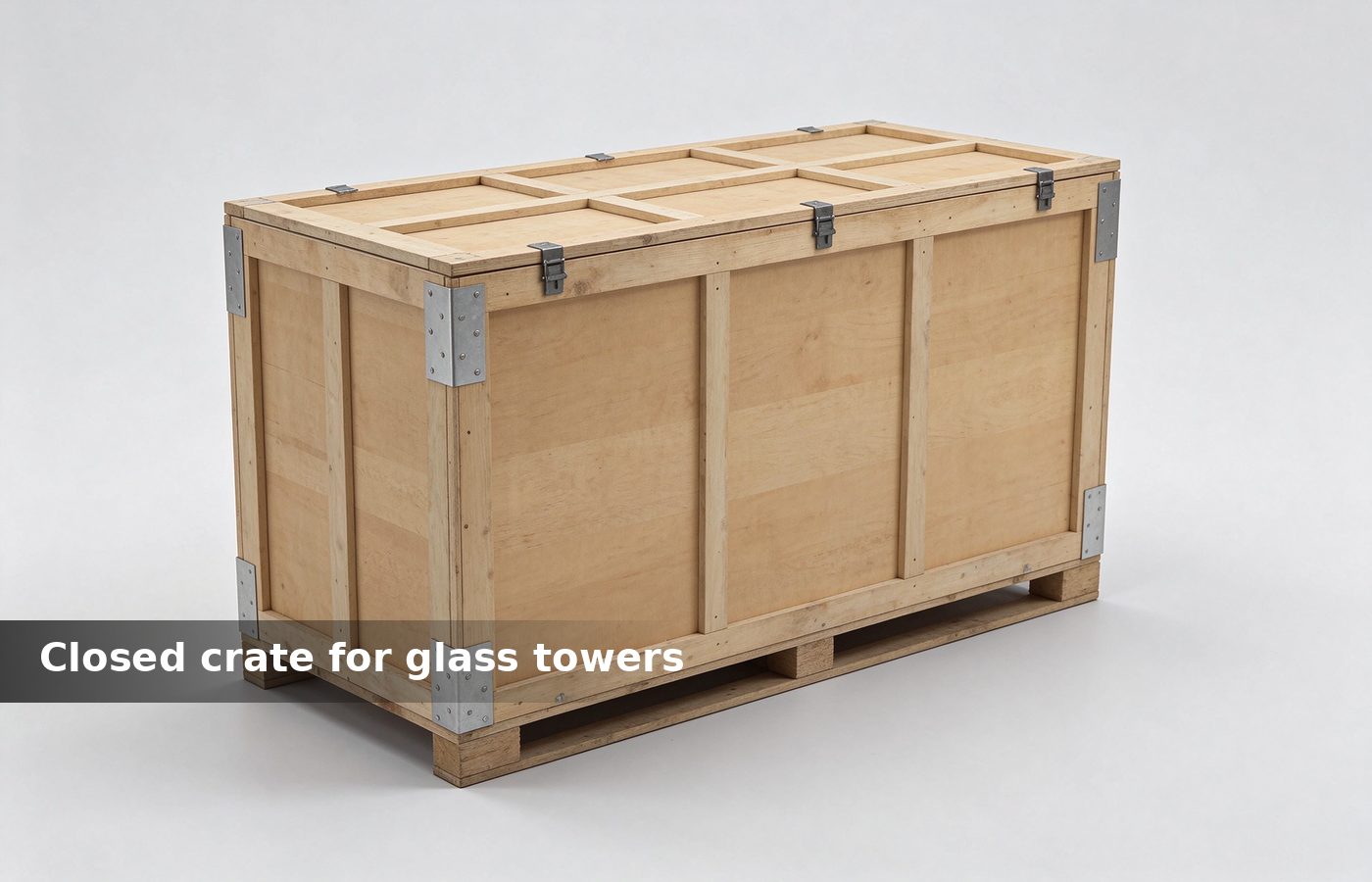
A crate costs about one tenth of the fixture inside it. It also decides how much of that fixture arrives intact. Damage on a sea voyage rarely comes from rough handling alone. Weak bracing, poor moisture control and single-layer glass packing do most of the work. This guide walks through the packing choices a factory makes before your display cases leave the floor. Each step below maps to a decision you can ask for in writing.
Start from the fixture class, then pick the crate, then set bracing and dry-air rules. Order matters, because a glass tower and a steel gondola bay need different shells. The notes here come from export packing of wooden display crates and retail display cases built for US and EU shops. Every figure below is a factory number, not a carrier guess.
Crate Types by Fixture Class
Three shells cover most orders. A skeleton crate is a slat frame with open sides. It suits steel shelving, gondola uprights and wall panels that shrug off scuffs. A fully closed plywood case adds walls on four sides and protects glass and finish. A clamshell case splits at mid height, so two people can lift the top off on site. Pick the lightest shell that still protects the finish.
Fixture weight drives board thickness. Steel bays under 120 kg travel well in 12 mm plywood. Glass towers and counters over 200 kg need 18 mm walls plus corner blocks. A closed crate also keeps dust out of a polished surface on a long route. For locked towers, keep the key taped inside the lid pocket, not loose in the crate. See store showcase builds for the shell that matches a lit case.
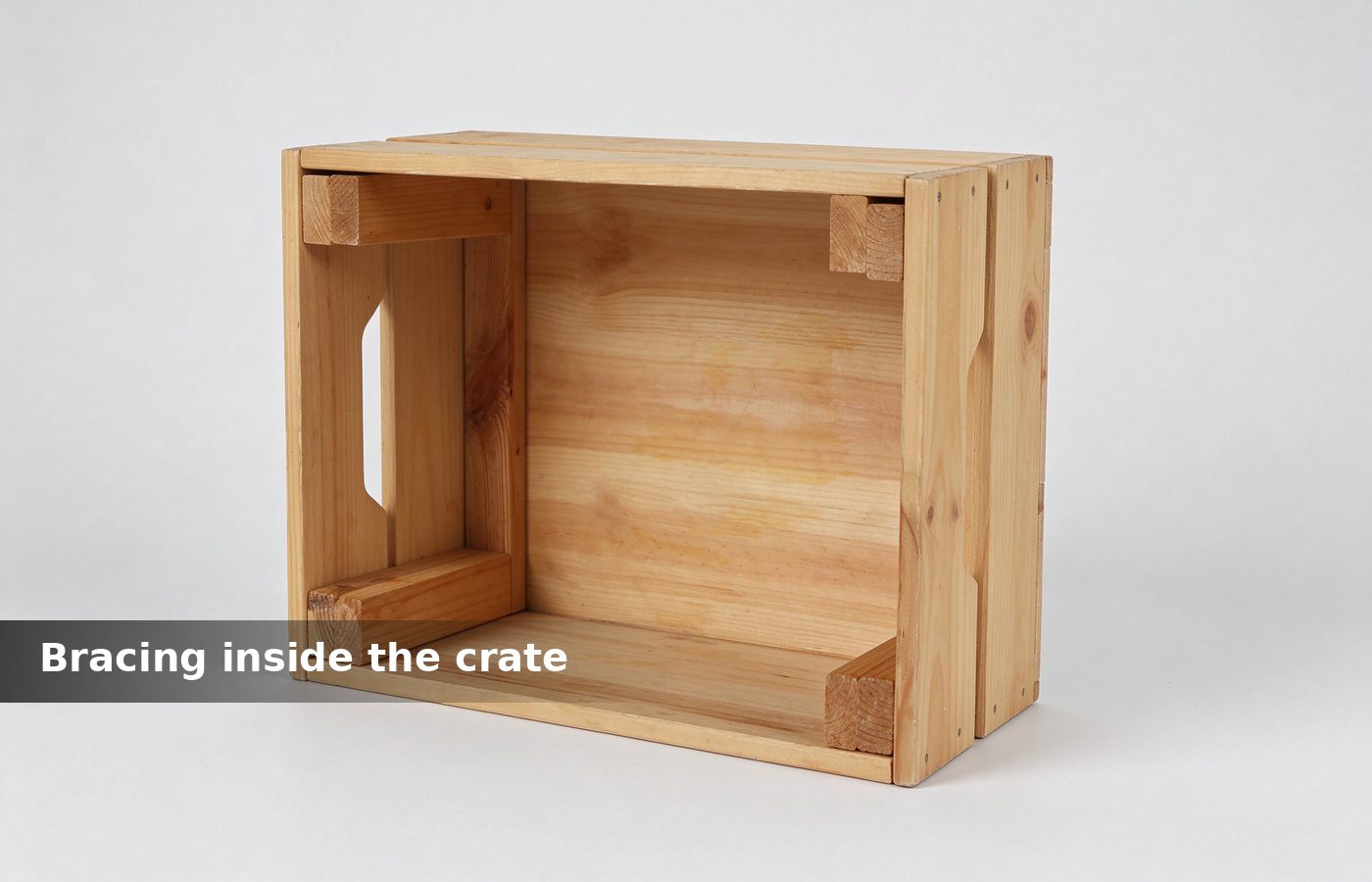
Height is the third input. Crates above 1200 mm need a vertical brace at the centre of each long wall. Stacking two crates is only safe when the lower one is rated for the load. Many buyers skip this and pay for it at the port. Full pallet rules for mixed orders sit under retail displays and fixtures pages on this site.
Bracing and Glass Protection
Glass travels best standing upright, never flat on its face. A flat pane takes the full shock of every bump through its centre. An upright pane shares the load with its edges. Build a plywood spine behind the glass and foam the edges. Move the case as one unit, so the glass never leaves its frame.
Use 20 mm polyethylene foam on faces and 10 mm on edges. Foam must cover the full pane, not just corners. Tape the foam, then wrap the case in stretch film so nothing shifts. A glass door gets a plywood sheet on both sides and a strap at mid height. Buyers who plan glass display case orders in summer should ask for a shade card in the crate, because heat plus direct sun warps film.
Pallet Load and Strap Rules
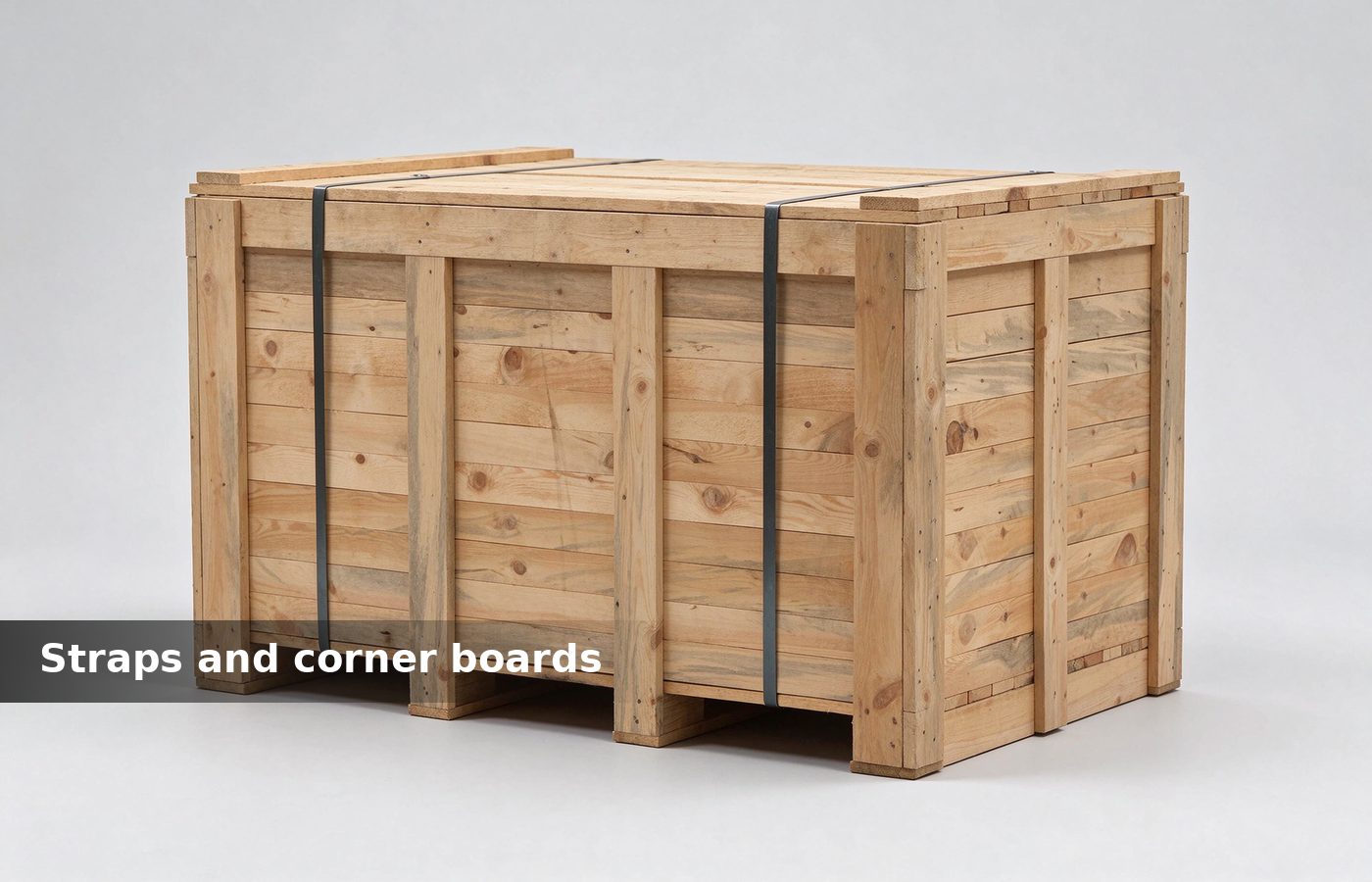
A loaded crate should sit under 400 kg for a standard 1200 by 800 mm pallet. That figure is the practical ceiling for hand pallet trucks, typical for 2026 warehouse floors. Above that, add a second pallet or split the fixture. Strapping runs two bands per crate, one at each third of the length. Corner boards stop the strap from cutting the plywood on a long haul.
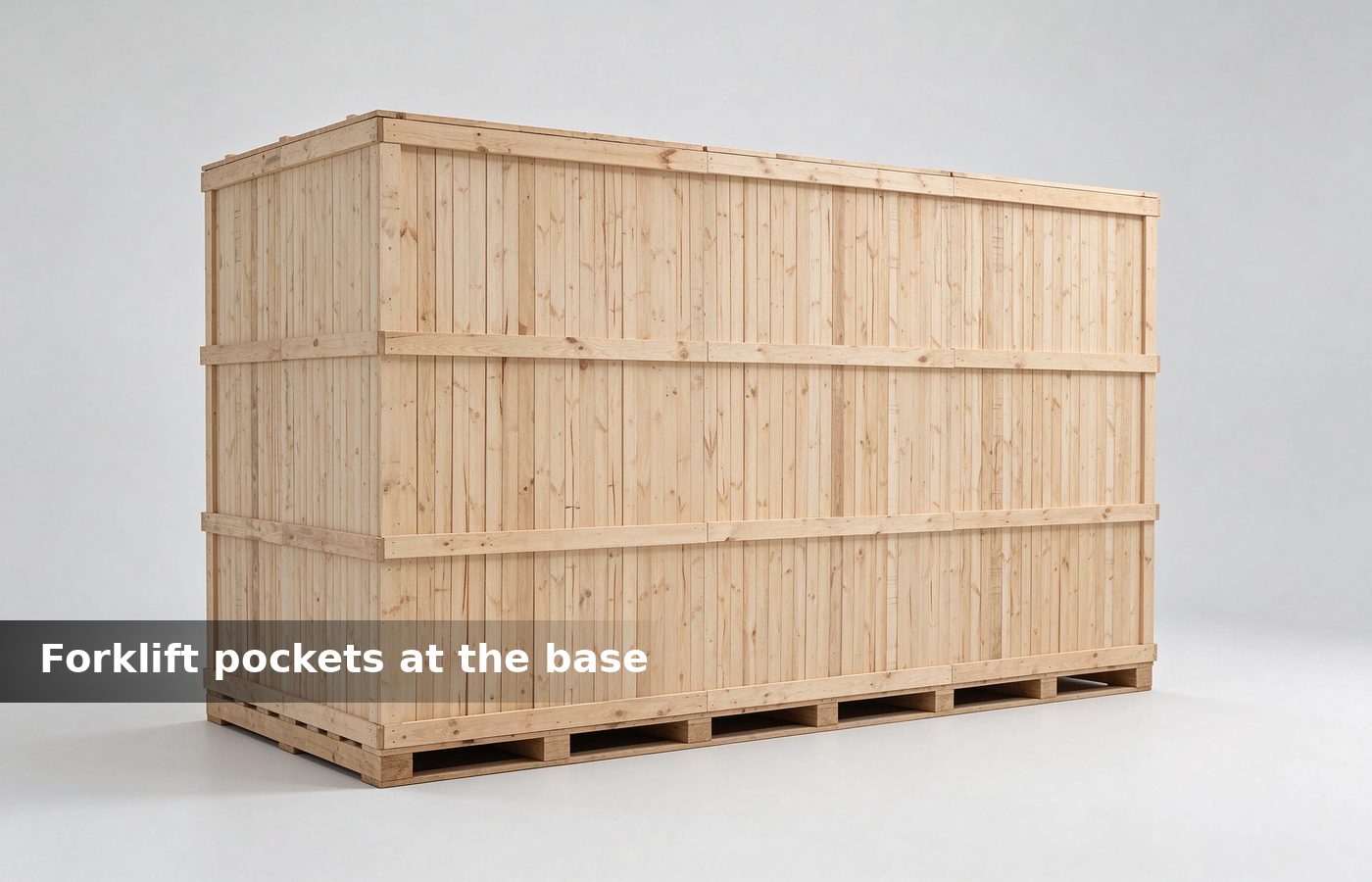
Forklift pockets need 100 mm clearance and must pass right through the base. A crate without pockets forces a clamp lift, which crushes a thin wall. Mark the centre of gravity on both long sides before loading. Hardware bags, keys and feet go in a labelled box strapped to the crate top. Spare parts for store fixtures hardware should never sit loose in the bottom of a container.
Loading a 40HQ Container
A 40HQ holds about 68 cubic metres. Fixture crates rarely fill it by volume, so weight and stability set the plan. Heavy crates go on the floor, in two rows along the walls. Light cartons fill the centre and the top. Never leave a gap behind a tall crate, because a gap lets it lean on the first swell.
Load from the rear doors forward, so the last crate sits against the doors. Use airbags in any gap over 200 mm. Lash tall crates to the container lugs, not to each other. Photograph every row as it goes in, with the crate label visible. That photo set is the first thing a claim handler asks for. Packing lists and pallet marks for mixed orders sit under retail packaging.
Moisture and Sea Air Control
Sea air carries salt and moisture. A container can swing from cold night air to hot afternoon sun every day for six weeks. That cycle puts condensation on any cold metal surface. Steel frames and hinges rust first, then the rust stains the finish. A twenty foot run of steel can show stains in the second week at sea.
Add 2 kg of silica gel per cubic metre of crate volume, in breathable bags. Seal the crate with a vapour barrier when the fixture carries a baked paint or a mirror. Fit vent plugs that close on the outbound leg. Do not wrap wet crates. Shipping supplies such as edge protectors and desiccant packs are cheap next to a rust claim.
Packing Spec by Fixture Type
Use the table below as a starting point for a quote. Values assume a full container and a standard sea route. Air freight removes the moisture risk but doubles the cost. Weights marked are net, so add the crate shell when you book. Ask the packer to confirm the shell against the final drawing, and note any stacking limit.
| Fixture | Shell | Board | Typical weight |
|---|---|---|---|
| Steel gondola bay | Skeleton | 12 mm ply | 80-120 kg |
| Countertop case | Closed | 15 mm ply | 60-150 kg |
| Glass tower case | Closed | 18 mm ply | 180-320 kg |
| Cash wrap counter | Clamshell | 18 mm ply | 200-400 kg |
| Museum wall unit | Closed plus spine | 18 mm ply | 250-450 kg |
Weights above are typical for 2026 factory packing, not a rated limit. A 1200 mm glass tower with four shelves lands near 260 kg. A 900 mm top case sits near 90 kg. A two door cash wrap with a stone top crosses 380 kg, so it takes a clamshell. Use these ranges to check a freight quote, then confirm with the packer on the final drawing.
Crate cost tracks the shell, not the fixture. A skeleton crate runs 40-90 USD. A closed 18 mm case with a spine runs 150-320 USD, typical for 2026 export packing in Shenzhen. That is a small share of a tower order, and it removes most glass claims. Jewelry towers in jewelry showcase lines always take the closed shell.
Inspection and Damage Claims
Inspect before you sign the delivery note. Walk around every crate and photograph the six faces before you sign. Then open the crate in front of the driver, not after he leaves. Glass cracks often start at an edge, so tilt the case and look along the pane. Check hinges, locks and feet before the crate goes into storage.
Report damage in writing within 72 hours. Keep the crate, the foam and the strapping until the claim closes, because an adjuster may ask for them. Photos of the crate label and the container row speed the process. A short video of the unpack helps when the damage sits behind a panel. For lit cases, test the display case locks and lights before you accept the unit. A dead LED strip is a supplier issue, not a transport issue.
Conclusion: Checklist Before You Ship
Six checks cover most of the risk. Match the shell to the fixture class. Set board thickness by weight. Stand glass upright with foam on the full pane. Keep each crate under 400 kg, with two straps and corner boards. Add desiccant and a vapour barrier. Photograph every container row. Run through this list once and a claim becomes unlikely.
Nothing here needs special tools, and most items cost little. The saving shows up as a shop that opens on schedule, with cases that arrive ready to light. Put the crate type, board thickness and dry-air rule into the purchase order, so nothing depends on memory. Buyers planning a museum-grade run can review museum display cases for the spine build that suits fragile glass.
Crates decide how much of your order reaches the shop floor intact, so they belong in the quote, not the afterthought. Our Shenzhen factory builds wooden crates to the fixture inside, with foam cut to the pane and desiccant sized to the volume. We ship display cases, counters and kiosks on this basis every month. Custom sizes and finishes are open, and our team can quote packing with the fixture in one line. Send your plan to our team.