
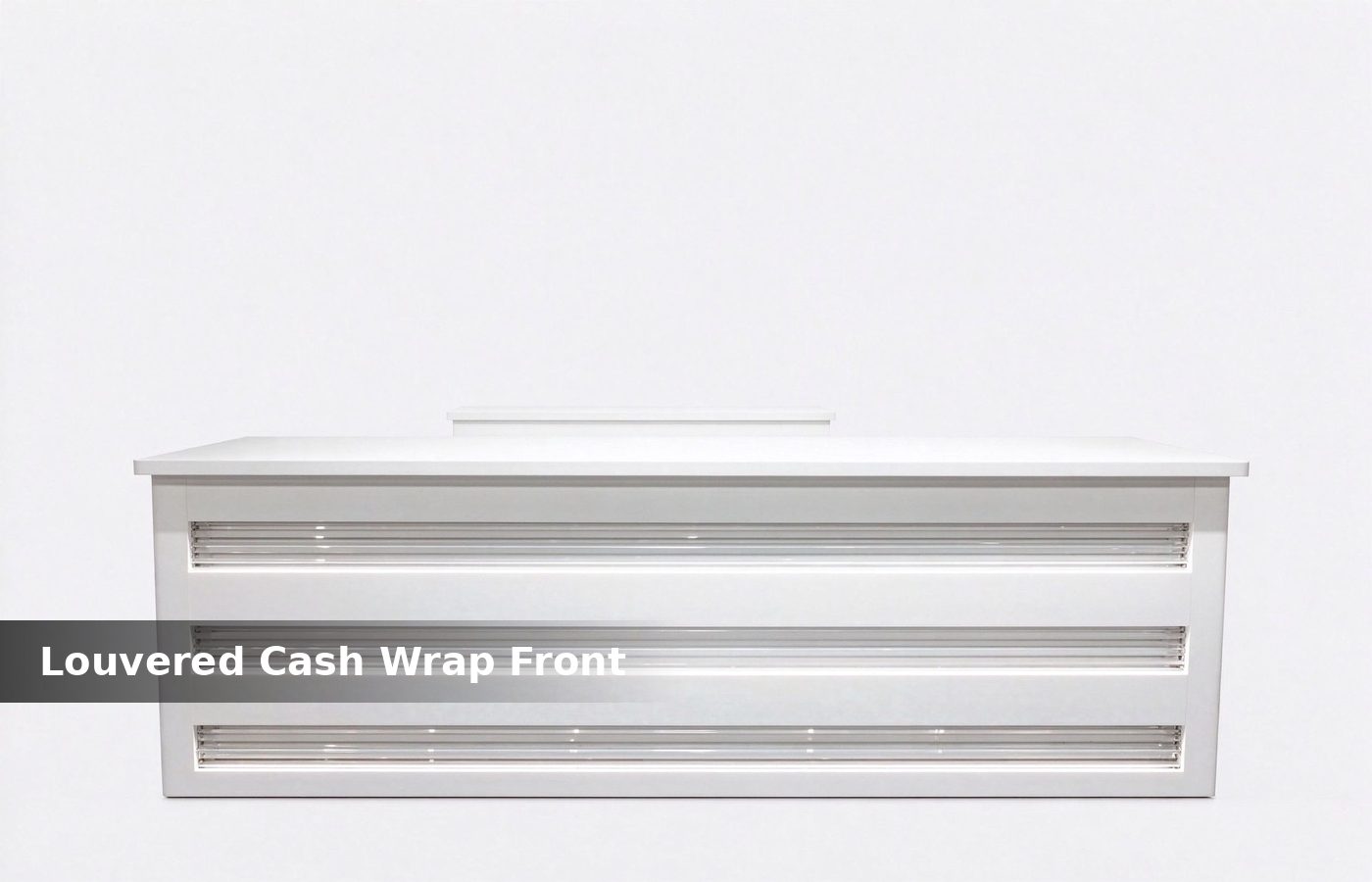
Why the Counter Sets the Pace
Every sale in a shop ends at one point. A cash wrap counter takes the payment, bags the goods and holds the queue. Size it badly and the line stalls at the busiest hour. Size it well and two staff work a full shift without crossing paths. This guide gives the numbers we use on real shop floors. It covers front length, depth, height, storage and power, in the order a shop is planned.
Most small shops order a counter last, after shelving and wall fixtures. That order is backward. A cash wrap counter sets the aisle width that feeds it. It also sets where a queue can stand without blocking a display. Plan the counter with the floor plan, not after it. A shop of 60 sqm has room for one clear route to the till, and the counter decides where that route runs.
Size by Staff, Not by Taste
Count the people who touch the till on a Saturday. One cashier needs 1,200 mm of front width for a bag bay and a card terminal. Two cashiers on one run need 2,000 mm. A wrapping station adds 600 mm beside the till. These are typical figures for 2026 small-shop fit-outs, before any lighting or steel work is added.
Queue length matters more than counter length. A 1,200 mm front holds three or four people in line. A 2,400 mm run holds six or seven before the line reaches a shelf. Keep 900 mm clear behind the queue, so a shopper can pass a waiting line without stepping into it. Read the cash wrap range against your own aisle width.
Depth and Height Rules
Depth runs from 500 to 700 mm on most counters. A shallow top of 500 mm suits a card-only till and a small bag bay. A 700 mm top leaves room for a printer, a scanner and a bag stack. Anything deeper pushes the cashier away from the customer. That gap reads as distance, and it slows the handover at the end of every sale.
Height stays at 900 to 1,000 mm for a standing cashier. A seated till needs 750 mm clear under the top. The top edge should sit just below the cashier’s elbow. A raised ledge at the back hides the screen from the queue. It also keeps a receipt roll and a stapler in reach, so the cashier does not turn away from the customer.
Counter size by shop floor
| Shop floor | Front length | Depth | Drawers |
|---|---|---|---|
| Up to 40 sqm | 1,200 mm | 500 mm | 1 |
| 40 to 80 sqm | 1,800 mm | 600 mm | 2 |
| 80 to 150 sqm | 2,400 mm | 600 mm | 3 |
| Over 150 sqm | 3,000 mm | 700 mm | 4 |
Drawer and Bag Storage
A till drawer takes 400 mm of width. A second drawer for bags and tape takes the same again. Count the things that leave the counter each day. Bags, tissue, tape, receipts and a stapler all need a home inside arm reach. Storage below the top is cheaper than storage beside it, and it keeps the front face clean.
Open shelves under the counter suit a shop with changing stock. Closed drawers suit cash, seals and small high-value items. A lock on the till drawer is standard. Add a second lock if the counter stays unwatched at lunch. Deep shelves at the back hold spare bags, so a refill takes seconds and the queue keeps moving.
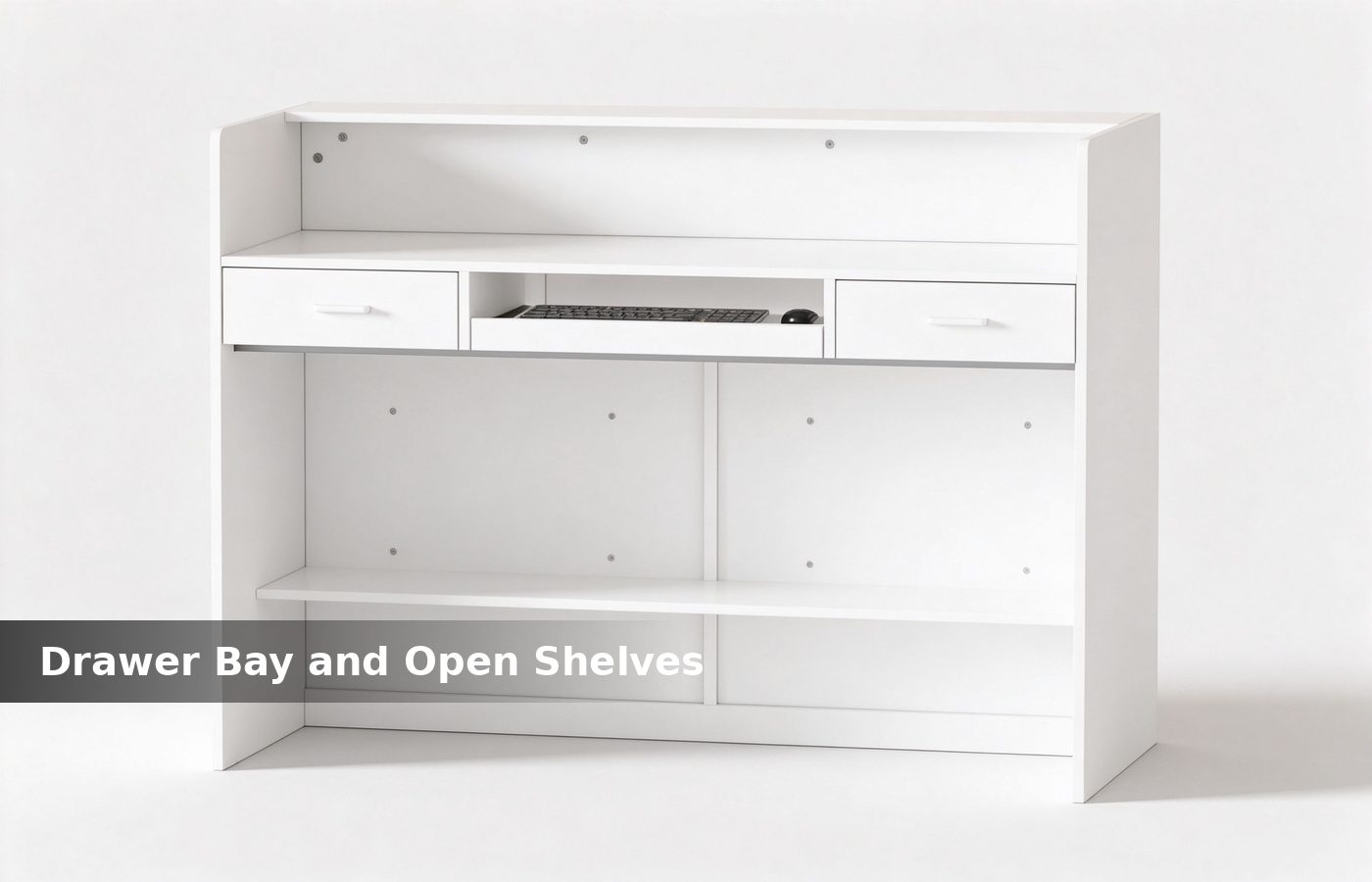
Where the Register Sits
Put the till to one side, never in the middle of a short counter. A corner position gives the cashier a clear view of the door and the queue. It also frees the rest of the top for bagging. Leave 200 mm of clear top at each edge, so a card machine does not hang over the drop. A counter of 1,200 mm leaves just enough room for that layout.
A screen at 1,100 mm from the floor reads well for a standing cashier. Tilt it slightly down, so the queue cannot read the total. A customer-facing display sits on the far side of the till. Both units need a cable route under the top, not across it. Cables on the top collect dust and slow a card swipe on a busy day. A display table beside the counter carries the impulse stock the till cannot.
Materials That Take Wear
Laminate over plywood is the workhorse for a cash wrap counter. A 1.0 mm high-pressure laminate face resists a key and a coin edge. A 2 mm PVC edge band protects the corners that take the most knocks. Solid surface costs more and can be sanded back after a scratch. Both sit on an 18 mm ply carcass, so the body stays square after a move. Pair the counter with retail wall fixtures in the same finish, so the front of the shop reads as one set.
A steel kick plate along the base saves the front panel from shoes and trolleys. A stainless top suits a shop that handles food or wet goods. A painted MDF front looks sharp on day one and dents on day ninety. Pick the material by the traffic, not by the photo on a supplier page. See how solid surface and laminate compare on retail store fixtures.
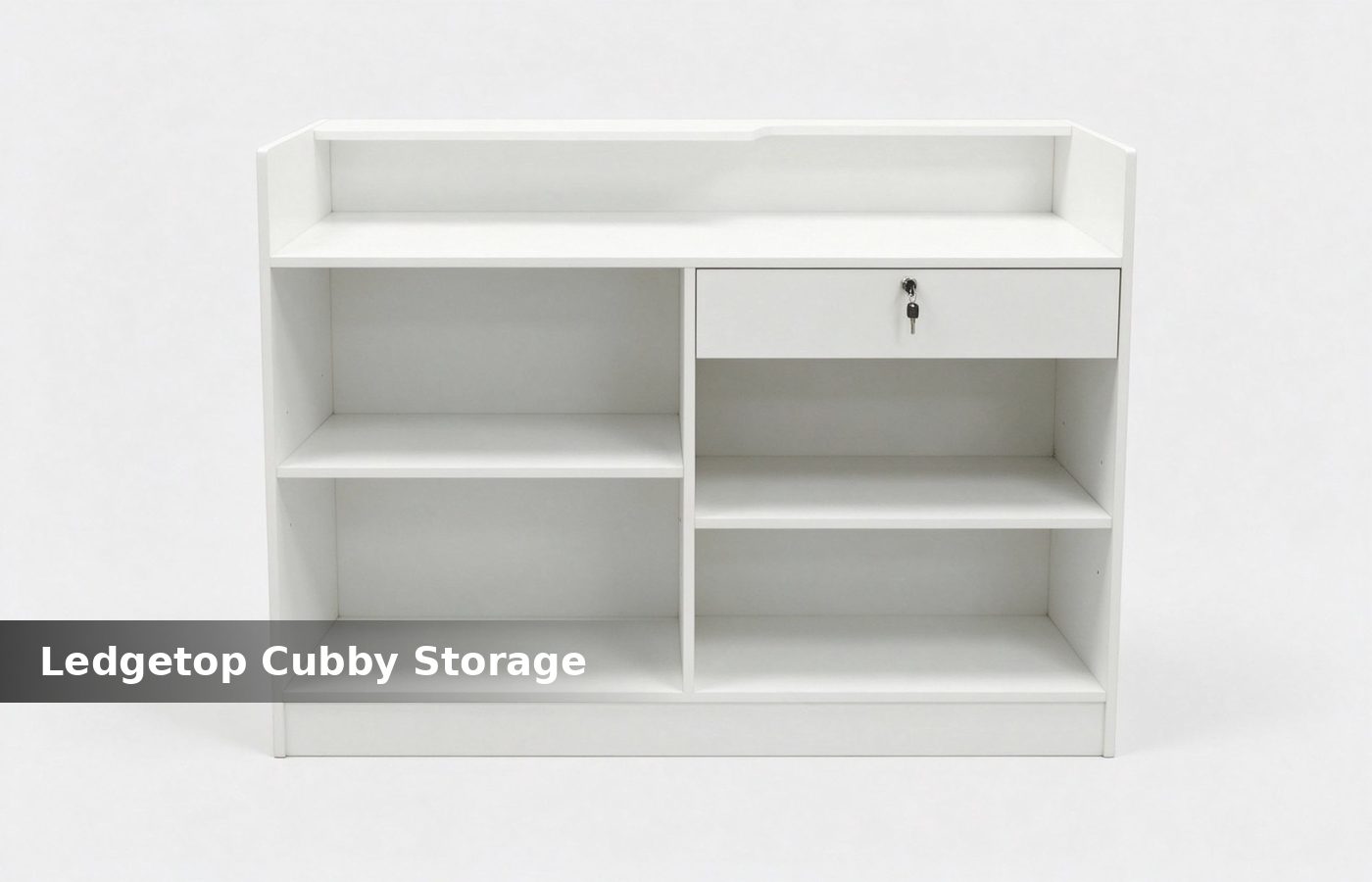
Power and Cable Routes
Count the sockets before the counter is drawn. A till, a card terminal, a printer, a scale and a light need 5 outlets on one run. Put a socket block inside the counter, not on the wall behind it. A trunking route along the base hides the cables from the aisle. A short run of trunking costs little and saves a service call later.
Leave a 60 mm gap at the back of the counter for cable drop. A drawer unit must not block that gap. Fit a removable back panel, so a service call takes minutes. Test every cable before the counter is fixed to the floor. A dead socket behind a fixed counter is a costly fault to fix.
Test the Counter Before Order
Build a mock-up from cardboard at the real height and depth. Stand at it for ten minutes and bag a few items. Reach for a card terminal and a receipt roll. Most sizing mistakes show up in that ten minutes. A full-size counter is expensive to change later, while cardboard costs nothing and takes an hour.
Weigh each drawer at 15 kg with stock and run it twenty times. A drawer that sticks on the first day will stick for a year. Check the bag bay against the largest bag you sell. A bay that is 50 mm too narrow wastes a hand movement on every sale. Write the faults down and send them with the order drawing.
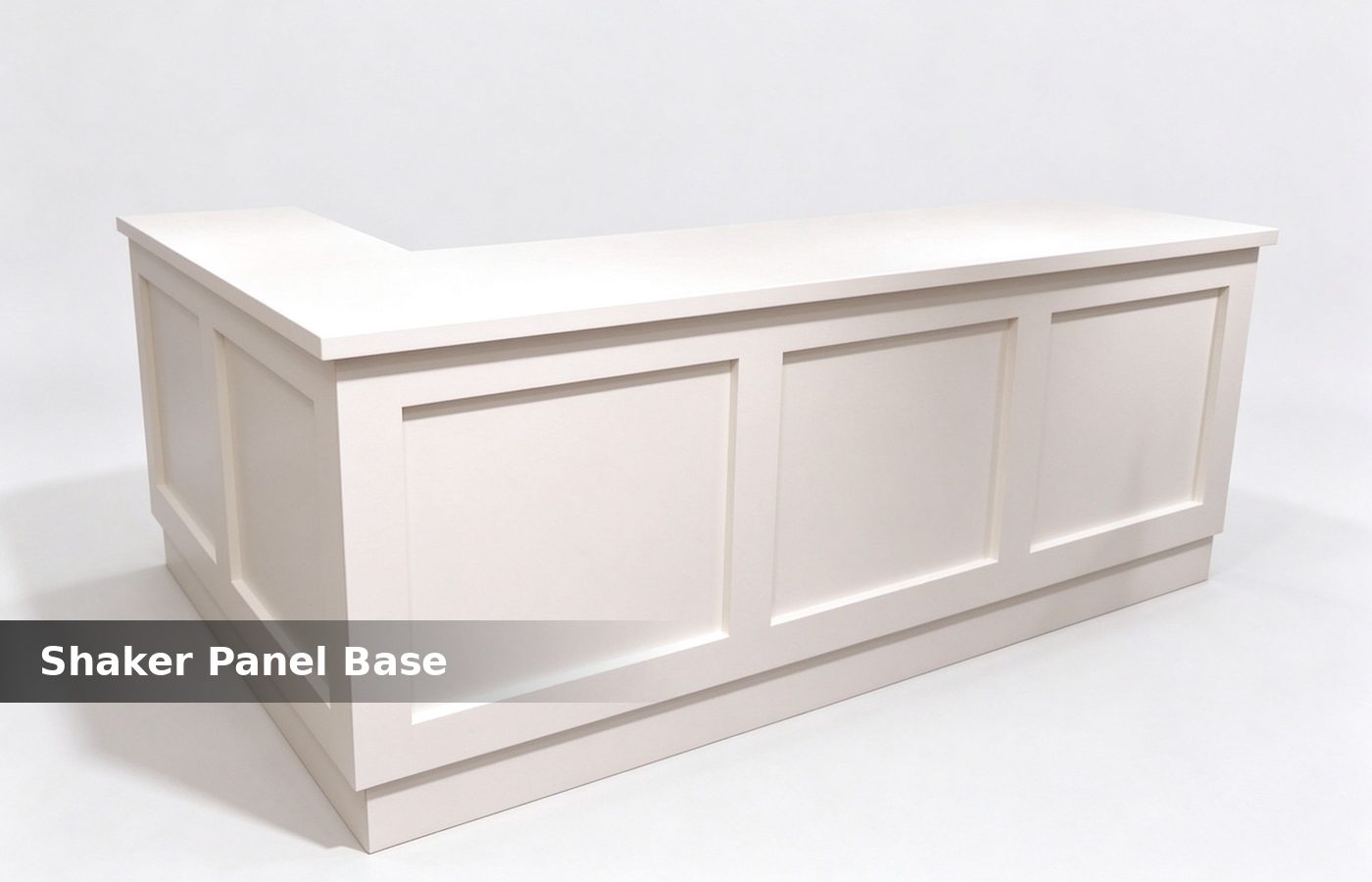
Order in Sequence
Order the counter after the floor plan and before the wall fixtures. A cash wrap counter of 1,200 mm costs USD 600 to 900 in laminate. A 2,400 mm run with drawers and a solid surface top runs USD 1,500 to 2,400. These are typical trade prices for 2026. Add 10 to 15 percent for a lit front or a steel kick plate.
A counter that fits the staff, the queue and the aisle pays back every day. Get the length wrong and you widen an aisle you did not need to widen. Get the depth wrong and the cashier leans all shift. Measure the shop first, then pick the counter from the retail displays range, and check the lead time before you set an opening date.
Our Shenzhen factory builds cash wrap counters to your drawing, in laminate, solid surface or stainless steel. We cut the front panels, drawers and bag bays to the sizes you send. Tell us the shop width and the staff count through contact us, and we return a layout and a price. Sample panels ship before the full order, so a finish is approved on a real surface. We also build the shelving that stands behind the counter.