
Why Aisles Start With a Gondola
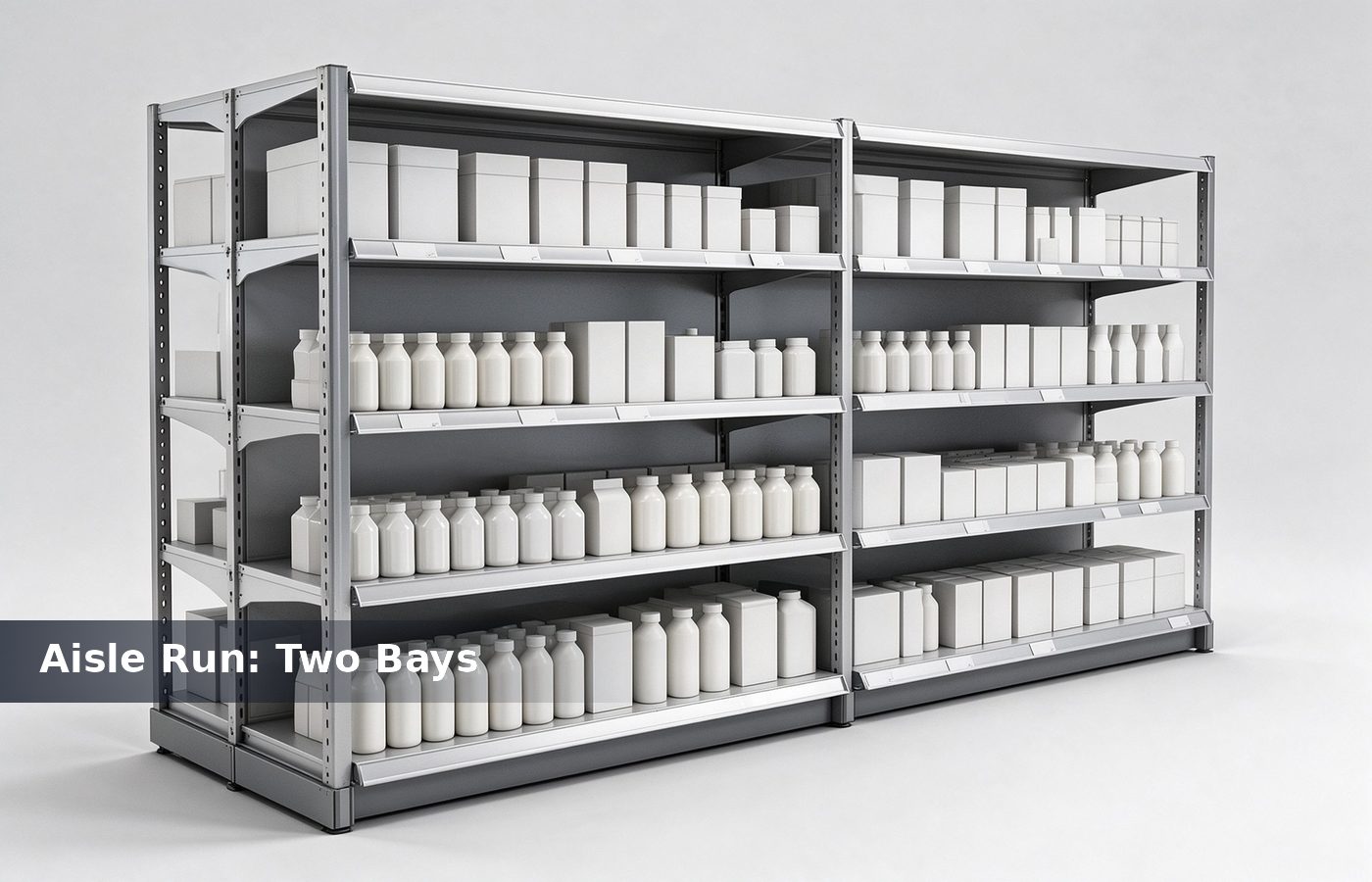
Walk into any supermarket and most of the stock sits on gondola shelving. One run of bays holds several hundred product lines in a few square metres. Store planners build the whole floor plan around that run. Aisle widths, category flow and restock routes all follow it. This guide answers the questions buyers raise in one place. Bay sizes, shelf loads, back panels and cost all get covered.
A gondola unit is not one shelf. It is a frame of uprights with decks hung between them. Two frames back to back make a double-sided run. Shoppers then shop both sides from two separate aisles. That is why suppliers price the unit by the bay, not by the shelf. A bay is one section between two uprights. Economy gondola units and heavy units share that same frame logic.
The Three Parts of Every Bay
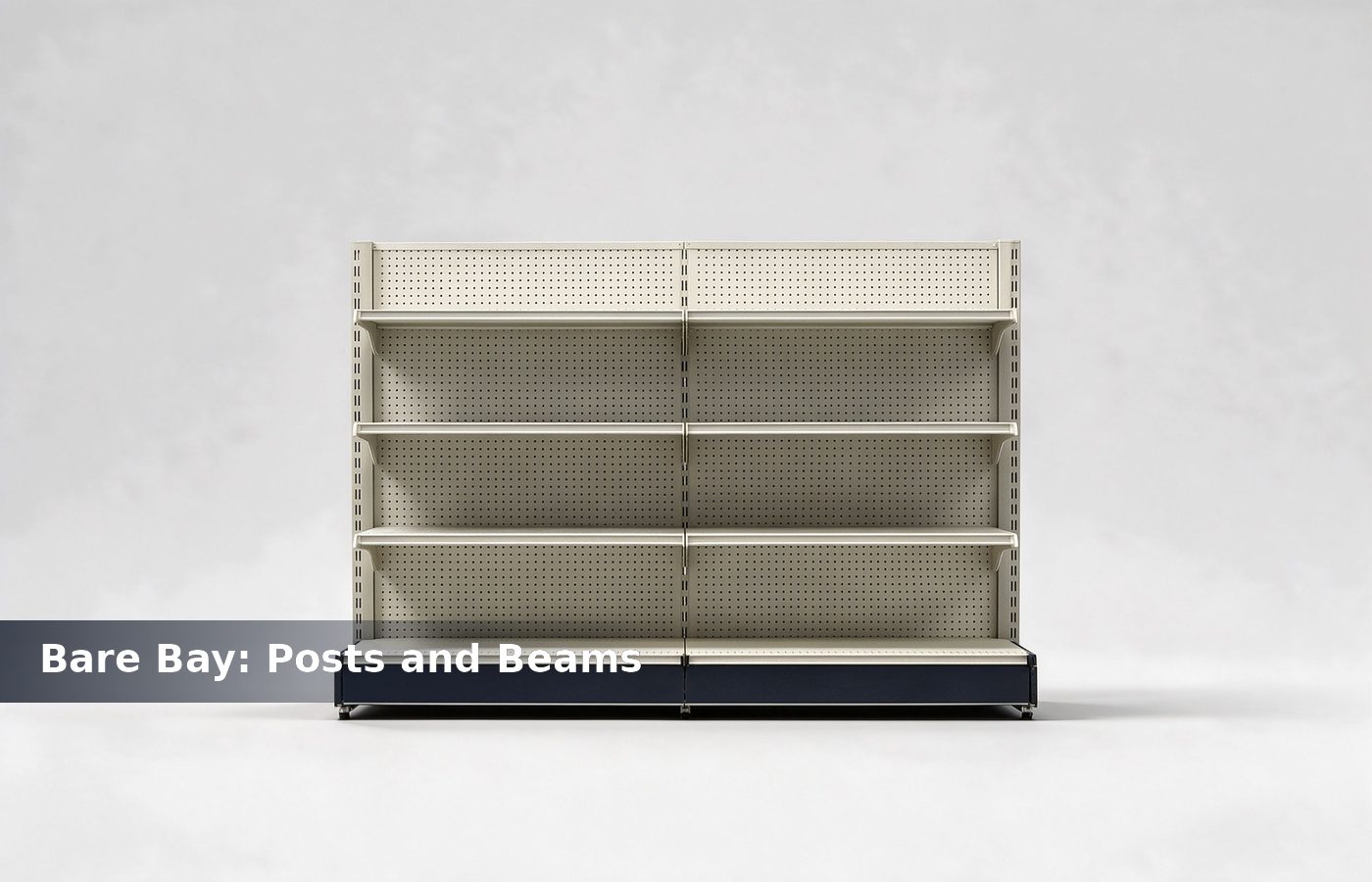
Every bay has three parts: uprights, beams and decks. Uprights are the vertical posts at each end. They carry the full load down to the base feet. Beams run across the bay and hold the deck. Decks drop into slots cut in the uprights. A base deck sits on the bottom beam and takes the heaviest load. Nothing else in the bay carries weight.
Slotted uprights let staff move a shelf without tools. The slots sit at fixed steps, often 25 mm or 50 mm apart. That step sets how tightly you can space the levels. Staff pick a slot, drop the beam and lock it with a beam clip. Solid locking matters when a shelf holds glass or liquid. A loose beam can drop a full shelf in one go.
Standard Bay Widths and Depths
Most factories build bays in a small set of widths. Common widths are 1000 mm, 1200 mm and 1250 mm. Depth runs 400 mm for small packs and 500 mm for most grocery. Bulk goods take 600 mm depth. Upright height sets the bay height, from 1500 mm to 2200 mm. A taller upright adds levels but adds cost. Pick depth from the pack size, not from the shelf count.
Width drives the number of facings on a shelf. A 1200 mm bay takes about 8 to 10 facings at 120 mm per pack. Depth drives how much stock sits behind the front facing. Shallow shelves sell fast but need more restocking. Deep shelves cut labour and hide stock from view. Mixed grocery ranges usually settle on 500 mm depth.
| Bay detail | Typical value |
|---|---|
| Width | 1000 / 1200 / 1250 mm |
| Depth | 400 / 500 / 600 mm |
| Upright height | 1500-2200 mm |
| Shelf load | 100-150 kg per deck |
| Slot pitch | 25 mm or 50 mm |
How Much Weight a Shelf Carries
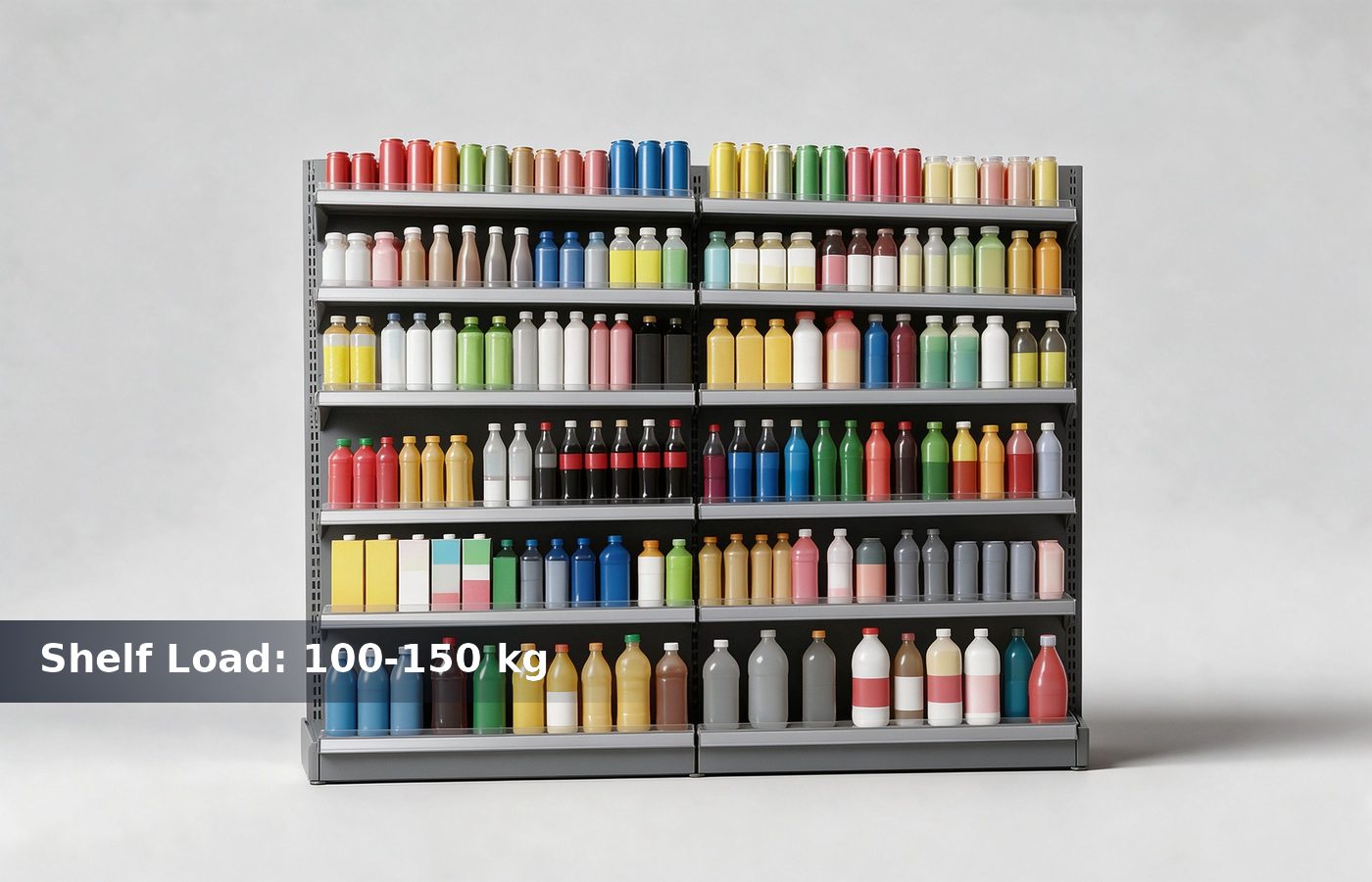
Shelf load is the number buyers ask about last. It should come first. A 1200 mm deck with one centre support holds about 100 kg. Heavier beams and a second support take it to 150 kg. That load covers the goods, the deck and any dividers. Water, oil and glass drinks sit near the top of the range. Plastic snacks sit near the bottom. Ask for the rating per deck, not per bay.
A full deck of bottled water weighs about 120 kg in a 1200 mm bay. That figure assumes 500 ml bottles, two rows deep. A 1000 mm bay with no centre support may flex under that load. Buyers should ask for the load rating in writing. The rating must cover the beam, not only the deck. Overloaded beams bend and never straighten again. Most failures start with a shelf that was rated from memory, not from a spec sheet.
Uprights, Beams and Pitch
Uprights come in light, medium and heavy grades. Grade shows in steel thickness, from 1.2 mm to 2.0 mm. A heavy upright carries more shelves of heavy goods. Beams are marked with length and load on the face. Pitch is the slot step, and it sets how many levels fit. A 2200 mm upright at 50 mm pitch takes about 6 levels. Madix gondola units use that same slot pattern.
Pitch matters more than buyers expect. Big steps waste height inside the bay. Small steps cost a little more and allow fine tuning. Most grocery runs use 5 levels on a 25 mm step. Staff can then set display height product by product. The same slots accept hooks, dividers and sign strips. Shelf brackets drop in without drilling.
Back Panels: Pegboard or Plain
The back panel decides what a bay can sell. A plain panel takes shelves only. A pegboard panel takes shelves and hooks. Slatwall takes shelves, hooks, bins and faceouts. Pegboard suits hardware, cosmetics and hanging packs. Slatwall suits apparel accessories and mixed small goods. Plain panels keep the cost lowest per bay. Retail metal gondolas with pegboard backs cover most hardware aisles.
Panel choice also changes how the aisle reads. Pegboard looks like utility retail. Slatwall panels and slatwall walls look like fashion retail. Both add cost over a plain panel. A mixed store can run plain panels in grocery and slatwall near the front. Swapping panels later means taking the bay apart. Decide the panel type at the order stage.
End Caps and Aisle Flow
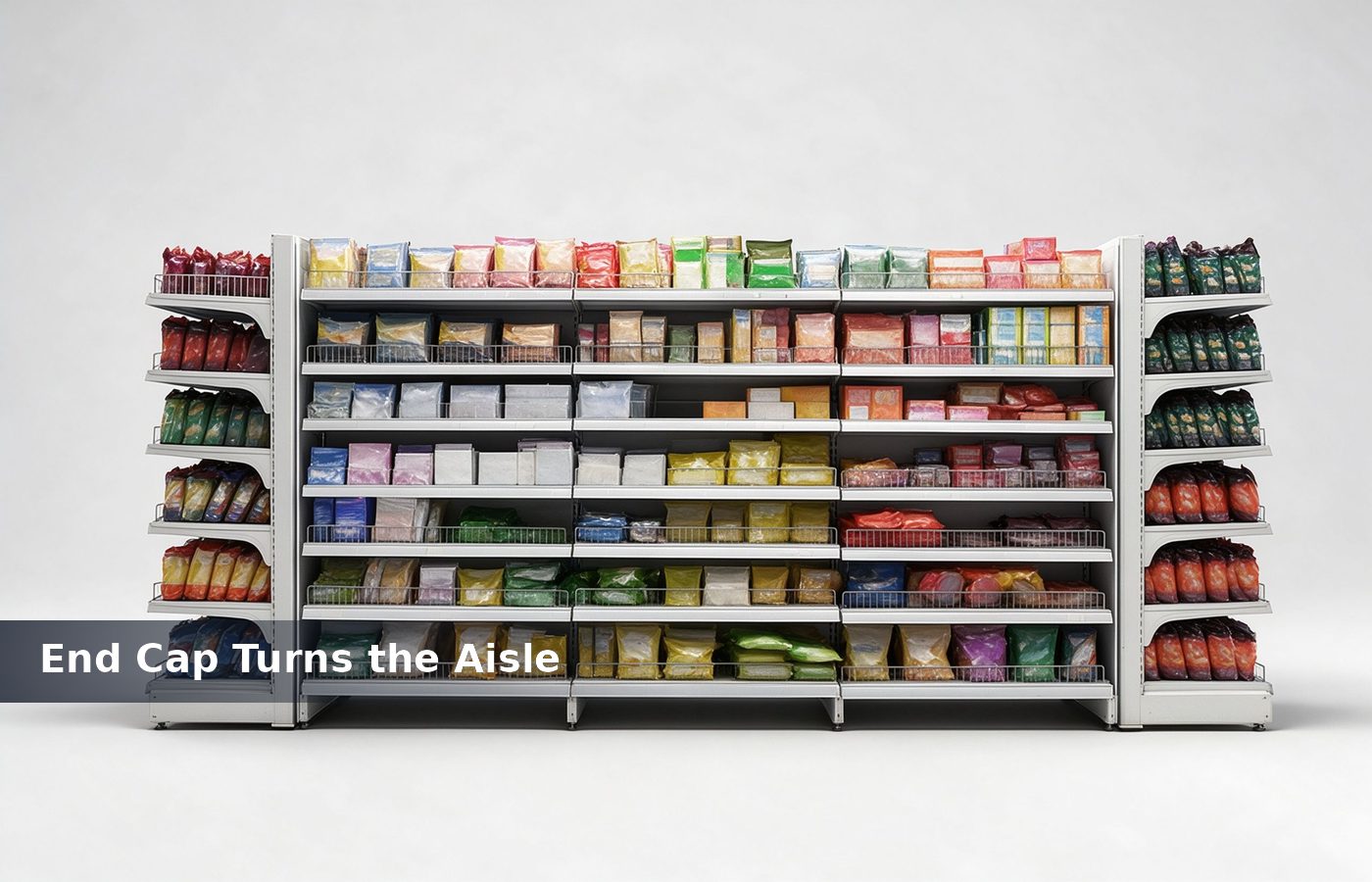
An end cap closes a run and faces the cross aisle. It carries the promoted line, not the everyday stock. End caps lift impulse sales because shoppers see them from the aisle. Turn the cap every two weeks to keep it fresh. A narrow cap uses 600 mm depth, the same as a shelf. Wider caps take a small table or a stack of bins. One cap per run end is the common plan.
Aisle flow follows run length. Long runs push shoppers down the aisle. Short runs invite cross-aisle turns. A 6 m run suits grocery and bulk goods. A 3 m run suits pharmacy and specialist shops. Keep the first 2 m of any aisle open for the trolley turn. Narrow aisles slow the shop and cost sales at the till.
What a Gondola Run Costs
Cost moves with grade, panel and length. An economy single-sided bay runs about USD 90-160. A double-sided bay runs about USD 150-260. A full 6 m double run lands near USD 900-1,600. Those figures are a typical range for 2026, ex-works, with four decks per bay. Freight, install and lighting sit outside that range.
Three things move the price fastest. Steel grade adds about 15-25%. Pegboard or slatwall panels add 10-20%. Each extra shelf level adds 8-12%. A local quote can look cheaper per bay. Check beam load rating and steel thickness side by side. Cheap bays often save on both. Then compare the shelf count, because four decks and five decks are not the same bay.
How to Order a Full Aisle
Order by aisle, not by bay. Measure the length you can use, then divide it. A 6 m aisle takes five bays at 1200 mm. Add one end cap at each end of the run. Send the plan with floor level and pack sizes. Ask for load ratings and panel type in writing. Confirm shelf count before you pay the deposit. Retail shelves, shelving units and cash wrap counters usually ship on the same order.
We build retail fixtures in Shenzhen, from gondola runs to display cases and counters. Our team matches bay width, steel grade, panel type and shelf count to your plan. Materials and finishes are open to custom order, from plain steel to wood-look panels. Send your aisle drawing and we return a section list and a price. Custom runs ship as pre-built sections for site assembly.